Multifocal Intraocular Lenses: Benefits, Limitations, and Patient Selection

Multifocal intraocular lenses can improve near, intermediate, and distance vision by using more than one focusing zone. They are most often considered during cataract surgery, but may also be discussed for selected patients with presbyopia.
Key Takeaways
- Multifocal intraocular lenses can improve near, intermediate, and distance vision by using more than one focusing zone.
- They are most often considered during cataract surgery, but may also be discussed for selected patients with presbyopia.
- Possible limitations include glare, halos around lights, reduced contrast sensitivity, and a period of visual adaptation.
- Good candidates usually have healthy corneas, retinas, and optic nerves, along with realistic expectations about postoperative vision.
- A detailed eye examination is essential because dry eye, macular disease, glaucoma, irregular astigmatism, or diabetic eye disease may affect results.
Multifocal intraocular lenses are artificial lens implants designed to help people see at more than one distance after cataract surgery or lens replacement. They can reduce the need for glasses, but they are not suitable for every eye or every lifestyle.
Overview
Multifocal intraocular lenses, often called multifocal IOLs, are clear artificial lenses placed inside the eye to replace the eye’s natural lens. They are most commonly used during cataract surgery, when the cloudy natural lens is removed. In selected cases, similar lens technology may also be discussed for people who do not have cataracts but wish to reduce dependence on reading glasses due to presbyopia.
A standard monofocal intraocular lens usually focuses light mainly at one distance, most often distance vision. A multifocal lens is designed with more than one focusing zone, helping the eye see at near and far distances, and in some models at intermediate distances as well. This can make daily activities such as reading, using a computer, cooking, shopping, or driving more convenient for suitable patients.
Multifocal lenses are considered “premium” or advanced-technology IOLs because they require careful planning, precise measurements, and individualized patient selection. They can be very helpful, but they do not create the same visual experience as a young natural lens. The best outcomes usually occur when the patient’s eye health, visual goals, and expectations are well matched to the lens design.
How Multifocal Intraocular Lenses Work
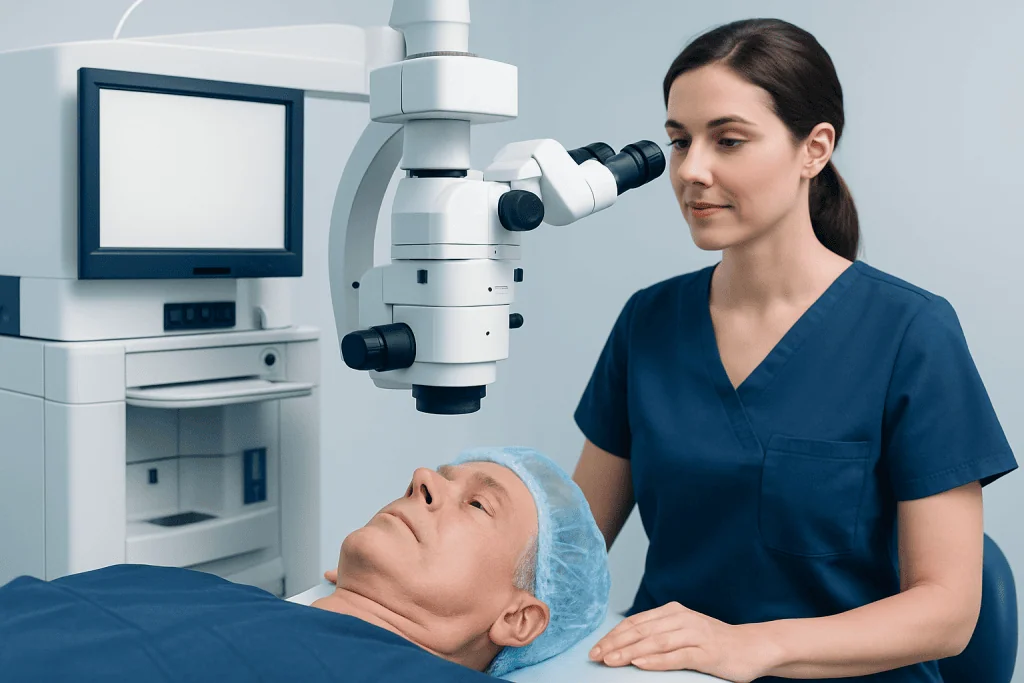
The natural lens of a younger eye can change shape to focus at different distances. With age, this flexibility decreases, leading to presbyopia, which makes near tasks such as reading more difficult. Multifocal IOLs aim to compensate for this by dividing or distributing light to more than one focal point. Depending on the lens model, vision may be optimized for distance and near, or for distance, intermediate, and near.
There are several designs. Bifocal lenses typically provide two main focal distances. Trifocal lenses add an intermediate range, which may help with computer work or dashboard viewing. Extended depth-of-focus lenses, sometimes discussed alongside multifocal lenses, create a longer range of focus rather than distinct focal points. Each design has advantages and trade-offs, so the choice depends on the patient’s eye measurements, daily activities, and tolerance for possible optical effects.
Because multifocal lenses split incoming light, the brain needs time to adapt to the new visual system. This process is often called neuroadaptation. Many patients become less aware of visual disturbances over time, but some continue to notice halos, glare, or reduced sharpness in low-contrast situations. For this reason, lens selection is not only a technical decision; it is also a lifestyle and expectation discussion between the patient and ophthalmologist.
Benefits and Everyday Advantages

The main potential benefit of multifocal intraocular lenses is reduced dependence on glasses after surgery. For many suitable patients, this means improved convenience for a range of daily activities. They may be able to read a menu, check a phone, watch television, and walk outdoors without constantly changing between distance and reading glasses.
Multifocal lenses can be especially appealing to active adults who value freedom from spectacles for routine tasks. They may also be helpful for people who find reading glasses inconvenient at work or during hobbies. In patients with both cataracts and presbyopia, treating the cataract while also addressing near vision can make the surgical plan more complete.
Potential benefits may include:
- Improved functional vision at more than one distance.
- Less reliance on reading glasses or bifocals for many activities.
- A single surgical opportunity to address cataract-related blur and age-related focusing difficulty.
- Customized options, including toric multifocal lenses for some patients with regular astigmatism.
It is important to understand that “reduced dependence” does not always mean “no glasses ever.” Some people may still prefer glasses for prolonged reading, fine print, night driving, or visually demanding work. A good preoperative consultation helps define what level of spectacle independence is realistic.
Limitations, Side Effects, and Visual Trade-Offs
Multifocal lenses involve optical compromises. Because light is shared between different focal points, some patients notice decreased contrast sensitivity, especially in dim lighting. This may make faint print, low-light environments, or subtle details feel less crisp compared with a monofocal lens. The effect varies from person to person and depends on the lens design and the health of the eye.
Commonly reported visual phenomena include halos around lights, glare, starbursts, or rings, particularly at night. These symptoms are often most noticeable while driving after dark or looking at bright lights against a dark background. For many patients, symptoms become less bothersome with time as the brain adapts, but they can persist in some cases. Patients who drive frequently at night or who are very sensitive to visual imperfections should discuss this carefully before choosing a multifocal IOL.
Another limitation is that multifocal lenses are less forgiving of small refractive errors. Even mild residual nearsightedness, farsightedness, or astigmatism can reduce satisfaction. Dry eye, corneal surface irregularity, and pupil characteristics can also influence the quality of vision. For this reason, the surgeon may recommend treating ocular surface disease before surgery or choosing a different lens type if the eye is not ideal for multifocal optics.
Rarely, if a patient remains significantly unhappy after healing and all correctable issues have been addressed, further treatment may be considered. This could include glasses, contact lenses, laser vision enhancement in suitable eyes, or in uncommon situations, lens exchange. These decisions require careful discussion because additional procedures have their own risks and limitations.
Patient Selection: Who May Be a Good Candidate?
The best candidates for multifocal intraocular lenses are usually people with healthy eyes and a strong desire to reduce dependence on glasses. They should understand that the goal is functional vision across distances, not perfect vision in every lighting condition. Patients who are flexible, realistic, and willing to allow time for adaptation often adjust more comfortably.
A suitable candidate typically has a healthy cornea, stable eye measurements, a clear visual pathway, and no significant retinal or optic nerve disease. The macula, which is responsible for central detailed vision, must be carefully assessed. Conditions such as macular degeneration, significant epiretinal membrane, advanced glaucoma, or active diabetic retinal disease may reduce the quality of vision after multifocal lens implantation. Patients with diabetes may need additional retinal evaluation, especially if there is concern for diabetic retinopathy.
Corneal shape is also important. Irregular astigmatism, keratoconus, previous corneal disease, or significant scarring may make multifocal optics less predictable. In some cases, patients with regular astigmatism may be candidates for toric multifocal lenses, while others may be better served by monofocal, toric monofocal, or extended depth-of-focus options. Severe dry eye should be treated before measurements are finalized, because an unstable tear film can affect both testing accuracy and postoperative comfort.
Personal habits matter as well. A person who reads for hours, drives at night professionally, or needs extremely precise low-light vision may prefer a different lens strategy. The ophthalmologist’s role is to match the lens to the patient’s anatomy, visual priorities, and tolerance for trade-offs.
Diagnosis and Preoperative Assessment
Before recommending a multifocal IOL, the ophthalmologist performs a detailed eye examination. This includes checking visual acuity, refraction, eye pressure, pupil behavior, and the health of the cornea, lens, retina, and optic nerve. If a cataract is present, the doctor assesses how much it contributes to blurred vision and whether surgery is appropriate.
Special measurements are needed to calculate the lens power and evaluate whether the eye is suitable for advanced lens technology. These may include optical biometry, corneal topography or tomography, keratometry, macular optical coherence tomography, and tear film evaluation. These tests help identify subtle problems that may not be obvious during a routine vision check but could affect the performance of a multifocal lens.
The consultation should also include a practical conversation about daily life. Patients may be asked about reading habits, computer use, night driving, hobbies, work requirements, and previous experiences with glasses or contact lenses. The surgeon may explain different lens options, including monofocal, toric, multifocal, trifocal, and extended depth-of-focus designs. Shared decision-making is essential because there is no single best lens for everyone.
Treatment Options and the Surgical Process
When multifocal intraocular lenses are chosen for cataract treatment, the surgical steps are similar to standard cataract surgery. The cloudy natural lens is removed through a small incision, and the selected artificial lens is implanted inside the eye. The procedure is typically performed under local anesthesia with eye drops or other numbing methods, and most patients return home the same day, depending on the clinical setting and individual health status.
If both eyes need surgery, they are often treated on separate days. This allows the first eye to begin healing and gives the surgeon an opportunity to evaluate early visual results before proceeding with the second eye. Some patients notice good functional vision quickly, while others need more time as the eye heals and the brain adapts to the new focusing pattern.
Multifocal IOLs are only one option among several. A monofocal lens may be preferred for patients who prioritize crisp distance vision and accept reading glasses. A monovision strategy, where one eye is focused more for distance and the other more for near, may be considered for selected patients who have previously tolerated it. Extended depth-of-focus lenses may offer a balance between range of vision and fewer night-vision symptoms for some people. Discussions about presbyopia treatment can help patients understand the full range of choices.
After surgery, eye drops and follow-up visits are important. The surgeon checks healing, eye pressure, lens position, and visual recovery. If dryness, inflammation, or residual refractive error affects vision, these issues are addressed step by step before judging the final outcome.
Recovery, Self-Care, and When to See a Doctor
Recovery after multifocal IOL implantation is usually gradual. Patients may notice brighter colors and improved clarity as the cataract is removed, but near and intermediate vision can continue to change during the healing period. It is common for the visual system to feel different at first, especially under night lighting. Following the prescribed drop schedule and attending postoperative visits supports safe recovery.
Patients should avoid rubbing the eye and should follow their surgeon’s guidance about bathing, exercise, makeup, swimming, and returning to work. Artificial tears may be recommended if dryness contributes to fluctuating vision. Reading in good light, taking breaks from screens, and being patient during adaptation can also help. Glasses may still be useful for certain tasks, particularly very fine print or prolonged detailed work.
A doctor should be contacted promptly if the patient develops increasing eye pain, sudden loss of vision, worsening redness, new flashes or floaters, a curtain-like shadow, or discharge. These symptoms do not mean a serious problem is present, but they require timely medical assessment. Patients should also report persistent bothersome halos, glare, or blurred vision after the expected healing period, because treatable causes such as dry eye, residual refractive error, posterior capsule clouding, or retinal changes may need evaluation.
International patients considering lens surgery should seek a center that offers comprehensive preoperative testing and coordinated ophthalmic care. Acibadem International’s multidisciplinary specialists and JCI-accredited hospitals diagnose and treat cataracts and refractive lens concerns for international patients, with lens choice guided by individual examination findings and medical suitability.
Frequently asked questions
What are multifocal intraocular lenses?
Multifocal intraocular lenses are artificial lens implants designed to focus light at more than one distance. They are usually implanted during cataract surgery after the cloudy natural lens is removed. Their goal is to reduce dependence on glasses for daily near, intermediate, and distance tasks.
Will multifocal IOLs completely eliminate the need for glasses?
They can reduce the need for glasses, but they do not guarantee complete spectacle independence. Some patients still prefer glasses for fine print, long reading sessions, night driving, or detailed close work. The likely benefit depends on eye health, lens choice, and healing.
Are halos and glare common after multifocal lenses?
Some patients notice halos, glare, rings, or starbursts around lights, especially at night. These symptoms often become less noticeable as the brain adapts, but they may persist in some people. Patients who drive often at night should discuss this carefully with their ophthalmologist.
Who is not a good candidate for multifocal intraocular lenses?
People with significant macular disease, advanced glaucoma, irregular corneal shape, severe dry eye, or active diabetic retinal disease may not be ideal candidates. These conditions can reduce contrast and visual quality, making multifocal optics less suitable. A detailed preoperative examination is essential before deciding.
What is the difference between multifocal and trifocal IOLs?
A multifocal IOL may provide two or more focal points, depending on its design. A trifocal IOL is a type of multifocal lens that is designed to support distance, intermediate, and near vision. The best choice depends on the patient’s eye measurements, lifestyle, and tolerance for possible visual side effects.
Can multifocal lenses be used if a patient has astigmatism?
Some patients with regular astigmatism may be candidates for toric multifocal lenses, which correct astigmatism and provide multiple focal distances. If astigmatism is irregular or related to corneal disease, another lens option may be safer and more predictable. Corneal mapping helps guide this decision.
How long does it take to adapt to multifocal IOLs?
Adaptation varies from person to person. Some patients feel comfortable within days or weeks, while others need longer for the brain to adjust to the new focusing pattern. Follow-up visits help confirm that healing is normal and that any correctable issues, such as dryness or residual prescription, are addressed.
This article is for general information only and is not a substitute for professional medical advice. Please consult a qualified doctor about your individual situation.
Intraocular Lens in Turkey — costs, top hospitals & a free quote
JCI-accredited · board-certified surgeons · reply within 24h
Add us as a Preferred Source to see more of our trusted health content across Google Search, AI Overviews and Discover.

Ophthalmology
Comprehensive eye care from laser vision correction to retina, cornea and cataract surgery.
75 specialists in this unitRelated Treatments
More from the Health Library

Contact Lens Eye Exams: Why Proper Fitting Matters for Comfort and Safety

Ptosis Surgery: Who May Benefit and What Recovery Is Like

Corrective Eye Surgery: LASIK, PRK, SMILE, and More

LASIK Vision Institute Alternatives: Choosing a Surgeon

Is LASIK Eye Surgery Safe? What the Evidence Shows