Ejection Fraction Before CABG: How Heart Pump Strength Guides Surgery

Ejection fraction measures how much blood the left ventricle pumps out with each heartbeat. A low ejection fraction may increase surgical risk, but it does not automatically prevent CABG.
Key Takeaways
- Ejection fraction measures how much blood the left ventricle pumps out with each heartbeat.
- A low ejection fraction may increase surgical risk, but it does not automatically prevent CABG.
- Doctors assess symptoms, coronary artery anatomy, heart muscle viability, valve function, kidney health, and other conditions alongside ejection fraction.
- CABG may improve blood flow to weakened heart muscle in carefully selected patients with coronary artery disease.
- Recovery planning often includes medication optimization, lifestyle changes, and supervised cardiac rehabilitation.
Ejection fraction before CABG is one of the key measurements doctors use to understand how strongly the heart is pumping before coronary artery bypass surgery. It helps the care team plan surgery, reduce risks, and guide recovery, but it is only one part of the overall decision.
Overview: Why Ejection Fraction Matters Before CABG
Ejection fraction before CABG is a common and important part of the preoperative heart assessment. CABG stands for coronary artery bypass grafting, a surgery that creates new pathways for blood to flow around narrowed or blocked coronary arteries. Because the procedure is performed on a heart affected by coronary artery disease, doctors need to know how well the heart muscle is pumping before recommending and planning surgery.
Ejection fraction, often shortened to EF, is usually measured as a percentage. It describes how much blood the left ventricle, the heart’s main pumping chamber, pushes out with each beat. A typical normal left ventricular ejection fraction is often around 55% to 70%, although interpretation depends on the imaging method, the patient’s overall condition, and the laboratory’s reference range.
EF helps the heart team estimate surgical risk, decide whether additional tests are needed, and plan anesthesia, monitoring, and recovery support. However, EF is not the only factor. Some people with a low EF still benefit from coronary artery bypass surgery, especially when blocked arteries are limiting blood flow to heart muscle that can recover after revascularization.
Understanding Ejection Fraction Numbers
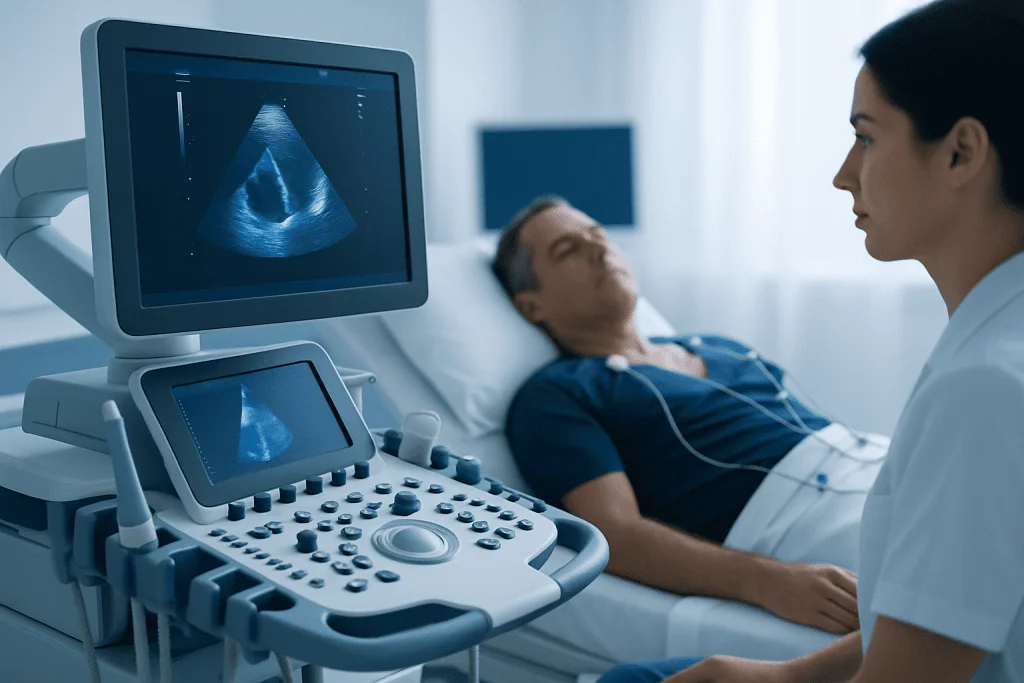
Ejection fraction is not a measure of how much blood is in the heart; it is the percentage of blood pumped out of the left ventricle with each contraction. For example, if the ventricle fills with blood and pumps out a little more than half of that amount, the EF may be within the normal range. The heart never empties completely during a heartbeat, so an EF of 100% is not expected or healthy.
In clinical practice, EF is often described in broad categories. An EF of 50% or above may be considered preserved in many settings, while 41% to 49% may be described as mildly reduced. An EF of 40% or lower is commonly associated with reduced pumping function, also called systolic dysfunction or heart failure with reduced ejection fraction. These ranges are helpful, but they do not replace an individualized review by a cardiologist.
Small differences in EF measurements can occur from one test to another. EF may vary depending on image quality, heart rhythm, blood pressure, fluid balance, and whether the heart was under stress at the time of testing. For this reason, doctors look at the overall pattern: symptoms, imaging findings, artery blockages, previous heart attack, valve function, and response to medications.
How EF Guides CABG Risk and Surgical Planning

Before CABG, EF gives the surgical team information about how much reserve the heart may have during and after the operation. A lower EF can mean the heart has less pumping strength to tolerate temporary changes in circulation, anesthesia, fluid shifts, and the stress of surgery. This does not mean surgery is impossible; it means planning must be more detailed and personalized.
For patients with a reduced EF, the care team may optimize heart failure medications, review fluid status, treat rhythm problems, assess valve disease, and evaluate kidney and lung function before surgery. In selected cases, doctors may discuss whether the operation should be performed with a heart-lung machine or using an off-pump technique, although the best approach depends on anatomy, surgeon experience, and the patient’s condition.
Low EF may also influence monitoring after surgery. Some patients benefit from closer intensive care observation, temporary medicines to support heart function, or advanced circulatory support in carefully selected situations. These measures are used to help the heart recover safely while the new bypass grafts begin supplying improved blood flow.
Importantly, EF is only one part of CABG risk assessment. Age, diabetes, kidney disease, lung disease, prior stroke, frailty, anemia, obesity, valve disease, and the extent of coronary artery disease all affect the final recommendation. A heart team approach helps balance surgical benefits and risks for each patient.
Symptoms and Signs That May Be Linked to Low EF
Some people with a reduced ejection fraction have noticeable symptoms, while others do not. Symptoms often depend on how much the heart’s pumping ability is reduced, how quickly the problem developed, and whether there are additional issues such as valve disease, abnormal heart rhythms, or uncontrolled blood pressure.
Common symptoms related to reduced pumping function may include shortness of breath during activity, fatigue, reduced exercise capacity, swelling in the legs or abdomen, difficulty lying flat, or waking at night feeling breathless. Chest discomfort, pressure, or tightness may occur when coronary artery blockages limit blood flow, especially during exertion or emotional stress.
Before CABG, doctors ask about these symptoms because they help clarify how much the heart condition is affecting daily life. Symptoms also guide urgency, medication adjustments, and the need for additional testing. A person with severe symptoms, recurrent chest pain, or signs of fluid overload may need more rapid assessment than someone who is stable and active.
Causes of Low Ejection Fraction in People Needing CABG
In patients being evaluated for CABG, a low ejection fraction is often related to coronary artery disease. When one or more coronary arteries are narrowed or blocked, heart muscle may receive too little oxygen-rich blood. Over time, this can weaken the muscle, especially after a heart attack or repeated episodes of reduced blood flow.
Some weakened heart muscle may be scarred and unable to recover fully. Other areas may be “hibernating,” meaning they are alive but functioning poorly because of chronically reduced blood supply. One goal of preoperative evaluation is to determine whether improving blood flow with bypass surgery may help these areas work better over time.
Low EF can also be caused or worsened by conditions beyond blocked arteries. These include long-standing high blood pressure, valve disease, cardiomyopathy, diabetes, certain rhythm disorders, previous myocarditis, thyroid disease, alcohol-related heart muscle injury, and some cancer treatments. Identifying these factors is important because treating them may improve heart function and reduce complications.
Risk factors for coronary artery disease and low EF often overlap. Smoking, high cholesterol, hypertension, diabetes, chronic kidney disease, excess weight, inactivity, and family history can all contribute. Managing these risks remains important before and after heart bypass surgery.
Diagnosis: Tests Used to Measure EF and Prepare for CABG
The most common test for measuring ejection fraction is an echocardiogram, an ultrasound of the heart. It shows how the ventricles pump, how the valves open and close, whether the heart muscle is thickened or scarred, and whether there is fluid around the heart. It is painless, widely available, and often repeated when doctors need to track heart function over time.
Other imaging tests may be used when more detail is needed. Cardiac MRI can provide precise information about heart muscle structure, scar tissue, and viability. Nuclear imaging, stress echocardiography, or PET scans may help determine whether weak heart muscle could improve after blood flow is restored. Cardiac CT may be useful in selected cases, although coronary angiography remains the key test for mapping artery blockages before CABG.
Preoperative testing also usually includes an electrocardiogram, blood tests, chest imaging, and assessment of kidney, lung, and vascular health. Coronary angiography shows the location and severity of blockages, helping surgeons decide which arteries may need bypass grafts. If valve disease or rhythm abnormalities are present, the heart team considers whether they should be addressed at the same time or treated separately.
Because EF is a measurement with some natural variability, doctors interpret it alongside the patient’s full clinical picture. A person’s ability to walk, climb stairs, breathe comfortably, and tolerate medications can be just as important as the number itself.
Treatment Options and Recovery Planning
When CABG is recommended, the aim is to improve blood flow to the heart muscle by using blood vessels from the chest, arm, or leg to bypass blocked coronary arteries. In patients with reduced EF, the decision often focuses on whether surgery is likely to relieve symptoms, reduce future cardiac events, and support better heart function over time. The expected benefit is greatest when there is significant coronary disease and heart muscle that can still recover.
Before surgery, doctors often work to optimize medical therapy. This may include medicines for heart failure, blood pressure, cholesterol, diabetes, angina, or abnormal heart rhythm, depending on the patient’s needs. Patients should never stop or change heart medicines on their own before surgery; the surgical and anesthesia teams provide specific instructions about which medications to take or hold.
After CABG, recovery is gradual. The heart may need time to adapt to improved blood flow, and EF does not always improve immediately. Some patients notice better stamina and fewer symptoms within weeks, while others improve more slowly as medications, wound healing, nutrition, sleep, and activity levels stabilize.
Supervised cardiac rehabilitation is often an important part of recovery when the doctor approves it. It combines monitored exercise, education, risk-factor control, and emotional support. For international patients, Acibadem International’s multidisciplinary specialists and JCI-accredited hospitals can evaluate and treat coronary artery disease and reduced EF with coordinated cardiology, cardiac surgery, anesthesia, and rehabilitation care.
Prevention, Self-Care, and When to See a Doctor
People preparing for CABG can support their heart by following their prescribed treatment plan and reporting any change in symptoms. Helpful habits include taking medications as directed, eating a heart-healthy diet, avoiding tobacco, limiting alcohol as advised, staying physically active within medical guidance, and monitoring blood pressure, blood sugar, and cholesterol. Good sleep and stress management also support recovery.
After surgery, self-care includes wound care, gradual activity, breathing exercises if recommended, and attending follow-up visits. Patients should ask their care team when it is safe to drive, return to work, lift objects, travel, or resume sexual activity. These timelines vary depending on the operation, EF, complications, and overall health.
Medical advice should be sought promptly for worsening shortness of breath, new or increasing chest discomfort, fainting, rapid or irregular heartbeat, swelling that worsens quickly, fever, wound redness or drainage, or sudden weakness or confusion. These symptoms do not always mean something serious is happening, but they deserve timely medical review.
Anyone told they have a low ejection fraction before CABG should ask what the number means in their specific case. Useful questions include: Is the weak muscle scarred or viable? Are medications optimized? What are the surgical risks and expected benefits? What recovery support will be needed? Clear answers can help patients and families feel better prepared for treatment decisions.
Frequently asked questions
What is a good ejection fraction before CABG?
A typical normal left ventricular ejection fraction is often around 55% to 70%, but the best interpretation depends on the patient’s overall condition and the test used. CABG can still be considered when EF is below normal if the expected benefits outweigh the risks. Doctors evaluate EF together with symptoms, coronary anatomy, valve function, and other health factors.
Can CABG be done with a low ejection fraction?
Yes, CABG may be possible in selected patients with low ejection fraction. A low EF can increase surgical risk, but it does not automatically rule out surgery. The heart team may perform additional tests, optimize medications, and plan extra monitoring or support during recovery.
Will ejection fraction improve after bypass surgery?
Ejection fraction may improve after CABG if weakened heart muscle is still alive and has been underperforming because of reduced blood supply. Improvement may take weeks to months and is not guaranteed. If heart muscle is largely scarred, symptoms may still improve even if EF changes only modestly.
How is ejection fraction measured before CABG?
Ejection fraction is most commonly measured with an echocardiogram, which uses ultrasound to assess heart pumping and valve function. In some cases, cardiac MRI, nuclear imaging, stress testing, or other scans provide more detail. Coronary angiography is also used to map the blocked arteries before surgery.
Is an EF of 30% too low for bypass surgery?
An EF around 30% indicates significantly reduced pumping function and requires careful evaluation, but it is not automatically too low for CABG. The decision depends on symptoms, artery blockages, heart muscle viability, kidney and lung function, and overall surgical risk. A specialist heart team can explain the expected benefits and risks for the individual patient.
What can patients do before CABG if their EF is low?
Patients should follow their doctor’s medication plan, avoid smoking, control blood pressure and diabetes, and report worsening symptoms promptly. They should not stop blood thinners, heart medicines, or diabetes medicines without specific instructions. Good nutrition, safe activity, and attending all preoperative appointments can help the team prepare for surgery.
This article is for general information only and is not a substitute for professional medical advice. Please consult a qualified doctor about your individual situation.
Heart care in Turkey — expert evaluation and treatment
JCI-accredited · board-certified surgeons · reply within 24h
Add us as a Preferred Source to see more of our trusted health content across Google Search, AI Overviews and Discover.
Check your numbers in seconds
BMI, calories, due date, blood pressure and 30+ more clinical calculators — free, instant, doctor-reviewed ranges.

Cardiology Department
Diagnosis and treatment of heart and vascular conditions, from prevention to advanced interventional procedures.
93 specialists in this unitRelated Treatments
Related Conditions
More from the Health Library

Coronary Bypass Graft Failure: Symptoms, Testing, and Prevention

Aortic Aneurysm Repair in Turkey: Cost, Hospital Stay, and Follow-Up

High Cholesterol: Heart Risk, Blood Tests, and Treatment Goals

Dental Clearance Before Heart Bypass Surgery: Why Infection Prevention Matters

Peripheral Artery Disease vs Deep Vein Thrombosis: How to Tell the Difference