What Is a Diagnostic Test? Types, Purpose, and How Results Help Doctors

A diagnostic test can include lab work, imaging, physical measurements, and tissue analysis. Doctors choose tests based on symptoms, medical history, risk factors, and examination findings.
Key Takeaways
- A diagnostic test can include lab work, imaging, physical measurements, and tissue analysis.
- Doctors choose tests based on symptoms, medical history, risk factors, and examination findings.
- Test results are interpreted together with the patient’s overall clinical picture.
- Some tests are used for screening, while others confirm a diagnosis or monitor treatment.
- Not every abnormal result means disease, and normal results do not always rule out every condition.
A diagnostic test is any medical test used to detect, confirm, monitor, or rule out a health condition. These tests help doctors make informed decisions about diagnosis, treatment, and follow-up care.
Overview: What Is a Diagnostic Test?
A diagnostic test is a medical test used to gather information about a person’s health. It may help identify the cause of symptoms, confirm a suspected condition, rule out a disease, or monitor how well a treatment is working. Diagnostic testing is a central part of modern medicine because many health conditions can have similar symptoms, and careful testing helps guide the next steps.
Diagnostic tests come in many forms. Some involve a blood, urine, or stool sample. Others use imaging, such as X-rays, ultrasound, computed tomography (CT), or magnetic resonance imaging (MRI), to look inside the body. In some situations, doctors may recommend heart tracing tests, breathing tests, genetic tests, or a biopsy, which involves taking a small tissue sample for closer examination.
Not all medical tests serve the same purpose. A screening test looks for possible disease before symptoms appear, while a diagnostic test is usually performed when there is a symptom, sign, or screening result that needs further evaluation. In practice, the two can overlap, and the doctor explains why a particular test is being recommended.
Most importantly, a diagnostic test does not stand alone. Doctors interpret test findings together with the patient’s symptoms, physical examination, age, medical history, family history, and sometimes other test results. This broader view helps create a more accurate and useful diagnosis.
Why Doctors Order Diagnostic Tests
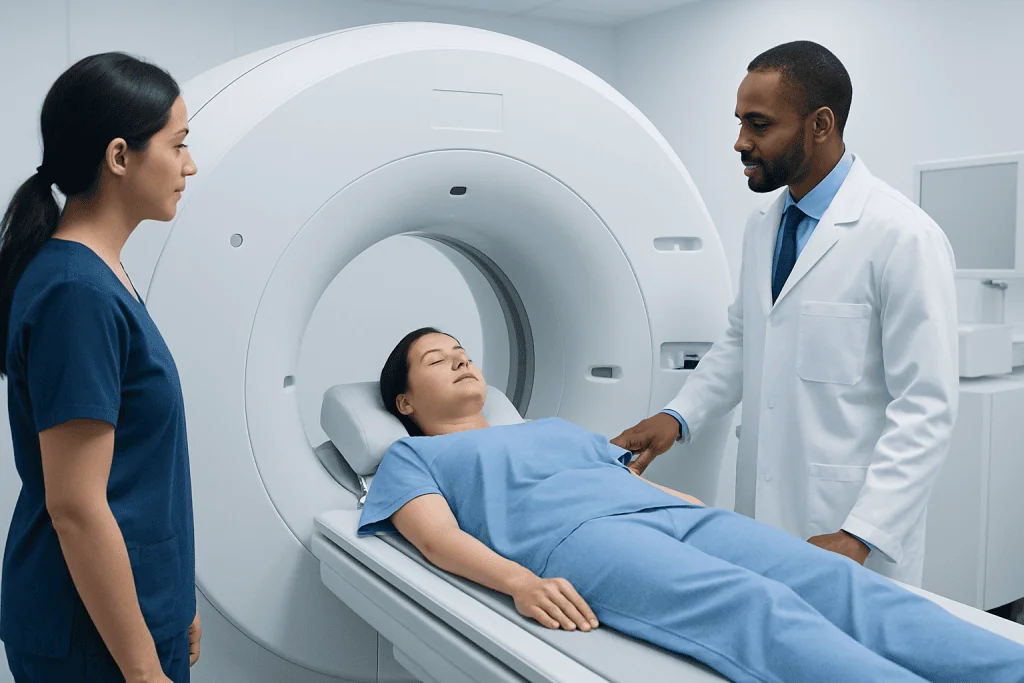
Doctors order diagnostic tests for several reasons. One of the most common is to investigate symptoms such as pain, fatigue, shortness of breath, dizziness, fever, digestive changes, or unexplained weight loss. A test can help narrow down the possible causes and show whether a condition is mild, urgent, temporary, or long term.
Tests are also used to confirm or rule out a condition that a doctor suspects after listening to symptoms and performing an examination. For example, chest imaging may help assess a cough or breathing problem, blood tests may help evaluate infection or inflammation, and a biopsy may be used when tissue needs to be examined under a microscope.
Another important purpose is monitoring. People with long-term conditions such as diabetes, thyroid disease, kidney disease, or heart conditions often need regular tests to track how stable the condition is and whether treatment is working well. Follow-up testing can also help doctors identify side effects or complications early.
In some cases, testing helps with planning treatment. Results may guide decisions about medication, surgery, rehabilitation, or whether a person needs referral to a specialist. Accurate testing supports more personalized care and may reduce unnecessary treatments.
Main Types of Diagnostic Tests

There are several major categories of diagnostic tests, and each provides different kinds of information. Laboratory tests are among the most common. These include blood tests, urine tests, stool tests, and swab samples. They can show signs of infection, anemia, hormone imbalance, organ dysfunction, inflammation, blood sugar changes, and many other medical issues.
Imaging tests create pictures of structures inside the body. X-rays are often used for bones and the chest. Ultrasound can assess organs, blood flow, pregnancy, or soft tissues. CT scans provide detailed cross-sectional images and are useful in many urgent and non-urgent settings. MRI gives highly detailed images of soft tissues, joints, the brain, and spinal structures. Depending on the situation, a doctor may recommend an MRI scan or a CT scan to clarify a diagnosis.
Functional tests measure how well an organ or body system works. Examples include electrocardiograms (ECGs) to record heart rhythm, echocardiography to assess heart function, pulmonary function tests to evaluate breathing, and stress tests to see how the body responds to exertion. These tests may be especially helpful when symptoms are present but routine imaging or labs do not give a complete answer.
Other diagnostic methods include endoscopy, which allows doctors to look inside the digestive or respiratory tract with a camera; pathology tests, including biopsies; and genetic or molecular tests, which can identify inherited conditions or markers linked to specific diseases. In selected cases, doctors may recommend PET-CT imaging when they need both functional and structural information, especially in complex evaluations.
- Laboratory tests: blood, urine, stool, swabs
- Imaging tests: X-ray, ultrasound, CT, MRI, mammography
- Functional tests: ECG, stress testing, lung function studies
- Direct-visualization tests: endoscopy, colonoscopy, bronchoscopy
- Tissue and molecular tests: biopsy, pathology, genetic testing
How Doctors Choose the Right Test
The choice of a diagnostic test depends on the person’s symptoms, how long they have been present, and whether they are getting worse. Doctors also consider age, sex, pregnancy status, medical history, medications, and family history. A person with sudden chest pain, for instance, may need a different testing pathway than someone with long-standing joint pain or gradual digestive symptoms.
Doctors also think about how accurate a test is and whether it is the best first step. Some tests are excellent for ruling out a disease, while others are better for confirming one. A doctor may begin with a simpler, less invasive test and then recommend additional testing if the results are unclear or if more detail is needed.
Practical issues matter as well. These include test availability, how quickly results are needed, whether preparation is required, and whether the test involves radiation, sedation, contrast dye, or a small procedure. In many cases, a test is chosen because it balances useful information with safety and convenience.
Sometimes a person needs more than one test because no single test answers every question. For example, a doctor might combine blood work with ultrasound or combine imaging with a biopsy. This stepwise approach can help reduce uncertainty and support a more confident diagnosis.
Understanding Diagnostic Test Results
Test results help doctors decide what to do next, but they are not always as simple as “normal” or “abnormal.” Many tests report a reference range, which is the range commonly seen in healthy people. A result slightly outside that range does not always mean disease, and a normal result does not always completely exclude a condition. Interpretation depends on the person’s symptoms and the context in which the test was ordered.
Doctors also consider the possibility of false-positive and false-negative results. A false-positive means a test suggests a problem that is not actually present. A false-negative means the test misses a problem that is present. For this reason, one result may need to be repeated, compared with another test, or interpreted alongside a physical examination and medical history.
Some results point clearly toward a diagnosis, while others only suggest possibilities. Imaging may show an abnormal area that needs further study, or blood tests may indicate inflammation without showing the exact cause. Follow-up testing may then be recommended to clarify whether the issue is infection, autoimmune disease, a structural problem, or another condition such as thyroid cancer or lung cancer when clinically appropriate.
Patients should feel comfortable asking what their results mean, whether more testing is needed, and how the findings affect treatment. Clear communication is an important part of good care, especially when results are borderline, unexpected, or require specialist review.
What to Expect Before, During, and After a Test
Preparation varies depending on the test. Some tests require fasting, avoiding certain medications, drinking extra water, or arriving with a full bladder. Others require no preparation at all. If contrast dye, sedation, or anesthesia may be used, the healthcare team usually gives detailed instructions in advance, including whether someone should arrange transportation home.
During the test, the experience also depends on the type of examination. A blood test usually takes only a few minutes. An ultrasound is generally painless and uses a handheld device on the skin. CT and MRI scans require the person to lie still, and MRI can feel noisy or enclosed for some people. Endoscopy or biopsy procedures may involve local anesthesia, sedation, or a short recovery period.
After the test, some results are available quickly, while others take days. Basic blood tests and many X-rays may be reviewed the same day, but pathology, cultures, genetic tests, or complex imaging reports can take longer. The doctor will explain when to expect results and whether follow-up is needed.
If a patient is anxious about discomfort, radiation, needles, or claustrophobia, it is helpful to mention this beforehand. Healthcare teams can often offer practical support, explain each step, and suggest ways to make the process easier and more comfortable.
Safety, Limits, and When More Testing Is Needed
Most diagnostic tests are safe, but each has potential limits or risks. Blood draws may cause brief discomfort or bruising. Imaging tests that use radiation, such as X-rays and CT scans, are used carefully and only when the expected benefit outweighs the exposure. Contrast dye may not be suitable for everyone, particularly people with certain allergies or kidney concerns. Invasive procedures such as biopsies or endoscopy carry small but important risks that the doctor discusses in advance.
Diagnostic testing also has limitations. A test may show an incidental finding, which is an unexpected result unrelated to the original reason for testing. This can sometimes lead to additional tests that clarify whether the finding is harmless or meaningful. At the same time, some conditions are difficult to detect in very early stages, so a normal test may still need repeating if symptoms continue.
More testing may be needed when symptoms persist, when initial results are inconclusive, or when several possible conditions remain under consideration. For example, if an imaging test shows a suspicious area, a doctor may recommend a biopsy to examine the tissue more closely. This step is often important for reaching a definite diagnosis rather than relying on imaging alone.
At the end of the diagnostic process, the goal is not just to find abnormalities but to understand what they mean for the individual patient. A careful, step-by-step approach often provides the clearest answers while avoiding unnecessary procedures.
When to See a Doctor and Getting the Right Support
A person should see a doctor if symptoms are persistent, unexplained, worsening, or interfering with daily life. Common reasons to seek medical advice include ongoing pain, changes in breathing, unusual bleeding, new lumps, fainting, severe headaches, sudden weakness, or lasting digestive problems. Emergency symptoms such as chest pain, stroke-like symptoms, severe shortness of breath, or heavy bleeding require urgent medical attention.
It is also sensible to ask about testing when there is a strong family history of certain conditions, a chronic illness that needs monitoring, or a screening result that needs clarification. Early assessment can make diagnosis more straightforward and may help treatment begin sooner when needed.
Patients can prepare for an appointment by bringing a list of symptoms, medications, previous test results, allergies, and key family history. This information helps the doctor decide which tests may be most useful and whether referral to a specialist is appropriate. In some cases, conditions identified through testing may relate to broader concerns such as breast cancer and need coordinated specialist care.
For people seeking care across borders, Acibadem International’s multidisciplinary specialists and JCI-accredited hospitals diagnose and treat a wide range of conditions for international patients. Whatever the setting, patients should feel informed about why a test is being done, what the results may show, and what the next steps could be.
Frequently asked questions
What is the difference between a screening test and a diagnostic test?
A screening test looks for signs of a possible disease before symptoms appear or in people at higher risk. A diagnostic test is usually done to investigate symptoms, confirm a suspicion, or clarify an abnormal screening result.
Can one diagnostic test provide a final diagnosis on its own?
Sometimes one test gives a clear answer, but often doctors need to combine test results with symptoms, examination findings, and medical history. In some cases, more than one test is needed to confirm the diagnosis with confidence.
Does an abnormal test result always mean there is a serious illness?
No. Some abnormal results are mild, temporary, or unrelated to a serious condition. Doctors look at how far the result is outside the expected range and whether it matches the person’s symptoms and overall health picture.
Why might a doctor repeat a test?
A test may be repeated if the result is borderline, unexpected, affected by preparation, or does not fit the clinical picture. Repeating or comparing tests over time can also help show whether a condition is stable, improving, or progressing.
Are diagnostic imaging tests safe?
Most imaging tests are considered safe when used appropriately. Doctors choose them carefully and weigh benefits against any possible risks, such as radiation exposure or the use of contrast dye.
How long does it take to get diagnostic test results?
This depends on the type of test. Some results, such as basic blood tests or simple imaging, may be available the same day, while pathology, cultures, or genetic tests can take longer.
This article is for general information only and is not a substitute for professional medical advice. Please consult a qualified doctor about your individual situation.
Explore treatments in Turkey — costs, top hospitals & a free quote
JCI-accredited · board-certified surgeons · reply within 24h
Add us as a Preferred Source to see more of our trusted health content across Google Search, AI Overviews and Discover.

More from the Health Library

Can You Get Lab Testing Without an Appointment?

Diagnostic Testing Abroad: What International Patients Should Ask Before Traveling
What Is a Diagnostic Mammogram for Men?

Neuroinfectious Disease Testing: Blood Work, MRI, and Spinal Fluid Explained

Blood Test or Imaging First? How Doctors Decide