When Do You Need a Second Opinion on Imaging Results?

A second opinion can clarify unclear, complex, or unexpected scan findings. It is often helpful before surgery, cancer treatment, or other major treatment decisions.
Key Takeaways
- A second opinion can clarify unclear, complex, or unexpected scan findings.
- It is often helpful before surgery, cancer treatment, or other major treatment decisions.
- Different specialists may interpret imaging in the context of a person’s symptoms, history, and prior tests.
- Patients should gather the scan images, written report, and relevant medical records before seeking another review.
- A second opinion does not always change the diagnosis, but it can improve confidence and communication.
A second opinion on imaging results can be useful when a scan finding is unclear, unexpected, or likely to affect an important treatment decision. In many cases, another radiologist or specialist review helps confirm the diagnosis, reduce uncertainty, and support confident next steps.
Overview: What a Second Opinion on Imaging Results Means
A second opinion on imaging results means asking another qualified doctor to review a scan and its report. This may involve a radiologist with expertise in a certain body area, such as the brain, lungs, bones, breast, or abdomen. It can also involve a specialist physician or surgeon who interprets the scan together with symptoms, examination findings, and other test results.
Imaging tests such as X-rays, ultrasound, CT, MRI, mammography, and PET scans are important tools in diagnosis and treatment planning. Even so, some findings are straightforward while others are more subtle or open to more than one interpretation. A second review can help confirm what the scan shows, suggest other possibilities, or identify whether more testing is needed.
Seeking another opinion is a common and reasonable step in healthcare. It does not mean the first doctor was wrong. In many situations, imaging interpretation depends on image quality, the clinical question asked, prior scans for comparison, and the experience of the reviewing specialist.
When a Second Opinion May Be Helpful
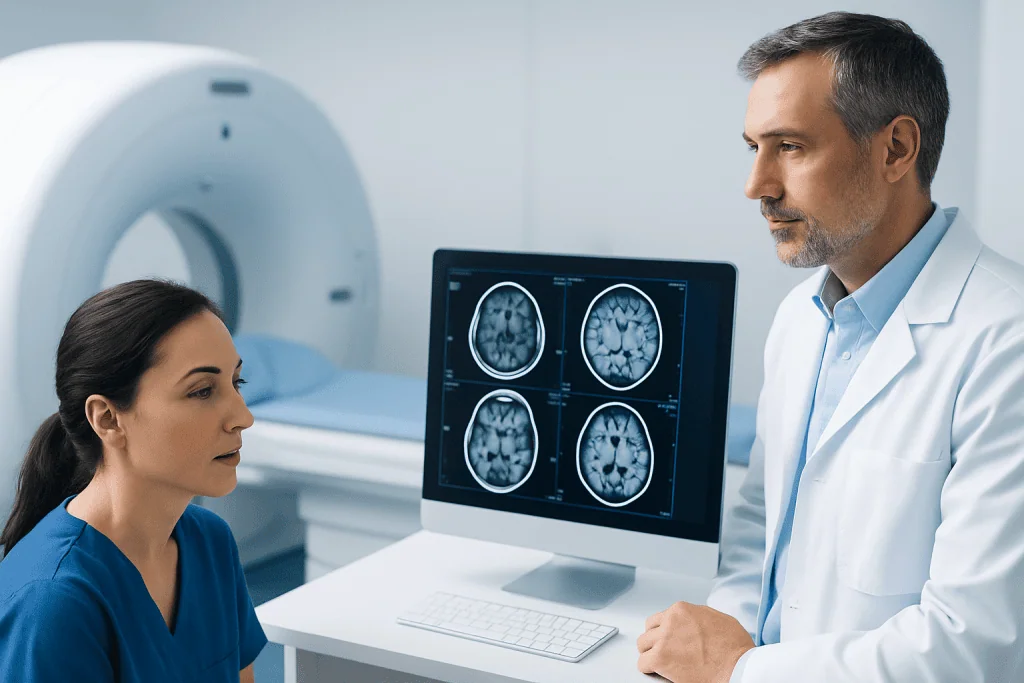
A second opinion is often most valuable when imaging results are unclear or do not fully explain a person’s symptoms. For example, a report may describe a “possible,” “indeterminate,” or “nonspecific” finding. In these cases, another review may help determine whether the finding is likely benign, whether follow-up imaging is appropriate, or whether a different test would be more useful.
It may also be worth seeking another opinion when the scan shows a serious or unexpected problem, especially if the result could lead to surgery, biopsy, cancer treatment, or long-term medication. Before major decisions, many patients feel more comfortable having the images reviewed by a subspecialty radiologist or by the doctor who would provide treatment.
Common situations where a second opinion may help include:
- Symptoms continue, but the scan is reported as normal or inconclusive
- The report mentions a mass, lesion, nodule, fracture, or abnormality that needs further evaluation
- Different doctors give different explanations of the same result
- The recommended treatment is invasive, urgent, or life-changing
- The scan quality was limited by movement, timing, or technical factors
- A rare condition is suspected, or the anatomy is complex
A second review may also be helpful if there are previous scans from another hospital. Comparing older and newer images can reveal whether a finding is stable, improving, or changing over time. This context can greatly influence interpretation.
Signs That Another Review Is Reasonable

Patients often wonder whether they are overreacting by asking for another opinion. In reality, certain signs make a second review especially reasonable. One sign is a mismatch between the report and how the person feels. For instance, severe pain, weakness, or ongoing symptoms may need further evaluation even if the first imaging result seems mild or uncertain.
Another sign is confusing communication. If the written report uses technical language that is hard to understand, or if the explanation given in the clinic feels incomplete, a second opinion can help translate the result into clear next steps. Patients should feel able to ask what the finding means, how certain the diagnosis is, and whether there are other possible explanations.
It can also help to seek another review when a finding is incidental. Incidental findings are changes seen on a scan that are unrelated to the original reason for testing. Many are harmless, but some need follow-up. If the significance of an incidental finding is uncertain, another specialist may help decide whether it can simply be monitored or should be investigated further.
How Imaging Second Opinions Are Done
For a useful second opinion, the reviewing doctor usually needs more than the report alone. The actual images matter because different specialists may focus on different details, image sequences, or comparison views. Whenever possible, patients should obtain the original scan files, the radiology report, and any earlier imaging studies.
Medical history is also important. A radiologist interpreting an MRI of the spine, for example, may reach a more helpful conclusion when they know where the pain is, how long symptoms have been present, and whether there is a history of injury, cancer, surgery, or infection. Clinical context often changes how a finding is understood.
The process may involve one of several approaches:
- A second radiologist independently reviews the images
- A subspecialty radiologist reviews a complex body area or disease type
- A multidisciplinary team discusses the case together
- A treating specialist, such as a neurologist, orthopedist, or oncologist, reviews the scan in clinical context
Sometimes the second opinion confirms the first report. In other cases, it may refine the wording, narrow the possibilities, recommend a different follow-up interval, or suggest another imaging test such as MRI, CT scan, or PET-CT if the original study did not fully answer the clinical question.
What to Prepare Before Asking for a Second Opinion
Being organized can make the process smoother and more informative. Patients should ask for a copy of the scan images in digital format, the official radiology report, clinic notes, blood test results if relevant, and records of previous procedures or treatments. If the concern involves a known condition, pathology or biopsy results may also be important.
It is also helpful to write down questions in advance. Examples include: What exactly was seen on the scan? How certain is the interpretation? Could the finding be harmless? Is more imaging needed now, or is follow-up later enough? Would the result change the treatment plan?
When meeting the second doctor, patients should be ready to describe their symptoms clearly, including when they started, what makes them better or worse, and whether they have changed over time. This simple information can help connect imaging findings with the real clinical picture.
If a person is considering treatment abroad or at a tertiary center, a coordinated review can be especially useful. Near the end of the diagnostic process, multidisciplinary specialists at Acibadem International and its JCI-accredited hospitals may review imaging results for international patients as part of diagnosis and treatment planning.
What a Second Opinion Can and Cannot Do
A second opinion can improve clarity, confidence, and decision-making. It may confirm a diagnosis, identify an alternative explanation, or show that the finding is less concerning than first thought. In some cases, it prevents unnecessary procedures; in others, it helps ensure that an important problem is not overlooked.
At the same time, a second opinion does not always provide a completely different answer. Some scan findings remain uncertain even after expert review. Imaging has limits, and certain conditions can overlap in appearance. If that happens, the next step may be short-interval follow-up imaging, laboratory testing, a biopsy, or direct clinical observation rather than an immediate firm label.
It is also important to remember that scans are only one part of diagnosis. A doctor may combine imaging with physical examination, blood tests, endoscopy, or tissue sampling. For example, a suspicious lesion may still need biopsy to determine exactly what it is, even when imaging strongly suggests a diagnosis.
When to See a Doctor Promptly
Most questions about imaging results can be discussed at a scheduled follow-up visit, but some situations need more urgent medical attention. If the scan result may relate to symptoms such as chest pain, sudden shortness of breath, stroke-like symptoms, severe headache, major injury, or significant weakness, prompt medical assessment is important. In these situations, care should not be delayed simply to arrange another opinion.
Patients should also contact their doctor sooner if they have a new serious diagnosis on imaging, if symptoms are rapidly worsening, or if there is uncertainty about whether a recommended procedure should happen quickly. A second opinion can still be requested, but urgent safety concerns should come first.
In planned, non-emergency situations, it is reasonable to ask how much time is available to review the results, compare prior scans, or consult another specialist. Good clinicians generally understand and support the wish for a clear explanation before major treatment decisions.
For complex cases, especially in areas such as cancer, neurology, or spine disease, a multidisciplinary review may be useful alongside evaluation for related conditions such as lung cancer or brain tumor when clinically relevant and already suspected by the treating team.
Frequently asked questions
Is it normal to ask for a second opinion on imaging results?
Yes. Asking for a second opinion is common, especially when results are unclear or the findings could affect a major treatment decision. Many doctors support this because it can improve understanding and confidence.
Should a second opinion be from another radiologist or from a specialist doctor?
Either may be helpful, depending on the situation. A radiologist can re-read the images in detail, while a specialist doctor can interpret the scan together with symptoms, examination findings, and treatment options.
What should a patient bring for a second opinion?
The most useful items are the actual scan images, the written radiology report, and prior imaging for comparison. It also helps to bring clinic notes, test results, and a summary of symptoms and past medical history.
Does a second opinion mean the first result was wrong?
Not necessarily. Imaging interpretation can be complex, and more than one reasonable view may exist, especially for subtle or nonspecific findings. A second opinion often confirms the first result or adds helpful detail rather than replacing it completely.
Can a second opinion change the treatment plan?
Yes, sometimes it can. Another review may confirm that treatment is needed, suggest a different test first, recommend monitoring instead of intervention, or refine the diagnosis in a way that changes the next step.
When should someone not wait for a second opinion?
A person should not delay urgent care if they have severe symptoms such as chest pain, sudden weakness, shortness of breath, or signs of stroke. If a doctor says a condition needs immediate treatment, it is important to discuss timing right away and not postpone necessary emergency care.
This article is for general information only and is not a substitute for professional medical advice. Please consult a qualified doctor about your individual situation.
Explore treatments in Turkey — costs, top hospitals & a free quote
JCI-accredited · board-certified surgeons · reply within 24h
Add us as a Preferred Source to see more of our trusted health content across Google Search, AI Overviews and Discover.

More from the Health Library

Labcorp Appointment: How to Book, Prepare, and Avoid Delays
CT Scan vs MRI: Which Imaging Test Is Right for You?
How to Choose a Good Imaging Center: Quality, Reporting, and Patient Safety

What Happens During a Diagnostic Imaging Exam: Step-by-Step Guide

What Is a Lab Test Panel and Why Are Tests Grouped Together?