Thyroid Nodules: Ultrasound Findings, Biopsy, and Next Steps

Most thyroid nodules are non-cancerous and may not cause symptoms. Thyroid ultrasound is the main test used to evaluate a nodule’s size and features.
Key Takeaways
- Most thyroid nodules are non-cancerous and may not cause symptoms.
- Thyroid ultrasound is the main test used to evaluate a nodule’s size and features.
- Fine needle aspiration biopsy is recommended for selected nodules based on ultrasound findings and size.
- Treatment depends on whether the nodule is benign, suspicious, overactive, or causing pressure symptoms.
- Regular follow-up is important because some nodules change over time.
- A doctor should assess new neck lumps, swallowing difficulty, voice changes, or rapid growth.
Thyroid nodules are common growths in the thyroid gland, and most are benign. Ultrasound, sometimes followed by fine needle aspiration biopsy, helps doctors decide which nodules simply need monitoring and which need treatment.
Overview: What Are Thyroid Nodules?
Thyroid nodules are lumps or areas of abnormal tissue that form within the thyroid gland, a small butterfly-shaped gland at the front of the neck. They may be solid, filled with fluid, or partly cystic. Many are found incidentally during imaging done for another reason, while others are noticed by a patient or doctor during a neck examination.
These nodules are very common, especially with increasing age. In most cases, they are benign and do not lead to serious health problems. Even so, a careful evaluation is important because a small proportion can be cancerous or can affect how the thyroid works.
Doctors usually assess thyroid nodules with a combination of medical history, physical examination, blood tests, and thyroid ultrasound. The goal is to understand whether the nodule is likely harmless, whether it is producing too much thyroid hormone, and whether it needs biopsy, treatment, or simple observation.
Symptoms and Possible Signs
Many thyroid nodules cause no symptoms at all. They are often discovered during a routine exam or on imaging such as carotid ultrasound, CT, or MRI performed for another reason. When symptoms do occur, they are often related to the nodule’s size, location, or effect on thyroid hormone production.
A larger nodule may create a visible swelling in the neck or a feeling of fullness. Some people notice discomfort when swallowing, a sensation of pressure, or occasional hoarseness. Symptoms such as persistent voice change or increasing trouble swallowing deserve prompt medical attention because they suggest pressure on nearby structures and need assessment.
If a nodule is overactive and produces excess thyroid hormone, symptoms may reflect hyperthyroidism. These can include palpitations, heat intolerance, nervousness, tremor, unexplained weight loss, or increased sweating. In contrast, some people with thyroid nodules may also have signs of an underactive thyroid if there is associated thyroid disease, such as fatigue, dry skin, or feeling unusually cold.
- Neck lump or swelling
- Pressure or tightness in the throat
- Difficulty swallowing
- Hoarseness or voice changes
- Symptoms of overactive or underactive thyroid function
Causes and Risk Factors

Thyroid nodules can develop for several reasons. Some arise from simple overgrowth of normal thyroid tissue, while others are related to cyst formation, inflammation, or benign tumors such as adenomas. Multiple nodules may occur as part of a multinodular goiter. Certain nodules are linked with autoimmune thyroid disease, including Hashimoto’s thyroiditis.
Most nodules are benign, but doctors pay attention to factors that may increase the chance of cancer. These include a history of childhood or young adult radiation exposure to the head or neck, a family history of thyroid cancer or certain inherited endocrine syndromes, and suspicious physical findings such as enlarged neck lymph nodes.
Age and sex also influence risk patterns. Thyroid nodules are more common in women and older adults, but nodules found in children or younger men may warrant especially careful evaluation. Iodine intake, local thyroid disease prevalence, and prior thyroid conditions can also play a role in how nodules develop and behave over time.
How Ultrasound Findings Help Guide Care
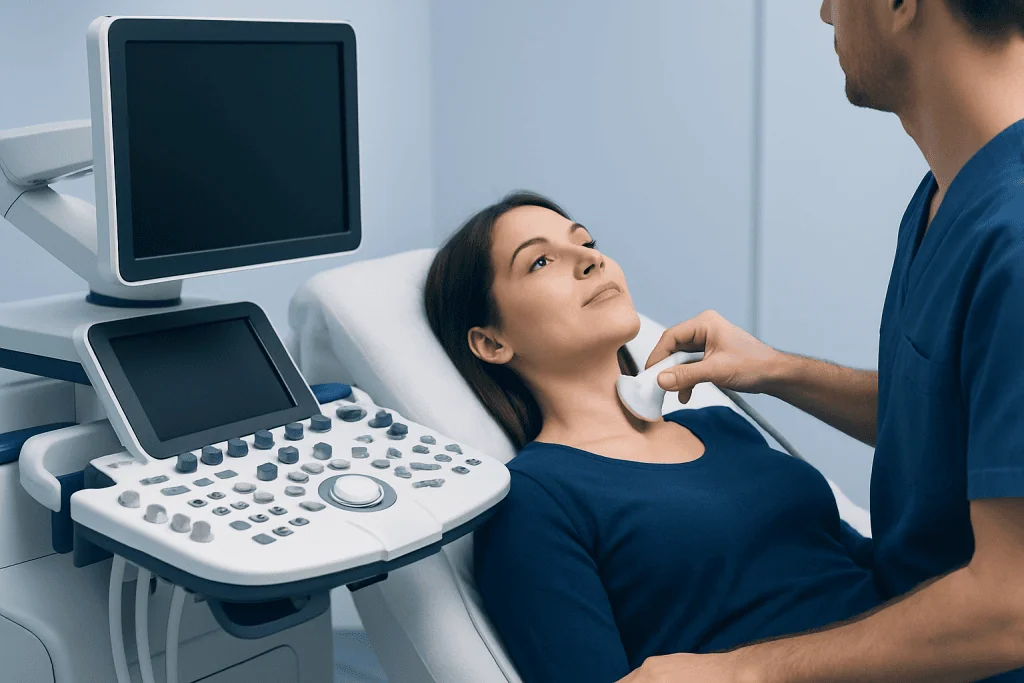
Thyroid ultrasound is the most important imaging test for evaluating a thyroid nodule. It shows the exact size, location, and internal structure of the nodule in real time and can also assess nearby lymph nodes. Ultrasound is painless, does not use ionizing radiation, and helps doctors decide whether a nodule looks low risk or whether it has features that need closer attention.
Radiologists and endocrinologists look at several ultrasound characteristics. These include whether the nodule is solid or cystic, brighter or darker than the surrounding thyroid, wider than tall or taller than wide, and whether it has smooth or irregular margins. Tiny calcium deposits and abnormal lymph nodes may also increase concern. These findings are commonly organized into risk-based systems that help determine whether fine needle aspiration is appropriate.
Not every nodule seen on ultrasound needs biopsy. For example, very small nodules without concerning features often only need monitoring. Purely cystic nodules are usually benign. On the other hand, a solid hypoechoic nodule with irregular borders or microcalcifications may be more likely to need tissue sampling. If thyroid function tests suggest the gland is overactive, doctors may also consider additional evaluation such as a thyroid scan to see whether the nodule is functioning autonomously.
Ultrasound is also useful after the first evaluation. It can track changes in size over time, help guide aspiration of cyst fluid when needed, and support image-guided fine needle aspiration biopsy for greater accuracy.
When a Biopsy Is Needed and What the Results Mean
The most common biopsy for a thyroid nodule is fine needle aspiration, often called FNA. During this procedure, a thin needle is used to collect cells from the nodule, usually with ultrasound guidance. It is typically done in an outpatient setting and does not require major preparation. Many people tolerate it well with only mild discomfort.
Doctors recommend FNA based mainly on the nodule’s ultrasound appearance and size rather than size alone. A suspicious-looking nodule may be biopsied even if it is relatively small, while a larger but clearly low-risk nodule may simply be followed. This selective approach helps avoid unnecessary procedures while still identifying nodules that need closer evaluation.
Biopsy results often fall into a few broad categories: benign, malignant, suspicious for malignancy, indeterminate, or nondiagnostic. A benign result usually means surveillance with periodic ultrasound. A malignant or strongly suspicious result generally leads to treatment planning, often involving thyroid surgery. An indeterminate result does not automatically mean cancer; depending on the case, the next step may be repeat biopsy, molecular testing if available, or surgery. If the sample is nondiagnostic, repeating the biopsy may be advised.
Patients often find waiting for results stressful, but it helps to remember that many biopsied nodules are still benign. The purpose of biopsy is to clarify risk so that the next step is based on the best available evidence.
Treatment Options and Follow-Up
Treatment depends on the nature of the nodule, whether it affects thyroid hormone production, and whether it causes symptoms. Benign nodules that are small and not bothersome often do not need immediate treatment. Instead, doctors may recommend watchful follow-up with repeat ultrasound at intervals based on the nodule’s features and stability.
If a nodule is causing pressure symptoms, cosmetic concerns, or repeated fluid build-up, treatment may be considered even when it is benign. For overactive nodules, management may include medication to control symptoms, radioactive iodine in selected cases, or surgery. If the evaluation suggests thyroid cancer, care is tailored to the type, size, spread, and overall health of the patient.
Surgery may involve removal of part of the thyroid or the entire gland, depending on the diagnosis and extent of disease. In some patients, minimally invasive or targeted approaches may be appropriate, but the decision is individualized. Treatment planning may also involve endocrinology evaluation to assess hormone levels and long-term thyroid function.
After treatment or during surveillance, follow-up remains important. Doctors may repeat ultrasound, review symptoms, and check blood tests such as TSH. This helps identify any meaningful change early while avoiding more intervention than necessary. Near the end of the care pathway, some patients may also seek multidisciplinary assessment; Acibadem International’s specialists in JCI-accredited hospitals diagnose and treat thyroid nodules for international patients.
Prevention, Self-Care, and Living With a Thyroid Nodule
There is no guaranteed way to prevent thyroid nodules, but general thyroid health and regular medical care can support early detection and appropriate management. People should avoid unnecessary radiation exposure when possible and discuss any history of radiation treatment or family history of thyroid cancer with their doctor. Adequate iodine intake is important for thyroid function, though supplementation should only be taken when medically appropriate.
Living with a thyroid nodule often means balancing reassurance with regular monitoring. Keeping follow-up appointments matters because growth or changes in ultrasound appearance can influence the next step. Most nodules remain stable or benign, so observation is often a safe and sensible part of care.
Patients can help themselves by noting any new symptoms, such as increasing neck fullness, changes in voice, swallowing difficulty, or symptoms of thyroid hormone imbalance. It is also useful to keep a record of ultrasound reports, biopsy results, and blood test findings, especially when seeing different specialists over time.
When to See a Doctor
A doctor should evaluate any new or persistent lump in the front of the neck. Medical review is also important if there is unexplained hoarseness, trouble swallowing, shortness of breath when lying flat, neck discomfort, or a rapidly enlarging mass. These symptoms do not necessarily mean cancer, but they do need prompt assessment.
People with a family history of thyroid cancer, a personal history of head or neck radiation, or abnormal thyroid blood tests should be especially careful about follow-up. Children, pregnant patients, and people with known thyroid disease may also need individualized evaluation and monitoring.
In general, the right next step after finding a thyroid nodule is not to panic but to arrange a structured assessment. Ultrasound and, when appropriate, biopsy provide clear information that helps doctors recommend the safest and most suitable plan.
Frequently asked questions
Are most thyroid nodules cancerous?
No. Most thyroid nodules are benign, meaning they are not cancer. Doctors still evaluate them carefully because a small percentage can be malignant, and the goal is to identify which nodules need closer attention.
What does a thyroid ultrasound show?
A thyroid ultrasound shows the nodule’s size, shape, structure, and exact location in the gland. It also helps identify features that suggest lower or higher risk and can examine nearby lymph nodes.
Does every thyroid nodule need a biopsy?
No. Biopsy is usually recommended only for nodules that meet certain size and ultrasound criteria. Many small or clearly low-risk nodules can be monitored safely with follow-up ultrasound instead.
Is a fine needle aspiration biopsy painful?
Most people describe fine needle aspiration as mildly uncomfortable rather than painful. The procedure is usually quick, done without major anesthesia, and normal activities can often be resumed soon afterward.
Can a benign thyroid nodule become cancer later?
A benign biopsy result is reassuring, but follow-up may still be needed because nodules can grow or because a sample may occasionally need confirmation. Monitoring helps doctors decide whether the nodule remains stable or needs repeat evaluation.
What happens if the biopsy result is indeterminate?
An indeterminate result means the cells do not clearly show whether the nodule is benign or malignant. Depending on the situation, the doctor may recommend repeat biopsy, additional testing, closer surveillance, or surgery.
Can thyroid nodules affect thyroid hormone levels?
Yes, some nodules can produce excess thyroid hormone and lead to symptoms of hyperthyroidism. However, many nodules do not change hormone levels at all, which is why blood tests are part of the evaluation.
References
- American Thyroid Association
- National Institute of Diabetes and Digestive and Kidney Diseases
- National Cancer Institute
- American College of Radiology
- Endocrine Society
This article is for general information only and is not a substitute for professional medical advice. Please consult a qualified doctor about your individual situation.
Ultrasound in Turkey — costs, top hospitals & a free quote
JCI-accredited · board-certified surgeons · reply within 24h
Add us as a Preferred Source to see more of our trusted health content across Google Search, AI Overviews and Discover.

Check-up & Preventive Medicine
Comprehensive health screenings designed for early detection and prevention.
3 specialists in this unit