

Lung Cancer Diagnosis: Tests Used and What the Results Mean
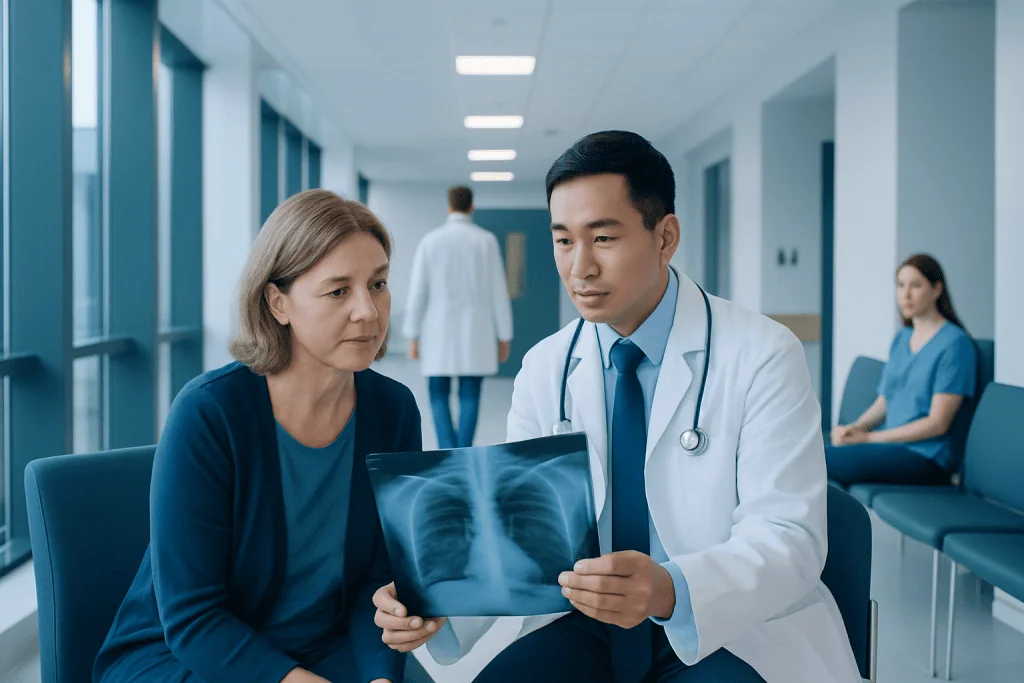
Lung cancer diagnosis often starts with imaging, such as chest X-ray or CT scan, but a biopsy is usually needed to confirm cancer. Test results help doctors determine whether a lung abnormality is cancer, what type it is, and whether it has spread.
Key Takeaways
- Lung cancer diagnosis often starts with imaging, such as chest X-ray or CT scan, but a biopsy is usually needed to confirm cancer.
- Test results help doctors determine whether a lung abnormality is cancer, what type it is, and whether it has spread.
- Staging tests guide treatment planning and may include PET-CT, MRI, and sampling of lymph nodes.
- Not every patient needs every test; the diagnostic plan depends on symptoms, scan findings, and general health.
- Asking for clear explanations of pathology and staging results can make the process easier to understand.
Lung cancer diagnosis usually involves a step-by-step process that combines imaging tests, tissue sampling, and staging studies. Understanding what each test looks for can help patients feel more prepared and informed as treatment decisions are made.
Overview of lung cancer diagnosis
Lung cancer diagnosis is the process doctors use to find out whether a spot, mass, or other lung abnormality is cancer. It usually begins when symptoms develop, when a chest scan shows an unexpected finding, or when screening detects a suspicious nodule. The goal is not only to confirm whether cancer is present, but also to learn exactly what kind it is and how far it may have spread.
In most cases, diagnosis happens in stages. Imaging tests can show where an abnormal area is located and whether it looks concerning. However, imaging alone often cannot confirm cancer with certainty. A tissue sample, called a biopsy, is commonly needed so a pathologist can examine the cells under a microscope.
After cancer is confirmed, doctors perform additional tests to determine the stage. Staging describes the size of the cancer and whether it has spread to lymph nodes or other parts of the body. This information is essential because treatment options for lung cancer depend heavily on the cancer type and stage.
Common signs that lead to testing
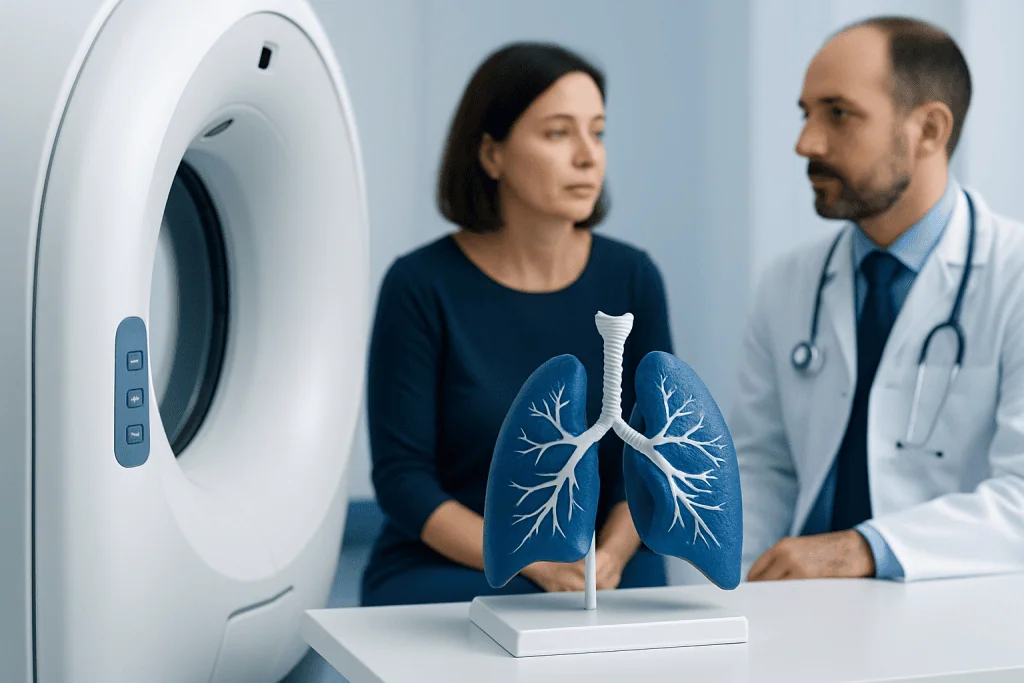
Some people are evaluated because of symptoms, while others are diagnosed after imaging for another reason. Common symptoms that may prompt testing include a persistent cough, coughing up blood, shortness of breath, chest pain, unexplained weight loss, repeated chest infections, or unusual fatigue. These symptoms can also occur with non-cancerous conditions, so further evaluation is important.
In other cases, a lung nodule or shadow is found during a chest X-ray or CT scan done for another medical concern. A screening low-dose CT scan may also identify small lung nodules before symptoms appear. Finding a nodule does not automatically mean cancer. Many nodules are caused by old infections, inflammation, or other benign conditions.
Doctors consider several factors when deciding what tests are needed next. These include the patient’s age, smoking history, exposure to harmful substances, personal or family medical history, symptoms, and the size and appearance of the abnormality on imaging. The next step may be close monitoring, more detailed imaging, or a biopsy.
Imaging tests used to look for lung cancer
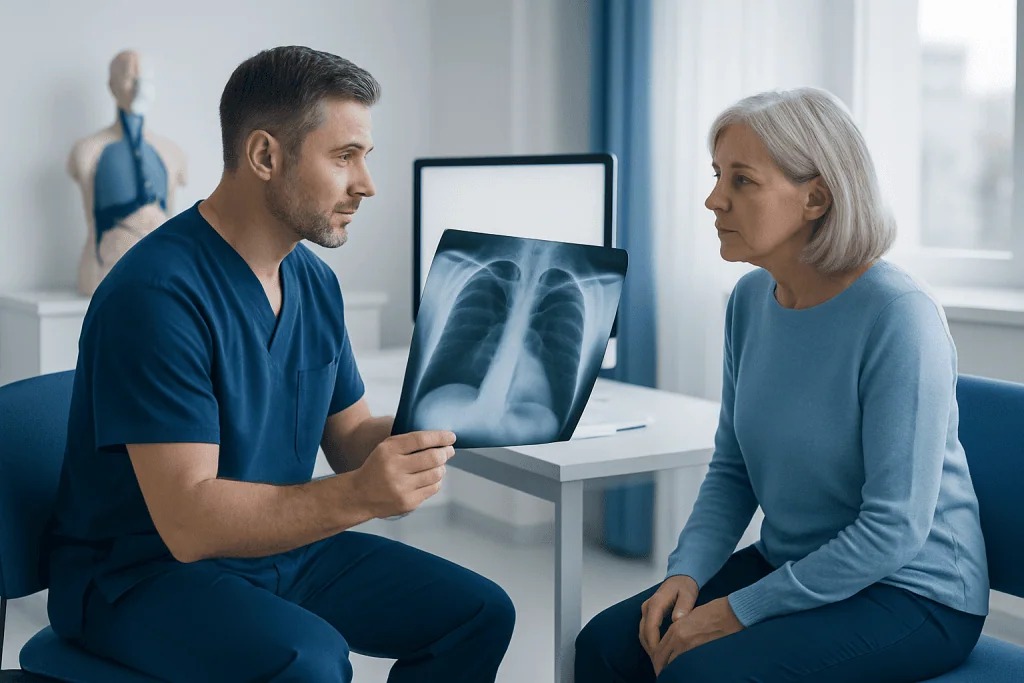
Imaging tests are often the first step in lung cancer diagnosis. A chest X-ray may show a mass, fluid around the lung, or other abnormalities, but it can miss small cancers. A CT scan provides more detailed images and is one of the most important tools for evaluating suspicious lung findings. It helps doctors assess the size, shape, and location of a lung nodule or tumor and can also show enlarged lymph nodes.
A PET-CT scan may be used when cancer is suspected or already confirmed. This test helps show areas of increased metabolic activity, which can suggest cancer in the lung, lymph nodes, or other organs. PET-CT is especially useful for staging because it helps identify whether disease may have spread beyond the lung.
MRI is not always required for initial diagnosis, but it may be used in certain situations, especially if doctors need to check whether cancer has spread to the brain or nearby structures. Some patients may also have ultrasound-guided imaging during procedures that sample lymph nodes or fluid. If a suspicious lesion is being evaluated in detail, doctors may recommend advanced PET-CT imaging or other targeted scans to support accurate staging and planning.
Biopsy and other tests that confirm the diagnosis
A biopsy is the key test that confirms lung cancer. During a biopsy, doctors take a small sample of tissue or cells from the abnormal area so it can be examined in the laboratory. The biopsy method depends on where the lesion is located, its size, and whether nearby lymph nodes also need to be sampled.
Bronchoscopy is commonly used when the abnormal area is in or near the larger airways. A thin, flexible tube with a camera is passed through the nose or mouth into the lungs. Doctors may collect tissue samples during the procedure, sometimes with the help of ultrasound guidance to reach lymph nodes. In some settings, patients may undergo bronchoscopy as part of the diagnostic work-up.
If the suspicious area is near the outer part of the lung, a needle biopsy may be performed through the chest wall using CT or ultrasound guidance. When fluid collects around the lungs, thoracentesis may be used to remove and test that fluid. In some cases, a surgical biopsy is the best option, especially if less invasive methods do not provide enough tissue. Procedures such as lung biopsy can help clarify whether a lesion is cancer and provide material for detailed pathology testing.
Laboratory analysis of the biopsy does more than simply label a sample as cancer or non-cancer. It identifies the exact cancer type, such as non-small cell lung cancer or small cell lung cancer. Additional molecular or biomarker tests may also be performed on the tissue to look for genetic changes or protein markers that can help guide treatment choices.
What the results mean: type, stage, and biomarkers
Once the pathology report is available, doctors explain several key findings. First, the report states whether cancer cells are present. If cancer is confirmed, the report usually identifies the main type. The two broad categories are non-small cell lung cancer and small cell lung cancer, and each has different treatment approaches. Non-small cell lung cancer may be further classified into subtypes such as adenocarcinoma or squamous cell carcinoma.
The next important step is staging. Staging describes how advanced the cancer is. Doctors look at the size of the primary tumor, whether lymph nodes are involved, and whether cancer has spread to distant organs. This is often summarized using the TNM system, which stands for tumor, nodes, and metastasis. Early-stage disease may be limited to the lung, while more advanced stages involve lymph nodes or spread elsewhere in the body.
Biomarker or molecular test results can also be very important, especially for non-small cell lung cancer. These tests may look for changes in genes or proteins that can help doctors decide whether targeted therapy or immunotherapy is likely to be helpful. Results do not always change the diagnosis itself, but they often play a major role in treatment planning and can make care more personalized.
Additional tests for staging and overall health
After lung cancer is confirmed, doctors may recommend more tests to understand the full extent of disease and to assess whether the patient is fit for certain treatments. Common staging tests include PET-CT, brain MRI, and procedures that sample lymph nodes in the chest. This may include endobronchial ultrasound-guided sampling during bronchoscopy or other minimally invasive approaches.
Blood tests are usually part of the evaluation as well. While blood tests alone cannot diagnose lung cancer, they can provide useful information about general health, kidney and liver function, blood counts, and readiness for surgery, chemotherapy, radiation, or other therapies. Pulmonary function tests may also be performed to measure how well the lungs are working, especially if surgery is being considered.
Sometimes doctors need to rule out other conditions that can resemble lung cancer on imaging, such as infections, inflammatory disease, or spread from another cancer. This is why the diagnostic process can take time and may involve several specialists, including pulmonologists, radiologists, pathologists, thoracic surgeons, and oncologists. A multidisciplinary review helps ensure that the diagnosis is as accurate as possible.
How diagnosis guides treatment decisions
Each test result contributes to an overall treatment plan. For example, a small tumor that has not spread may be treated very differently from cancer that involves lymph nodes or distant organs. Surgery may be an option for some early-stage cancers, while radiation therapy, systemic therapy, or a combination of treatments may be more appropriate in other cases.
The cancer type also matters. Small cell lung cancer and non-small cell lung cancer are treated in different ways, and within non-small cell lung cancer, biomarker results may open the door to targeted therapy or immunotherapy. This is why obtaining enough high-quality tissue during biopsy is so important. In selected situations, doctors may discuss procedures such as lung cancer surgery if the disease appears operable and the patient is a suitable candidate.
Patients often find it helpful to ask their doctor a few key questions: What type of lung cancer is it? What stage is it? Has it spread to lymph nodes or other organs? Were biomarker tests performed? What treatment options are recommended and why? Clear answers can make the process feel more manageable and help patients participate confidently in decision-making.
When to see a doctor and getting support
Anyone with symptoms such as a persistent cough, coughing up blood, unexplained weight loss, chest pain, or ongoing shortness of breath should seek medical evaluation. It is also important to follow up promptly if a chest scan shows a lung nodule or other suspicious abnormality. Early assessment does not always mean cancer is present, but it does allow appropriate testing and timely reassurance or treatment.
Waiting for results can be stressful, and it is normal to feel uncertain during the diagnostic process. Many people find it useful to bring a family member or friend to appointments, write down questions in advance, and ask for copies of pathology and imaging reports. If anything is unclear, patients should feel comfortable asking their care team to explain it in plain language.
Specialist centers can help coordinate imaging, biopsy, pathology review, and staging in an organized way. Acibadem International’s multidisciplinary specialists and JCI-accredited hospitals diagnose and treat lung conditions and cancers for international patients. No matter where care is received, timely follow-up with a qualified medical team is the best way to move from testing to a clear treatment plan.
Frequently asked questions
Can a CT scan alone diagnose lung cancer?
A CT scan can show a suspicious lung nodule or mass, but it usually cannot confirm cancer by itself. In most cases, a biopsy is needed to examine tissue and make a definite diagnosis.
What is the most important test for confirming lung cancer?
The most important confirmatory test is a biopsy. This allows a pathologist to identify whether cancer cells are present and determine the exact type of lung cancer.
Why might more tests be needed after the biopsy?
Once cancer is confirmed, doctors often order staging tests to see whether it has spread to lymph nodes or other organs. Additional tests may also check lung function, general health, and biomarkers that can guide treatment.
What does staging mean in lung cancer?
Staging describes how large the cancer is and how far it has spread. It helps doctors choose the most appropriate treatment and gives patients a clearer picture of the condition.
Are all lung nodules cancer?
No, many lung nodules are not cancer. Some are caused by old infections, inflammation, scarring, or other benign conditions, which is why careful evaluation is important.
How long does it take to get lung biopsy results?
The exact timing varies by hospital and by the type of testing needed. Basic pathology results may come sooner, while biomarker or molecular testing can take longer because it requires more detailed laboratory analysis.
References
- World Health Organization
- National Cancer Institute
- American Cancer Society
- National Comprehensive Cancer Network
- American Lung Association
This article is for general information only and is not a substitute for professional medical advice. Please consult a qualified doctor about your individual situation.
Lung Cancer in Turkey — costs, top hospitals & a free quote
JCI-accredited · board-certified surgeons · reply within 24h
Add us as a Preferred Source to see more of our trusted health content across Google Search, AI Overviews and Discover.

Medical Oncology Department
Medical treatment of cancer with chemotherapy, immunotherapy and targeted therapies under a multidisciplinary tumor board.
60 specialists in this unitMore from the Health Library



Related Specialists

Dr. Salim Sırrı Türker
Orthopedic Surgery & Traumatology
Prof. Dr. Cengiz Canpolat
Pediatrics & Pediatric Oncology
Dr. Utku Alemdaroğlu
Cardiovascular Surgery
Dr. Aslı Saran İkizler
Radiation Oncology