Endovascular Surgery for Aortic Disease: How It Works and Who May Benefit

Endovascular surgery repairs some aortic conditions through small groin incisions rather than a large open chest or abdominal operation. A fabric-covered metal tube called a stent graft is guided into the aorta to reinforce the weakened or damaged area.
Key Takeaways
- Endovascular surgery repairs some aortic conditions through small groin incisions rather than a large open chest or abdominal operation.
- A fabric-covered metal tube called a stent graft is guided into the aorta to reinforce the weakened or damaged area.
- Not every patient is a candidate; the decision depends on the type of aortic disease, the shape and size of the aorta, and other health factors.
- Imaging tests such as CT angiography are essential for diagnosis, planning, and follow-up.
- After treatment, long-term monitoring is important because the aorta can change over time.
Endovascular surgery for aortic disease is a minimally invasive way to treat certain problems of the body’s main artery, the aorta, from inside the blood vessel. It may be an option for some aneurysms, dissections, or traumatic injuries, depending on the exact location, anatomy, and overall health of the patient.
Overview: What Endovascular Surgery for Aortic Disease Means
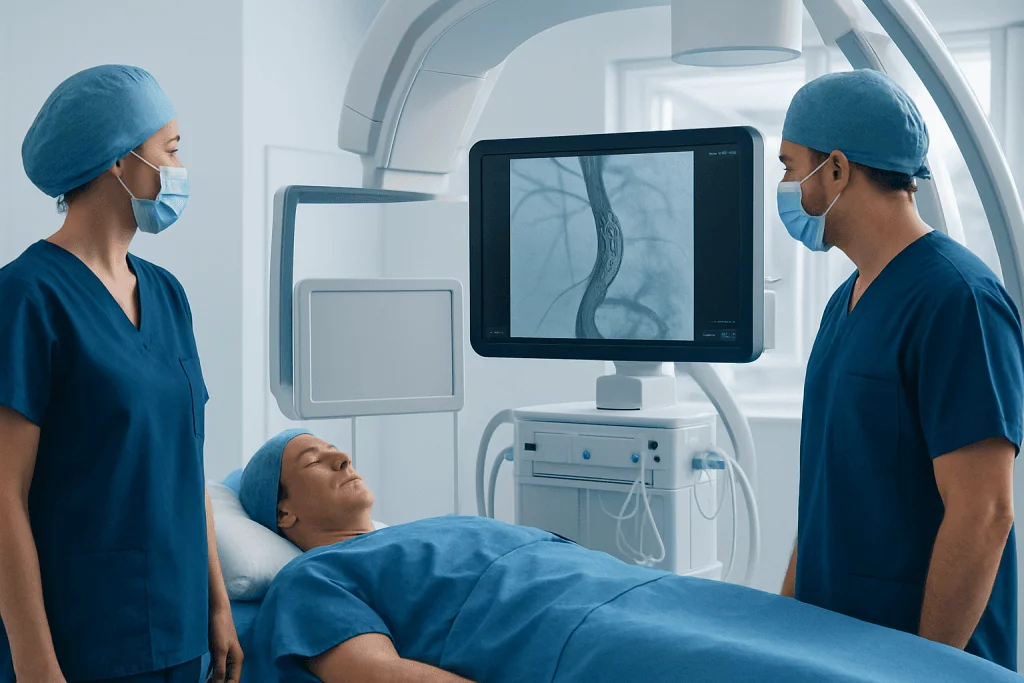
Endovascular surgery for aortic disease is a procedure used to treat certain conditions affecting the aorta, the large artery that carries blood from the heart to the rest of the body. Instead of opening the chest or abdomen through a large incision, the surgeon usually reaches the aorta through blood vessels in the groin. Special instruments and a stent graft are then guided into place using live imaging.
The stent graft acts like an internal support. It helps create a new channel for blood flow and reduces pressure on the weak or injured section of the aortic wall. This approach is commonly used for selected aortic aneurysms, some aortic dissections, and certain traumatic aortic injuries. It is often discussed alongside endovascular surgery as a broader treatment approach for vascular conditions.
Because it is less invasive than traditional open surgery, endovascular repair may mean less blood loss, a shorter hospital stay, and a faster early recovery for suitable patients. However, it is not automatically the best choice for everyone. Careful imaging, planning, and follow-up are essential to help achieve a safe and durable result.
Which Aortic Conditions May Be Treated This Way
The aorta can develop problems in different areas, including the chest and abdomen. One of the most common reasons for treatment is an aortic aneurysm, which is an abnormal widening or bulging of the artery wall. When an aneurysm grows, it may become more likely to rupture, which is why close monitoring and timely treatment matter. In selected cases, a patient with aortic regurgitation may also have related aortic root or ascending aorta disease, although not all of those problems are treated endovascularly.
Endovascular techniques are widely used for many abdominal aortic aneurysms and for suitable aneurysms in the thoracic aorta. This may be described as EVAR for the abdominal aorta or TEVAR for the thoracic aorta. Patients seeking information about aortic aneurysm treatment often learn that the exact repair method depends on aneurysm size, location, and shape.
Some forms of aortic dissection may also be treated with endovascular repair. A dissection happens when a tear develops in the inner layer of the aorta, allowing blood to flow between the layers of the wall. In certain cases, especially involving the descending thoracic aorta, a stent graft can help seal the tear and redirect blood flow. Endovascular treatment may also be used after traumatic injury to the aorta or to manage specific complications after previous aortic surgery.
How the Procedure Works
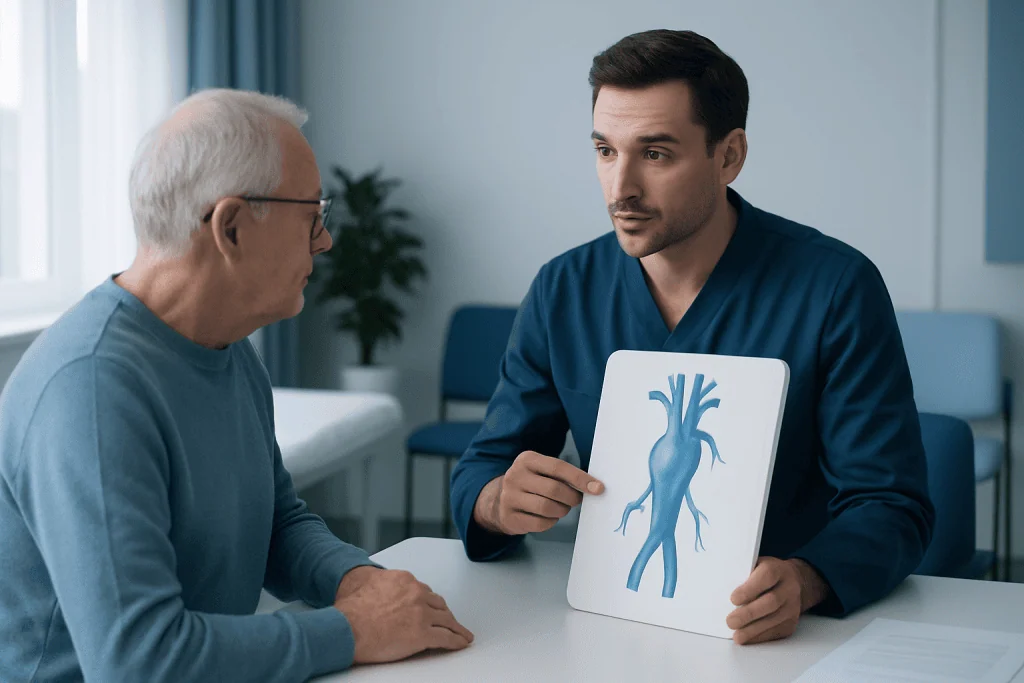
Before the procedure, the medical team carefully studies the aorta using detailed imaging, most often CT angiography. These images help the team measure the aorta, choose the correct size of stent graft, and decide whether the blood vessel anatomy is suitable. Planning is a major part of safety because the graft must fit securely above and below the diseased area.
During the procedure, the patient is given anesthesia, and the surgeon accesses an artery, usually in the groin. Through this artery, thin tubes called catheters and guidewires are advanced to the diseased segment of the aorta. A compressed stent graft is then delivered through the catheter and opened in the correct position. Once expanded, it lines the inside of the aorta and helps divert blood away from the weak or torn section.
In many cases, imaging dye and X-ray guidance are used throughout the procedure to confirm placement. Sometimes additional steps are needed, such as placing more than one graft component or protecting nearby branches that supply vital organs. The final goal is a secure seal with good blood flow to the rest of the body.
Although the technique avoids a large incision, it is still a major vascular intervention that requires expert planning and experienced teams. Some patients are also evaluated with echocardiography or other heart tests beforehand, especially if they have other cardiovascular conditions such as coronary artery disease.
Who May Benefit and Who May Not
Patients may benefit from endovascular repair when their aortic condition meets treatment criteria and their anatomy is suitable for a stent graft. This can include people with aneurysms above a certain size, aneurysms that are growing, symptomatic aneurysms, selected dissections, or specific traumatic injuries. It may be especially helpful for older adults or for patients who have higher risks with open surgery because of other medical problems.
However, not all parts of the aorta are equally suited to endovascular treatment. The graft needs healthy sections of artery, often called landing zones, where it can attach securely. If the aorta is too twisted, too short, too wide in key areas, or involves important branch vessels in a complex way, open surgery or a hybrid approach may be more appropriate.
Other factors also affect eligibility. Kidney function, contrast dye tolerance, circulation in the leg arteries, lung health, and the presence of infection all matter. Patients with uncontrolled hypertension or other cardiovascular risks need careful assessment and medical optimization before and after the procedure.
The decision is usually made by a multidisciplinary team that may include cardiovascular surgeons, interventional specialists, imaging experts, anesthesiologists, and cardiologists. In some cases, traditional cardiothoracic surgery remains the most durable or safest option, particularly for complex disease involving the ascending aorta or aortic arch.
Benefits, Risks, and Possible Complications
For the right patient, endovascular repair can offer meaningful advantages. Compared with open surgery, it often involves smaller incisions, less postoperative pain, a shorter stay in the hospital, and a faster return to daily activities. Because the chest or abdomen usually does not need to be opened widely, the early recovery period may be easier for many patients.
At the same time, endovascular procedures carry risks, and patients should understand them clearly. Possible complications include bleeding, infection, blood vessel injury, kidney strain from contrast dye, allergic reaction to contrast material, stroke, heart complications, and problems related to anesthesia. There is also a risk that the graft may not fully seal the diseased area.
A specific concern after aneurysm repair is an endoleak, which means blood continues to flow into the aneurysm sac outside the graft. Some endoleaks simply need monitoring, while others require another procedure. Additional concerns can include graft movement, blockage of branch vessels, limb ischemia, or, rarely, spinal cord ischemia in certain thoracic repairs.
These risks are balanced against the danger of leaving the aortic disease untreated. The treating team explains which option offers the best overall risk-benefit profile for the individual patient. Shared decision-making is important, and patients should feel comfortable asking why one approach is recommended over another.
Diagnosis, Preparation, and Recovery
Diagnosis starts with understanding the aortic condition itself. Many aneurysms are found incidentally during imaging for another reason, while others are discovered after symptoms such as chest, back, or abdominal pain. CT angiography is often the main test because it shows the shape of the aorta and nearby branches in detail. Ultrasound, MRI, blood tests, and heart evaluations may also be used.
Before treatment, the team reviews medications, allergies, kidney function, and other health conditions. Patients may be advised about fasting, adjusting certain medicines, and stopping smoking. Blood pressure control is very important because it reduces stress on the aortic wall. In some cases, a patient may also benefit from non-invasive cardiology evaluation before the procedure.
After endovascular repair, patients are monitored closely in the hospital. The team checks circulation in the legs, kidney function, blood pressure, and the puncture sites in the groin. Many people begin walking relatively soon, depending on their recovery and the complexity of the procedure.
Going home does not mean treatment is finished. Follow-up imaging is a key part of care because the stent graft and the aorta need ongoing review. Over time, some patients need medication adjustments, lifestyle changes, or additional procedures. Rehabilitation and risk-factor management can support recovery, and some patients benefit from supervised cardiac rehabilitation after major cardiovascular treatment.
Long-Term Care, Prevention, and When to Seek Medical Help
Long-term care focuses on protecting the aorta and reducing overall cardiovascular risk. This usually includes careful blood pressure control, not smoking, staying physically active within the doctor’s advice, eating a heart-healthy diet, and taking prescribed medicines consistently. These steps cannot reverse every aortic condition, but they can help lower stress on the blood vessels and support general heart health.
Patients should keep all follow-up appointments even if they feel well. Aortic disease can change silently, and imaging is often the only way to confirm that the repair remains stable. People with a family history of aneurysm or connective tissue disorders may need screening and specialist advice for relatives as well.
Urgent medical attention is needed for sudden severe chest, back, or abdominal pain, fainting, signs of stroke, new leg weakness, cold or painful limbs, shortness of breath, or heavy bleeding from an access site. These symptoms do not always mean a serious complication, but they should never be ignored.
For international patients needing evaluation, Acibadem International’s multidisciplinary specialists and JCI-accredited hospitals diagnose and treat aortic disease, including endovascular approaches, with individualized planning. The most appropriate care plan depends on the type of aortic disease, imaging findings, and the patient’s overall health.
Frequently asked questions
Is endovascular surgery the same as open aortic surgery?
No. Endovascular surgery is performed from inside the blood vessel, usually through small groin incisions, while open surgery requires a larger incision to directly reach the aorta. Both methods can be effective, but the best choice depends on the location and complexity of the aortic disease.
How long does recovery usually take after endovascular aortic repair?
Recovery is often faster than with open surgery, but it still varies from person to person. Many patients spend a shorter time in the hospital and return to light daily activities sooner, although full recovery and follow-up planning still take time.
Will a patient need follow-up scans after the procedure?
Yes. Regular imaging is a standard part of care after endovascular aortic repair. These scans help doctors check the position of the stent graft, make sure there is no endoleak, and monitor the aorta over time.
Can endovascular surgery treat every type of aortic aneurysm?
No. Some aneurysms are well suited to endovascular repair, while others require open surgery or a hybrid approach. The decision depends on the aneurysm’s size, shape, location, and how close it is to important branch vessels.
Is the procedure appropriate for older adults?
It can be, and in some cases it is especially useful for older adults who may face higher risks with open surgery. However, age alone does not determine treatment. Overall health, anatomy, kidney function, and other medical conditions are also important.
What symptoms of aortic disease should prompt urgent evaluation?
Sudden severe chest, back, or abdominal pain should always be assessed urgently, especially if it is intense or unusual. Fainting, weakness, stroke-like symptoms, shortness of breath, or signs of poor blood flow to the legs also require immediate medical attention.
This article is for general information only and is not a substitute for professional medical advice. Please consult a qualified doctor about your individual situation.
Endovascular Surgery in Turkey — costs, top hospitals & a free quote
JCI-accredited · board-certified surgeons · reply within 24h
Add us as a Preferred Source to see more of our trusted health content across Google Search, AI Overviews and Discover.

Cardiology Department
Diagnosis and treatment of heart and vascular conditions, from prevention to advanced interventional procedures.
93 specialists in this unitRelated Treatments
Related Conditions
More from the Health Library

Blood Sugar Control After CABG: Healing, Infection Risk, and Recovery

Heart Attack: Symptoms, Emergency Treatment, and Recovery

No-Touch Vein Harvesting in CABG: Potential Benefits and Limitations

Anemia Before Heart Bypass Surgery: Testing, Transfusion Risk, and Optimization

Redo Coronary Bypass Surgery: When a Second Operation Is Considered