Choosing a Hospital for Brain Aneurysm Treatment: Questions to Ask

Hospitals with dedicated neurovascular teams are often better prepared to evaluate and treat brain aneurysms. It helps to ask whether both surgical clipping and endovascular treatment are available.
Key Takeaways
- Hospitals with dedicated neurovascular teams are often better prepared to evaluate and treat brain aneurysms.
- It helps to ask whether both surgical clipping and endovascular treatment are available.
- Emergency access, advanced imaging, and intensive care support are important for ruptured aneurysms.
- Clear communication about risks, recovery, and follow-up imaging supports safer decision-making.
- International patients may also need help with travel planning, records review, and coordinated aftercare.
Choosing a hospital for brain aneurysm treatment involves more than location alone. Patients and families often feel more confident when they know what questions to ask about expertise, emergency readiness, treatment options, and follow-up care.
Overview: Why hospital choice matters
A brain aneurysm is a weak area in the wall of a brain artery that can bulge outward. Some aneurysms are found before they cause symptoms, while others become a medical emergency if they rupture and bleed. Because treatment can be highly specialized, choosing a hospital for brain aneurysm treatment is an important part of care.
The right hospital is not simply one that offers neurosurgery. Brain aneurysm care often involves a coordinated team that may include neurosurgeons, interventional neuroradiologists, neurologists, neuroanesthesiologists, critical care specialists, and rehabilitation professionals. This team-based approach can help with diagnosis, treatment planning, urgent intervention, and recovery support.
Patients may be choosing care for an unruptured aneurysm found on imaging, or they may be planning ahead after a family history raises concern. In other cases, a ruptured aneurysm requires urgent transfer to a center with advanced neurovascular care. The questions asked at the start can help patients and loved ones understand whether a hospital is equipped for both routine and complex situations.
What services should the hospital offer?
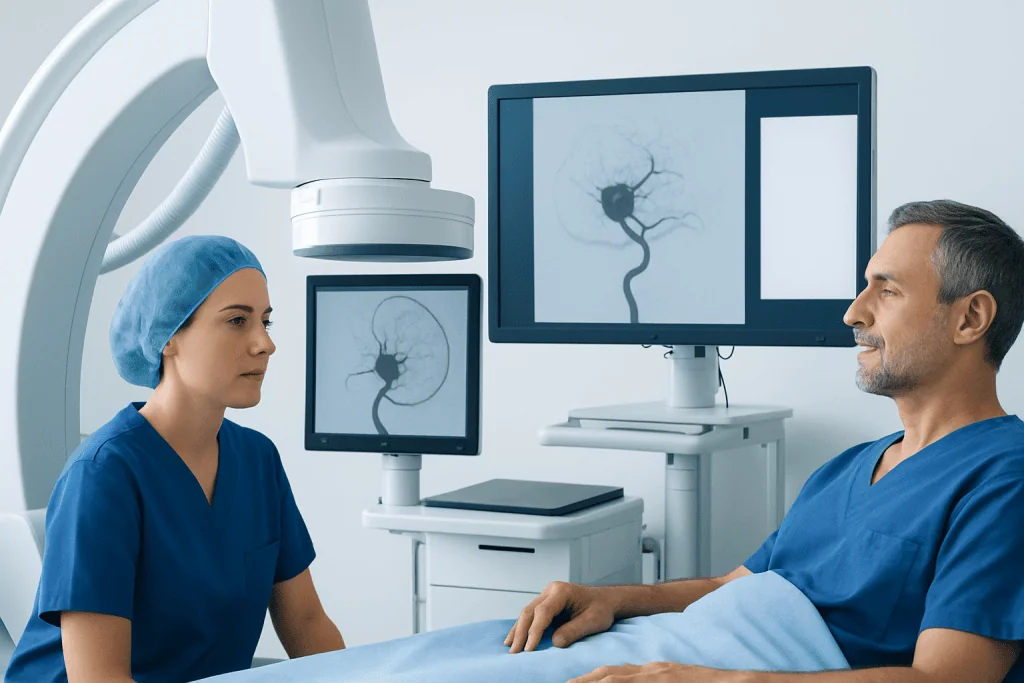
A strong brain aneurysm program usually provides rapid diagnosis, around-the-clock emergency care, advanced imaging, and more than one treatment approach. This matters because aneurysms differ in size, shape, location, and rupture risk. A hospital should be able to evaluate the individual case rather than rely on a single routine plan.
It is reasonable to ask whether the hospital treats both unruptured and ruptured aneurysms, and whether specialists are available 24 hours a day. For emergencies, time-sensitive access to operating rooms, angiography suites, and neuro-intensive care can be especially important.
Useful questions include:
- Does the hospital have a dedicated neurovascular or cerebrovascular team?
- Are emergency aneurysm cases treated at any time, including nights and weekends?
- What imaging is available, such as CT, MRI, cerebral angiography, or vascular imaging?
- Is there a neuro-intensive care unit for close monitoring after treatment?
- Are rehabilitation, speech therapy, and follow-up neurological services available if needed?
Hospitals that can offer a full pathway from diagnosis to recovery may provide a smoother and safer experience, especially when complications or unexpected findings arise.
Questions to ask about the specialist team

Experience and teamwork are key factors when choosing a hospital for brain aneurysm treatment. Patients often benefit from a center where aneurysm cases are regularly reviewed by specialists from different fields. This can be especially helpful when deciding between monitoring and active treatment.
It may help to ask who will actually manage the case. Some hospitals have a primary neurosurgeon, while others use a team model with input from interventional neuroradiology and neurology. Knowing who performs the procedure, who explains the risks, and who manages recovery can make the process feel clearer.
Questions families often ask include:
- How often does the team evaluate and treat brain aneurysms?
- Will more than one specialist review the case?
- Who would perform the procedure, and what is their role?
- How does the team decide between observation, clipping, or endovascular treatment?
- Who will oversee post-treatment recovery and follow-up imaging?
Patients may also want to ask whether the hospital manages related neurovascular conditions, such as brain aneurysm and arteriovenous malformation. Programs familiar with complex blood vessel disorders in the brain often have systems in place for detailed planning and close monitoring.
Understanding treatment options and hospital capabilities
Not every aneurysm is treated the same way. Some small, unruptured aneurysms may be monitored with regular imaging and risk-factor management. Others may need treatment to reduce the chance of rupture. A hospital should be able to explain why one approach is recommended for a particular aneurysm.
In general, treatment may include open surgical clipping or minimally invasive endovascular techniques performed through blood vessels. For some patients, hospitals may offer aneurysm surgery or endovascular treatment, depending on the aneurysm’s shape and location. The best centers can explain the benefits, limitations, and expected recovery for each option in clear language.
It is helpful to ask:
- Which treatments are available at this hospital?
- Is the recommendation based on the aneurysm’s size, shape, and location?
- What are the possible benefits and risks of each option?
- If the first treatment plan is not possible, what backup options are available?
- How long is the expected hospital stay and recovery period?
A balanced conversation should include both the reason for treatment and the reason some aneurysms may be observed instead. Patients should feel comfortable asking for a clear explanation of why the proposed plan fits their own medical situation.
Emergency readiness, safety, and intensive care support
A ruptured brain aneurysm is a medical emergency. If a hospital is being considered for possible urgent treatment, families may want to ask about emergency pathways and how quickly specialists can respond. Even when the aneurysm has not ruptured, emergency preparedness can be reassuring if a patient’s condition changes suddenly.
Important capabilities include immediate brain imaging, urgent access to cerebral angiography, neurosurgical and endovascular teams on call, and specialized neuro-intensive care. The period after treatment can be just as important as the procedure itself, especially if close monitoring is needed for blood pressure, brain swelling, or other complications.
Questions worth asking include:
- Does the hospital have 24/7 emergency neurovascular coverage?
- Is there a neuro-ICU staffed by clinicians experienced in brain hemorrhage and aneurysm recovery?
- How are complications recognized and treated if they occur?
- Can the hospital manage complex cases without transferring the patient elsewhere?
Safety also includes clear communication. Families should know who to contact, what warning signs to watch for, and what the first days after treatment may involve. Hospitals that explain these steps carefully can make a stressful situation feel more manageable.
Diagnosis, second opinions, and planning before treatment
Accurate diagnosis guides every treatment decision. A hospital evaluating a possible aneurysm may use CT, MRI, CT angiography, MR angiography, or catheter-based cerebral angiography. The goal is to understand the aneurysm’s size, neck, shape, exact location, and whether there are signs of bleeding or pressure on nearby structures.
Patients should feel free to ask how the diagnosis was confirmed and whether additional imaging is needed before treatment. If the aneurysm was found incidentally, doctors may also look at personal factors such as age, smoking, high blood pressure, family history, and previous bleeding risk when discussing options.
For non-emergency situations, a second opinion can be useful, especially if the recommended approach is major surgery or if watchful waiting has been suggested. A good hospital will usually support informed decision-making rather than rush the process. In some cases, advanced imaging and review by teams experienced in neurosurgery or interventional neuroradiology can help clarify the safest path forward.
Patients may want to ask for a simple explanation of the findings, what level of urgency exists, and what could happen if treatment is delayed. Understanding these points can help families prepare emotionally and practically.
Recovery, follow-up care, and support for international patients
Recovery after brain aneurysm treatment depends on whether the aneurysm was ruptured, the type of treatment used, and the person’s overall health. Some patients return home relatively quickly after planned treatment, while others need longer hospital stays, rehabilitation, or close neurological follow-up. A hospital should be able to explain the likely recovery pathway before treatment begins.
Follow-up care often includes repeat imaging, clinic visits, medication review, and monitoring for neurological symptoms. Patients can ask how often imaging will be needed, who will interpret those results, and whether long-term surveillance is recommended. This is especially important after endovascular procedures, where ongoing imaging may be part of routine care.
For international patients, practical support also matters. Helpful services may include help with medical records review, appointment coordination, interpreter services, and planning for travel after treatment. Near the end of the decision process, some patients also ask whether the center can coordinate rehabilitation and communication with doctors back home. Acibadem International’s multidisciplinary specialists and JCI-accredited hospitals diagnose and treat brain aneurysm conditions for international patients with coordinated care planning.
A well-organized hospital should give clear discharge instructions, warning signs that require urgent care, and a realistic timeline for returning to daily activities. Families often feel more reassured when these plans are explained early, not only at discharge.
When to seek urgent medical help and final questions to ask
Anyone with symptoms that could suggest a ruptured aneurysm should seek emergency care immediately. Warning signs can include a sudden severe headache, vomiting, neck stiffness, confusion, loss of consciousness, seizures, weakness, or sudden vision changes. These symptoms do not always mean an aneurysm has ruptured, but they need urgent assessment.
For planned care, patients may find it useful to bring a written list of questions to consultations. This can help families compare hospitals in a practical way. A calm, clear discussion with the treatment team often reveals how organized and responsive the hospital is.
Final questions to ask may include:
- What is the recommended treatment and why?
- What are the alternatives, including monitoring?
- What type of recovery should be expected in this specific case?
- What follow-up imaging and appointments will be needed?
- Who should be contacted if symptoms change before or after treatment?
Choosing a hospital for brain aneurysm treatment is often easier when patients focus on expertise, available treatment options, emergency readiness, and follow-up care. A qualified doctor can help interpret imaging findings and guide the safest next steps for each individual situation.
Frequently asked questions
What is the most important thing to look for in a hospital for brain aneurysm treatment?
A hospital should have a dedicated team experienced in brain blood vessel conditions, with access to both emergency and planned aneurysm care. It is also helpful if the hospital offers advanced imaging, intensive care support, and more than one treatment option.
Should patients choose a hospital that offers both surgery and endovascular treatment?
In many cases, yes. A hospital that offers both approaches can recommend treatment based on the aneurysm itself rather than on a single technique available at that center. This can support a more individualized treatment plan.
Is a second opinion useful for an unruptured brain aneurysm?
A second opinion can be very helpful when the aneurysm was found incidentally and there is time to review options. It may clarify whether monitoring or treatment is more appropriate and can help patients feel more confident in their decision.
What questions should families ask about recovery?
Families can ask about expected hospital stay, possible rehabilitation needs, warning signs after discharge, and how often follow-up imaging will be needed. They may also ask who will manage care after the procedure and when normal activities may gradually resume.
Why does neuro-intensive care matter after aneurysm treatment?
Some patients need close monitoring after treatment, especially if the aneurysm has ruptured or if neurological symptoms are present. A neuro-ICU is designed to watch for changes in brain and blood vessel function and respond quickly if complications develop.
What should international patients consider when choosing a hospital?
In addition to medical expertise, international patients may need support with medical record review, travel timing, interpreters, and follow-up planning after returning home. Clear coordination between the hospital and the patient's local doctors can make care more continuous and less stressful.
References
- World Health Organization
- American Stroke Association
- National Institute of Neurological Disorders and Stroke
- Brain Aneurysm Foundation
- European Stroke Organisation
This article is for general information only and is not a substitute for professional medical advice. Please consult a qualified doctor about your individual situation.
Explore treatments in Turkey — costs, top hospitals & a free quote
JCI-accredited · board-certified surgeons · reply within 24h
Add us as a Preferred Source to see more of our trusted health content across Google Search, AI Overviews and Discover.