Heart Disease Symptoms in Men: Common Warning Signs and When to Act

Chest pressure or discomfort is a common warning sign, but symptoms can also be subtle. Shortness of breath, fatigue, nausea, sweating, or dizziness may signal a heart problem.
Key Takeaways
- Chest pressure or discomfort is a common warning sign, but symptoms can also be subtle.
- Shortness of breath, fatigue, nausea, sweating, or dizziness may signal a heart problem.
- Men with diabetes, high blood pressure, high cholesterol, smoking history, or family history need closer attention to symptoms.
- Sudden, severe, or worsening symptoms require urgent medical evaluation.
- Early diagnosis and treatment can reduce complications and improve long-term heart health.
Heart disease symptoms in men are not limited to sudden chest pain. Early signs may include pressure in the chest, breathlessness, unusual fatigue, dizziness, or pain spreading to the arm, jaw, neck, or back.
Overview
Heart disease is a broad term that includes problems affecting the heart and blood vessels. In men, it often refers to coronary artery disease, which happens when the arteries supplying the heart muscle become narrowed or blocked. It can also include rhythm problems, heart failure, valve disease, and other cardiovascular conditions.
Heart disease symptoms in men do not always appear in the same way. Some men experience the classic feeling of chest pressure, while others notice breathlessness, reduced exercise tolerance, unusual tiredness, or discomfort in the arm, jaw, back, or upper abdomen. Symptoms may develop gradually or begin suddenly.
Recognizing warning signs early matters because prompt evaluation can help prevent serious complications. A symptom that seems mild at first may still reflect reduced blood flow to the heart. Paying attention to changes in how the body feels during daily activity, rest, or exercise can support earlier diagnosis and safer treatment.
Common Symptoms and Warning Signs
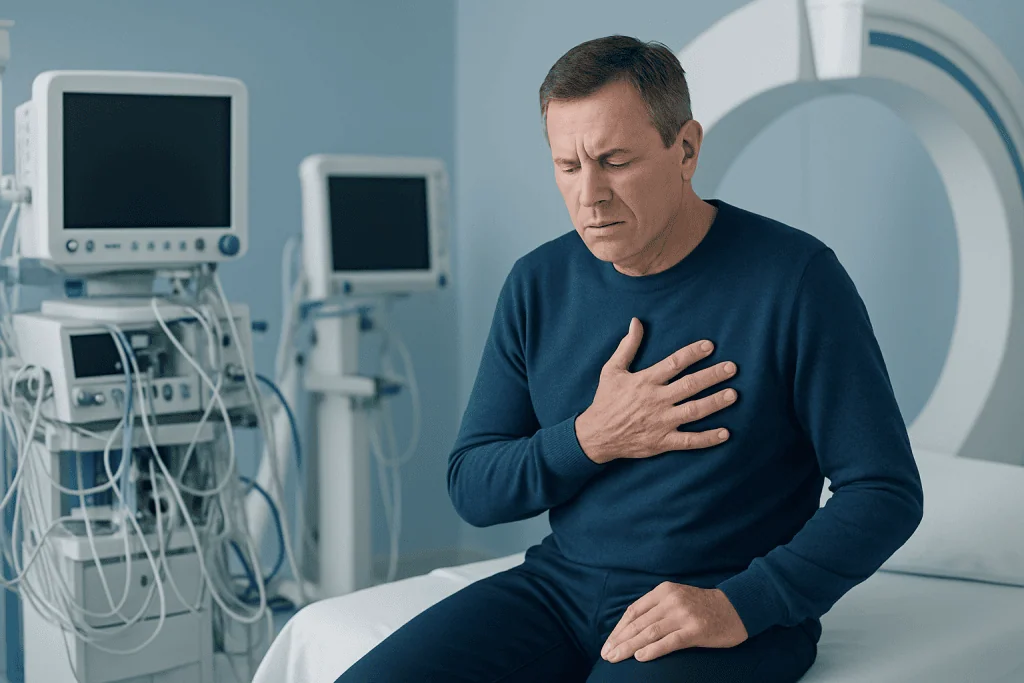
The most familiar symptom is chest discomfort. Men may describe it as pressure, squeezing, heaviness, tightness, burning, or pain in the center or left side of the chest. It may last several minutes, come and go, or appear during physical activity, emotional stress, or even at rest.
Symptoms can also occur outside the chest. Pain or discomfort may spread to one or both arms, the shoulders, neck, jaw, upper back, or upper abdomen. Some men notice shortness of breath before chest pain appears, while others feel suddenly weak, lightheaded, clammy, or nauseated.
Less obvious symptoms can still be important. A man may find that he gets tired much more quickly than usual, cannot keep up with normal walking or stairs, or feels unwell during exercise in a way that is new. These changes can sometimes point to reduced blood flow to the heart, especially when they recur.
- Chest pressure, pain, or tightness
- Shortness of breath
- Pain in the arm, shoulder, neck, jaw, or back
- Cold sweats
- Nausea or indigestion-like discomfort
- Dizziness or faintness
- Unusual fatigue or reduced stamina
- Rapid, irregular, or pounding heartbeat
Symptoms of a Heart Attack in Men

A heart attack happens when blood flow to part of the heart muscle is blocked. In men, the most common symptom is chest pressure or pain that may spread to the left arm, both arms, jaw, neck, or back. The discomfort is often intense, but it can also feel moderate and still represent an emergency.
Other symptoms may include shortness of breath, sudden sweating, nausea, vomiting, dizziness, or a sense of impending illness. Some men describe a feeling like severe indigestion, crushing pressure, or an inability to catch their breath. Symptoms can begin during exertion or while resting.
Not every heart attack is dramatic. Some are quieter and may be mistaken for muscle strain, acid reflux, or fatigue. If chest discomfort lasts more than a few minutes, returns repeatedly, or is accompanied by breathlessness, sweating, or faintness, emergency medical care is needed right away.
Causes and Risk Factors
The most common cause of heart disease symptoms in men is reduced blood flow due to plaque buildup in the coronary arteries. Over time, cholesterol, inflammation, and other factors can narrow the arteries and limit oxygen delivery to the heart. If a plaque ruptures and a clot forms, it can suddenly block blood flow and trigger a heart attack.
Several health conditions increase risk. High blood pressure, high cholesterol, diabetes, obesity, kidney disease, and sleep apnea can all strain the cardiovascular system. Smoking and exposure to tobacco are major contributors, and heavy alcohol use may also affect heart rhythm and blood pressure.
Age, family history, and lifestyle also play an important role. Risk rises as men get older, especially if a close relative developed heart disease early in life. Low physical activity, chronic stress, poor sleep, and diets high in salt, saturated fat, or highly processed foods may further increase risk. Men who already have coronary artery disease or arrhythmia should be especially alert to changing symptoms.
How Doctors Diagnose Heart Problems
Diagnosis begins with a careful medical history and physical examination. A doctor will ask what the symptoms feel like, when they happen, how long they last, and whether they occur during activity or rest. Personal risk factors, family history, medications, and smoking status are also important parts of the evaluation.
Tests may include an electrocardiogram to assess the heart’s electrical activity, blood tests to look for signs of heart muscle damage, and imaging studies to examine the heart’s structure and blood flow. Depending on the situation, doctors may recommend an exercise stress test, echocardiography, CT-based heart imaging, or coronary angiography.
Diagnosis aims not only to confirm whether symptoms are heart-related, but also to identify the exact problem and its urgency. In some men, symptoms come from blocked arteries. In others, they may be linked to rhythm disturbances, valve disease, or heart muscle weakness. A clear diagnosis helps guide the most appropriate treatment plan.
Treatment Options
Treatment depends on the cause, severity, and urgency of the condition. Many men benefit from a combination of lifestyle changes and medication to control blood pressure, cholesterol, blood sugar, heart rhythm, or chest pain. Stopping smoking, increasing physical activity safely, improving diet, and managing stress are often part of long-term care.
If symptoms are caused by narrowed or blocked coronary arteries, doctors may recommend procedures to restore blood flow. In selected cases, this may involve coronary angiography to evaluate the arteries in detail, followed by angioplasty and stent treatment if a blockage needs to be opened. More extensive disease may require coronary artery bypass graft surgery.
Some men need treatment for rhythm problems, heart failure, or other structural heart conditions rather than artery blockages. Ongoing follow-up is important, because symptoms and treatment needs can change over time. Near the end of the care journey, some international patients choose centers such as Acibadem International, where multidisciplinary specialists in JCI-accredited hospitals diagnose and treat complex heart conditions.
Prevention and Self-Care
Many cases of heart disease can be partly prevented or better controlled through everyday habits. A heart-healthy pattern includes regular physical activity, balanced meals rich in vegetables, fruit, whole grains, legumes, and healthy fats, along with limited intake of highly processed foods, excess salt, and trans fats. Reaching and maintaining a healthy weight can reduce strain on the heart.
Managing risk factors is equally important. Men should work with a doctor to control blood pressure, cholesterol, and diabetes, and to address sleep problems such as sleep apnea. Quitting smoking is one of the most effective steps for heart protection, and limiting alcohol may help lower cardiovascular risk.
Self-care also means paying attention to the body. New exercise intolerance, unexplained fatigue, repeated chest discomfort, or breathlessness should not be ignored. Keeping track of when symptoms occur and what triggers them can help guide medical assessment and support earlier treatment.
When to See a Doctor
Any new, persistent, or worsening heart-related symptom deserves medical attention. A scheduled doctor visit is appropriate for recurrent chest discomfort with exertion, reduced stamina, unexplained shortness of breath, palpitations, or swelling in the legs or feet. These symptoms may not always be an emergency, but they should be evaluated.
Emergency care is needed for severe chest pressure or pain, symptoms spreading to the arm, jaw, neck, or back, sudden shortness of breath, fainting, or cold sweating with nausea. The same is true if symptoms appear suddenly at rest or feel stronger than anything experienced before.
It is safer not to wait and see if possible warning signs pass on their own. Early evaluation can identify a treatable problem before it becomes more serious. Men with existing cardiovascular risk factors should be especially cautious and seek prompt care if something feels new or unusual.
Frequently asked questions
What are the most common heart disease symptoms in men?
Common symptoms include chest pressure or pain, shortness of breath, pain spreading to the arm or jaw, dizziness, sweating, and unusual fatigue. Some men also notice nausea, palpitations, or lower exercise tolerance. Symptoms can be obvious or subtle.
Do all men with heart disease have chest pain?
No. While chest discomfort is common, some men mainly experience breathlessness, fatigue, indigestion-like discomfort, dizziness, or pain in the back, neck, or jaw. That is why persistent or unusual symptoms should not be ignored even if chest pain is absent.
How are heart attack symptoms different from other heart symptoms?
Heart attack symptoms are often more sudden, intense, or persistent. They may include chest pressure along with sweating, nausea, shortness of breath, and pain radiating to the arm, jaw, or back. Because a heart attack is an emergency, urgent medical help is needed right away.
Can younger men have heart disease symptoms?
Yes. Although risk generally increases with age, younger men can also develop heart disease, especially if they smoke or have diabetes, high blood pressure, high cholesterol, obesity, or a strong family history. Any concerning symptom deserves medical evaluation regardless of age.
When should a man seek emergency help for possible heart symptoms?
Emergency help is needed for severe or persistent chest pain, chest pressure lasting more than a few minutes, sudden shortness of breath, fainting, or symptoms spreading to the arm, jaw, neck, or back. Sweating, nausea, and a feeling of collapse are also important warning signs.
Can lifestyle changes really reduce heart disease risk?
Yes. Stopping smoking, staying physically active, eating a balanced diet, sleeping well, and controlling blood pressure, cholesterol, and blood sugar can meaningfully reduce cardiovascular risk. Lifestyle measures work best when combined with regular medical care and treatment when needed.
References
- World Health Organization
- American Heart Association
- Centers for Disease Control and Prevention
- National Heart, Lung, and Blood Institute
- European Society of Cardiology
This article is for general information only and is not a substitute for professional medical advice. Please consult a qualified doctor about your individual situation.
Heart care in Turkey — expert evaluation and treatment
JCI-accredited · board-certified surgeons · reply within 24h
Add us as a Preferred Source to see more of our trusted health content across Google Search, AI Overviews and Discover.
Check your numbers in seconds
BMI, calories, due date, blood pressure and 30+ more clinical calculators — free, instant, doctor-reviewed ranges.