Aneurysm Coiling: Who Is a Candidate and How Recovery Compares With Surgery

Aneurysm coiling treats some brain aneurysms through a catheter rather than open skull surgery. Good candidates often have aneurysms whose size, shape, and location are suitable for endovascular treatment.
Key Takeaways
- Aneurysm coiling treats some brain aneurysms through a catheter rather than open skull surgery.
- Good candidates often have aneurysms whose size, shape, and location are suitable for endovascular treatment.
- Recovery after coiling is often shorter and less physically demanding than recovery after surgical clipping.
- Not every aneurysm can be safely treated with coiling, and some need clipping or another technique.
- Long-term follow-up imaging is important because some coiled aneurysms may need monitoring or retreatment.
Aneurysm coiling is a minimally invasive procedure used to treat certain brain aneurysms from inside the blood vessel. Many people recover faster than they would after open surgery, but the best option depends on the aneurysm’s size, shape, location, and whether it has ruptured.
Overview of Aneurysm Coiling
Aneurysm coiling is an endovascular treatment for certain brain aneurysms. A brain aneurysm is a weakened, bulging area in a blood vessel in the brain. During coiling, a specialist guides a thin tube called a catheter through an artery, usually from the wrist or groin, to the aneurysm. Tiny soft coils are then placed inside the aneurysm to reduce blood flow into the bulge and help lower the risk of rupture or re-bleeding.
This approach is considered minimally invasive because it does not require opening the skull. It is commonly performed by interventional neuroradiologists, endovascular neurosurgeons, or related specialists working as part of a stroke and cerebrovascular team. In some cases, coiling is combined with other devices, such as stents or balloons, to help keep the coils in place or improve treatment of wide-necked aneurysms.
Aneurysm coiling is one of several treatment options for brain aneurysms. Another well-known option is surgical clipping, which involves an operation through the skull to place a small clip across the aneurysm neck. The choice between these treatments depends on anatomy, urgency, overall health, and the expertise of the treating team.
Who Is a Candidate for Aneurysm Coiling?
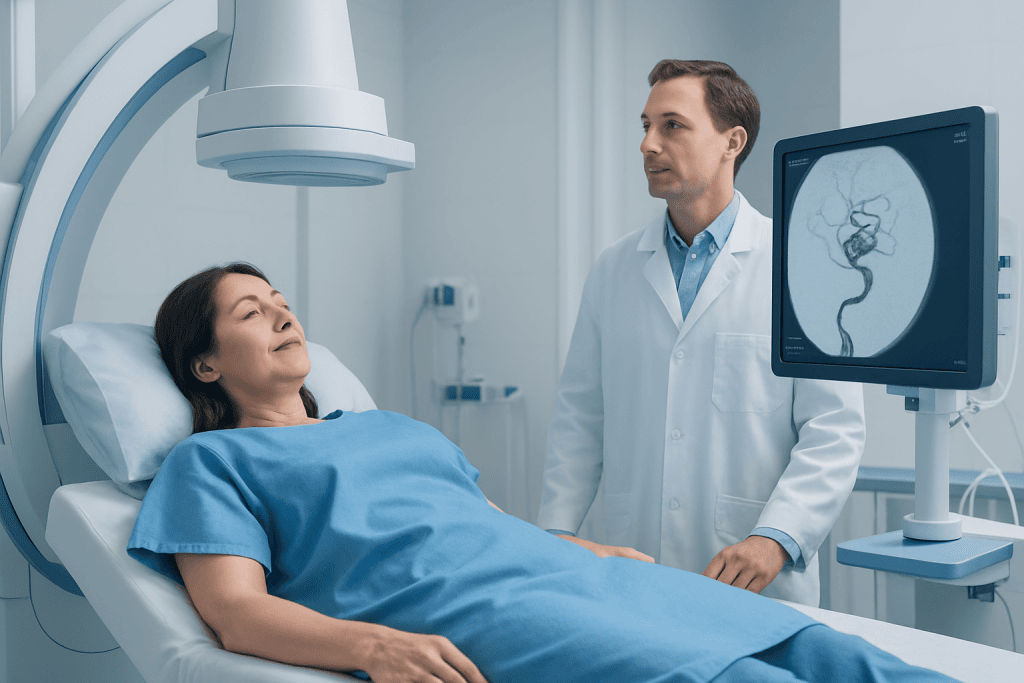
The best candidates for aneurysm coiling are people whose aneurysms can be safely reached through the blood vessels and whose aneurysm shape is suitable for filling from the inside. Specialists look closely at the aneurysm’s size, neck width, location, and whether it has ruptured. Aneurysms in some deeper or harder-to-reach areas of the brain may be especially well suited to endovascular treatment.
Coiling may be used for both ruptured and unruptured aneurysms. In an emergency, such as bleeding into the space around the brain, timely treatment is aimed at preventing another bleed. In unruptured aneurysms, the decision to treat is more individualized and weighs the risk of rupture against the risks of the procedure itself. Age, other medical conditions, prior stroke history, and overall fitness are also important considerations.
Some aneurysms are not ideal for simple coiling alone. A very wide-necked aneurysm, a complex branching pattern, or vessel anatomy that limits safe catheter access may make clipping or another endovascular technique more appropriate. In some patients, specialists may consider surgical clipping or advanced options such as flow diverter treatment when standard coiling is less likely to provide a durable result.
- Favorable aneurysm location for catheter access
- Suitable aneurysm size and neck shape
- Ruptured or unruptured status and urgency
- Patient age and general medical condition
- Need for long-term durability versus procedural simplicity
How the Procedure Is Performed

Before the procedure, imaging tests are used to map the aneurysm and the surrounding blood vessels. Aneurysm coiling is usually performed in a specialized angiography suite under anesthesia or deep sedation, depending on the case. The medical team places a catheter into an artery and carefully advances it to the blood vessels of the brain using live X-ray guidance.
Once the catheter reaches the aneurysm, the specialist introduces very small platinum coils into the aneurysm sac. These coils encourage clotting within the aneurysm and help separate it from normal blood circulation. In some cases, a balloon is temporarily inflated to support coil placement, or a stent is left in the parent artery to hold the coils securely, especially in a wide-necked aneurysm.
The goal is to protect the aneurysm while preserving normal blood flow to the brain. Many patients spend a short period in a recovery unit or intensive monitoring area afterward. If the aneurysm has ruptured, the hospital stay is usually longer because the person also needs treatment and observation for the effects of the bleed itself, not just the coiling procedure.
How Recovery Compares With Surgery
For many patients, recovery after aneurysm coiling is shorter and physically easier than recovery after open surgical clipping. Because coiling is performed through a blood vessel rather than through an incision in the scalp and skull, there is typically less postoperative pain, less disruption of surrounding tissues, and a shorter initial hospital stay for uncomplicated cases. Many people can return to light daily activities relatively soon, depending on their doctor’s advice.
By contrast, clipping is an open brain operation and usually involves a longer recovery period. It may require more time in the hospital and a slower return to normal routines. However, a longer recovery does not mean clipping is the worse choice. For some aneurysms, clipping may provide a more durable solution or may be safer than coiling based on the aneurysm’s structure.
It is also important to separate recovery from durability. Coiling may have an easier short-term recovery, but some coiled aneurysms need follow-up imaging and, in some cases, repeat treatment if the aneurysm partially reopens over time. Surgical clipping may involve a bigger operation upfront, yet some clipped aneurysms need less long-term retreatment. The best comparison is not simply “easier” versus “harder,” but which treatment offers the best balance of safety, effectiveness, and recovery for that individual.
Benefits, Risks, and Possible Limitations
The main benefit of aneurysm coiling is that it is minimally invasive. This can be especially helpful for patients who may not be ideal candidates for open surgery or for aneurysms in locations that are difficult to reach surgically. Shorter hospital stays, smaller access-site wounds, and a quicker return to usual activities are among the advantages many patients value.
Like any procedure involving the brain and blood vessels, coiling also carries risks. These can include bleeding, stroke, blood vessel injury, clot formation, reaction to contrast dye, infection, and complications related to anesthesia. There can also be aneurysm recurrence or incomplete closure, which is why follow-up is so important. If a stent is used, some patients may need blood-thinning medication for a period recommended by their doctor.
Another limitation is that not all aneurysms can be treated equally well with coils. Some aneurysms have a shape that makes coil stability difficult, and some are more suitable for other techniques such as endovascular aneurysm embolization. A careful discussion with a specialist helps patients understand the expected benefits, possible trade-offs, and the reasons one treatment may be recommended over another.
Diagnosis, Planning, and Follow-Up
Diagnosis and treatment planning begin with brain and blood vessel imaging. Doctors may use CT angiography, MR angiography, or catheter angiography to understand the aneurysm’s exact size, neck, shape, and relationship to nearby arteries. Catheter angiography often provides the most detailed information when making a treatment plan.
Once an aneurysm is found, the team considers whether it has ruptured, whether symptoms are present, and what the overall risk profile looks like. The decision may involve interventional neuroradiology, neurosurgery, neurology, and critical care specialists. This team-based approach is especially valuable when a patient could reasonably be treated with more than one method.
After coiling, follow-up imaging is a routine part of care. These scans help confirm that the aneurysm remains sealed and that blood flow in the surrounding vessels is normal. Some people need only periodic monitoring, while others may need further treatment if the aneurysm shows reopening. Near the end of the care journey, some international patients choose centers such as Acibadem International, where multidisciplinary specialists in JCI-accredited hospitals evaluate and treat complex cerebrovascular conditions.
When to Seek Medical Care
A person should seek urgent medical care for sudden, severe headache, especially if it is described as the worst headache of life. Emergency attention is also important for symptoms such as fainting, seizure, sudden weakness, confusion, vision changes, trouble speaking, or a stiff neck with severe headache. These symptoms can be caused by several serious conditions, including a ruptured aneurysm, and should never be ignored.
For an unruptured aneurysm, medical review is also important if there are ongoing headaches, double vision, eyelid drooping, facial pain, or new neurological symptoms. Although many unruptured aneurysms do not cause symptoms, any new or unexplained neurological change deserves assessment. People with a strong family history of aneurysm or certain inherited conditions should ask a doctor whether screening is appropriate.
After aneurysm coiling or clipping, patients should contact their care team if they develop new severe headache, increasing drowsiness, fever, weakness, speech difficulty, chest pain, shortness of breath, or problems at the catheter access site such as swelling or persistent bleeding. Prompt follow-up helps address complications early and supports a safer recovery.
Frequently asked questions
Is aneurysm coiling safer than surgery?
Aneurysm coiling is less invasive than surgical clipping, and for many people it can mean a shorter and smoother early recovery. However, the safest option depends on the aneurysm’s anatomy, whether it has ruptured, and the patient’s overall health. A specialist team can explain which approach offers the best balance of risk and benefit.
How long does it take to recover from aneurysm coiling?
Recovery time varies depending on whether the aneurysm was ruptured and whether there were any complications. For an uncomplicated unruptured aneurysm, many people recover faster than they would after open surgery and may return to light activities within days to weeks. Recovery is often longer after a ruptured aneurysm because the bleeding itself affects healing.
Can an aneurysm come back after coiling?
Yes, some aneurysms can partially reopen after coiling. That does not mean treatment failed, but it does mean follow-up imaging is essential. If needed, the doctor may recommend repeat coiling or another treatment approach.
Will every brain aneurysm need coiling or clipping?
No. Some small unruptured aneurysms may be monitored rather than treated right away. The decision depends on rupture risk, aneurysm features, age, symptoms, and overall medical condition. Doctors weigh the risks of observation against the risks and benefits of treatment.
What is the difference between coiling and clipping?
Coiling treats the aneurysm from inside the blood vessel using a catheter and tiny coils. Clipping is an open surgical procedure in which a surgeon places a small clip across the aneurysm through an operation on the skull. Coiling is less invasive, while clipping may be more durable for some aneurysms.
Will I need follow-up scans after aneurysm coiling?
Yes, follow-up imaging is a standard part of care after coiling. These scans help the medical team confirm that the aneurysm remains well sealed and that nearby vessels are healthy. The timing of scans depends on the details of the aneurysm and the procedure.
This article is for general information only and is not a substitute for professional medical advice. Please consult a qualified doctor about your individual situation.
Explore treatments in Turkey — costs, top hospitals & a free quote
JCI-accredited · board-certified surgeons · reply within 24h
Add us as a Preferred Source to see more of our trusted health content across Google Search, AI Overviews and Discover.

Neurosurgery
Surgical treatment of the brain, spine and nervous system, including minimally invasive and functional procedures.
70 specialists in this unitMore from the Health Library

CSF Leak From the Nose: When Clear Nasal Drainage Needs Urgent Care

Neurointerventional Radiology: What Happens During Diagnosis and Treatment Planning
When to See an Interventional Neuroradiologist for Brain or Spine Vessel Problems

Neurointervention Procedures: What to Expect Before, During, and After

Preparing for Neurointervention: Tests, Medicines, and Questions to Ask