Kyphosis
Kyphosis is an excessive forward curve of the upper spine. Learn about symptoms, causes, diagnosis and treatment options.
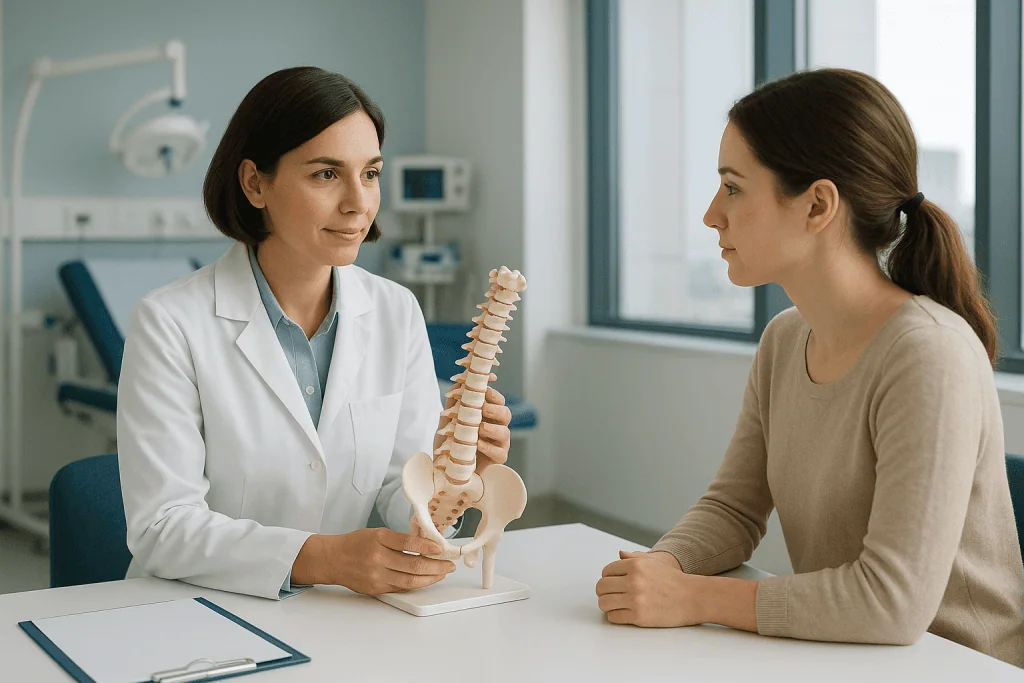
Quick answer
Kyphosis is an excessive forward curvature of the upper spine that can cause a rounded back, pain, stiffness, and, in some cases, breathing or balance problems. At Acibadem, evaluation focuses on the underlying cause and severity, and treatment may include monitoring, physical therapy, bracing, pain management, or surgery when the curve is severe or progressive.
What is kyphosis?
Kyphosis is a condition in which the upper part of the spine curves forward more than normal, creating a rounded or hunched appearance of the back. Everyone’s spine has a gentle outward curve in the upper back (the thoracic region, meaning the part of the spine between the neck and the lower back). This natural curve helps the spine absorb shock and support the head. When that curve becomes exaggerated, doctors describe it as kyphosis. Some people also use everyday terms such as “roundback” or, in more severe older adults, “dowager’s hump,” although these informal terms can be misleading.
To understand what is kyphosis in practical terms, it helps to know that a small forward curve is completely normal. Kyphosis becomes a medical concern when the curve is noticeably larger than expected, when it worsens over time, or when it causes pain, stiffness, or other problems. Doctors often measure the curve in degrees on an X-ray; a curve beyond the typical range for a person’s age may be labeled kyphosis, though the exact threshold can vary depending on the person and the type of curve.
Kyphosis can affect people at any age. In adolescents, it may appear during growth spurts, sometimes as flexible “postural kyphosis” and sometimes as a structural condition called Scheuermann’s kyphosis (a growth-related change in the shape of the spinal bones). In older adults, kyphosis often develops gradually because of weakening bones (osteoporosis), spinal fractures, or age-related wear of the discs between the vertebrae. Less commonly, kyphosis is present at birth (congenital kyphosis) because the spine did not form normally before birth.
In many cases kyphosis is mild and causes few or no problems. In other cases, the curve can progress and lead to back pain, fatigue, reduced mobility, and, in severe situations, pressure on the lungs or the nerves of the spine. Because the causes and outlook vary so widely, an accurate diagnosis matters before deciding on kyphosis treatment.
Symptoms of kyphosis
Kyphosis symptoms range from a barely noticeable change in posture to significant pain and disability. Many people, especially those with mild curves, have no symptoms at all beyond the visible rounding of the upper back. When symptoms do occur, they commonly include:
- A visibly rounded or hunched upper back, which may be more obvious when bending forward
- Back pain or aching, most often in the mid or upper back, which may worsen with activity or long periods of standing or sitting
- Stiffness in the back and tightness in the hamstrings (the muscles at the back of the thighs)
- Fatigue in the back and shoulder muscles, because they must work harder to hold the body upright
- Loss of height over time, particularly in older adults with osteoporosis-related kyphosis
- Difference in shoulder height or a forward-leaning head position
Symptoms often differ by type. In postural kyphosiscommon in adolescents: the curve is flexible, usually painless or only mildly uncomfortable, and often improves when the person consciously straightens up or lies down. In Scheuermann’s kyphosis, the curve is rigid and does not correct with posture changes; pain is more common, tends to be located at the peak of the curve, and may flare with activity. In age-related or osteoporotic kyphosis, the curve usually develops slowly and may be accompanied by episodes of sudden back pain if a vertebra (one of the bones of the spine) fractures.
In severe kyphosis, less common but more serious symptoms can develop. A very large curve may reduce the space available for the lungs, causing shortness of breath, or press on the spinal cord or nerves, causing numbness, tingling, weakness in the legs, or problems with balance. Rarely, severe curves can affect bladder or bowel control. These neurological symptoms (symptoms related to the nerves) are warning signs that need prompt medical attention, as described in the final section of this article.
Causes and risk factors
Kyphosis causes vary considerably by age group and type. Understanding the underlying cause is essential because it directly shapes the treatment approach.
- Poor posture (postural kyphosis): Habitual slouching, heavy backpacks, and prolonged bending over desks or screens can lead to a flexible increase in the upper-back curve, especially in adolescents. The bones themselves remain normally shaped.
- Scheuermann’s disease: In this condition, several vertebrae grow in a wedge shape rather than the usual rectangular shape during adolescence, producing a rigid structural curve. The exact cause is not fully understood, and it may run in families.
- Osteoporosis and vertebral compression fractures: In older adults, weakened bones can slowly collapse or fracture at the front, tipping the spine forward. This is one of the most common causes of kyphosis later in life, particularly in postmenopausal women.
- Degenerative changes: Age-related wear of the spinal discs (the cushions between vertebrae) can reduce their height and contribute to a forward curve.
- Congenital kyphosis: Some children are born with vertebrae that did not form or separate properly before birth. These curves can progress as the child grows.
- Injury, infection, or tumors: Spinal fractures from trauma, infections of the spine, and certain tumors can damage vertebrae and cause a kyphotic curve.
- Other medical conditions: Certain neuromuscular disorders, connective tissue disorders, and previous spinal surgery or radiation therapy can also contribute to kyphosis in some people.
Risk factors include adolescence (during rapid growth), older age, low bone density, a family history of Scheuermann’s disease or other spinal conditions, and lifestyle factors that weaken the muscles supporting the spine. Not everyone with these risk factors will develop kyphosis, and having a mild curve does not necessarily mean it will worsen.
Diagnosis
Kyphosis diagnosis usually begins with a careful medical history and physical examination. Your doctor may ask when the curve was first noticed, whether it has changed, whether there is pain, and whether there are symptoms such as numbness, weakness, or breathing difficulty. Family history and, in children, growth and development are also relevant.
During the physical exam, the doctor typically observes the spine from the side and from behind, both standing and bending forward. The forward-bend test (often called the Adam’s test) makes the shape of the curve easier to see and helps distinguish a flexible postural curve, which straightens when the person corrects their posture or lies down, from a rigid structural curve, which does not. The doctor may also test muscle strength, reflexes, sensation, and flexibility to check whether the nerves are affected.
Imaging tests are used to confirm the diagnosis and measure the curve:
- Standing X-rays of the spine, taken from the side, are the standard first test. They allow the doctor to measure the curve in degrees (often using a method called the Cobb angle) and to look for wedge-shaped vertebrae, fractures, or other bone changes.
- MRI (magnetic resonance imaging), a scan that uses magnets to show soft tissues, may be ordered if there are neurological symptoms, unusual pain, or suspicion of infection, tumor, or spinal cord compression.
- CT (computed tomography) scans provide detailed images of the bones and are sometimes used when planning surgery or evaluating complex anatomy.
- Bone density testing (DEXA scan) may be recommended for older adults to check for osteoporosis, since treating weak bones is an important part of managing age-related kyphosis.
- Lung function tests are occasionally used in severe curves to see whether breathing is affected.
In growing children and adolescents, doctors may repeat X-rays over time to see whether the curve is progressing, because the risk of worsening is highest during growth. Spinal conditions such as kyphosis are typically evaluated and managed by orthopedics and spine specialty departments, such as those within the Acibadem hospital network, often working together with physical therapy and, when needed, neurology or neurosurgery teams.
Treatment options for kyphosis
Kyphosis treatment depends on the cause, the size and flexibility of the curve, the person’s age and remaining growth, the severity of symptoms, and whether the curve is progressing. Many people never need more than monitoring and exercise; a smaller number benefit from bracing or surgery. The main options are:
Observation and watchful waiting
Mild curves that cause no symptoms are often simply monitored. In children and adolescents, this usually means periodic checkups and repeat X-rays to make sure the curve is not worsening during growth. In adults with stable, mild kyphosis, no active treatment may be required at all.
Physical therapy and exercise
Exercise is a cornerstone of care for postural kyphosis and a helpful part of managing most other types. A physical therapist can teach exercises that strengthen the muscles of the back and core (the muscles of the abdomen and trunk), stretch tight chest and hamstring muscles, and improve posture awareness. For flexible postural curves, consistent exercise and posture correction often improve the appearance of the back and reduce discomfort, although results vary from person to person.
Medication
There is no medication that straightens a kyphotic curve. However, over-the-counter pain relievers such as acetaminophen or nonsteroidal anti-inflammatory drugs (NSAIDs, medicines that reduce pain and inflammation) may help manage back pain when used as directed. In people whose kyphosis is related to osteoporosis, doctors may prescribe medications that strengthen bone, along with calcium and vitamin D, to reduce the risk of further vertebral fractures. Treating the underlying bone weakness is often as important as treating the curve itself.
Bracing
In growing adolescents with Scheuermann’s kyphosis or certain other progressive curves, a back brace may be recommended. A brace does not usually reverse an established curve, but in many cases it can help prevent the curve from worsening while the skeleton is still growing. Bracing is generally not effective for correcting curves in adults whose growth is complete, although supportive bracing is sometimes used briefly for comfort after a vertebral fracture.
Procedures for vertebral fractures
When kyphosis in older adults is driven by painful osteoporotic compression fractures, doctors may in some cases consider minimally invasive procedures such as vertebroplasty or kyphoplasty, in which medical bone cement is injected into the fractured vertebra to stabilize it. These procedures are aimed mainly at relieving fracture pain; they are not suitable for everyone, and your doctor can explain whether they are an option in your situation.
Surgery
Surgery is generally reserved for severe curves, curves that continue to progress despite other measures, significant pain that has not responded to conservative care, or situations where the spinal cord or nerves are compressed or breathing is affected. The most common operation is spinal fusion, in which the surgeon straightens the curve as much as safely possible using metal rods and screws, and joins the affected vertebrae so they heal into a more upright position. Congenital kyphosis in children sometimes requires earlier surgical treatment because these curves can progress steadily with growth.
Like all spinal surgery, fusion carries risks, including infection, bleeding, hardware problems, nerve injury, and the possibility of needing further surgery, which must be weighed against the expected benefits. The decision is individual and typically involves detailed imaging, a thorough discussion of goals and risks, and, in many centers including Acibadem, evaluation by a multidisciplinary spine team.
Living with kyphosis and outlook
The outlook for kyphosis depends largely on its type and severity. Postural kyphosis generally has an excellent outlook: with attention to posture and regular strengthening exercise, most people do well and the condition rarely progresses to a serious problem. Mild Scheuermann’s kyphosis often remains stable after growth is complete, and many adults with it lead fully active lives, sometimes with occasional back discomfort. Larger structural curves are more likely to cause chronic pain and may slowly progress in adulthood, which is why ongoing follow-up may be recommended.
For older adults with osteoporosis-related kyphosis, managing bone health is central to the long-term outlook. Treating osteoporosis, preventing falls, staying physically active within safe limits, and not smoking can all help reduce the risk of new fractures and further curve progression. No treatment can guarantee that a curve will not worsen, but early attention to bone density and posture often makes a meaningful difference.
Day to day, many people with kyphosis benefit from regular low-impact exercise such as walking or swimming, workplace and home adjustments that encourage upright posture, supportive footwear, and maintaining a healthy weight to reduce strain on the spine. Kyphosis can also affect self-image, especially in adolescents; discussing these concerns openly with a doctor or counselor can help. If symptoms change, for example, if pain worsens or new numbness or weakness appears, it is important to have the spine reassessed rather than assume the change is inevitable.
Frequently asked questions
What is kyphosis in simple terms?
Kyphosis is an exaggerated forward rounding of the upper back. A gentle outward curve in this area is normal for everyone; kyphosis is diagnosed when the curve is larger than expected, causing a rounded or hunched appearance. It can result from posture habits, growth-related changes in adolescents, weakened bones in older adults, or, less commonly, problems present from birth.
Can kyphosis be corrected without surgery?
Often, yes, depending on the type. Flexible postural kyphosis frequently improves with posture training, stretching, and strengthening exercises. In growing adolescents, bracing may help prevent structural curves from worsening. Rigid structural curves in adults usually cannot be straightened without surgery, but symptoms can often be managed effectively with exercise, pain management, and treatment of any underlying bone weakness. Your doctor can advise which approach fits your situation.
How serious is kyphosis?
Most cases are mild and do not seriously affect health. However, severity varies: larger curves can cause chronic pain, reduced mobility, and, in severe cases, breathing difficulty or nerve compression. The seriousness also depends on the cause, for example, kyphosis from osteoporotic fractures signals underlying bone fragility that itself needs treatment. An evaluation with X-rays helps determine how significant a particular curve is.
What are the first kyphosis symptoms people usually notice?
The earliest sign is often a change in appearance, rounded shoulders, a hump in the upper back, or a head that leans forward, sometimes noticed by a family member before the person themselves. Mild back pain, stiffness, or muscle fatigue after standing or sitting for long periods are also common early kyphosis symptoms. Many mild cases cause no discomfort at all.
Does kyphosis get worse with age?
It can, but not always. Curves related to growth often stabilize once the skeleton matures. In adults, mild curves may remain unchanged for decades, while larger structural curves can progress slowly over time. In older adults, kyphosis may worsen if osteoporosis leads to new vertebral fractures, which is why bone health monitoring and treatment are often recommended. Periodic follow-up allows your doctor to detect any progression early.
Is kyphosis the same as scoliosis?
No. Kyphosis is a forward (front-to-back) curve seen when looking at the spine from the side, while scoliosis is a sideways curve seen when looking at the spine from behind. Some people have both conditions at the same time, which is sometimes called kyphoscoliosis. The diagnosis and treatment of the two conditions differ, so accurate imaging is important.
What is recovery like after kyphosis surgery?
Recovery from spinal fusion varies with the person’s age, health, and the extent of surgery. A hospital stay of several days is typical, followed by a gradual return to daily activities over weeks to months, often with physical therapy. Heavy lifting and high-impact activities are usually restricted while the fusion heals, which can take many months. Your surgical team will provide a plan specific to your operation, and outcomes cannot be guaranteed, so realistic expectations are discussed before surgery.
When to see a doctor
Consider making a medical appointment if you or your child has a noticeably rounded upper back that seems to be getting worse, persistent back pain or stiffness, or a curve accompanied by fatigue or difficulty standing upright. Adolescents with a visible curve should be evaluated, because treatment options such as bracing work best while growth continues, and older adults with a new or worsening hump may need a bone density assessment.
Seek urgent medical care if kyphosis is accompanied by any of the following red-flag warning signs:
- New numbness, tingling, or weakness in the legs or arms
- Loss of bladder or bowel control, or difficulty urinating
- Sudden, severe back pain, especially after a fall or minor injury in someone with osteoporosis, which may indicate a spinal fracture
- Shortness of breath or difficulty breathing associated with a severe curve
- Problems with balance or walking that are new or rapidly worsening
- Fever with back pain, or unexplained weight loss alongside spinal symptoms, which can suggest infection or another serious condition
These symptoms can indicate pressure on the spinal cord or nerves, a fracture, or another condition that needs prompt evaluation. Early assessment allows doctors to confirm the cause, rule out serious problems, and recommend the safest and most appropriate course of care for your situation.
Medically reviewed by the Acıbadem International Medical Board September 2, 2026
See our medical review board →
Update history
- PublishedJune 8, 2026
- Medical review approvedSeptember 2, 2026
- Last content updateSeptember 2, 2026