Mesothelioma
Mesothelioma is a rare cancer often linked to asbestos exposure. Learn about symptoms, diagnosis, treatment options and when to see a doctor.
Quick answer
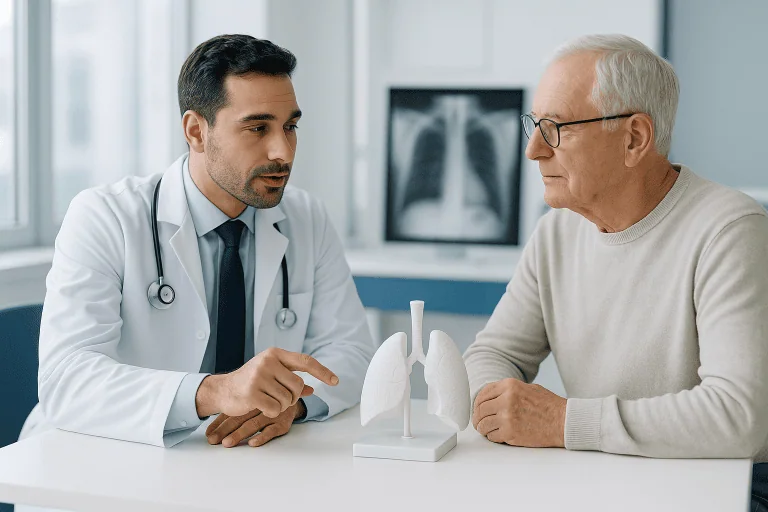
Mesothelioma is a cancer that develops in the mesothelium, the thin lining around organs, most often affecting the lungs and less commonly the abdomen or heart. At Acibadem in Turkey, evaluation focuses on imaging, biopsy, and staging, and treatment may include surgery, chemotherapy, radiotherapy, and supportive care tailored to the disease extent and the patient’s overall condition.
What is mesothelioma?
Mesothelioma is a rare cancer that develops in the mesothelium, a thin layer of tissue that lines the lungs, chest wall, abdomen, heart, and some other internal organs. When people ask “what is mesothelioma,” the simplest answer is that it is a tumor of this protective lining rather than of the organs themselves. The most common form starts in the pleura, the lining that surrounds the lungs and covers the inside of the chest wall. This is called pleural mesothelioma. Less often, the cancer begins in the peritoneum, the lining of the abdominal cavity, and this is known as peritoneal mesothelioma. Very rarely, it develops in the lining around the heart (the pericardium) or the testicles.
Mesothelioma most often affects older adults, and it is diagnosed more frequently in men than in women. This pattern is largely explained by its main cause: exposure to asbestos, a group of mineral fibers that was widely used in construction, shipbuilding, insulation, and other industries for much of the twentieth century. Because the disease usually develops decades after exposure, many people are diagnosed long after they worked with or around asbestos, and some may not remember being exposed at all.
Mesothelioma is generally considered an aggressive cancer, meaning it tends to grow and spread within the chest or abdomen. Early diagnosis can be difficult because symptoms often appear gradually and can resemble more common, less serious conditions. Understanding the warning signs and risk factors can help people who may be at risk seek medical attention sooner.
Symptoms of mesothelioma
Mesothelioma symptoms depend on where the cancer starts and how far it has progressed. In the early stages, many people have no symptoms at all, or only mild complaints that are easy to attribute to other causes. As the tumor grows, symptoms usually become more noticeable and persistent.
Common symptoms of pleural mesothelioma (in the chest) include:
- Shortness of breath, often caused by fluid building up between the lung and the chest wall (a pleural effusion)
- Chest pain, typically felt in the side or lower chest, which may be dull or aching
- A persistent cough that does not improve over time
- Unexplained weight loss and loss of appetite
- Fatigue, a persistent feeling of tiredness or weakness
- Night sweats or fever in some cases
- Hoarseness or difficulty swallowing, usually in more advanced disease
Common symptoms of peritoneal mesothelioma (in the abdomen) include:
- Abdominal swelling or bloating, often due to fluid buildup in the abdomen (called ascites)
- Abdominal pain or a general feeling of discomfort
- Changes in bowel habits, such as constipation or diarrhea
- Nausea and reduced appetite
- Unexplained weight loss
In early-stage disease, symptoms are often subtle and intermittent. As the cancer advances, breathlessness and pain typically become more constant, and general symptoms such as weight loss and fatigue tend to worsen. Because mesothelioma symptoms overlap with many other conditions, including infections, heart disease, and other lung or abdominal problems, persistent symptoms should always be evaluated by a doctor rather than assumed to be minor.
Causes and risk factors
The main cause of mesothelioma is exposure to asbestos. Asbestos refers to a group of naturally occurring mineral fibers that are heat-resistant and durable, which is why they were used so widely in insulation, roofing, flooring, cement products, brake linings, and shipbuilding materials. When asbestos-containing materials are disturbed, tiny fibers can be released into the air. If inhaled or swallowed, these fibers can lodge in the lining of the lungs or abdomen. Over many years, they can cause inflammation and cellular damage that may eventually lead to cancer.
A key feature of mesothelioma causes is the long delay between exposure and disease. This delay, called the latency period, is often several decades. Many people diagnosed today were exposed in the 1960s, 1970s, or 1980s, before asbestos use was heavily restricted in many countries.
Recognized risk factors include:
- Occupational asbestos exposurepeople who worked in construction, shipyards, insulation installation, plumbing, mining, or certain factories face the highest risk
- Secondary (household) exposurefamily members of asbestos workers may have been exposed to fibers carried home on clothing, hair, or tools
- Environmental exposureliving near asbestos mines, processing plants, or areas where asbestos occurs naturally in soil and rock
- Older buildings and renovation workdisturbing asbestos-containing materials during demolition or renovation can release fibers
- Radiation therapy to the chest or abdomenprior radiation treatment is a less common but recognized risk factor
- Genetic factorsin a small number of families, an inherited change in a gene called BAP1 increases susceptibility to mesothelioma
It is important to understand that not everyone exposed to asbestos develops mesothelioma; in fact, most people who were exposed never do. However, there is no exposure level that is considered completely safe, and risk generally increases with the intensity and duration of exposure. Unlike lung cancer, smoking is not considered a direct cause of mesothelioma, although smoking combined with asbestos exposure greatly increases the risk of lung cancer.
Diagnosis
Mesothelioma diagnosis usually involves several steps, because the disease can look similar to other conditions on initial tests. Doctors typically begin with a medical history, including questions about possible asbestos exposure, and a physical examination. From there, the workup often proceeds as follows.
Imaging tests
A chest X-ray is often the first test performed when someone has breathlessness or chest pain. It may show fluid around the lung, thickening of the pleura, or other abnormalities. A computed tomography (CT) scan, a detailed X-ray that creates cross-sectional images of the body, provides much more information about the extent of the disease. In some cases, doctors also use magnetic resonance imaging (MRI), which uses magnetic fields to produce detailed images, or a positron emission tomography (PET) scan, which highlights areas of active cancer cells and helps determine whether the disease has spread.
Fluid analysis
If fluid has collected around the lung or in the abdomen, doctors may drain some of it with a needle. This procedure, called thoracentesis in the chest or paracentesis in the abdomen, relieves symptoms and allows the fluid to be examined under a microscope for cancer cells. However, fluid analysis alone is often not enough to confirm mesothelioma.
Biopsy
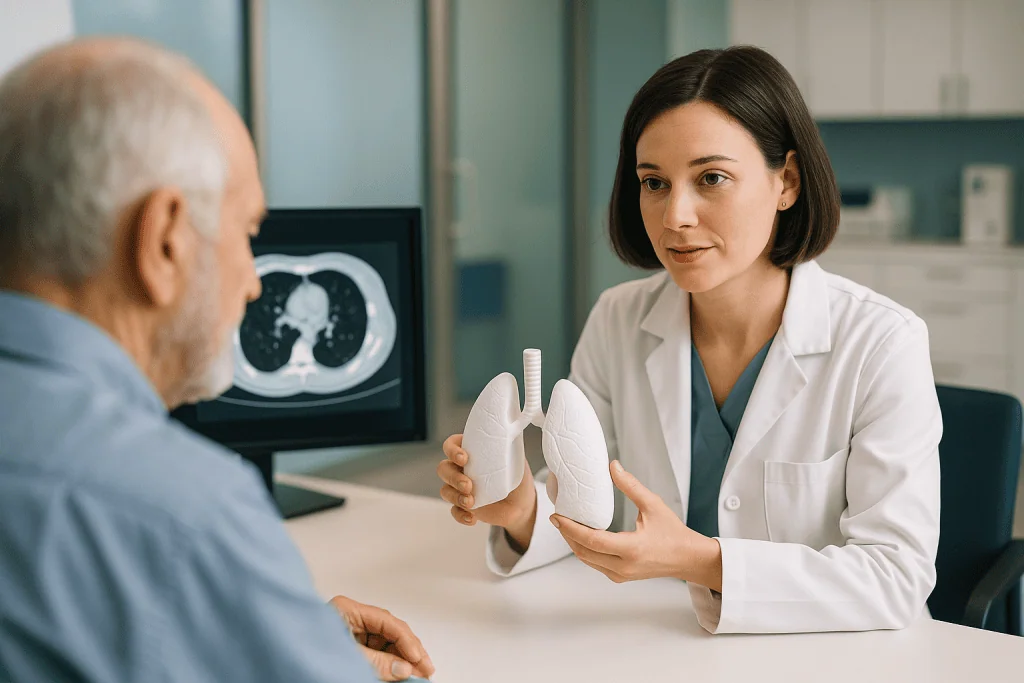
A biopsy, meaning the removal of a small sample of tissue for laboratory examination, is the definitive way to confirm a mesothelioma diagnosis. Depending on the tumor’s location, doctors may take the sample using a needle guided by imaging, or through a minimally invasive procedure such as thoracoscopy (a camera-assisted examination of the chest cavity through small incisions) or laparoscopy (the same approach for the abdomen). A specialist called a pathologist then examines the tissue and uses special stains, known as immunohistochemistry, to distinguish mesothelioma from other cancers that can look similar, such as lung cancer that has spread to the pleura.
Staging
Once mesothelioma is confirmed, doctors determine its stage, how large the tumor is and whether it has spread to lymph nodes or distant organs. Staging usually relies on imaging and sometimes additional procedures. The stage strongly influences which treatment options are appropriate, so this step is an essential part of planning care.
Treatment options for mesothelioma
Mesothelioma treatment depends on the type and stage of the disease, the person’s overall health and lung function, and their personal preferences and goals. Because mesothelioma is complex, care is usually planned by a multidisciplinary team that may include medical oncologists (cancer specialists who use drug treatments), surgeons, radiation oncologists, and lung specialists. In many hospital systems, including Acibadem, systemic cancer treatment is coordinated through a dedicated Medical Oncology Department.
Chemotherapy and drug treatments
Chemotherapy, medication that kills or slows the growth of cancer cells, has long been a standard treatment for mesothelioma that cannot be removed surgically. It is often given as a combination of drugs and may help shrink tumors, relieve symptoms, and slow the progression of the disease. In recent years, immunotherapy has also become an established option for many patients. Immunotherapy refers to drugs that help the body’s own immune system recognize and attack cancer cells. Your doctor may recommend chemotherapy, immunotherapy, or a sequence of both, depending on the tumor type and your overall condition.
Surgery
Surgery may be considered for selected patients with earlier-stage disease who are fit enough for a major operation. For pleural mesothelioma, operations range from removing the pleura and visible tumor while preserving the lung, to more extensive procedures that remove the lung along with the surrounding lining. For peritoneal mesothelioma, surgeons may remove as much visible tumor as possible from the abdomen, sometimes combined with heated chemotherapy delivered directly into the abdominal cavity during the operation. Surgery for mesothelioma is complex, and whether it is appropriate depends on careful evaluation by an experienced team.
Radiation therapy
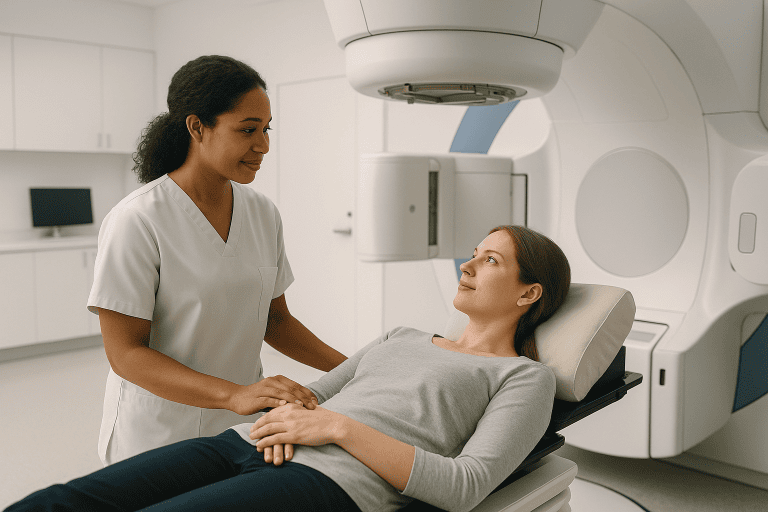
Radiation therapy uses high-energy beams to damage cancer cells. In mesothelioma, it is most often used to relieve pain or other symptoms caused by tumor growth, and sometimes as part of a combined treatment plan alongside surgery or drug therapy.
Procedures to relieve symptoms
Because fluid buildup around the lung or in the abdomen causes much of the discomfort in mesothelioma, procedures to drain this fluid play an important role. Doctors may drain fluid with a needle, place a small long-term drainage tube that can be emptied at home, or perform a procedure called pleurodesis, in which a medication is used to seal the space around the lung so fluid cannot re-accumulate.
Supportive and palliative care
Palliative care means specialized medical care focused on relieving symptoms and improving quality of life; it is not the same as end-of-life care and can be provided alongside active cancer treatment at any stage. For some patients, particularly those with other serious health conditions or very slow-growing disease: a period of careful monitoring, sometimes called watchful waiting, may be discussed before starting or intensifying treatment. In all cases, treatment decisions should balance potential benefits against side effects and personal priorities, and it is reasonable to ask your care team about clinical trials, which study new treatment approaches.
Living with mesothelioma and outlook
An honest conversation about outlook is an important part of mesothelioma care. Mesothelioma is generally a serious cancer, and in many cases it is diagnosed at a stage when it cannot be completely cured. However, the outlook varies considerably from person to person. Factors that influence prognosis include the location of the tumor, its cell type (some types tend to grow more slowly than others), the stage at diagnosis, the person’s age and general health, and how the cancer responds to treatment. Some people, particularly those with earlier-stage disease or certain forms of peritoneal mesothelioma, live for years after diagnosis, while for others the disease progresses more quickly. No doctor can predict an individual outcome with certainty, and statistics describe groups of patients rather than any one person.
Living with mesothelioma often involves managing symptoms such as breathlessness, pain, and fatigue. Practical steps that many patients find helpful include pacing daily activities, using breathing techniques taught by a physiotherapist or nurse, maintaining adequate nutrition, and staying as active as symptoms allow. Emotional support matters as well: a mesothelioma diagnosis can be distressing for patients and families, and counseling, support groups, and open communication with the care team can help. Regular follow-up visits allow doctors to monitor the disease, adjust treatment, and address new symptoms promptly. Patients diagnosed after occupational asbestos exposure may also wish to ask about documentation of their exposure history, as this can be relevant for legal or compensation matters in some countries.
Frequently asked questions
What is mesothelioma in simple terms?
Mesothelioma is a cancer of the thin lining that surrounds the lungs, abdomen, and some other organs. It most often develops in the lining around the lungs and is strongly linked to past exposure to asbestos fibers. It is different from lung cancer, which starts inside the lung tissue itself, although the two can cause similar symptoms.
Can mesothelioma be cured?
In most cases, mesothelioma cannot be completely cured, because it is often diagnosed after it has spread within the chest or abdomen. However, treatment can often slow the disease, relieve symptoms, and extend life, and a small number of patients with early-stage disease treated with surgery and other therapies do achieve long-term control. Every situation is different, and your care team can explain what is realistic in your specific case.
How serious is mesothelioma?
Mesothelioma is considered a serious and generally aggressive cancer. The outlook depends on the tumor’s location, cell type, and stage, as well as the patient’s overall health. Some people live for several years after diagnosis, particularly with earlier-stage disease or slower-growing tumor types, while for others the disease advances more quickly. Doctors avoid firm predictions because individual outcomes vary widely.
What are the first symptoms of mesothelioma?
Early mesothelioma symptoms are often vague. In the chest, the first signs are usually gradually worsening shortness of breath, chest or side pain, and a persistent cough, often caused by fluid building up around the lung. In the abdomen, early signs may include bloating, discomfort, and changes in appetite. Because these symptoms are common to many conditions, persistent complaints deserve a medical evaluation, especially in anyone with a history of asbestos exposure.
How long after asbestos exposure does mesothelioma develop?
Mesothelioma typically develops decades after asbestos exposure, often between twenty and fifty years later. This long delay means that people exposed earlier in life may only develop symptoms in older age. It also means that current diagnoses often reflect exposures that occurred long before modern asbestos regulations were introduced.
What is the difference between mesothelioma and lung cancer?
Lung cancer starts in the tissue of the lung itself, while mesothelioma starts in the pleura, the lining around the lung and inside the chest wall. They can look similar on scans and cause overlapping symptoms, which is one reason a biopsy with specialized laboratory testing is needed to tell them apart. The treatments for the two diseases also differ, so an accurate diagnosis is essential.
What does mesothelioma treatment involve?
Mesothelioma treatment is tailored to the individual and may include chemotherapy, immunotherapy, radiation therapy, surgery in selected cases, and procedures to drain fluid and relieve symptoms. Many patients receive a combination of these approaches. Supportive and palliative care, focused on comfort and quality of life, is an important part of treatment at every stage, not only in advanced disease.
When to see a doctor
Anyone with persistent chest, breathing, or abdominal symptoms should see a doctor, particularly if they have ever been exposed to asbestos at work, at home, or in their environment. Early evaluation does not guarantee an early diagnosis, but it gives doctors the best chance to identify the cause of symptoms and begin appropriate care.
Seek prompt medical attention if you experience any of the following:
- Shortness of breath that is new, worsening, or occurs at rest
- Chest pain that persists or worsens over days or weeks
- A cough lasting more than a few weeks, especially with a history of asbestos exposure
- Coughing up blood, which always requires urgent evaluation
- Unexplained weight loss or a marked loss of appetite
- Abdominal swelling, bloating, or pain that does not go away
- Severe fatigue, fever, or night sweats without an obvious explanation
- Difficulty swallowing or a persistently hoarse voice
If breathlessness becomes sudden or severe, or if chest pain is intense, seek emergency care immediately, as these can signal urgent problems beyond mesothelioma. For ongoing symptoms that are less dramatic but persistent, a primary care doctor can begin the evaluation and refer you to specialists, typically in pulmonology, oncology, or surgery, if further testing is needed. Mentioning any known or suspected asbestos exposure to your doctor is important, as it helps guide the choice of tests and can shorten the path to an accurate diagnosis.
Medically reviewed by the Acıbadem International Medical Board September 3, 2026
See our medical review board →
Update history
- PublishedJune 8, 2026
- Medical review approvedSeptember 3, 2026
- Last content updateSeptember 2, 2026