

Aesthetic Scalp Surgery for Hairline and Forehead Shape

Aesthetic scalp surgery can lower a high hairline and refine forehead proportions. Candidacy depends on scalp flexibility, hair pattern, and facial balance.
Key Takeaways
- Aesthetic scalp surgery can lower a high hairline and refine forehead proportions.
- Candidacy depends on scalp flexibility, hair pattern, and facial balance.
- The procedure is usually planned as part of a broader facial harmony assessment.
- Recovery involves swelling, tenderness, and temporary activity limits.
- A consultation helps patients understand realistic goals, risks, and alternative options.
Aesthetic scalp surgery is a procedure used to adjust hairline position and improve forehead shape for people seeking better facial balance. It should be planned with a qualified plastic or reconstructive surgeon after careful assessment of scalp laxity, hair density, and overall facial proportions.
Overview
Aesthetic scalp surgery refers to surgical techniques that change the position of the hair-bearing scalp, most commonly to lower a high hairline and create a more balanced forehead shape. It is sometimes discussed as hairline lowering surgery, forehead reduction surgery, or scalp advancement.
The goal is usually cosmetic rather than medical. Some people feel their forehead appears too prominent in relation to the rest of the face, while others want a softer hairline or a more feminine or youthful contour. A surgeon evaluates the entire face, not just the forehead, because the best result depends on overall harmony rather than a single measurement.
There is no one-size-fits-all operation. In some patients, the scalp can be advanced forward directly. In others, surgery may be combined with brow procedures, hair transplantation, or related facial aesthetic treatments such as brow lift surgery to achieve a more natural result.
Symptoms and Concerns Patients May Notice

Aesthetic scalp surgery is not performed for “symptoms” in the medical sense, but for appearance-related concerns that affect confidence and comfort with facial balance. Common reasons people seek evaluation include a naturally high hairline, a long-looking forehead, or asymmetry between the left and right sides of the hairline.
Some patients also notice that their hairline makes the face appear less proportionate in photographs or when the hair is pulled back. Others may want to reduce the forehead’s vertical height while keeping the result subtle and natural. Expectations matter, because the procedure can improve contour, but it cannot completely change the natural structure of the scalp or hair follicles.
In some cases, a person’s concern is related to hair density rather than forehead size. A surgeon may then discuss whether scalp surgery, hair restoration, or a combination of approaches is more appropriate. Careful assessment helps ensure the chosen treatment matches the real problem.
Causes and Risk Factors
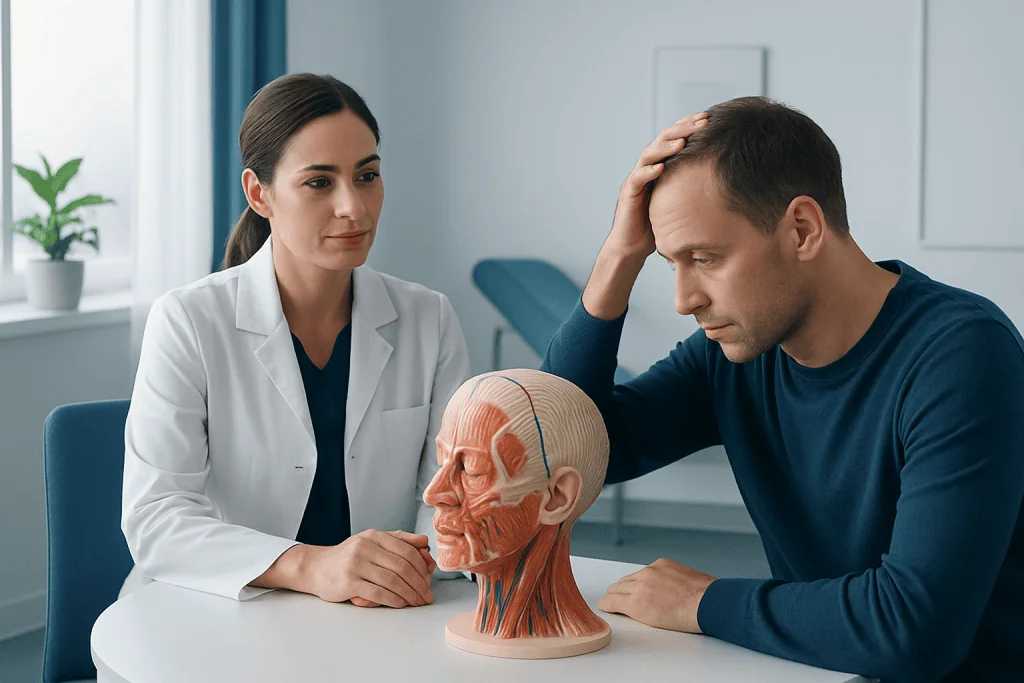
A high hairline or prominent forehead can be a normal inherited facial feature. Genetics strongly influence forehead height, scalp elasticity, and the shape of the frontal hairline. Some people simply have a naturally larger upper facial third, and this is not a sign of illness.
Hair loss can also make the forehead appear longer over time. In those cases, a surgeon may look for pattern hair loss, previous hair transplantation, scarring, traction from hairstyles, or past surgery that altered the hairline. Women and men can both seek help for these concerns, although the surgical plan may differ.
Not everyone is a good candidate for scalp advancement. Limited scalp flexibility, thin hair density, a tendency to form thick scars, or an unstable pattern of hair loss may affect planning. A full medical history is important, including medications, smoking, and previous procedures on the scalp or forehead.
Diagnosis and Pre-Surgical Evaluation
Diagnosis in aesthetic scalp surgery begins with a detailed consultation and physical examination. The surgeon assesses forehead height, hairline position, scalp laxity, brow position, hair density, and facial proportions from different angles. Photographs are often taken for planning and discussion.
The surgeon may ask about goals in daily life, hairstyle preferences, prior hair treatments, and any family history of hair thinning. It is also important to review general health, because conditions that affect healing or bleeding can influence the timing and safety of surgery.
Some patients benefit from discussion with related specialists. For example, if the hairline concern is partly due to hair loss, a hair restoration strategy may be considered alongside surgical contouring. In selected cases, a broader facial plan may include the forehead, brows, and surrounding features so that the result looks proportionate from multiple viewpoints.
Treatment Options
The main surgical option is scalp advancement, in which the hair-bearing scalp is carefully mobilized and moved forward to lower the hairline. The incision is usually planned along or near the existing hairline so that it can be hidden as much as possible in the hair pattern. The surgeon then shapes the new contour to match the patient’s facial structure.
Depending on anatomy, the procedure may be combined with additional techniques. Some patients need a brow position adjustment, while others may benefit from hair transplantation after healing to soften the edge of the hairline. In certain facial balance concerns, procedures such as oculoplastic surgery or other adjacent aesthetic treatments may be discussed as part of an overall plan, but only when truly relevant to the patient’s anatomy.
Non-surgical options can sometimes help patients decide whether they want to proceed. Hairstyling, bangs, makeup contouring, and temporary camouflage methods may improve appearance without surgery. However, these methods do not change the underlying hairline position. A qualified surgeon can explain which choices are realistic and which are best avoided.
What to Expect During Surgery and Recovery
Aesthetic scalp surgery is usually performed under anesthesia, depending on the extent of the procedure and the surgeon’s recommendation. The operation may take several hours because the scalp must be released carefully to preserve blood supply and create a smooth, natural result. Precision matters, especially around the hairline and temples.
After surgery, patients commonly experience swelling, tightness, mild discomfort, and temporary numbness around the incision area. These effects generally improve with time. The scalp may feel tender when washing or sleeping, so patients are usually advised to follow wound-care instructions closely and avoid pressure on the incision.
Activity limits are important during the healing phase. Heavy exercise, bending, or anything that increases swelling is usually restricted for a period of time. Most patients are also advised to avoid smoking, because it can slow healing and affect scar quality. Follow-up visits allow the surgeon to monitor incision healing and discuss when normal routines can resume.
Prevention and Self-care
Because the need for aesthetic scalp surgery is usually related to natural anatomy or hair loss, prevention is not always possible. Still, patients can support scalp health by protecting the hair from traction, avoiding harsh styling practices, and seeking early evaluation if thinning or recession is progressing.
Self-care before and after surgery should follow the surgeon’s instructions. This may include gentle cleansing, protecting the incision from sun exposure, and avoiding unapproved hair products until healing is complete. Good nutrition, adequate hydration, and stopping smoking can also support recovery.
It helps to have realistic goals. The purpose of surgery is usually improvement, not perfection. A natural-looking hairline that suits the face often produces a better long-term outcome than an overly aggressive change. Patients may also discuss whether related contouring procedures, such as aesthetic neck contouring, are part of a wider facial balancing plan.
When to See a Doctor
Anyone considering a change to the hairline or forehead shape should start with a consultation with a qualified plastic or reconstructive surgeon. The surgeon can determine whether scalp advancement, hair restoration, a brow procedure, or a non-surgical approach is most appropriate.
Medical review is especially important if hairline changes are happening quickly, if there is patchy hair loss, scarring, pain, itching, or scalp skin changes, or if the patient has a history of poor wound healing. These findings may suggest a condition that should be addressed before cosmetic planning.
Patients should also seek advice before surgery if they take blood-thinning medicines, smoke, or have chronic health conditions that may affect healing. In the right setting, Acibadem International’s multidisciplinary specialists and JCI-accredited hospitals can diagnose and treat this condition for international patients with coordinated care.
Frequently asked questions
What is aesthetic scalp surgery used for?
It is used to move the hair-bearing scalp forward and lower a high hairline or refine forehead shape. The aim is to create a more balanced facial proportion while keeping the result natural-looking.
Who is a good candidate for hairline lowering surgery?
Good candidates usually have a stable hairline, enough scalp laxity, and realistic expectations. A surgeon also considers hair density, scar tendency, and whether hair loss is still progressing.
Is the procedure the same as a hair transplant?
No, they are different. Scalp surgery moves existing hair-bearing scalp, while a hair transplant relocates individual follicles to improve density or shape.
How long does recovery usually take?
Recovery varies, but most patients can expect swelling, tightness, and temporary activity restrictions during the early healing period. The surgeon will guide them on washing, sleeping, exercise, and return to work based on the extent of surgery.
Will the scar be visible?
Surgeons plan incisions carefully to hide them as much as possible, often near the hairline or within hair-bearing scalp. The final appearance depends on healing, hair density, and individual scar formation.
Can forehead shape be improved without surgery?
Sometimes the appearance can be softened with hairstyling, makeup, or other non-surgical methods. These options do not change the hairline position, but they may help some people decide whether surgery is necessary.
References
- American Society of Plastic Surgeons
- Mayo Clinic
- Cleveland Clinic
- International Society of Aesthetic Plastic Surgery
This article is for general information only and is not a substitute for professional medical advice. Please consult a qualified doctor about your individual situation.
Aesthetic Scalp Surgery in Turkey — costs, top hospitals & a free quote
JCI-accredited · board-certified surgeons · reply within 24h
Add us as a Preferred Source to see more of our trusted health content across Google Search, AI Overviews and Discover.

Plastic, Reconstructive & Aesthetic Surgery
Reconstructive and aesthetic procedures for the face and body, performed by experienced surgeons.
35 specialists in this unitRelated Treatments
Related Conditions
More from the Health Library



Related Specialists

Prof. Dr. Şükrü Yazar
Aesthetic Plastic & Reconstructive Surgery
Assoc. Prof. Dr. Erdem Güven (m)
Aesthetic Plastic & Reconstructive Surgery
Prof. Dr. Hakan Ağır
Aesthetic Plastic & Reconstructive Surgery
Prof. Dr. Bülent Saçak
Aesthetic Plastic & Reconstructive Surgery