

Aesthetic Scalp Surgery: Who Is a Good Candidate for Hairline Correction?

Hairline correction aims to improve hairline shape, position, or symmetry for cosmetic or reconstructive reasons. The best candidates typically have good scalp flexibility, sufficient hair density behind the hairline, and stable hair loss.
Key Takeaways
- Hairline correction aims to improve hairline shape, position, or symmetry for cosmetic or reconstructive reasons.
- The best candidates typically have good scalp flexibility, sufficient hair density behind the hairline, and stable hair loss.
- A specialist assessment is important to decide whether scalp advancement, hair transplantation, scar revision, or a combination is most appropriate.
- Smoking, active scalp disease, uncontrolled medical conditions, and unrealistic expectations can affect suitability and healing.
- Recovery involves temporary swelling, tightness, and scar care, with final results becoming clearer over time.
Aesthetic scalp surgery for hairline correction can help reshape a naturally high, uneven, or scar-affected hairline when non-surgical options are not enough. Good candidates usually have healthy scalp tissue, a stable pattern of hair loss, and realistic expectations about results and recovery.
Overview: What Is Aesthetic Scalp Surgery for Hairline Correction?
Aesthetic scalp surgery for hairline correction refers to procedures designed to improve the position, shape, or symmetry of the frontal hairline. People may seek treatment because they feel their forehead appears too high, the hairline is naturally uneven, or previous scarring has changed the way the hairline looks. In some cases, hairline correction is also considered after trauma, burns, or prior surgery.
The term covers more than one approach. Depending on the person’s anatomy and goals, treatment may involve scalp advancement to lower the hairline, surgical scar revision, or hair transplantation to refine edges and add density. Some patients benefit most from a combined plan rather than a single procedure. A consultation for aesthetic scalp surgery helps clarify which option is likely to be safest and most effective.
Hairline correction is usually elective, meaning it is chosen to improve appearance and confidence rather than to treat a medical emergency. Even so, it should be approached with the same care as any surgery. A qualified surgeon considers scalp health, hair characteristics, healing tendency, and long-term hair loss patterns before recommending treatment.
Who Is a Good Candidate?
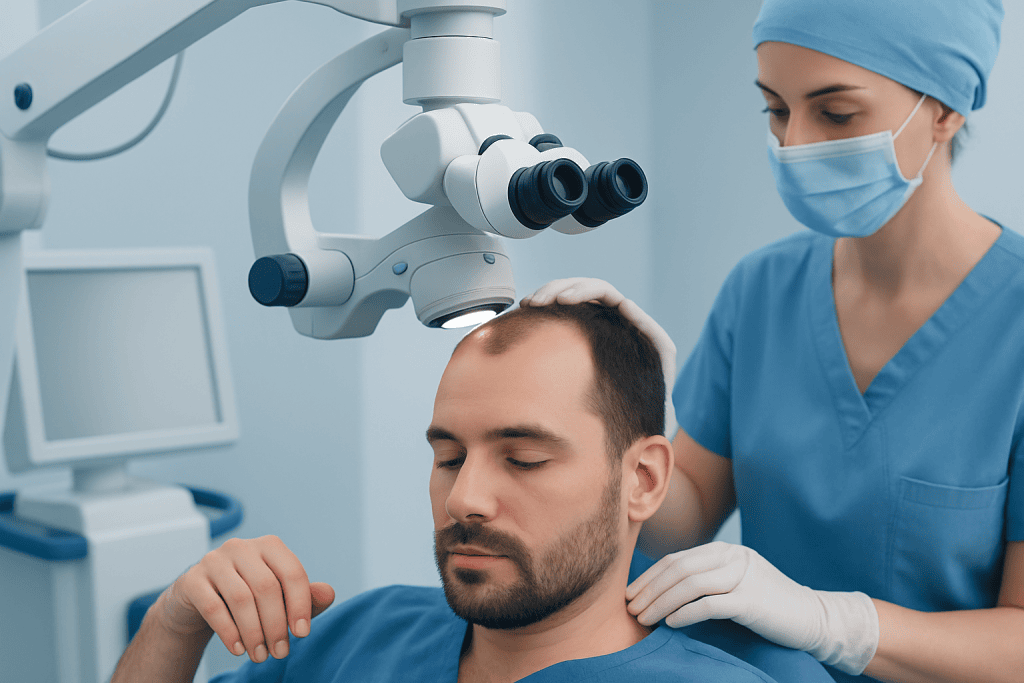
A good candidate for hairline correction is someone who is bothered by the appearance of the hairline and has anatomy that supports a safe, predictable result. This often includes people with a naturally high hairline, a broad forehead, mild asymmetry, or visible scars that distort the hairline. The person should be in generally good health and understand that surgery can improve proportions, but not create perfection.
Scalp flexibility is an important factor, especially if hairline lowering through scalp advancement is being considered. A surgeon also looks at the density and quality of hair behind the existing hairline, because this affects how natural the final result may appear. If the hair is very thin or loss is progressing, a different approach may be recommended.
Stable hair loss matters. If someone has active or rapidly advancing hair thinning, lowering the hairline too aggressively may lead to an unnatural look over time as surrounding hair changes. For that reason, a specialist may suggest waiting, monitoring, or combining surgery with other treatments. The best candidates are usually those whose pattern of hair loss is limited or stable.
Good candidates also tend to have realistic goals, patience for recovery, and a willingness to follow aftercare instructions. Emotional readiness is important in cosmetic surgery. The decision should be personal and well considered, not made under pressure from others.
When Hairline Correction May Be Considered

Hairline correction may be considered for aesthetic reasons, such as a forehead that appears disproportionately large or a hairline with irregular contours. It can also be useful in reconstructive situations, including scarring from previous operations, injury, or healed burns that altered hair-bearing skin. In these cases, treatment planning focuses not only on appearance but also on scar quality, tissue movement, and blood supply.
Some people seek surgery after cosmetic procedures in nearby areas of the face or brow if they want overall balance between the forehead and upper facial features. Others want to soften the appearance of temporal recession or improve symmetry after a prior hair restoration procedure. A surgeon assesses whether the desired change is best achieved through one operation or in stages.
Hairline correction may also be discussed when thick or raised scarring affects the scalp. People with a known tendency toward keloid scars need special evaluation, because their healing pattern may increase the risk of a prominent scar after surgery. This does not always rule out treatment, but it can influence technique, timing, and aftercare.
Not every person troubled by their hairline needs scalp surgery. Some are better served by hair transplantation, styling changes, medical treatment for hair loss, or a combination approach. The choice depends on anatomy, expectations, and the reason the hairline looks the way it does.
Who May Not Be an Ideal Candidate?
A person may not be an ideal candidate if there is active hair loss that is likely to continue changing the hairline, especially without a plan for long-term management. Surgery that looks balanced at first may appear less natural later if surrounding hair continues to thin. This is one reason careful diagnosis comes before cosmetic planning.
Other factors can also limit suitability. These include poor scalp laxity, very low hair density behind the frontal hairline, active scalp inflammation, untreated skin conditions, or certain medical problems that affect healing. Smoking and nicotine use are especially important because they can reduce blood flow and increase the risk of delayed wound healing or poor scar quality.
Psychological readiness matters too. People who expect perfection, instant final results, or a dramatic change beyond what anatomy allows may not be good candidates until expectations are discussed more fully. Cosmetic surgery tends to be most satisfying when goals are specific, realistic, and aligned with what the procedure can safely achieve.
Sometimes the surgeon recommends postponing surgery. For example, someone recovering from major stress-related hair shedding, active dermatologic disease, or recent facial injury may benefit from waiting until tissues and hair patterns are more stable. If hairline concerns are related to a broader reconstructive issue, treatment may be coordinated with other specialists involved in cosmetic (aesthetic) surgery planning.
How Specialists Evaluate Candidacy
Evaluation begins with a detailed medical history and physical examination. The surgeon asks about general health, medications, allergies, smoking, previous scalp procedures, and any history of abnormal scarring. Hair loss history is equally important, including when thinning began, whether it is progressing, and whether close relatives have similar patterns.
During the examination, the surgeon assesses forehead proportions, current hairline shape, scalp laxity, skin quality, scar location, and hair density. Photographs are often taken for planning and comparison. In some cases, additional evaluation by a dermatologist may be helpful if there are signs of scalp disease or uncertain causes of hair loss.
The consultation also includes a discussion of goals. Some people want the hairline lowered by a modest amount, while others mainly want softer contours or improved symmetry. The safest plan is usually the one that matches both the patient’s wishes and the natural limits of the scalp and hair. A surgeon may show how much movement is realistic and explain where scars are likely to be placed.
If there is a history of trauma or reconstructive needs, the evaluation may be more complex. Patients with prior facial trauma or scalp injury may have altered tissue elasticity and blood supply, which can affect planning. This is why personalized assessment is essential and why two people with similar hairline concerns may be offered different solutions.
Treatment Options for Hairline Correction
There is no single technique that suits everyone. Hairline lowering surgery, often called scalp advancement, moves the hair-bearing scalp forward to reduce forehead height in selected patients with good scalp flexibility. This can produce an immediate change in hairline position, although swelling, temporary numbness, and scar maturation are part of normal recovery.
Hair transplantation is another option and may be used alone or after scalp advancement to refine shape, fill corners, or soften the leading edge of the hairline. It is particularly useful when a very natural transition is needed or when scalp movement alone cannot provide enough change. In some cases, a surgeon may suggest a staged plan that combines advancement first and grafting later for detail work.
Scar revision may be considered when an old scar at the hairline or scalp is wide, raised, or irregular. This can be relevant after prior surgery or injury, including situations managed within reconstructive pathways such as reconstructive ophthalmology when neighboring facial tissues are involved. The aim is to improve the way the scar blends with surrounding hair-bearing skin, although no scar can be completely erased.
Other supportive measures may include medical management of hair loss, advice about timing, and planning around future aging changes. The surgeon explains benefits, limits, expected scars, likely recovery time, and whether more than one procedure may be needed to reach the desired result.
Recovery, Risks, and Self-Care
Recovery after hairline correction depends on the exact procedure, but most patients can expect some swelling, tightness, tenderness, and temporary numbness near the incision or treated area. Stitches or staples may be used, and scar care instructions are important. The care team usually advises gentle washing, avoiding tension on the scalp, and limiting strenuous activity for a period recommended by the surgeon.
It is normal for the result to evolve over time. Early swelling can make the hairline appear different from the final outcome, and scars typically soften and mature gradually. When hair transplantation is part of the plan, growth takes additional time, so patience is essential.
Every surgery carries risks. Possible concerns include bleeding, infection, delayed healing, asymmetry, visible scarring, numbness, and dissatisfaction with cosmetic results. In hairline surgery specifically, the future pattern of hair loss is an important long-term consideration. A careful preoperative assessment helps reduce risk, but cannot remove it completely.
Self-care matters before and after the procedure. Stopping smoking if advised, following medication instructions, protecting the scalp from sun exposure, and attending follow-up visits all support healing. Near the end of the care pathway, centers such as Acibadem International may provide multidisciplinary assessment and treatment for international patients through JCI-accredited hospitals when aesthetic or reconstructive scalp concerns require specialist care.
When to See a Doctor
A medical consultation is helpful when a person is considering changing the shape or position of the hairline and wants to understand which options are realistic. It is especially important if there is a history of rapidly changing hair loss, scalp scarring, prior surgery, burns, or trauma, because these factors can affect both safety and the final result.
Professional evaluation is also recommended if there are signs of scalp disease, such as redness, scaling, pain, itching, or patchy hair loss. In these situations, the underlying condition should be diagnosed before cosmetic treatment is planned. Treating the cause first can improve outcomes and may even change whether surgery is needed.
After surgery, patients should contact their doctor promptly if they develop increasing pain, significant swelling, drainage, fever, or any other symptom that seems unusual. They should also seek advice if they are worried about scar healing or changes in sensation. Timely follow-up helps address concerns early and supports the best possible recovery.
Frequently asked questions
What is the difference between hairline lowering surgery and a hair transplant?
Hairline lowering surgery moves the existing hair-bearing scalp forward, while a hair transplant places hair follicles into selected areas to change shape or add density. Lowering surgery can create an immediate shift in position in suitable patients, whereas transplantation usually takes longer to show visible growth. Some people benefit from a combination of both.
How do doctors decide if someone is a good candidate for hairline correction?
Doctors assess overall health, scalp flexibility, hair density, hair loss stability, scar history, and personal goals. They also examine whether the desired change matches what the scalp and hair can safely support. A stable pattern of hair loss and realistic expectations are usually important factors.
Can aesthetic scalp surgery help with scars along the hairline?
Yes, in selected cases it may help improve the appearance of hairline or scalp scars. The exact approach depends on the scar’s size, thickness, location, and the quality of surrounding tissue. Improvement is often possible, but complete scar removal is not realistic.
Will the results look natural?
Natural-looking results depend on careful planning, appropriate technique, and the person’s individual hair characteristics. Surgeons consider hair direction, density, forehead proportions, and future hair loss patterns. In some cases, a staged approach gives the most natural final appearance.
Is recovery from hairline correction difficult?
Most people experience temporary swelling, tightness, tenderness, and some numbness during recovery. These symptoms are usually manageable and improve over time with proper aftercare. The doctor will explain activity limits, wound care, and when normal routines can gradually resume.
Can future hair loss affect the result?
Yes, ongoing hair loss can change how the hairline looks over time. That is why doctors pay close attention to whether thinning is stable before recommending surgery. In some patients, long-term planning may include monitoring, medical treatment, or combining procedures.
References
- American Society of Plastic Surgeons
- International Society of Hair Restoration Surgery
- American Academy of Dermatology
- National Health Service
- Mayo Clinic
This article is for general information only and is not a substitute for professional medical advice. Please consult a qualified doctor about your individual situation.
Aesthetic Scalp Surgery in Turkey — costs, top hospitals & a free quote
JCI-accredited · board-certified surgeons · reply within 24h
Add us as a Preferred Source to see more of our trusted health content across Google Search, AI Overviews and Discover.

Plastic, Reconstructive & Aesthetic Surgery
Reconstructive and aesthetic procedures for the face and body, performed by experienced surgeons.
35 specialists in this unitRelated Treatments
Related Conditions
More from the Health Library



Related Specialists
Assoc. Prof. Dr. Erdem Güven (m)
Aesthetic Plastic & Reconstructive Surgery
Prof. Dr. Şükrü Yazar
Aesthetic Plastic & Reconstructive Surgery
Prof. Dr. Hakan Ağır
Aesthetic Plastic & Reconstructive Surgery
Prof. Dr. Bülent Saçak
Aesthetic Plastic & Reconstructive Surgery