And Uterine Cancer: Early Signs, Risk Factors, and How It Is Treated

Abnormal vaginal bleeding, especially after menopause, is the most common early warning sign. Most uterine cancers begin in the endometrium, the inner lining of the uterus.
Key Takeaways
- Abnormal vaginal bleeding, especially after menopause, is the most common early warning sign.
- Most uterine cancers begin in the endometrium, the inner lining of the uterus.
- Diagnosis often involves pelvic evaluation, ultrasound, and endometrial biopsy.
- Treatment depends on the cancer type and stage, but surgery is commonly the first step.
- Prompt medical assessment of unusual bleeding can lead to earlier diagnosis and better treatment planning.
And uterine cancer most often refers to cancer that starts in the lining of the uterus, called endometrial cancer. It commonly causes abnormal vaginal bleeding early, and many cases are treatable when diagnosed promptly.
Overview
And uterine cancer usually refers to cancer that develops in the uterus, most commonly in the endometrium, which is the inner lining of the womb. The main early clue is abnormal vaginal bleeding, especially bleeding after menopause or bleeding between periods. Because this symptom often appears early, many people are diagnosed before the disease has spread widely.
There are different types of uterine cancer. The most common is endometrial cancer, while less common forms include uterine sarcoma, which starts in the muscle or supporting tissues of the uterus. These cancers can behave differently, so accurate diagnosis is important before treatment decisions are made.
Uterine cancer is distinct from cervical cancer, which begins in the cervix, and from ovarian cancer, which begins in the ovaries. Although symptoms can sometimes overlap, the causes, tests, and treatments are not the same. A structured evaluation helps identify the source of symptoms and guide the next steps.
Early Signs and Symptoms
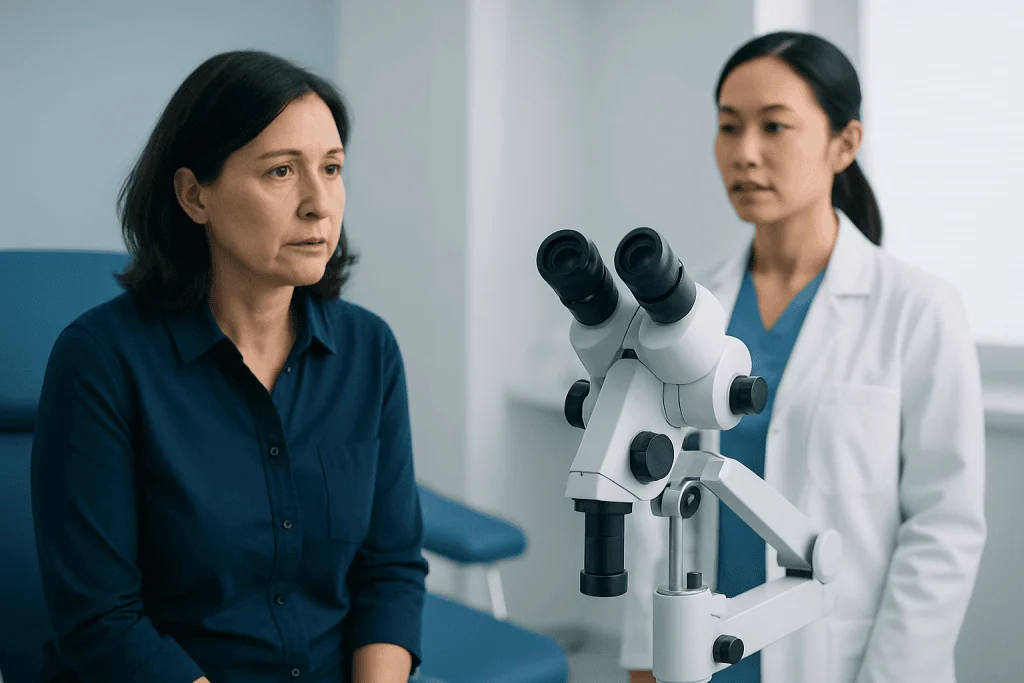
The most common symptom of uterine cancer is abnormal vaginal bleeding. In a person who has gone through menopause, any vaginal bleeding should be assessed by a doctor. In someone who still has menstrual periods, warning signs may include bleeding between periods, much heavier periods than usual, or bleeding that is becoming more frequent or irregular.
Other symptoms can include watery or blood-streaked vaginal discharge, pelvic pain or pressure, and discomfort during intercourse. These symptoms do not always mean cancer, and they may also be caused by benign conditions such as fibroids, polyps, or hormonal changes. Still, persistent or unexplained symptoms deserve medical attention.
As the disease advances, some people may notice pain in the lower abdomen, unintentional weight loss, fatigue, or changes in bladder or bowel habits. These later symptoms are less specific and can occur in many conditions. Early evaluation is especially helpful because uterine cancer is often more treatable when found at an earlier stage.
Some people first learn about a possible problem during testing for endometriosis or other gynecologic concerns. Even when another condition is present, new or unusual bleeding should not be assumed to be part of a known diagnosis without proper evaluation.
What Causes It and Who Is at Higher Risk?

Uterine cancer develops when cells in the uterus begin to grow in an abnormal and uncontrolled way. In many cases, the exact trigger is not clear. However, doctors know that prolonged exposure to estrogen without enough balancing progesterone can increase the risk of changes in the endometrial lining.
Several factors are linked with a higher risk of endometrial cancer. These include older age, obesity, a history of irregular ovulation, never having been pregnant, early onset of menstruation, later menopause, and certain inherited conditions such as Lynch syndrome. Diabetes, high blood pressure, and a history of thickened endometrium or endometrial hyperplasia may also raise risk.
Use of tamoxifen for breast cancer can slightly increase the risk of endometrial cancer in some people, though its benefits may still outweigh this concern. Family history also matters, especially if close relatives have had uterine, colon, or ovarian cancer. People with a strong family history may benefit from personalized risk assessment and genetic counseling.
Not everyone with risk factors develops uterine cancer, and some people diagnosed with it have few or no obvious risk factors. That is why symptoms remain so important. Abnormal bleeding should be checked regardless of age or personal medical history.
How Uterine Cancer Is Diagnosed
Diagnosis usually starts with a medical history and pelvic examination. The doctor asks about bleeding patterns, menopause status, medications, family history, and other health conditions. If uterine cancer is suspected, the next step often includes imaging and a sample of tissue from the uterine lining.
A transvaginal ultrasound may be used to measure the thickness of the endometrium and look for structural changes such as masses or polyps. While ultrasound can raise or lower suspicion, it does not confirm cancer by itself. The most important test for many patients is an endometrial biopsy, which removes a small sample of tissue for laboratory analysis.
Some people may also need hysteroscopy, a procedure that allows the doctor to look inside the uterus with a thin camera, or dilation and curettage if a larger tissue sample is needed. If cancer is confirmed, additional tests such as MRI, CT, or blood work may help determine the stage and support treatment planning.
When care is coordinated through a gynecologic oncology team, diagnosis and staging can be organized efficiently. Imaging tests such as MRI scanning and CT imaging may be used when there is concern about local spread or disease outside the uterus.
Treatment Options
Treatment depends on the type of uterine cancer, how far it has spread, the tumor grade, and the person’s overall health and goals. For most endometrial cancers, surgery is the main treatment. This commonly involves removal of the uterus, and often the ovaries and fallopian tubes, with evaluation of nearby lymph nodes when needed.
Some patients may also need radiation therapy to reduce the chance of recurrence, especially if there are higher-risk features. Radiation may be delivered internally, externally, or both, depending on the individual case. Chemotherapy is more often used for advanced disease, aggressive subtypes, or cancer that has returned after earlier treatment.
Hormone therapy may be considered in selected cases, particularly for cancers that respond to hormones or in patients who are not candidates for surgery right away. Targeted therapy and immunotherapy may also play a role for certain advanced or recurrent cancers based on tumor characteristics. Molecular testing can help doctors decide whether these treatments may be useful.
For people with a confirmed diagnosis, referral to a specialist team experienced in gynecologic oncology is important. In appropriate cases, treatment planning may also involve medical oncology for systemic therapies and long-term follow-up.
Living With the Diagnosis and Recovery After Treatment
Hearing that there may be uterine cancer can feel overwhelming, but many patients are treated successfully, especially when the disease is found early. Understanding the diagnosis, stage, and treatment options can help people take an active role in decisions. It is reasonable to ask about the goals of treatment, expected recovery, possible side effects, and how follow-up will be organized.
Recovery depends on the type of treatment received. After surgery, patients may need time for pain control, wound healing, and a gradual return to activity. If radiation or chemotherapy is part of treatment, fatigue, bowel or bladder changes, and other side effects may need supportive care and monitoring.
Follow-up visits are important after treatment because they help detect recurrence, manage side effects, and address emotional wellbeing. Pelvic symptoms, new bleeding, ongoing pain, or unexplained weight loss should be reported. Many people also benefit from discussing sexual health, menopause symptoms, fertility concerns, or body image changes as part of recovery.
Near the end of the care pathway, some patients choose centers that can coordinate surgery, pathology, imaging, and oncology services in one setting. Acibadem International’s multidisciplinary specialists and JCI-accredited hospitals diagnose and treat uterine cancer for international patients as part of comprehensive cancer care.
Prevention and Self-care
There is no guaranteed way to prevent uterine cancer, but some steps may help lower risk. Maintaining a healthy weight, staying physically active, and managing conditions such as diabetes can support hormonal and metabolic health. These measures are useful for overall wellbeing even though they cannot completely eliminate risk.
Regular gynecologic care helps address abnormal bleeding early and identify other conditions that may need treatment. People with irregular periods, polycystic ovary syndrome, or known endometrial hyperplasia may need closer follow-up. Those with a strong family history of uterine or colon cancer should ask whether genetic counseling is appropriate.
Self-care also includes paying attention to changes in bleeding patterns, discharge, pelvic pain, and general health. Keeping a record of symptoms can make medical visits more productive. Anyone who has gone through menopause should treat new vaginal bleeding as a reason to seek timely medical assessment.
- Track menstrual changes or postmenopausal bleeding.
- Attend routine gynecologic checkups.
- Discuss family history of uterine, colon, or ovarian cancer with a doctor.
- Seek advice promptly for persistent pelvic pain or unusual discharge.
When to Seek Medical Care
Medical care should be sought if there is any vaginal bleeding after menopause, bleeding between periods, or periods that become noticeably heavier or more prolonged than usual. These symptoms are often caused by noncancerous conditions, but they should still be evaluated to rule out uterine cancer or other important gynecologic problems.
An appointment is also advisable for persistent watery or blood-tinged discharge, pelvic pressure, lower abdominal pain, or unexplained fatigue and weight loss. People with risk factors such as obesity, Lynch syndrome, or a history of endometrial hyperplasia should be especially alert to new symptoms.
Urgent medical attention may be needed for very heavy bleeding, dizziness, fainting, severe pain, or symptoms that are rapidly worsening. A qualified doctor can decide which tests are appropriate and whether specialist referral is needed. Early assessment is the safest way to clarify the cause and begin treatment if required.
Frequently asked questions
What is the difference between uterine cancer and endometrial cancer?
Uterine cancer is a broader term for cancers that start in the uterus. Endometrial cancer is the most common type and begins in the inner lining of the uterus, while rarer types such as uterine sarcoma begin in the muscle or connective tissue.
Is bleeding after menopause always a sign of uterine cancer?
No, bleeding after menopause can have several causes, including polyps, thinning of the vaginal tissues, or hormone-related changes. However, it should always be evaluated because it is also a common early symptom of uterine cancer.
Can younger women get uterine cancer?
Yes, although uterine cancer is more common after menopause, it can also occur in younger women. Risk may be higher in those with obesity, irregular ovulation, certain genetic conditions, or long-term hormonal imbalance.
How is uterine cancer confirmed?
A diagnosis is usually confirmed with an endometrial biopsy, which examines tissue from the uterine lining under a microscope. Ultrasound and other imaging tests can support evaluation, but tissue testing is typically needed to make the diagnosis.
Is uterine cancer curable?
Many cases are treatable and may be cured, especially when found early and still limited to the uterus. The outlook depends on the cancer type, stage, grade, and how well it responds to treatment.
Will treatment always require removal of the uterus?
Surgery is the standard treatment for many patients and often includes removal of the uterus. In selected situations, such as specific early cancers or when surgery is not suitable, hormone therapy or other treatments may be considered by a specialist team.
References
- World Health Organization
- American Cancer Society
- National Cancer Institute
- American College of Obstetricians and Gynecologists
- National Comprehensive Cancer Network
This article is for general information only and is not a substitute for professional medical advice. Please consult a qualified doctor about your individual situation.
Oncology care in Turkey — second opinion and treatment plan
JCI-accredited · board-certified surgeons · reply within 24h
Add us as a Preferred Source to see more of our trusted health content across Google Search, AI Overviews and Discover.
Check your numbers in seconds
BMI, calories, due date, blood pressure and 30+ more clinical calculators — free, instant, doctor-reviewed ranges.