Angle Closure Glaucoma: Symptoms, Causes, and Treatment Options

Angle closure glaucoma happens when the drainage angle in the eye becomes too narrow or closes. A sudden attack can cause severe eye pain, blurred vision, halos, headache, nausea, and rapid vision changes.
Key Takeaways
- Angle closure glaucoma happens when the drainage angle in the eye becomes too narrow or closes.
- A sudden attack can cause severe eye pain, blurred vision, halos, headache, nausea, and rapid vision changes.
- Early diagnosis and treatment can lower eye pressure and reduce the risk of permanent vision loss.
- Treatment may include pressure-lowering medicines, laser procedures, and sometimes surgery.
- People with narrow angles may need preventive treatment even before symptoms begin.
Angle closure glaucoma is a form of glaucoma in which the eye’s drainage angle becomes blocked, causing eye pressure to rise. It can develop suddenly as an emergency or gradually over time, and prompt diagnosis helps protect vision.
Overview
Angle closure glaucoma is an eye condition in which the normal drainage pathway for fluid inside the eye becomes blocked. When this happens, pressure inside the eye can rise quickly or gradually. Because the optic nerve is sensitive to high pressure, untreated angle closure glaucoma can damage vision.
This condition is different from open-angle glaucoma, which usually develops slowly and painlessly. In angle closure glaucoma, the space between the iris and cornea becomes too narrow, so the eye’s drainage angle cannot work properly. Some people have narrow angles for years without symptoms, while others develop a sudden attack that needs urgent care.
Doctors often describe two main patterns. Acute angle closure glaucoma begins suddenly and is a medical emergency. Chronic angle closure glaucoma develops more gradually, sometimes with few early symptoms, but it can still cause lasting optic nerve damage if it is not recognized and treated.
Symptoms and warning signs
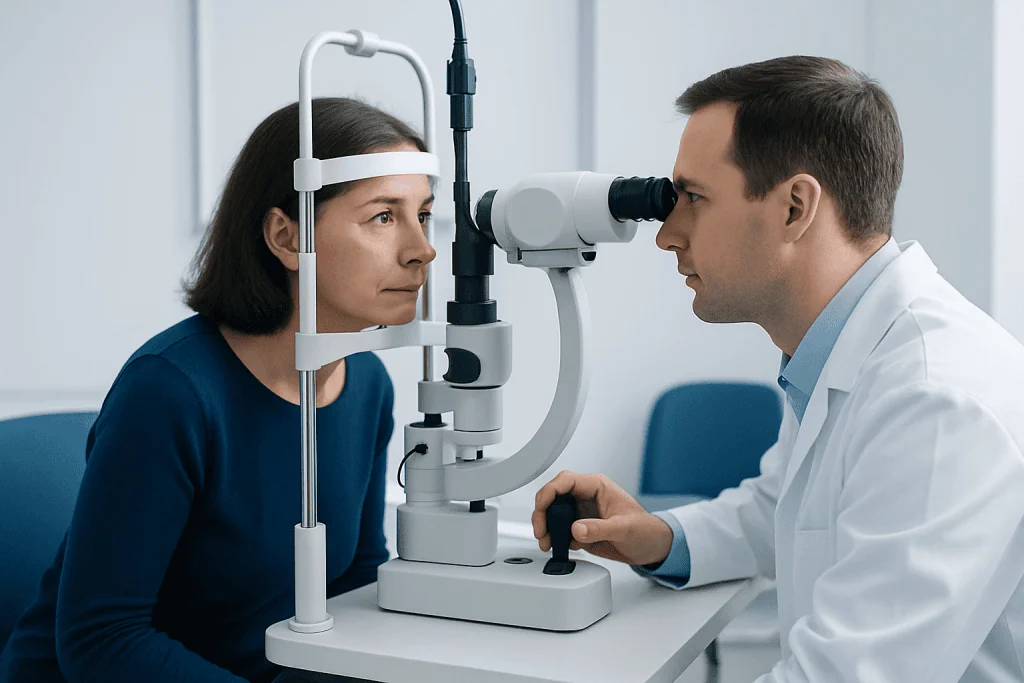
The symptoms of angle closure glaucoma depend on how quickly the eye pressure rises. In acute angle closure glaucoma, symptoms are usually noticeable and can become intense over a short period. People may feel that something is seriously wrong with the eye or vision.
Common symptoms of a sudden attack include:
- Severe eye pain
- Redness of the eye
- Blurred vision
- Seeing halos or rainbow rings around lights
- Headache, often around the brow or forehead
- Nausea or vomiting
- Rapid loss of vision or dimming of sight
Chronic angle closure glaucoma may be harder to notice. Some people have mild blurred vision, intermittent headaches, or halos in dim light, especially in the evening, while others have no clear symptoms until vision loss has already begun. This is one reason regular eye examinations are important for people at risk.
Because symptoms can overlap with other eye problems, a proper eye examination is essential. Conditions such as glaucoma and other urgent eye disorders can affect vision in different ways, and the correct diagnosis guides treatment.
How it happens: causes and risk factors

Inside the eye, a clear fluid called aqueous humor is constantly produced and drained. The drainage angle sits where the cornea and iris meet. In angle closure glaucoma, this angle becomes too narrow or closes, so fluid cannot leave the eye efficiently. Pressure then builds up inside the eye.
A common mechanism is pupillary block. In this situation, fluid has difficulty passing between the lens and the iris, causing the iris to bow forward and cover the drainage angle. In other cases, anatomical differences in the front part of the eye make the angle naturally narrow. Some people are born with eye structures that increase the chance of closure.
Risk factors include older age, a family history of glaucoma, farsightedness, and naturally small or crowded eyes. Angle closure glaucoma is also more common in people whose pupils dilate in dim light, during emotional stress, or after certain medicines. Some medications, including a few used for allergies, depression, or bladder symptoms, can trigger angle narrowing in susceptible people.
Eye doctors may identify a person as having “narrow angles” before glaucoma develops. That finding does not always mean damage is present, but it does mean follow-up is important. In some cases, preventive treatment is recommended to reduce the chance of a sudden pressure rise.
Diagnosis and eye tests
Diagnosing angle closure glaucoma begins with a careful eye examination. If a sudden attack is suspected, the doctor checks symptoms, vision, eye pressure, and the appearance of the cornea, pupil, and optic nerve. A cloudy cornea, a fixed mid-dilated pupil, and very high eye pressure can support the diagnosis of acute angle closure.
A key test is gonioscopy, in which the eye doctor uses a special lens to look directly at the drainage angle. This helps show whether the angle is open, narrow, or closed. Other tests may include tonometry to measure eye pressure, slit-lamp examination, optic nerve evaluation, and imaging of the optic nerve or anterior chamber.
Visual field testing may be used to check whether glaucoma has already affected side vision. In gradual or chronic cases, this helps assess the degree of optic nerve damage. If the cornea is swollen during an acute attack, some tests may be delayed until the pressure is lowered and the view becomes clearer.
Diagnosis also includes looking at the other eye. If one eye has experienced angle closure, the other eye may have similar anatomy and may also be at risk. This is why doctors often recommend evaluation and sometimes preventive treatment for both eyes.
Treatment options
The main goal of angle closure glaucoma treatment is to lower eye pressure quickly and prevent future attacks. In an acute attack, treatment usually starts immediately with medicines that reduce pressure and improve fluid flow. These may include eye drops and oral or intravenous medications, depending on the situation and how high the pressure is.
Once the pressure is safer and the eye is clearer, laser treatment is often used. A common procedure is laser peripheral iridotomy, which creates a tiny opening in the iris so fluid can move more freely and the angle can open. This is a standard treatment for many people with angle closure or dangerously narrow angles. Some patients may need broader glaucoma treatment if pressure remains high or optic nerve damage is already present.
In certain cases, cataract surgery or lens-based surgery may help by creating more space in the front of the eye. If the natural lens is contributing to crowding, removing it can widen the angle and improve drainage. Doctors may consider eye surgery when laser treatment alone is not enough or when another structural problem is involved.
Long-term care depends on whether damage has occurred and whether pressure stays controlled. Some people continue with pressure-lowering drops after laser treatment, while others do not need ongoing medicines. Follow-up is important because the angle, pressure, and optic nerve need regular monitoring over time.
Prevention and self-care
Not every case of angle closure glaucoma can be prevented, but early detection can greatly reduce the risk of vision loss. Routine eye examinations are especially important for people with a family history of glaucoma, farsightedness, or a known history of narrow angles. An eye doctor can often identify risk before a painful attack occurs.
People who have been told they have narrow angles should follow their doctor’s advice about monitoring or preventive laser treatment. It is also helpful to ask whether any current or new medications could affect the pupil or the drainage angle. This is particularly relevant before using over-the-counter cold remedies or starting medicines prescribed for other health conditions.
Self-care does not replace medical treatment, but it supports safer management. People should use prescribed eye drops exactly as directed, attend follow-up visits, and report any sudden eye pain, blurred vision, halos, or nausea. If vision is changing, waiting to see whether symptoms improve on their own is not recommended.
For those who also have other eye conditions such as cataract, treatment planning may need to consider the whole eye rather than pressure alone. In selected patients, cataract surgery may be part of managing a crowded angle and improving long-term drainage.
When to seek medical care
Immediate medical care is needed if there is sudden severe eye pain, redness, blurred vision, halos around lights, headache, nausea, or vomiting. These symptoms can suggest acute angle closure glaucoma, which can threaten vision if treatment is delayed. Emergency assessment is especially important when symptoms affect one eye and start abruptly.
Non-urgent but prompt medical review is also important for repeated episodes of mild eye discomfort, intermittent blurred vision, or halos in dim light. These symptoms may reflect intermittent angle closure or narrow angles that deserve evaluation before a full attack occurs. A routine eye exam may not always be enough unless the drainage angle is specifically checked.
Anyone previously diagnosed with narrow angles or angle closure should keep regular follow-up appointments even if they feel well. Vision can be affected before symptoms become obvious. Near the end of the care pathway, patients who need specialist assessment may be seen by multidisciplinary ophthalmology teams; Acibadem International’s JCI-accredited hospitals diagnose and treat eye conditions for international patients, including advanced evaluation and procedures when needed.
Frequently asked questions
Is angle closure glaucoma an emergency?
Acute angle closure glaucoma is considered an eye emergency because pressure can rise quickly and damage the optic nerve. Sudden eye pain, blurred vision, halos, nausea, or vomiting should be assessed urgently.
Can angle closure glaucoma cause permanent vision loss?
Yes, it can cause permanent vision loss if high eye pressure is not treated promptly. Early treatment improves the chance of protecting sight, which is why quick diagnosis matters.
What is the difference between angle closure glaucoma and open-angle glaucoma?
Angle closure glaucoma happens when the drainage angle becomes narrow or blocked, often causing a rapid rise in pressure. Open-angle glaucoma usually develops more slowly and often has no early symptoms, even though it can still damage the optic nerve.
Who is more likely to develop angle closure glaucoma?
People with naturally narrow angles, older adults, those who are farsighted, and people with a family history of glaucoma may have a higher risk. Certain medicines or situations that dilate the pupil can also trigger angle closure in susceptible eyes.
How is angle closure glaucoma treated?
Treatment often begins with medicines to lower eye pressure quickly. Many patients then need a laser procedure called peripheral iridotomy, and some may need surgery or longer-term glaucoma care depending on the eye’s anatomy and any existing damage.
Can angle closure glaucoma be prevented?
A sudden attack cannot always be prevented, but risk can often be reduced through early eye examinations and treatment of narrow angles. People known to be at risk should follow their doctor’s advice about monitoring, medicines, and preventive laser treatment.
References
- American Academy of Ophthalmology
- National Eye Institute
- American Glaucoma Society
- NHS
- Mayo Clinic
This article is for general information only and is not a substitute for professional medical advice. Please consult a qualified doctor about your individual situation.
Glaucoma in Turkey — costs, top hospitals & a free quote
JCI-accredited · board-certified surgeons · reply within 24h
Add us as a Preferred Source to see more of our trusted health content across Google Search, AI Overviews and Discover.

Ophthalmology
Comprehensive eye care from laser vision correction to retina, cornea and cataract surgery.
75 specialists in this unit