

Arm Lift Surgery: Who Is a Good Candidate?

Arm lift surgery is designed to improve the shape of the upper arms by removing loose skin and, in some cases, small amounts of fat. The best candidates are usually at a stable weight, in good overall health, and finished with major weight-loss changes.
Key Takeaways
- Arm lift surgery is designed to improve the shape of the upper arms by removing loose skin and, in some cases, small amounts of fat.
- The best candidates are usually at a stable weight, in good overall health, and finished with major weight-loss changes.
- A consultation focuses on skin quality, medical history, lifestyle factors, and the patient’s goals for arm contour.
- The procedure can help with comfort and clothing fit, but it leaves a scar that should be understood before surgery.
- Recovery takes time, and following the surgeon’s instructions is important for safe healing and the best result.
Arm lift surgery, also called brachioplasty, is a body-contouring procedure that removes excess skin and sometimes fat from the upper arms. Good candidates are generally healthy adults who have realistic expectations and stable weight, and who are bothered by sagging arm tissue that does not improve with exercise.
Overview
Arm lift surgery, medically known as brachioplasty, is a cosmetic procedure that reshapes the upper arms by removing extra skin and, when needed, a limited amount of fat. It is commonly considered by people who notice loose, hanging tissue along the underside of the upper arms, often after significant weight loss or natural aging.
The procedure is not meant to change a person’s overall body size. Instead, it aims to create a smoother, more toned arm contour when diet and exercise are no longer enough to address stretched skin. For some patients, this can also make clothing fit more comfortably and reduce the feeling of heaviness in the upper arms.
Because arm lift surgery involves removing skin, the main question is not only whether a person wants the result, but whether their body is ready for surgery and healing. A careful consultation helps determine whether the benefits are likely to outweigh the risks for that individual.
Symptoms and Concerns That Lead to Consultation

People usually seek an arm lift because they are bothered by visible sagging or “bat wing” appearance in the upper arms. The skin may look stretched, folds may rub together, or the arms may feel less proportionate to the rest of the body.
Some patients also report practical concerns. They may avoid sleeveless clothing, feel self-conscious in social settings, or find that excess skin moves uncomfortably during exercise. In some cases, the area under the arm may become irritated from friction and sweating.
- Loose, hanging skin on the upper arms
- Residual fullness after weight loss
- Discomfort from skin rubbing
- Difficulty finding comfortable clothing
- Feeling self-conscious about arm appearance
These concerns do not automatically mean surgery is the right choice, but they are common reasons people ask about brachioplasty. A surgeon will usually discuss whether the problem is mainly skin laxity, excess fat, or both, since that affects treatment planning.
Causes & Risk Factors
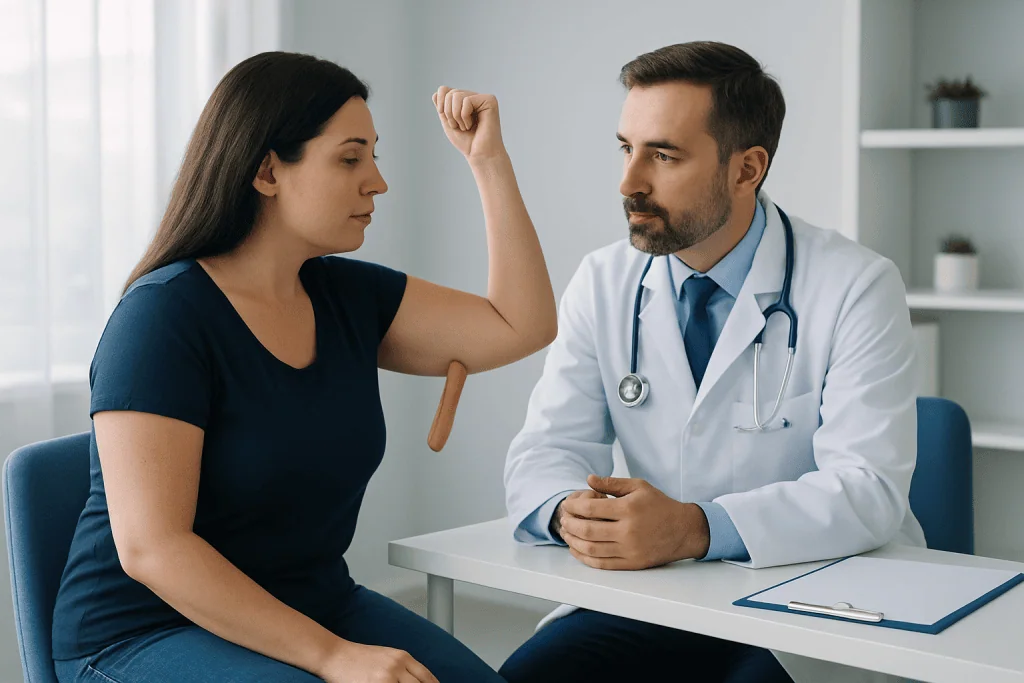
Arm laxity can develop for several reasons. Aging is one of the most common, since skin naturally loses elasticity over time. Major weight loss can also leave behind stretched skin that does not retract fully, even when the person has reached a healthier weight.
Genetics plays a role as well. Some people are more likely to store fat in the upper arms or to have skin that sags earlier than expected. Sun exposure, smoking, and repeated weight changes may further affect skin quality and healing potential.
Not everyone with loose upper-arm skin is a good surgical candidate. Factors that can make surgery less suitable in the short term include uncontrolled medical conditions, active smoking, recent major weight change, and expectations that surgery will replace fitness, weight management, or aging-related skin care.
For people who have had large weight-loss procedures or are still losing weight, surgeons often recommend waiting until weight is stable before considering an arm lift. This helps improve the chance that the result will remain more consistent over time.
Diagnosis and Surgical Evaluation
There is no special laboratory test that determines candidacy for arm lift surgery. Instead, the evaluation is based on a consultation with a plastic surgeon, who reviews the patient’s goals, medical history, medications, and pattern of arm fullness or skin excess.
The surgeon usually examines skin quality, the amount of loose tissue, and whether fat removal alone might help or whether skin tightening is needed. They may also discuss scar placement, because arm lift surgery typically leaves a scar along the inner or back portion of the upper arm.
Medical clearance may be needed for some patients, especially those with heart, lung, clotting, or wound-healing concerns. Preoperative planning may also include stopping smoking, reviewing supplements and blood-thinning medicines, and making sure the patient understands recovery demands.
When appropriate, a surgeon may discuss combined body-contouring procedures such as body contouring or other after-weight-loss options, but the decision depends on safety, anatomy, and the amount of surgery involved. The goal is to create a plan that is both realistic and medically appropriate.
Treatment Options
Arm lift surgery is the main treatment for significant excess upper-arm skin. In many cases, the operation removes a strip of skin and some underlying fat, then repositions the remaining tissue to create a smoother shape. The exact technique depends on how much excess skin is present and where the fullness is located.
Some patients need only a limited procedure, while others benefit from a longer incision when there is more substantial laxity after weight loss. If fat is the main issue and skin quality is good, a surgeon may discuss whether liposuction or a less extensive approach could be helpful, but skin tightening is usually the key part of brachioplasty.
Arm lift surgery may be considered alongside other procedures when a person has had major body changes. In selected patients, surgeons may discuss complementary contouring operations such as abdominoplasty or breast lift surgery if those areas are also affected by skin laxity. These decisions are individualized and depend on surgical safety, recovery time, and patient goals.
The best option is not always the most extensive one. A good surgical plan aims for a balance between improvement in arm contour, scar acceptability, and safe healing.
Who Is a Good Candidate?
Good candidates for arm lift surgery are usually adults who are bothered by loose upper-arm skin and understand that the procedure improves contour rather than creates perfection. They often have stable body weight, healthy enough skin and tissues to heal, and a clear understanding that scars are part of the trade-off for removing excess skin.
Being at a stable weight is especially important. If a person expects to lose a significant amount more weight, the arm shape may change again after surgery. Many surgeons therefore prefer that weight-loss efforts be complete or close to complete before brachioplasty is scheduled.
Other signs of a good candidate include realistic expectations, willingness to follow aftercare instructions, and enough time to rest during recovery. People who are generally healthy, do not smoke, and have no major unmanaged medical issues often have a more straightforward healing process.
- Stable weight for a period of time
- Loose or hanging upper-arm skin
- Good overall health
- Realistic expectations about scars and results
- Commitment to recovery instructions
People who are not ideal candidates right away may still become candidates later after improving health, reaching a stable weight, or stopping smoking. A consultation can help clarify timing.
Prevention & Self-care
Not all arm laxity can be prevented, especially when it is related to genetics, age, or major weight loss. Still, healthy habits can support skin and body health. Maintaining a stable weight, staying physically active, eating a balanced diet, and avoiding smoking may all help support better surgical readiness and healing.
For people considering surgery, self-care before the procedure matters. Following instructions about medications, nutrition, hydration, and smoking cessation can reduce avoidable risks. It is also helpful to prepare the home in advance so that daily tasks are easier during the early recovery period, when arm movement may be limited.
After surgery, gentle movement as advised by the surgical team, incision care, and attending follow-up visits are important. Patients are usually advised to avoid heavy lifting until cleared. Scar care, sun protection, and patience during healing can help the final result mature over time.
Because arm lift surgery is part of a broader body-contouring journey for some patients, long-term maintenance matters too. Stable weight and healthy lifestyle habits help preserve the contour that surgery creates.
When to See a Doctor
A person should see a qualified plastic surgeon if loose upper-arm skin is causing physical discomfort, emotional distress, or difficulty finding clothing that fits well. A consultation is also appropriate if someone is unsure whether their concern is better treated with surgery, weight management, or another approach.
Medical evaluation is especially important before any elective procedure for people with chronic conditions such as diabetes, high blood pressure, clotting disorders, or a history of poor wound healing. A surgeon can determine whether these issues need to be optimized first.
After surgery, patients should contact their care team if they notice unexpected swelling, fever, increasing pain, drainage, or changes that concern them. Most recoveries are planned and monitored, but questions should always be addressed promptly by the treating team.
At Acibadem International, multidisciplinary specialists and JCI-accredited hospitals diagnose and treat arm lift surgery candidates for international patients in a coordinated, patient-centered setting.
Frequently asked questions
What does arm lift surgery treat?
Arm lift surgery treats loose or hanging skin on the upper arms, and it may also remove a limited amount of excess fat. It is best for contour improvement rather than major weight reduction. The procedure is often chosen after weight loss or as skin loses elasticity with age.
Is arm lift surgery only for people who lost a lot of weight?
No. Many people seek arm lift surgery after major weight loss, but aging and genetics can also lead to loose upper-arm skin. The key issue is whether the patient has excess skin that is unlikely to improve enough with exercise alone.
How do surgeons decide if someone is a good candidate?
They review the person’s medical history, weight stability, skin quality, and expectations. The surgeon also checks whether the patient can safely undergo anesthesia and healing. A good candidate usually understands the scar trade-off and recovery process.
Can exercise replace arm lift surgery?
Exercise can strengthen the arm muscles and improve overall fitness, but it cannot remove stretched skin. If the main problem is skin laxity, surgery may be the only way to significantly tighten the area. A consultation can help distinguish fat from excess skin.
Will there be a scar after arm lift surgery?
Yes, scarring is expected because skin is removed during the procedure. Surgeons try to place the incision in a location that is as discreet as possible, but the scar will usually remain visible to some degree. It often softens and fades over time.
How long is recovery after an arm lift?
Recovery varies depending on the extent of surgery and the patient’s health. Most people need time to rest, limit lifting, and follow wound-care instructions before returning to full activity. The surgeon will give individualized guidance based on healing progress.
References
- American Society of Plastic Surgeons
- International Society of Aesthetic Plastic Surgery
- Mayo Clinic
- Cleveland Clinic
This article is for general information only and is not a substitute for professional medical advice. Please consult a qualified doctor about your individual situation.
Arm Lift in Turkey — costs, top hospitals & a free quote
JCI-accredited · board-certified surgeons · reply within 24h
Add us as a Preferred Source to see more of our trusted health content across Google Search, AI Overviews and Discover.

Plastic, Reconstructive & Aesthetic Surgery
Reconstructive and aesthetic procedures for the face and body, performed by experienced surgeons.
35 specialists in this unitRelated Treatments
Related Conditions
More from the Health Library



Related Specialists

Prof. Dr. Şükrü Yazar
Aesthetic Plastic & Reconstructive Surgery
Assoc. Prof. Dr. Erdem Güven (m)
Aesthetic Plastic & Reconstructive Surgery
Prof. Dr. Hakan Ağır
Aesthetic Plastic & Reconstructive Surgery
Prof. Dr. Bülent Saçak
Aesthetic Plastic & Reconstructive Surgery