Bed Bugs: A Complete Medical Overview

Bed bugs are insects that hide near sleeping areas and feed on blood, often leaving itchy clusters or lines of bites. Their bites can resemble other skin conditions, so diagnosis usually depends on both the rash and signs of infestation.
Key Takeaways
- Bed bugs are insects that hide near sleeping areas and feed on blood, often leaving itchy clusters or lines of bites.
- Their bites can resemble other skin conditions, so diagnosis usually depends on both the rash and signs of infestation.
- Treatment mainly relieves itching and prevents skin infection; the home environment also needs careful pest control.
- Most bites improve on their own, but medical care is important for severe reactions, signs of infection, or ongoing uncertainty.
Bed bugs are small insects that feed on human blood, usually at night, and most often cause itchy bite marks and sleep disruption rather than serious illness. A medical overview focuses on recognizing the skin reaction, easing symptoms safely, and removing the insects from the home environment to prevent repeated bites.
Overview
Bed bugs are small, flat, reddish-brown insects that feed on human blood. They are most active at night and tend to hide in mattresses, bed frames, furniture seams, wall cracks, and luggage. Although their presence can be distressing, bed bugs do not usually cause serious medical harm, and they are not known to spread disease in the way that some other insects do.
From a health perspective, bed bugs matter mainly because their bites can lead to itching, skin irritation, poor sleep, and worry. Some people develop a noticeable rash, while others have little or no visible reaction. This difference in skin response is one reason bed bug bites are sometimes confused with other causes of itchy spots.
It is also important to separate the medical issue from the household issue. The skin reaction can often be managed with simple supportive care, but repeated bites will continue unless the infestation is addressed. A complete approach therefore includes both symptom relief and environmental control.
What Bed Bug Bites Look and Feel Like
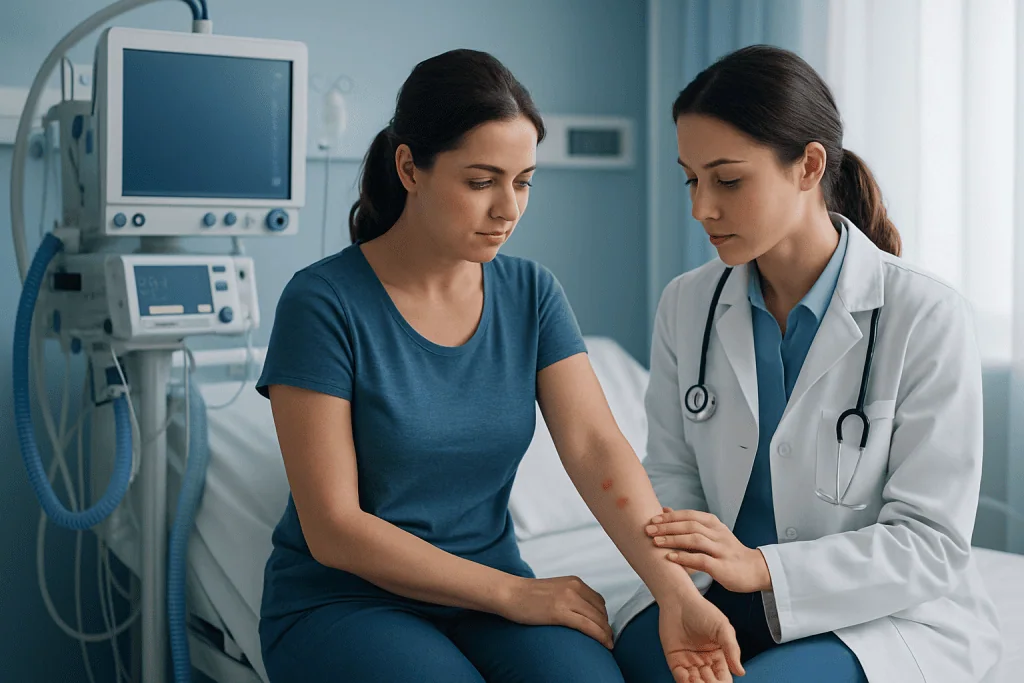
Bed bug bites often appear as small, itchy, red bumps on areas of skin exposed during sleep, such as the arms, shoulders, neck, face, or legs. In some people, the marks appear in a line or cluster because several bugs may feed in the same area. Others may only notice mild redness, and some people may not react visibly at all.
The itching may begin right away or develop hours to days later. Scratching can make the skin more inflamed and can sometimes break the surface, increasing the risk of secondary bacterial infection. In children and people with sensitive skin, swelling or larger itchy patches may be more obvious.
Because bed bug bites are not unique in appearance, they can be mistaken for mosquito bites, flea bites, hives, allergic rashes, or certain forms of eczema. A doctor may consider the pattern, timing, and home history together rather than relying on the rash alone.
- Common features include itching, small red bumps, and grouped or linear bite patterns.
- Bites often appear on exposed skin after sleeping.
- Not everyone develops the same reaction.
- Ongoing new bites may suggest that bed bugs are still present in the environment.
Where Bed Bugs Come From and Who Is at Risk

Bed bugs spread by traveling with people and belongings rather than by jumping or flying. They may move in luggage, clothing, used furniture, bedding, or boxes. Infestations can occur in homes, hotels, dormitories, shelters, cruise ships, and many other places where people sleep or rest.
Having bed bugs is not a sign of poor hygiene. Even very clean homes can develop an infestation if the insects are introduced from another location. Bed bugs are skilled at hiding in tiny spaces and may go unnoticed for some time, especially in the early stages.
People who travel frequently, live in multi-unit housing, purchase secondhand furniture, or have frequent turnover of residents or guests may have a higher chance of exposure. The main medical risk factors are not for getting the insects themselves, but for having stronger skin reactions, scratching-related infection, sleep disruption, or anxiety related to the infestation.
How Doctors Diagnose Bed Bug Problems
Diagnosis begins with a careful history and skin examination. A clinician will often ask when the rash started, whether it is worse in the morning, whether other household members have similar symptoms, and whether there has been recent travel or a change in sleeping environment. The pattern of bites can be helpful, but there is no single skin finding that proves bed bugs are the cause.
In many cases, confirming bed bugs requires finding evidence in the environment. This may include live insects, shed skins, tiny pale eggs, or dark spots from insect waste on sheets, mattress seams, or nearby furniture. If the diagnosis is uncertain, a doctor may also consider other causes of itchy skin, including contact dermatitis, scabies, flea bites, medication reactions, or psoriasis if scaling plaques are present rather than bite-like spots.
Tests are not usually needed for simple bites. However, if there are signs of infection, severe swelling, or a more complex skin condition, a dermatologist or primary care doctor may recommend further evaluation. In some situations, assessment by a dermatology specialist is helpful when the skin reaction is persistent or difficult to distinguish from other rashes.
Treatment Options for Bed Bug Bites
The treatment of bed bug bites is usually focused on symptom relief. Most bites improve on their own over several days to one or two weeks. Washing the area gently with soap and water can reduce irritation and help lower the chance of infection if the skin has been scratched.
For itching and inflammation, doctors may suggest measures such as a cool compress, soothing skin care, or anti-itch medicines. In some cases, a mild medicated cream may be recommended to calm the reaction. If scratching has led to broken skin and infection, medical treatment may be needed. Signs that may suggest infection include increasing pain, warmth, pus, or spreading redness.
People with more significant skin reactions, blisters, or ongoing irritation may benefit from specialist assessment, sometimes through allergy evaluation if there is concern about an exaggerated bite reaction. Severe allergic reactions are uncommon, but urgent medical care is needed if there is trouble breathing, dizziness, swelling of the lips or tongue, or widespread hives.
Emotional and sleep effects should not be overlooked. Repeated nighttime bites can cause stress, embarrassment, insomnia, and difficulty concentrating. When sleep is significantly affected, a doctor may also review broader supportive care and, if needed, recommend evaluation for related sleep concerns.
Removing Bed Bugs From the Home
Managing the skin symptoms alone is not enough if bed bugs remain in the living space. Effective control usually requires a structured environmental plan. This often includes carefully inspecting sleeping areas, washing bedding and clothing in hot water when appropriate, drying items on high heat, vacuuming cracks and seams, and reducing clutter that creates hiding places.
Mattresses and box springs may need special encasements designed for bed bug control. Items moved from an infested room should be handled carefully so the insects are not spread to other areas. Because bed bugs are difficult to eliminate completely, professional pest control is often the most reliable option, especially for larger infestations.
It is generally unwise to rely on random home chemicals or excessive spraying, which may be ineffective and can pose health risks. A planned approach is safer and more successful. If the infestation is severe or the skin symptoms are ongoing, medical and environmental management should proceed together.
Prevention and Self-care
Prevention focuses on reducing the chance of bringing bed bugs home and noticing them early if exposure occurs. After travel, it helps to inspect luggage, wash travel clothing, and avoid placing suitcases directly on beds. When buying secondhand furniture, careful inspection is important before bringing items indoors.
At home, regular checking of mattress seams, headboards, and nearby upholstered furniture may help identify a problem early. If someone wakes with unexplained bites, looking for environmental signs can be more useful than repeatedly treating the skin without understanding the cause.
Self-care for bites includes keeping the skin clean, avoiding scratching as much as possible, trimming fingernails to reduce skin damage, and using doctor-recommended anti-itch measures if needed. People with chronic skin sensitivity or existing allergic conditions may be especially aware of itching and irritation, even though bed bugs themselves are not the same as an airborne allergy trigger.
When to Seek Medical Care
Medical care is appropriate if bite marks are very painful, become increasingly red or swollen, develop drainage, or do not improve as expected. A doctor should also assess symptoms when the diagnosis is unclear, the rash is widespread, or another skin condition may be present. Children, older adults, and people with fragile skin may need earlier evaluation if scratching is causing skin damage.
Urgent care is needed for signs of a serious allergic reaction, such as difficulty breathing, faintness, swelling of the face or throat, or extensive hives. Persistent sleep loss, anxiety, or distress related to bed bugs also deserves attention, as these effects can significantly affect wellbeing even when the bites themselves are medically mild.
For international patients who need assessment of persistent skin symptoms or related complications, Acibadem International offers care through multidisciplinary specialists in JCI-accredited hospitals. The goal is to confirm the diagnosis, rule out look-alike conditions, and guide both symptom management and appropriate follow-up.
Frequently asked questions
Are bed bugs dangerous?
Bed bugs are usually more bothersome than dangerous. They commonly cause itching, skin irritation, and disturbed sleep, but they are not generally known to spread disease to humans. The main medical concerns are scratching-related skin infection and, less commonly, allergic reactions.
How can someone tell if bites are from bed bugs?
Bed bug bites often appear as itchy red bumps in clusters or lines on skin exposed during sleep. However, the appearance is not specific, so the best clue is a combination of the rash and evidence of bed bugs in the sleeping area. A doctor may help rule out other skin conditions if the diagnosis is uncertain.
Do bed bug bites go away on their own?
In many people, yes. The bites often improve without special treatment over several days to one or two weeks. Symptom relief may still be useful to control itching and help prevent scratching.
Should antibiotics be used for bed bug bites?
Antibiotics are not usually needed for uncomplicated bed bug bites. They may only be considered if the skin becomes infected, which can happen after repeated scratching. A healthcare professional should decide whether an infection is present.
Can a clean home still have bed bugs?
Yes. Bed bugs are not a sign of poor hygiene and can be found in very clean environments. They spread mainly by traveling in luggage, furniture, clothing, and other belongings.
What is the best way to get rid of bed bugs?
The most effective approach usually combines careful cleaning measures with professional pest control. Washing and drying fabrics at high heat, vacuuming, using protective encasements, and reducing clutter can help, but larger infestations often need expert treatment. Treating the skin alone will not stop new bites if the insects remain.
References
- Centers for Disease Control and Prevention
- World Health Organization
- American Academy of Dermatology
- Mayo Clinic
- U.S. Environmental Protection Agency
This article is for general information only and is not a substitute for professional medical advice. Please consult a qualified doctor about your individual situation.
Explore treatments in Turkey — costs, top hospitals & a free quote
JCI-accredited · board-certified surgeons · reply within 24h
Add us as a Preferred Source to see more of our trusted health content across Google Search, AI Overviews and Discover.