

Black Male Hair Replacement: Surgical and Nonsurgical Options

Hair replacement for Black men should be individualized because Afro-textured hair and common scalp conditions need specific planning. Nonsurgical options include hair systems, camouflage products, medications, and scalp-focused care.
Key Takeaways
- Hair replacement for Black men should be individualized because Afro-textured hair and common scalp conditions need specific planning.
- Nonsurgical options include hair systems, camouflage products, medications, and scalp-focused care.
- Surgical hair restoration can work well when performed by an experienced team familiar with curly hair characteristics and donor planning.
- A careful diagnosis is essential, especially when hair loss may be linked to traction, scarring, or inflammatory scalp disease.
- Protective styling, gentle grooming, and early treatment can help preserve existing hair and improve long-term results.
Black male hair replacement can include custom nonsurgical hair systems, medications, scalp treatments, and hair transplant surgery. The best approach depends on the cause of hair loss, curl pattern, scalp condition, styling habits, and the person’s goals for appearance, maintenance, and recovery.
Overview
Black male hair replacement is a broad term that includes both surgical and nonsurgical ways to improve the appearance of thinning hair or bald areas. For some people, the goal is to restore a natural hairline. For others, it is to add coverage, improve density, or manage visible hair loss while protecting the scalp and remaining hair.
Planning is especially important for Black men because Afro-textured hair has unique curl patterns, shaft shapes, and grooming needs. These features can affect how hair loss appears, how donor hair is evaluated, and how treatments are chosen. The scalp must also be assessed carefully for conditions that can cause inflammation or scarring.
Hair loss may result from hereditary male pattern baldness, tight hairstyles, chronic irritation, autoimmune conditions, or scalp disorders. Because the cause is not always obvious, a specialist usually begins by identifying whether the hair loss is non-scarring, potentially reversible, or scarring and more urgent to treat. This step helps guide whether nonsurgical management, surgery, or a combination will offer the safest and most natural-looking outcome.
Symptoms and common causes of hair loss
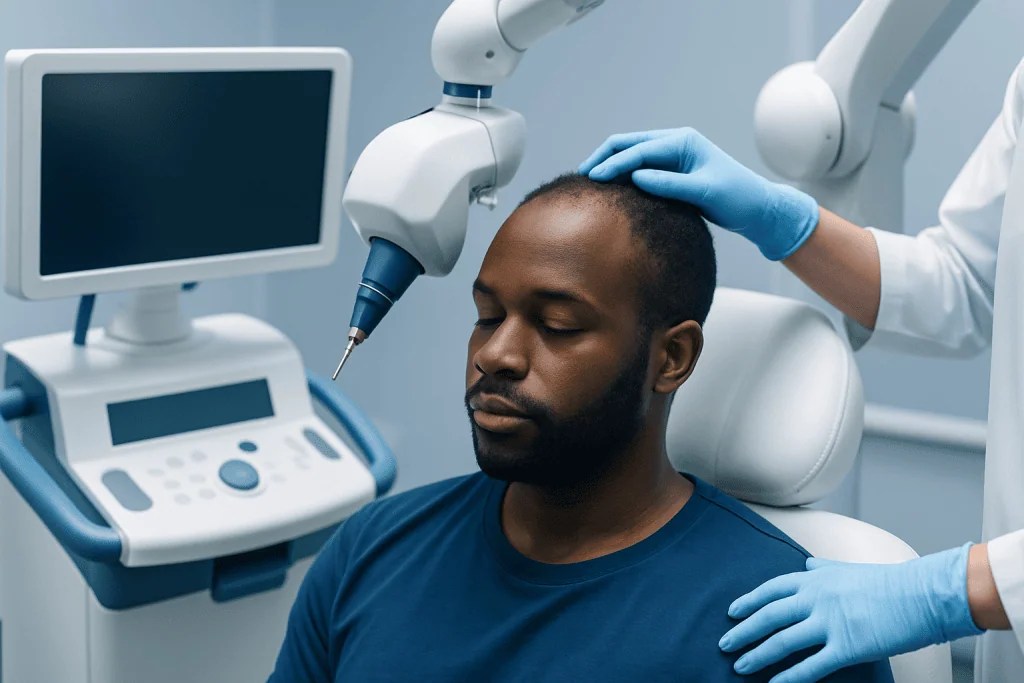
Hair loss can show up in several ways. Some men notice a receding hairline, thinning at the crown, or gradually reduced density across the scalp. Others develop patchy hair loss, breakage around the temples, tenderness, itching, scaling, or small bumps on the scalp. These clues can help distinguish pattern baldness from traction-related or inflammatory causes.
One common cause is androgenetic alopecia, also called male pattern hair loss. This usually develops gradually and often follows a recognizable pattern. Another important cause is traction from tight braids, twists, locs, weaves, or frequent use of heavy extensions and close shaving techniques that irritate the scalp. Over time, repeated tension can damage follicles and may become permanent if not addressed early.
Some scalp disorders can mimic or worsen ordinary hair loss. Inflammation, infection, and scarring disorders may lead to patchy loss or shiny areas where follicles are damaged. A history of acne-like scalp bumps, pain, or burning should not be ignored. Some men may also have visible scars from injury or healing problems such as keloid scars, which can influence treatment planning and the safety of certain procedures.
- Gradual thinning or recession often suggests male pattern hair loss.
- Hair loss around edges may suggest traction.
- Itching, pain, scaling, or pustules can point to scalp inflammation.
- Shiny scarred areas may suggest permanent follicle damage.
Nonsurgical hair replacement options

Nonsurgical hair replacement can be a good choice for men who want immediate coverage, are not ideal surgical candidates, or prefer to avoid an operation. One option is a custom hair system, sometimes called a hairpiece or unit. These systems are designed to match skin tone, curl pattern, density, and hairstyle preferences. When fitted well and maintained properly, they can create a natural appearance.
Camouflage products may also help. Hair fibers, tinted sprays, scalp micropigmentation, and strategic grooming can reduce the contrast between the scalp and hair, making thinning less noticeable. These approaches do not regrow hair, but they can improve confidence and buy time while medical treatment is started.
Medical management may be recommended when the follicles are still active. Depending on the diagnosis, a doctor may discuss evidence-based medications for pattern hair loss, treatment of scalp inflammation, or therapies to support scalp health. If tight hairstyles or grooming practices are contributing to the problem, changing those habits is an important part of treatment. In some cases, a specialist may also consider procedures related to aesthetic scalp surgery when there are scars or contour concerns affecting appearance.
Nonsurgical approaches require ongoing maintenance. Hair systems need cleaning, refitting, and periodic replacement. Medical treatments usually take time and must often be continued to maintain benefits. Even so, many men find that a combination of scalp care, styling changes, and cosmetic coverage offers meaningful improvement.
Surgical hair replacement for Black men
Hair transplant surgery can be an effective option for selected patients. The two main techniques are follicular unit extraction and follicular unit transplantation. In both methods, hairs are taken from a donor area, usually the back or sides of the scalp, and placed into thinning or bald areas. The goal is to create natural density and a hairline that fits facial features, age, and grooming style.
For Black men, surgical planning must account for tightly curled follicles, which curve beneath the skin as well as above it. This makes harvesting and placement more technically demanding. Surgeons need experience with Afro-textured hair to reduce follicle injury, preserve donor supply, and design a result that looks natural from both near and far. Curl can be an advantage because each transplanted hair may provide better visual coverage than straight hair, but only if graft handling is meticulous.
Surgery is not right for every type of hair loss. If there is active inflammation, untreated scarring alopecia, or ongoing traction, the priority is usually to stabilize the scalp first. Men with scarring from injuries, prior surgery, or conditions such as burns may need specialized reconstructive planning rather than standard transplantation alone. In appropriate cases, broader cosmetic surgery planning may be part of restoring harmony between the scalp, hairline, and surrounding tissues.
Results develop gradually because transplanted hairs go through a growth cycle. It can take several months before visible improvement appears and longer for the final shape and density to mature. A realistic consultation should cover the likely number of sessions, expected density, donor limits, and long-term planning if natural hair loss continues.
How doctors diagnose the right option
Choosing the best hair replacement approach starts with a proper diagnosis. A specialist usually asks when the hair loss began, how it has changed, what hairstyles and grooming methods are used, and whether there is itching, tenderness, flaking, or breakage. Family history, medical conditions, medications, and previous treatments are also relevant.
The scalp and hair are then examined closely. The doctor looks at hairline shape, donor density, signs of miniaturization, scalp flexibility, inflammation, and any scarring. In some cases, magnified scalp examination or photographs are used to track changes over time. If the cause is uncertain, additional tests may be needed, and sometimes a scalp biopsy is considered to distinguish scarring from non-scarring causes.
This evaluation is important because treatment can differ greatly depending on the diagnosis. A man with stable hereditary hair loss may be a reasonable candidate for transplant surgery, while someone with an active inflammatory disorder may need medical treatment first. A person with visible scars from prior trauma, including facial trauma, may need a more individualized plan focused on both scalp health and cosmetic restoration.
Treatment planning, recovery, and expected results
The best outcomes usually come from combining methods rather than relying on just one. For example, a person may use medication to help protect existing hair, choose a hair system for immediate cosmetic coverage, and later consider transplant surgery once the scalp is stable. This staged approach can be practical, especially when hair loss is still evolving.
After surgery, the scalp needs gentle care. A doctor will explain washing, sleeping position, sun protection, exercise limits, and when to return to shaving or styling. Temporary shedding of transplanted hair is common before new growth begins. It is also normal for redness or mild discomfort to improve gradually in the early recovery period.
Expectations should stay realistic. Hair transplantation redistributes existing hair; it does not create new donor hair. Density may improve significantly, but the result depends on donor supply, pattern of loss, hair characteristics, and whether additional sessions are needed. Men who are prone to raised scars should discuss this clearly before any procedure, as scar behavior can affect surgical decisions.
Near the end of the care journey, some patients benefit from coordinated support across dermatology and plastic surgery. Acibadem International’s multidisciplinary specialists in JCI-accredited hospitals diagnose and treat hair and scalp concerns for international patients, including cases that may overlap with reconstructive or scalp-focused aesthetic procedures.
Prevention and self-care
Not every form of hair loss can be prevented, but healthy scalp habits can reduce avoidable damage. Gentle cleansing, avoiding harsh chemicals, and limiting high-tension styles are especially important. If braids, twists, or locs are worn, they should not cause pain or persistent pulling, particularly around the temples and hairline.
Frequent friction and irritation can worsen breakage and scalp inflammation. Using clean tools, being cautious with close clipping or shaving, and reducing repeated trauma from helmets, caps, or rough brushing may help. Men who notice scalp bumps, burning, or chronic itch should seek medical advice rather than trying multiple over-the-counter products without guidance.
General health also matters. Balanced nutrition, stress management, and good control of underlying medical conditions support hair and scalp health. While supplements are often marketed for hair growth, they are not a substitute for a diagnosis. The most effective prevention strategy is early evaluation when hair loss first appears or when styling habits seem to be contributing.
When to see a doctor
Medical evaluation is a good idea if hair loss is sudden, patchy, painful, or associated with itching, scaling, or pustules. These signs may suggest inflammation, infection, or scarring, which may need early treatment to protect remaining follicles. It is also sensible to seek help if the hairline is steadily receding or the crown is becoming thinner.
A consultation is especially helpful before choosing a surgical procedure or investing in a long-term hair system. A specialist can explain whether the hair loss is stable, whether donor hair is sufficient, and whether other treatments should be started first. This can prevent disappointment and help match the approach to the person’s appearance goals, lifestyle, and budget.
Anyone with a history of abnormal scarring, previous scalp injury, or scalp disease should mention this during the visit. Early, individualized care often offers the best chance to preserve hair, improve appearance, and avoid treatments that may not suit the underlying problem.
Frequently asked questions
What is the best hair replacement option for Black men?
There is no single best option for everyone. The right choice depends on the cause of hair loss, the condition of the scalp, the available donor hair, and whether the person prefers a temporary or more permanent solution. A specialist evaluation helps determine whether medical treatment, a hair system, transplant surgery, or a combination is most appropriate.
Can Black men get hair transplants?
Yes, many Black men can be good candidates for hair transplant surgery. However, the procedure should be performed by a team experienced with Afro-textured hair because the follicles are often curved beneath the scalp. Proper planning is important for natural hairline design, donor preservation, and minimizing follicle injury.
Are nonsurgical hair systems safe?
Hair systems are generally safe when they are properly fitted, cleaned, and maintained. Problems can arise if adhesives irritate the skin, if the scalp is not cleaned regularly, or if an underlying scalp condition is missed. A medical check can be helpful before long-term use, especially if there is itching, tenderness, or breakage.
Will a hair transplant look natural on Afro-textured hair?
It can look very natural when the surgeon understands curl pattern, hairline design, and graft placement. In fact, the curl of Afro-textured hair can provide good visual coverage. Natural-looking results depend on careful technique, realistic density goals, and ongoing management of any future hair loss.
How long does recovery take after hair transplant surgery?
Early recovery usually takes days to a couple of weeks, depending on the method used and the individual’s healing. New growth takes longer, and visible improvement often develops gradually over several months. Final results are not immediate, so patience is an important part of the process.
Can tight hairstyles cause permanent hair loss?
Yes, repeated tension from tight braids, twists, locs, or other styles can lead to traction alopecia. If caught early, the hair may recover, but long-standing traction can cause permanent follicle damage. Reducing tension and getting early treatment can improve the chances of preserving hair.
References
- American Academy of Dermatology
- British Association of Dermatologists
- National Institute for Health and Care Excellence
- Mayo Clinic
- MedlinePlus
This article is for general information only and is not a substitute for professional medical advice. Please consult a qualified doctor about your individual situation.
Hair transplant in Turkey — costs, graft counts & a free assessment
JCI-accredited · board-certified surgeons · reply within 24h
Add us as a Preferred Source to see more of our trusted health content across Google Search, AI Overviews and Discover.

Related Treatments
Related Conditions
More from the Health Library



Related Specialists

Assoc. Prof. Dr. Erdem Güven (m)
Aesthetic Plastic & Reconstructive Surgery
Prof. Dr. Şükrü Yazar
Aesthetic Plastic & Reconstructive Surgery
Prof. Dr. Hakan Ağır
Aesthetic Plastic & Reconstructive Surgery
Prof. Dr. Bülent Saçak
Aesthetic Plastic & Reconstructive Surgery