

Blepharoplasty and Afro Hair Transplant in Turkey: What to Know

Blepharoplasty removes or repositions excess eyelid skin or fat to improve appearance and sometimes vision. Afro hair transplant requires specialized planning because tightly curled hair has unique growth patterns above and below the scalp.
Key Takeaways
- Blepharoplasty removes or repositions excess eyelid skin or fat to improve appearance and sometimes vision.
- Afro hair transplant requires specialized planning because tightly curled hair has unique growth patterns above and below the scalp.
- A good candidate is in stable health, has realistic expectations, and understands recovery and long-term maintenance.
- Surgeon experience matters, especially for natural eyelid results and safe handling of Afro-textured follicles.
- Travel planning should include consultation, preoperative assessment, recovery time, and follow-up arrangements.
Blepharoplasty and Afro hair transplant are two very different cosmetic procedures, but both depend on careful planning, realistic goals, and expert technique. People considering treatment in Turkey should understand candidacy, preparation, recovery, and the importance of choosing surgeons with relevant experience.
Overview
Blepharoplasty and Afro hair transplant are elective procedures often chosen to improve appearance, confidence, or facial balance. Blepharoplasty is eyelid surgery that may address loose upper eyelid skin, under-eye bags, puffiness, or a tired-looking eye area. Afro hair transplant is a form of hair restoration designed for people with tightly curled or coiled hair, where the unique structure of the hair follicle calls for particular technical skill.
Although these procedures treat different concerns, they share several important principles. Both require a detailed consultation, clear communication about goals, and a treatment plan tailored to the person’s anatomy, skin quality, hair characteristics, and overall health. Many people also ask whether it is possible to combine procedures during one trip; in some cases it may be appropriate, but that decision depends on medical suitability, expected operating time, and recovery needs.
Turkey is a well-known destination for cosmetic and reconstructive procedures, but the quality of care varies between providers. The most important factor is not the destination alone, but whether the patient is assessed by qualified specialists who can explain benefits, limits, alternatives, and possible risks in a clear and ethical way.
What Blepharoplasty Involves
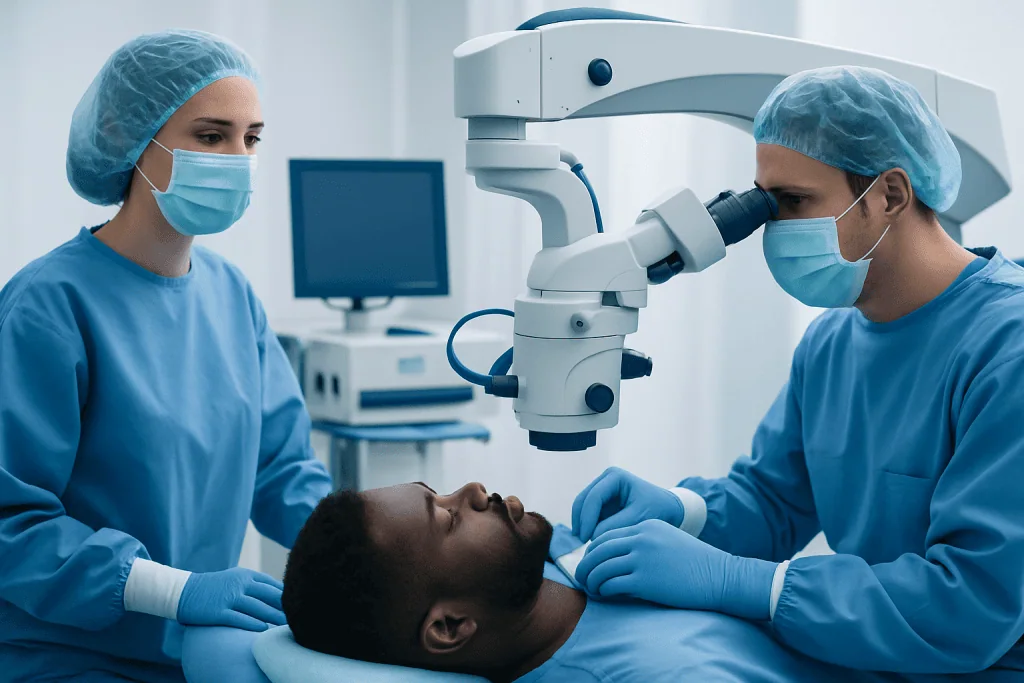
Blepharoplasty may be performed on the upper eyelids, lower eyelids, or both. Upper eyelid surgery usually focuses on excess skin that can create a heavy appearance or, in some people, interfere with the upper field of vision. Lower eyelid surgery may address puffiness, under-eye bags, or skin laxity. Depending on the findings, the surgeon may remove or reposition fat, tighten supporting tissues, and adjust excess skin conservatively.
The procedure is not meant to change a person’s identity or completely erase natural aging. Instead, the goal is often a more rested, open, and refreshed appearance while preserving normal eyelid function and eye protection. Careful planning is especially important because the eyelids are delicate structures, and both aesthetic and functional results matter.
People considering eyelid surgery may also be evaluated for related treatments when needed. For example, concerns involving eyelid support, asymmetry, or previous surgery may overlap with reconstructive ophthalmology care. In some cases, a heavy brow rather than the eyelid itself contributes to the appearance, so an assessment may also include whether a brow lift would be relevant.
What Makes Afro Hair Transplant Different

Afro hair transplant requires an understanding of tightly curled hair not only above the scalp, but also beneath the skin. The follicle often follows a curved path, which can make harvesting and implantation more technically demanding than in straighter hair types. If the follicles are not handled carefully, they may be damaged more easily during extraction.
Another key consideration is hairline design. A natural result depends on age, facial shape, hair density, and the person’s existing pattern of hair loss. For patients with Afro-textured hair, a skilled surgeon will also consider curl direction, graft distribution, and the visual effect of density, since curly hair can provide fuller-looking coverage when transplanted thoughtfully.
Different techniques may be used, including follicular unit extraction or strip-based methods, depending on the scalp, donor hair, styling preferences, and surgeon expertise. People with a history of scarring, traction from hairstyles, or inflammatory scalp conditions need extra evaluation. In some situations, scalp scarring problems such as keloid scars can affect whether surgery is advisable and how healing should be monitored. Patients may also benefit from discussion of broader aesthetic scalp surgery options if there are additional scalp concerns beyond hair loss alone.
Who May Be a Good Candidate
Good candidates for blepharoplasty are adults in generally stable health who are bothered by eyelid heaviness, puffiness, or loose skin and who have realistic expectations. An eye history matters. Dry eye symptoms, prior eye surgery, thyroid eye disease, contact lens use, or vision problems should be discussed before any decision is made. Smoking, certain medications, and uncontrolled medical conditions may increase the chance of complications or delay healing.
Good candidates for Afro hair transplant usually have enough healthy donor hair and a stable pattern of hair loss. The cause of hair thinning should be identified first. Some people have genetic pattern hair loss, while others may have shedding linked to illness, traction, inflammation, hormones, or nutritional problems. A transplant works best when the underlying cause has been properly assessed and, where possible, treated or stabilized.
During consultation, patients should feel comfortable asking what results are realistic, whether more than one session might be needed, how scars are managed, and what recovery will involve. A thoughtful specialist will also explain when surgery may not be the best first step. In some cases, eyelid concerns are related to facial aging or previous facial trauma, and hair loss may need medical treatment before a transplant is considered.
Consultation, Evaluation, and Planning in Turkey
Anyone traveling for surgery should expect a full preoperative evaluation rather than a quick booking process based only on photos. For blepharoplasty, assessment may include eyelid position, brow height, skin quality, tear production, eye surface health, and visual field concerns. For Afro hair transplant, the surgeon should examine scalp condition, donor area density, hair shaft and curl characteristics, and the pattern and cause of hair loss.
It is also sensible to ask practical questions about the care pathway. These include who performs the consultation, who performs the operation, what type of anesthesia will be used, how long recovery in Turkey is recommended, and what follow-up support is available after returning home. Patients should receive clear instructions on medications, smoking cessation, washing, sleeping position, activity limits, and warning signs that need attention.
If multiple procedures are being considered in one trip, the team should explain whether combining them is medically reasonable. While some healthy patients may be able to have two procedures planned together, others benefit from staging treatment for safety, comfort, and better recovery. Near the end of the planning process, some international patients choose centers such as Acibadem International, where multidisciplinary specialists in JCI-accredited hospitals assess suitability and organize diagnosis and treatment for visiting patients.
Recovery, Results, and Possible Risks
After blepharoplasty, temporary swelling, bruising, tightness, and mild irritation are common. Most people need a period of rest, head elevation, and careful wound care. The eye area usually looks better gradually rather than immediately. Early healing can be uneven, and final refinement may take time as swelling settles. Vision should not be permanently affected by routine cosmetic blepharoplasty, but any sudden severe pain, major bleeding, or change in vision needs urgent medical review.
After an Afro hair transplant, the scalp may feel tender for several days, and small crusts typically form around the grafts. Transplanted hairs often shed before new growth begins, which is a normal part of the process. Visible improvement develops gradually over months. The donor area and recipient area both need gentle care, and patients should follow advice about washing, sun protection, exercise, hats, and avoiding friction or traction.
All procedures carry some risk. For blepharoplasty, these may include asymmetry, dryness, difficulty closing the eyes, visible scarring, infection, bleeding, or dissatisfaction with the cosmetic result. For Afro hair transplant, possible concerns include poor graft survival, unnatural hairline design, patchy density, folliculitis, numbness, scarring, or disappointing growth. People prone to problematic scarring, including keloid-type scarring, should raise this early because it can influence treatment planning and healing expectations.
Preparing Well and Protecting Results
Preparation begins with honest medical history and realistic expectations. Patients should disclose all medications, supplements, allergies, smoking or vaping habits, and previous surgeries. It is important to follow instructions about stopping certain blood-thinning medicines only if advised by the treating doctor, not independently. Good sleep, stable nutrition, and control of chronic conditions such as diabetes or blood pressure can support safer recovery.
For blepharoplasty, protecting results often means ongoing sun protection, gentle skin care, and attention to overall facial aging. For hair transplant patients, long-term care may include medical treatment for pattern hair loss if recommended, since transplanted follicles do not stop the natural progression of hair thinning in untreated areas. A transplant improves coverage, but it does not always eliminate the need for future maintenance.
Patients traveling abroad should also plan the practical side of recovery. That includes arranging enough time before the return flight, understanding how to contact the clinic with concerns, and setting up follow-up with a local doctor if needed. This is especially helpful after cosmetic procedures, where questions about healing are common and reassurance from a qualified clinician can make recovery smoother.
When to Seek Medical Advice
Anyone considering blepharoplasty or Afro hair transplant should seek medical advice before booking if they have major eye symptoms, unstable medical conditions, a history of poor wound healing, or uncertain causes of hair loss. A specialist assessment is also important if there has been previous eyelid surgery, scalp surgery, burns, trauma, or significant scarring. Individual anatomy and medical history can change what is safe and what results are realistic.
After surgery, medical review is important if there is fever, increasing redness, worsening pain, discharge, heavy swelling, persistent bleeding, or any symptom that seems out of proportion to routine recovery. After eyelid surgery, severe pain or vision changes deserve urgent attention. After hair transplant, rapidly spreading scalp inflammation, unusual drainage, or signs of poor healing should also be checked promptly.
People who want treatment in Turkey may find it helpful to consult centers that can coordinate preoperative evaluation, surgery, and follow-up advice in a structured way. The best results usually come from careful patient selection, individualized planning, and open communication before and after treatment.
Frequently asked questions
Can blepharoplasty and Afro hair transplant be done during the same trip to Turkey?
In some healthy patients, both procedures may be planned during one trip, but this is not suitable for everyone. The decision depends on overall health, operative time, expected recovery, and whether combining procedures would affect comfort or safety. A surgeon should assess this individually.
Is Afro hair transplant more difficult than other hair transplant types?
It can be more technically demanding because tightly curled follicles often have a curved shape beneath the scalp. This means harvesting and placing grafts requires experience and careful technique. With appropriate planning, natural-looking results are possible.
How long does recovery usually take after blepharoplasty?
Initial recovery usually involves bruising and swelling for days to a couple of weeks, though this varies from person to person. Many patients feel socially comfortable sooner than the final result appears. Subtle settling and scar maturation continue over a longer period.
Will transplanted Afro hair grow naturally?
Yes, transplanted hair should continue to grow with the person’s natural hair characteristics, including curl pattern. However, growth is gradual, and the first visible stages can take several months. The final appearance depends on graft survival, donor quality, and good surgical planning.
Are the results of blepharoplasty permanent?
Blepharoplasty can produce long-lasting improvement, but it does not stop the natural aging process. Skin, fat, and surrounding facial tissues continue to change over time. Many people enjoy durable results, especially when surgery is planned conservatively and eyelid function is preserved.
What should a patient ask during consultation in Turkey?
Helpful questions include who will perform the surgery, what technique is recommended, what risks and alternatives exist, and what the recovery plan will be. It is also wise to ask about follow-up after returning home, expected healing milestones, and what to do if a concern arises after travel.
References
- American Academy of Ophthalmology
- American Society of Plastic Surgeons
- International Society of Hair Restoration Surgery
- British Association of Aesthetic Plastic Surgeons
- National Health Service
This article is for general information only and is not a substitute for professional medical advice. Please consult a qualified doctor about your individual situation.
Afro Hair Transplant in Turkey — costs, top hospitals & a free quote
JCI-accredited · board-certified surgeons · reply within 24h
Add us as a Preferred Source to see more of our trusted health content across Google Search, AI Overviews and Discover.

Hair Transplant
Modern FUE and DHI hair restoration with natural, lasting results.
Related Treatments
Related Conditions
More from the Health Library



Related Specialists
Assoc. Prof. Dr. Erdem Güven (m)
Aesthetic Plastic & Reconstructive Surgery
Prof. Dr. Şükrü Yazar
Aesthetic Plastic & Reconstructive Surgery
Prof. Dr. Hakan Ağır
Aesthetic Plastic & Reconstructive Surgery
Prof. Dr. Bülent Saçak
Aesthetic Plastic & Reconstructive Surgery