Blood Clot: A Complete Medical Overview

A blood clot can be normal after an injury, but harmful when it forms inside a blood vessel. Symptoms depend on location and may include leg swelling, chest pain, shortness of breath, or stroke-like changes.
Key Takeaways
- A blood clot can be normal after an injury, but harmful when it forms inside a blood vessel.
- Symptoms depend on location and may include leg swelling, chest pain, shortness of breath, or stroke-like changes.
- Major risk factors include immobility, surgery, cancer, pregnancy, smoking, and inherited clotting disorders.
- Diagnosis often uses ultrasound, blood tests, CT scans, and a careful medical history.
- Treatment may include blood thinners, clot-removal procedures, compression therapy, and prevention strategies.
A blood clot is a gel-like clump of blood that can be helpful when it stops bleeding, but dangerous when it forms inside a vein or artery and blocks blood flow. Understanding where a clot forms, what symptoms it causes, and when urgent treatment is needed can help protect health and prevent serious complications.
Overview: what a blood clot is and why it matters
A blood clot is a semi-solid clump of blood that forms when blood cells, proteins, and platelets stick together. This process is essential after an injury because it helps stop bleeding. The concern begins when a clot develops inside a blood vessel without a good reason, or when part of a clot breaks loose and travels to another part of the body.
Clots can form in veins or arteries. A clot in a deep vein, often in the leg or pelvis, is called deep vein thrombosis (DVT). If that clot travels to the lungs, it can cause a pulmonary embolism, which is a medical emergency. Arterial clots may reduce blood flow to the heart, brain, or limbs and can lead to a heart attack, stroke, or tissue damage.
Not every clot causes obvious symptoms, and the warning signs depend on where the clot is located. For that reason, blood clot problems are best understood not as a single disease, but as a group of conditions linked by one process: blocked blood flow. Early recognition and prompt medical care can greatly reduce the risk of complications.
How blood clots affect the body
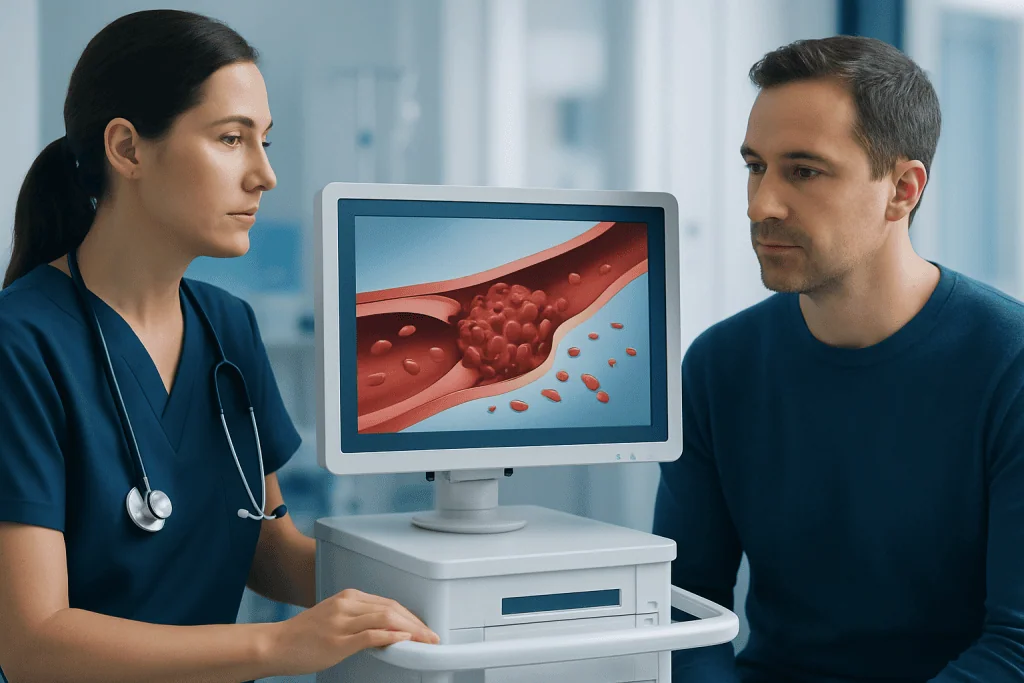
Blood normally moves smoothly through vessels. When a clot forms, it may partially block flow or stop it completely. The body part beyond the blockage may not receive enough oxygen and nutrients. This is why symptoms can appear suddenly and can range from mild discomfort to a serious emergency.
Venous clots, such as DVT, often cause swelling and pressure because blood has trouble returning to the heart. Arterial clots tend to cause more sudden and severe symptoms because they interrupt oxygen-rich blood flowing out to organs and tissues. A clot in the brain can cause weakness, trouble speaking, or vision changes, while a clot in the heart may cause chest pain.
Sometimes the body gradually breaks down a clot on its own. In other cases, treatment is needed to stop the clot from growing, prevent new clots, or restore blood flow more quickly. Doctors may also look for damage that remains after the event, such as long-term leg swelling or reduced lung function.
Symptoms of a blood clot by location

Blood clot symptoms vary depending on where the clot is. A clot in the leg or pelvis may cause swelling in one leg, pain or tenderness, warmth, skin redness, or a feeling of tightness. Some people describe a cramp-like pain in the calf that does not go away. However, some DVTs cause few or no symptoms.
A clot that reaches the lungs may cause sudden shortness of breath, chest pain that can worsen with a deep breath, fast heartbeat, coughing, or coughing up blood. A blood clot affecting the brain may cause face drooping, weakness or numbness on one side, confusion, difficulty speaking, sudden severe headache, or trouble seeing. In the heart, symptoms may include chest pressure, pain spreading to the arm or jaw, sweating, or nausea.
Clots can also affect the arm, abdomen, or arteries of the limbs. Symptoms may include swelling of one arm, belly pain, pale or cold skin, or a painful limb with reduced pulse. Because these symptoms can overlap with other conditions, medical assessment is important rather than self-diagnosis.
- One-sided leg swelling or pain
- Sudden shortness of breath or chest pain
- Stroke-like symptoms such as facial droop or slurred speech
- A cold, pale, or painful arm or leg
- Unexplained rapid heartbeat or fainting
Causes and risk factors
Blood clots often form when several factors come together. Doctors commonly think about three broad contributors: slowed blood flow, injury to the vessel wall, and changes that make the blood more likely to clot. These changes may happen temporarily, such as after surgery, or may be long-term, such as with certain inherited conditions.
Common risk factors include long periods of immobility, hospitalization, major surgery, trauma, cancer, pregnancy and the weeks after delivery, smoking, obesity, older age, and estrogen-containing medications. Long travel can contribute when a person sits still for many hours, especially if other risks are also present. A personal or family history of abnormal clotting can increase the chance of future events.
Some medical conditions also make clotting more likely, including heart failure, inflammatory disorders, severe infections, and some autoimmune diseases. Dehydration alone is usually not a major cause, but it can add to risk in certain situations. In some people, no clear trigger is found, which is why a doctor may recommend further evaluation after an unexplained clot.
How doctors diagnose a blood clot
Diagnosis starts with a careful review of symptoms, timing, recent travel or surgery, medicines, family history, and physical examination. Because the signs of a blood clot can resemble other illnesses, doctors often use clinical risk tools together with testing rather than relying on symptoms alone.
For a suspected DVT, ultrasound is commonly the first imaging test. For a possible clot in the lungs, doctors may use a CT pulmonary angiogram or, in selected situations, a ventilation-perfusion scan. A D-dimer blood test can help rule out certain clots in people with low or moderate suspicion, but it does not confirm a clot by itself because many other conditions can also raise the result.
Additional tests may be used depending on the situation. Blood oxygen levels, ECG, chest imaging, or heart ultrasound may help if a pulmonary embolism is suspected. If the clot appears unprovoked, recurrent, or occurs at a young age, the medical team may consider testing for inherited or acquired clotting disorders. In complex cases, specialists in hematology care or vascular surgery may be involved.
Treatment options and recovery
Treatment depends on the clot’s location, size, symptoms, and the person’s overall health. For many venous clots, the main treatment is anticoagulation, often called blood-thinning therapy. These medicines do not dissolve the clot instantly, but they help prevent it from growing and reduce the risk of new clots while the body gradually breaks it down.
In more severe situations, doctors may recommend treatments that remove or break up the clot more quickly. These can include clot-dissolving medicines in carefully selected patients, catheter-based procedures, or surgery. A pulmonary embolism or an arterial clot may require urgent hospital care, especially if blood pressure, breathing, or organ function is affected. Some patients may also benefit from interventional radiology procedures to restore blood flow.
Recovery varies. Some people feel better within days or weeks, while others have longer-lasting symptoms such as leg swelling, discomfort, or reduced exercise tolerance. Follow-up is important to monitor bleeding risk, determine how long treatment should continue, and lower the chance of recurrence. Compression stockings may be advised for selected patients with leg symptoms, and structured follow-up may include care through cardiology services when the heart or circulation needs close review.
Prevention and self-care
Prevention focuses on reducing known risks wherever possible. During travel or prolonged sitting, regular movement, calf exercises, and staying reasonably hydrated can help. After surgery or hospitalization, doctors may recommend early walking, compression devices, or preventive anticoagulant medicine depending on the person’s risk profile.
Long-term self-care includes not smoking, managing weight, staying physically active, and discussing hormone therapies or birth control options with a clinician if clot risk is a concern. People with a prior blood clot should understand their personal triggers, take medicines exactly as prescribed, and attend follow-up appointments. They should also tell healthcare professionals about any clot history before operations, pregnancy care, or major travel.
Self-care does not replace medical treatment. Massaging a painful, swollen leg is not advised if a DVT is possible, because a clot may be unstable. Instead, prompt assessment is safest. For international patients who need coordinated evaluation, Acibadem International’s multidisciplinary specialists in JCI-accredited hospitals diagnose and treat blood clot conditions with individualized planning.
When to seek medical care
Urgent medical care is needed for symptoms that could suggest a serious blood clot. These include sudden shortness of breath, chest pain, coughing up blood, fainting, sudden weakness or numbness, facial drooping, trouble speaking, or a cold and painful limb. These symptoms should not be watched at home, because they may signal a pulmonary embolism, stroke, heart attack, or an arterial blockage.
A prompt medical appointment is also appropriate for one-sided leg swelling, persistent calf pain, new unexplained arm swelling, or abdominal pain with risk factors for clotting. People already taking blood thinners should seek advice if they miss doses, notice signs of bleeding, or develop new clot symptoms despite treatment.
It is especially important to seek medical guidance after recent surgery, a long hospital stay, cancer treatment, pregnancy, or a long trip if concerning symptoms appear. Early evaluation can help confirm whether a blood clot is present and support treatment before complications develop.
Frequently asked questions
What does a blood clot feel like?
A blood clot can feel different depending on where it is. In a leg vein, it often causes one-sided swelling, pain, warmth, or tenderness. In the lungs or heart, it may cause sudden chest pain or shortness of breath, while in the brain it can cause stroke-like symptoms.
Can a blood clot go away on its own?
Some blood clots may gradually be broken down by the body over time. However, a clot can also grow, move, or cause complications before that happens. Because of this risk, suspected blood clots should be assessed by a doctor rather than left untreated.
Is every blood clot dangerous?
No. Clotting after a cut or injury is a normal and helpful body response. The danger comes from clots that form inside blood vessels and block normal circulation, especially in the legs, lungs, heart, or brain.
Who is most at risk for a blood clot?
Risk is higher in people who have been immobile for long periods, recently had surgery, are pregnant, have cancer, smoke, or use certain hormone medicines. A personal or family history of clotting disorders can also increase risk. Often, several risk factors are present at the same time.
How is a blood clot confirmed?
Doctors usually combine symptom assessment with imaging tests and sometimes blood tests. Ultrasound is often used for a suspected clot in the leg, and CT imaging is commonly used for suspected pulmonary embolism. The exact test depends on the location and urgency of symptoms.
How long is treatment for a blood clot?
Treatment length varies depending on where the clot is, what caused it, and whether the person has had clots before. Some people need treatment for a limited period after a temporary risk factor, while others may need longer-term therapy. The decision is individualized by a healthcare professional.
This article is for general information only and is not a substitute for professional medical advice. Please consult a qualified doctor about your individual situation.
Explore treatments in Turkey — costs, top hospitals & a free quote
JCI-accredited · board-certified surgeons · reply within 24h
Add us as a Preferred Source to see more of our trusted health content across Google Search, AI Overviews and Discover.

More from the Health Library

Dnr — Explained by Medical Evidence, Not Myths

Boil Under Armpit — Explained by Medical Evidence, Not Myths

Ulcerated Sores on Skin — Explained by Medical Evidence, Not Myths

Best Pasta Diabetes: A Complete Medical Overview

Coffee and Empty Stomach: An Evidence-Based Guide for Patients