

Blown Pupil Treatment: How It Works, Results and What to Expect

A “blown pupil” is a descriptive term for an abnormally enlarged pupil, often with a reduced response to light. Treatment is directed at the underlying cause rather than the pupil size alone.
Key Takeaways
- A “blown pupil” is a descriptive term for an abnormally enlarged pupil, often with a reduced response to light.
- Treatment is directed at the underlying cause rather than the pupil size alone.
- Sudden pupil changes can sometimes signal a neurologic or eye emergency and should not be self-treated.
- Recovery varies widely: medication-related dilation may wear off, while nerve or iris injury can cause longer-lasting changes.
- Sunglasses, avoiding driving with impaired vision, and follow-up with an eye specialist may help manage symptoms during recovery.
Blown pupil treatment starts with identifying why one pupil is unusually large and poorly reactive to light. Some causes resolve after treatment or observation, while a sudden blown pupil with headache, weakness, eyelid drooping, vision loss, or recent injury needs urgent medical assessment.
Overview: What Is Blown Pupil Treatment?
Blown pupil treatment means evaluating and treating the cause of an abnormally enlarged pupil. The term is often used when one pupil is noticeably larger than the other and does not constrict normally in bright light. It is a sign rather than a diagnosis, so the appropriate treatment can range from simply waiting for an eye-drop effect to urgent treatment for an eye, nerve, or brain-related condition.
Some people notice a large pupil after an eye examination, accidental exposure to certain medicines, migraine, or an eye injury. In other situations, a new large pupil may occur with severe headache, double vision, eyelid drooping, confusion, weakness, loss of consciousness, or changes in vision. These associated symptoms can be important clues and require prompt medical evaluation.
A clinician will first determine whether the pupil change is new, whether it affects one or both eyes, and whether it is caused by the iris, eye nerves, medications, trauma, or a neurologic disorder. The aim is to protect vision, address any urgent cause, and manage ongoing glare, light sensitivity, or cosmetic concerns when needed.
How Blown Pupil Treatment Works
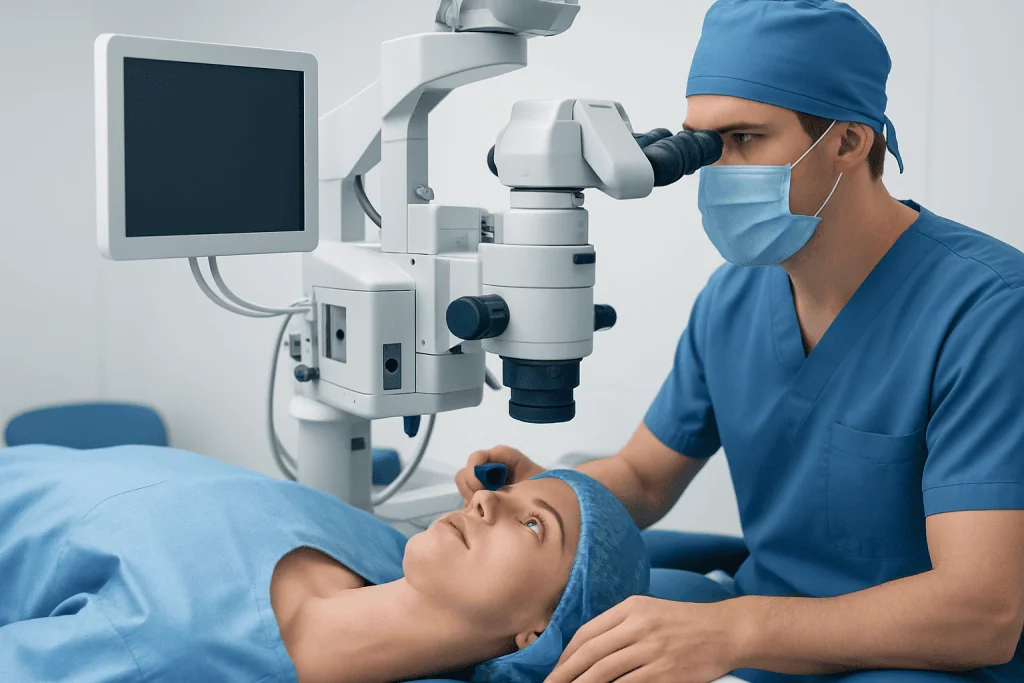
There is no single procedure that corrects every blown pupil. Treatment works by addressing the underlying mechanism. If a medicine or dilating eye drop is responsible, the pupil usually returns toward its usual size as the effect wears off. If injury has torn or weakened the iris muscle, care may focus on protecting the eye, reducing inflammation, monitoring eye pressure, and considering repair in selected cases.
When a pupil change is related to a nerve problem, treatment depends on the source. For example, a clinician may arrange urgent imaging and specialist care if symptoms suggest pressure on the nerve that controls pupil constriction. Conditions involving the brain, blood vessels, or head trauma require treatment tailored to the specific diagnosis rather than treatment of the pupil alone.
For persistent light sensitivity caused by a large pupil, an ophthalmologist may recommend tinted lenses, sunglasses, or specialized contact lenses designed to reduce the amount of light entering the eye. In some cases, medicines that narrow the pupil may be considered, but they are not suitable for every cause and should only be used under medical supervision.
When structural iris damage causes ongoing symptoms, surgical iris repair or an artificial iris implant may be discussed by an experienced eye surgeon. These options are individualized and are generally considered after the eye has healed and the full extent of injury is clear. [[TREATMENT:|Ophthalmology assessment and treatment]] can help determine which approach is appropriate.
Who May Need Treatment and How Doctors Diagnose the Cause

Anyone with a newly enlarged pupil should be assessed, especially when the difference between pupils is obvious, the pupil reacts poorly to light, or there are new neurologic or visual symptoms. People who have recently had eye surgery, an eye examination with dilating drops, facial or head trauma, migraine, or exposure to medications may have a clearer possible explanation, but a clinician should still confirm that the pattern is not concerning.
Assessment usually begins with a detailed history. The clinician may ask when the pupil change began; whether there is pain, redness, headache, nausea, double vision, or blurred vision; whether an injury occurred; and which prescription medicines, over-the-counter products, patches, inhalers, eye drops, or plant substances may have contacted the eye.
The eye examination may include vision testing, pupil measurements in bright and dim light, eye-movement testing, eyelid examination, slit-lamp examination of the iris, and measurement of eye pressure. Depending on the findings, doctors may use pupil tests, visual field testing, or imaging such as CT or MRI scans. A neuro-ophthalmology, neurology, emergency medicine, or ophthalmology consultation may be needed.
Not every pupil-size difference is dangerous. Mild, longstanding unequal pupils can be a normal variation in some people. However, it is not possible to safely assume this when the change is sudden or accompanied by symptoms, which is why timely assessment is important.
What to Expect During Treatment and Recovery
The steps of care depend on the diagnosis. In an urgent setting, clinicians first check vital signs, consciousness, eye function, and neurologic symptoms. They may perform an eye examination and arrange imaging or specialist review if a serious cause is possible. Treatment then focuses on the identified condition, such as head injury care, management of an eye emergency, or treatment of a nerve-related disorder.
For a medication-related dilated pupil, recovery may involve avoiding further exposure and allowing time for the medicine to clear. Patients should protect their eyes from bright light and avoid driving or hazardous activities if vision is blurred or glare is significant. A clinician can advise when it is safe to return to usual activities.
After blunt eye trauma, follow-up can be important even when initial vision seems good. Inflammation, pressure changes, lens injury, retinal injury, or delayed glaucoma can occur after trauma. Care may include eye drops, protective measures, repeat examinations, and, in selected cases, surgery to repair significant iris damage or associated eye injuries.
Recovery timelines vary. A temporary drug effect may resolve within hours or days, while recovery after nerve injury or eye trauma can take weeks to months and may be incomplete. Follow-up visits allow the care team to monitor vision, pupil function, eye pressure, and any new symptoms.
Benefits, Risks and Self-Care Considerations
The main benefit of timely evaluation is that it can identify conditions needing urgent treatment and reduce the risk of avoidable vision or neurologic complications. When the cause is benign or temporary, reassurance and practical symptom management may be all that is needed. For persistent symptoms, treatments such as tinted lenses or iris repair may improve comfort, reduce glare, and in some cases improve appearance.
Risks vary according to the cause and treatment. A persistently enlarged pupil can contribute to glare, light sensitivity, blurred near vision, difficulty focusing, and reduced visual comfort. Eye medications may have side effects, and surgical options carry risks such as infection, inflammation, pressure changes, or the need for additional treatment. An ophthalmologist can explain the expected benefits and limitations in an individual case.
Until medical advice is received, patients should not use “pupil-constricting” drops or another person’s eye medicine. They should avoid rubbing an injured eye, use sunglasses outdoors or in bright environments, and seek advice before driving if vision, depth perception, or light tolerance is affected. Following the recommended review schedule is particularly important after eye or head trauma.
- Bring a list of all medicines, eye drops, patches, inhalers, and recent exposures to the appointment.
- Note the time symptoms began and whether the change is getting worse.
- Use prescribed treatments exactly as directed and attend repeat eye-pressure or retinal checks when advised.
Can You Recover From a Blown Pupil?
Recovery from a blown pupil is possible, but it depends on the cause. A pupil enlarged by dilating eye drops or accidental medication exposure often returns to normal as the medication effect fades. A large pupil associated with migraine may also improve after the episode has settled, although recurrent or atypical symptoms still deserve medical assessment.
Recovery can be less predictable after direct iris injury, damage to the nerve controlling the pupil, or serious brain injury. Some people regain normal or near-normal pupil movement over time, while others have a persistent difference in pupil size. Even when the size does not fully normalize, symptoms such as glare and light sensitivity can often be managed.
The most useful next step is a professional diagnosis rather than waiting to see whether the pupil improves. The examination helps clarify whether recovery is expected, whether monitoring is needed, and whether treatment can improve comfort or protect vision.
How Long Does Pupil Dilation Medication Last?
The duration of dilation medication depends on the specific drug, its strength, the person’s age, iris color, and individual response. Many routine dilating drops used during eye examinations affect vision and light sensitivity for several hours, and sometimes until the next day. Stronger or longer-acting medications, particularly those used in children or for certain eye conditions, can last longer.
Blurred near vision and sensitivity to bright light are common while the pupil remains dilated. Sunglasses can improve comfort outdoors, and patients should follow the clinic’s advice about driving, reading, and returning to work. Contact the prescribing clinician if the effect lasts longer than expected, causes severe eye pain or redness, or is associated with worsening vision.
Medication-related dilation should only be assumed when there is a clear exposure and no warning symptoms. A new enlarged pupil without an obvious explanation should be assessed by a healthcare professional.
What Is the Prognosis for a Blown Pupil? Can It Go Back to Normal?
The prognosis for a blown pupil ranges from excellent to variable because the term covers many different causes. Temporary dilation from medicines, some migraine-related episodes, and minor reversible problems may resolve completely. The outlook is generally better when the cause is identified promptly and any urgent eye or neurologic condition is treated without delay.
A blown pupil can go back to normal when the iris and the nerve pathways controlling it recover. After trauma or nerve damage, however, the pupil may remain larger or less reactive. This does not always mean that vision will be severely affected, but it may cause lasting glare, reduced near focus, or cosmetic asymmetry that can be addressed with supportive treatments.
Long-term follow-up may be recommended after an injury or ongoing pupil abnormality. Acibadem International’s multidisciplinary specialists and JCI-accredited hospitals can assess eye and neurologic causes of pupil changes for international patients and coordinate appropriate follow-up care.
When to Seek Medical Care
Seek emergency medical care immediately for a sudden enlarged pupil with severe or sudden headache, confusion, fainting, seizure, weakness, numbness, trouble speaking, new double vision, a drooping eyelid, severe eye pain, a red eye with nausea, sudden vision loss, or after a significant head or eye injury. These symptoms may indicate a condition that needs urgent assessment.
Prompt medical evaluation is also appropriate for a new pupil difference that persists, unexplained light sensitivity, blurry vision, eye pain, or a pupil that does not respond normally to light. This is particularly important for people with recent surgery, known neurologic conditions, or a history of aneurysm or significant trauma.
If dilation occurred after a planned eye examination and symptoms match the expected effect, follow the instructions given by the eye clinic. Contact the clinic or another qualified healthcare professional if symptoms are more severe than expected, are worsening, or do not improve within the advised timeframe.
Frequently asked questions
What does a blown pupil mean?
A blown pupil is an informal term for a pupil that is unusually large and often reacts weakly or not at all to light. It can result from eye drops, medication exposure, migraine, eye trauma, nerve injury, or neurologic conditions. A new or unexplained pupil change should be evaluated by a clinician.
Can you recover from a blown pupil?
Yes, recovery is possible when the cause is temporary or reversible, such as certain dilating medicines or some migraine-related episodes. Recovery after iris trauma or nerve injury may take longer and can be incomplete. An eye and neurologic assessment helps clarify the likely outlook.
How long does pupil dilation medication last?
Many commonly used examination drops last for several hours and may affect near vision and light sensitivity into the following day. Longer-acting drops can last longer, depending on the medication and the individual. The prescribing clinic can explain what is expected for a particular eye drop.
What is the prognosis for a blown pupil?
The prognosis depends entirely on the underlying cause. A medication-related dilated pupil often resolves, while trauma or nerve injury may leave a lasting pupil difference. Prompt evaluation is important because some causes require urgent treatment.
Can a blown pupil go back to normal?
It can return to normal if the iris and nerve pathways recover or if the enlargement is caused by a temporary medication effect. Some pupils remain enlarged after significant iris or nerve damage. Treatments may still help reduce glare, light sensitivity, and visual discomfort.
Is a blown pupil always an emergency?
No, but a sudden blown pupil can be an emergency, especially with headache, eye pain, vision change, drooping eyelid, weakness, confusion, or trauma. Pupil enlargement after clinician-administered dilating drops is often expected. When there is uncertainty, urgent medical advice is the safest option.
References
- American Academy of Ophthalmology
- National Eye Institute
- Merck Manual Professional Edition
- Mayo Clinic
- National Institute of Neurological Disorders and Stroke
This article is for general information only and is not a substitute for professional medical advice. Please consult a qualified doctor about your individual situation.
Explore treatments in Turkey — costs, top hospitals & a free quote
JCI-accredited · board-certified surgeons · reply within 24h
Add us as a Preferred Source to see more of our trusted health content across Google Search, AI Overviews and Discover.

More from the Health Library

Testicular Cancer Treatment Los Angeles: How It Works, Results and What to Expect

Top 10 Hospitals for Bone Marrow Transplant Usa: Procedure, Recovery and Results

Bacterial Peritonitis Treatment Guidelines: How It Works, Results and What to Expect
Related Specialists

Dr. Alptekin Arifoğlu
Radiation Oncology
Dr. Cem Tekin Baran
Orthopedic Surgery & Traumatology
Dt. Oğuzhan Hakan Özdemir
Oral & Dental Health
Assoc. Prof. Dr. İzgi Alnıak
Psychiatry