Bone Doctor Explained: Which Conditions Are Treated in Orthopedics?

Orthopedics is the medical specialty that treats the musculoskeletal system, not only bones. Common orthopedic conditions include fractures, arthritis, sports injuries, back pain, and tendon problems.
Key Takeaways
- Orthopedics is the medical specialty that treats the musculoskeletal system, not only bones.
- Common orthopedic conditions include fractures, arthritis, sports injuries, back pain, and tendon problems.
- Many orthopedic issues improve with non-surgical treatment such as rest, physical therapy, braces, and medicines.
- Orthopedic doctors use physical exams and imaging tests to identify the cause of pain, swelling, weakness, or limited movement.
- Early evaluation can help prevent worsening pain, joint damage, and loss of function.
A bone doctor, also called an orthopedic doctor, diagnoses and treats problems affecting bones, joints, muscles, ligaments, tendons, and the spine. Orthopedics covers both sudden injuries and long-term conditions, with treatment ranging from exercise and medication to surgery when needed.
Overview: What a Bone Doctor Treats
A “bone doctor” is a common way patients describe an orthopedic doctor. Orthopedics is the medical specialty focused on the musculoskeletal system, which includes bones, joints, cartilage, muscles, ligaments, tendons, and often the spine. Because all of these structures work together to support movement and stability, orthopedic care goes well beyond broken bones alone.
Orthopedic doctors treat people of many ages, from children with growth-related bone concerns to adults with sports injuries, arthritis, or age-related joint wear. Some orthopedic specialists focus on a specific area, such as the knee, hip, shoulder, hand, foot and ankle, spine, or sports medicine. Others manage trauma, meaning injuries caused by falls, accidents, or other sudden events.
In practice, orthopedics includes both diagnosis and treatment. A patient may see an orthopedic doctor for persistent knee pain, a swollen ankle after twisting it, shoulder stiffness, back pain, or difficulty walking. The goal is to find the cause of symptoms, relieve pain, restore function, and help protect long-term mobility whenever possible.
Common Conditions Seen in Orthopedics
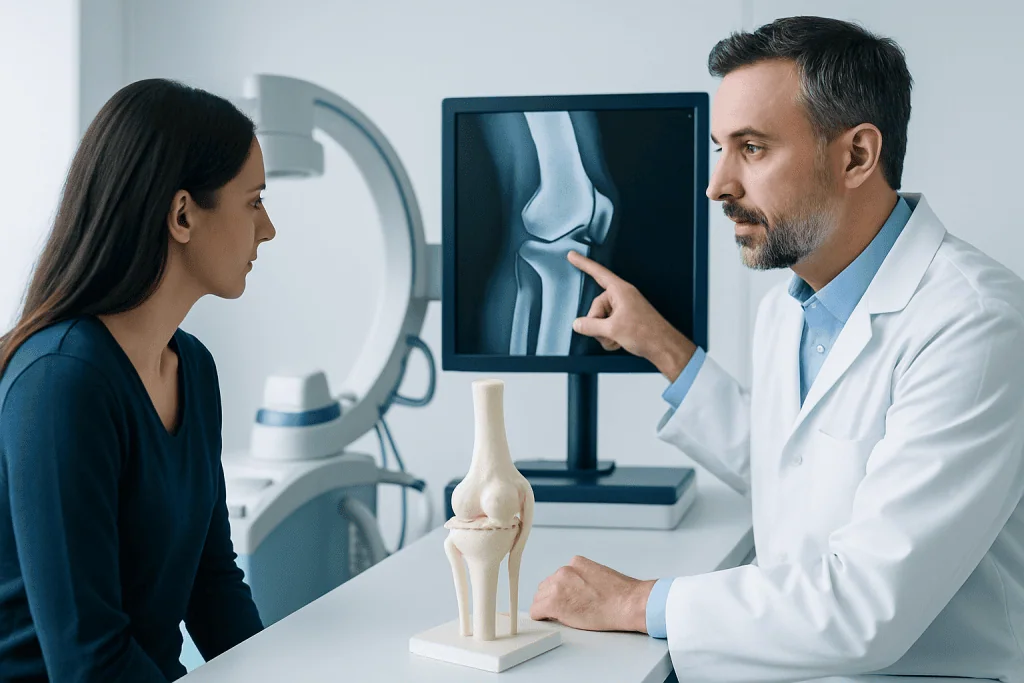
Orthopedic doctors commonly care for fractures, dislocations, sprains, strains, and overuse injuries. A fracture is a broken bone, while a dislocation happens when the ends of bones are forced out of their normal position in a joint. Sprains affect ligaments, and strains affect muscles or tendons. These problems may happen suddenly during sports, exercise, work, or daily activities.
Long-term orthopedic conditions are also very common. These include osteoarthritis, rheumatoid arthritis affecting joints, tendonitis, bursitis, degenerative spine conditions, and osteoporosis-related fractures. Orthopedics also covers issues such as meniscus tears, rotator cuff injuries, carpal tunnel syndrome, scoliosis, foot deformities, and chronic neck or lower back pain.
Some examples of conditions an orthopedic doctor may evaluate include:
- Broken bones and stress fractures
- Joint pain in the knees, hips, shoulders, hands, or ankles
- Sports injuries such as ACL tears or tendon injuries
- Back pain, neck pain, and some spinal disorders
- Arthritis and cartilage wear
- Shoulder impingement and rotator cuff problems
- Tendonitis, bursitis, and overuse injuries
- Hand, wrist, foot, and ankle conditions
Because symptoms often overlap, pain in one area does not always mean the problem starts there. For example, hip disease may be felt in the groin or knee, and a spine problem can sometimes cause leg or arm pain. This is one reason a careful orthopedic assessment is important.
Symptoms That May Need an Orthopedic Evaluation
Many orthopedic problems cause pain, but pain is not the only symptom. People may also notice swelling, bruising, stiffness, weakness, numbness, joint instability, clicking, locking, or reduced range of motion. Some patients seek care because walking, climbing stairs, lifting objects, or sleeping comfortably has become difficult.
Symptoms can begin suddenly after an injury or develop slowly over time. A person with a fracture may have immediate pain and trouble bearing weight. By contrast, arthritis often causes gradually worsening pain, morning stiffness, or discomfort that increases with activity. Tendon and ligament injuries may cause weakness or a sense that a joint is giving way.
It is sensible to arrange an orthopedic review if symptoms do not improve with rest, if a joint looks deformed, or if movement becomes increasingly limited. Ongoing pain in the back, knee, shoulder, or hip deserves attention, especially when it interferes with daily life, work, exercise, or sleep.
Causes and Risk Factors
Orthopedic conditions can have many causes. Acute injuries often result from falls, traffic accidents, sports contact, twisting movements, or heavy lifting. Repetitive use can also injure tissues over time, especially in people who perform the same motions at work or during training. Running, jumping, overhead movements, and poor lifting technique are common examples of mechanical stress.
Age is another important factor. As people get older, cartilage may wear down, bones may lose density, muscles may weaken, and tendons may become less flexible. This can increase the risk of osteoarthritis, tendon tears, and fractures. Previous injuries may also raise the chance of later joint pain or degeneration.
Other risk factors include excess body weight, low physical activity, poor muscle strength, improper footwear, smoking, certain inflammatory diseases, and family history. In children and adolescents, growth-related changes can contribute to some orthopedic complaints. Not every risk factor can be changed, but healthy habits can support stronger bones, joints, and muscles over time.
How Orthopedic Doctors Diagnose These Problems
Diagnosis usually starts with a detailed medical history and physical examination. The orthopedic doctor asks when the symptoms began, whether there was an injury, what movements make pain worse, and whether swelling, weakness, or numbness is present. During the examination, the doctor may check alignment, tenderness, joint stability, muscle strength, reflexes, walking pattern, and range of motion.
Imaging tests are often used to confirm the diagnosis or understand its severity. X-rays are especially useful for fractures, dislocations, arthritis changes, and bone alignment. Ultrasound can help evaluate some tendon or soft tissue problems, while MRI is often used to assess ligaments, cartilage, discs, muscles, and other soft tissues. CT scans may be helpful in more complex fractures or detailed bone assessment.
In some cases, blood tests are ordered to look for infection, inflammation, or metabolic bone disease. Bone density testing may be considered if osteoporosis is suspected. The diagnosis guides treatment, and orthopedic care is often individualized based on the patient’s age, activity level, general health, and personal goals.
Treatment Options in Orthopedics
Many orthopedic conditions can be treated without surgery. Early treatment may include rest, activity modification, ice, compression, elevation, pain-relieving or anti-inflammatory medicines, and supportive devices such as braces, splints, casts, or shoe inserts. Physical therapy is a key part of care for many injuries and chronic conditions because it can improve flexibility, strength, balance, and joint mechanics.
Some patients benefit from injections to reduce inflammation or pain in selected joints or soft tissues. Rehabilitation plans are often tailored to the specific problem, such as a shoulder tendon injury, knee cartilage wear, or a healing ankle sprain. The aim is not only to ease symptoms but also to restore safe movement and help prevent recurrence.
Surgery may be recommended when a bone is badly broken, a joint is unstable, a tendon is torn, or pain and disability continue despite non-surgical care. Depending on the diagnosis, treatment may include joint replacement for advanced joint damage, arthroscopy for certain minimally invasive joint procedures, or spine surgery for selected spinal problems. The best treatment depends on the exact condition, symptom severity, and expected benefit.
Near the end of the care pathway, follow-up is important. Healing progress may be checked with repeat examinations or imaging, and the plan may be adjusted based on pain, mobility, and daily function. For international patients, Acibadem International’s multidisciplinary specialists and JCI-accredited hospitals diagnose and treat orthopedic conditions with coordinated care.
Prevention and Self-Care for Bone and Joint Health
Not every orthopedic problem can be prevented, but many can be reduced with practical habits. Regular weight-bearing exercise helps maintain bone strength, while resistance training supports muscles that protect joints. Warm-up before sports, gradual increases in training intensity, and proper technique can lower the risk of strains, sprains, and overuse injuries.
Good footwear and attention to posture can also make a difference. People who sit for long periods may benefit from changing position regularly, stretching, and keeping workstations ergonomic. Those who lift objects at home or work should use safer lifting mechanics, including bending the knees and keeping loads close to the body.
General bone and joint health also depends on a balanced diet with enough calcium, vitamin D, and protein, as well as avoiding smoking when possible. Maintaining a healthy body weight can reduce stress on hips, knees, ankles, and the spine. If pain persists, self-care should not replace professional advice, especially after injury or when symptoms keep returning.
When to See a Doctor
A person should seek medical attention if bone, joint, muscle, or back pain is severe, keeps returning, or does not improve after a few days of rest and simple care. Evaluation is also important if there is visible deformity, inability to bear weight, marked swelling, joint locking, fever with joint pain, or sudden weakness after an injury. These signs may suggest a problem that needs prompt treatment.
Chronic pain deserves attention too. Waiting too long can allow some conditions to worsen, reduce strength and mobility, and affect everyday life. Early care may help control symptoms sooner and widen the treatment options available, especially before major joint damage develops.
Orthopedic review can be especially helpful for persistent knee, shoulder, hip, or spine complaints that interfere with walking, work, sleep, or exercise. A qualified doctor can determine whether symptoms are due to injury, arthritis, overuse, a nerve-related problem, or another cause, and can recommend the safest next steps.
Frequently asked questions
What is a bone doctor called?
A bone doctor is commonly called an orthopedic doctor or orthopedic surgeon. Even though the name suggests bones only, this specialist also treats joints, muscles, ligaments, tendons, and many spine-related problems.
Do orthopedic doctors only treat broken bones?
No. Orthopedic doctors treat many conditions besides fractures, including arthritis, sports injuries, tendon tears, back pain, joint problems, and overuse injuries. They care for both sudden injuries and long-term musculoskeletal conditions.
When should someone see an orthopedic doctor?
It is a good idea to see an orthopedic doctor for ongoing pain, swelling, stiffness, weakness, or reduced movement in a bone, joint, muscle, or the spine. Medical review is especially important after an injury, if walking is difficult, or if symptoms affect daily life or sleep.
Will every orthopedic problem need surgery?
No, many orthopedic conditions improve with non-surgical treatment. Rest, physical therapy, braces, medicines, and lifestyle changes are often effective, while surgery is usually reserved for specific injuries or symptoms that do not improve with conservative care.
What tests does an orthopedic doctor use?
Orthopedic doctors usually begin with a history and physical examination. They may also use imaging tests such as X-rays, MRI, ultrasound, or CT scans, and in some cases blood tests or bone density testing.
Can orthopedic doctors treat back pain?
Yes. Many orthopedic specialists evaluate and treat back and neck problems, including some disc, joint, and spine conditions. Treatment may involve exercise-based rehabilitation, medicines, injections, or surgery in selected cases.
References
- American Academy of Orthopaedic Surgeons
- National Institute of Arthritis and Musculoskeletal and Skin Diseases
- World Health Organization
- MedlinePlus
- Mayo Clinic
This article is for general information only and is not a substitute for professional medical advice. Please consult a qualified doctor about your individual situation.
Joint and spine care in Turkey — expert assessment & treatment
JCI-accredited · board-certified surgeons · reply within 24h
Add us as a Preferred Source to see more of our trusted health content across Google Search, AI Overviews and Discover.

Orthopedics & Spine
Care for bones, joints and the musculoskeletal system, including joint replacement, sports injuries and trauma.
125 specialists in this unit