

Bone Grafting for Dental Implants: When It Is Needed

A dental bone graft may be needed when tooth loss, gum disease, infection, trauma, or long-term denture use has reduced jawbone volume. The goal is to create enough healthy bone to support a dental implant in the correct position.
Key Takeaways
- A dental bone graft may be needed when tooth loss, gum disease, infection, trauma, or long-term denture use has reduced jawbone volume.
- The goal is to create enough healthy bone to support a dental implant in the correct position.
- Bone grafting may be done before implant placement or, in selected cases, at the same appointment.
- Healing time varies depending on graft size, location, general health, and whether additional procedures are required.
- Good oral hygiene, smoking avoidance, and follow-up visits are important for successful healing.
Bone grafting for dental implants is a common preparatory procedure used when the jawbone is not strong or thick enough to support an implant safely. With careful planning, modern grafting techniques can help many patients become suitable candidates for long-lasting implant treatment.
Overview
Bone grafting for dental implants is a procedure that rebuilds or strengthens the jawbone before an implant is placed. A dental implant functions like an artificial tooth root, so it needs a stable foundation of bone around it. If the bone is too thin, too short, or too soft, the implant may not be positioned safely or may not have enough support for long-term function.
Jawbone loss is common after a tooth is removed. Once a tooth root is no longer present, the surrounding bone may gradually shrink because it is no longer stimulated by chewing forces. This process can affect both the height and width of the jaw ridge, especially if a tooth has been missing for many months or years.
A bone graft adds bone-like material to the area where more volume is needed. Over time, the patient’s body remodels the grafted area, allowing new bone to develop and integrate. The aim is not only to place an implant, but to place it in a position that supports comfortable chewing, healthy gums, and a natural-looking final tooth.
When Bone Grafting Is Needed
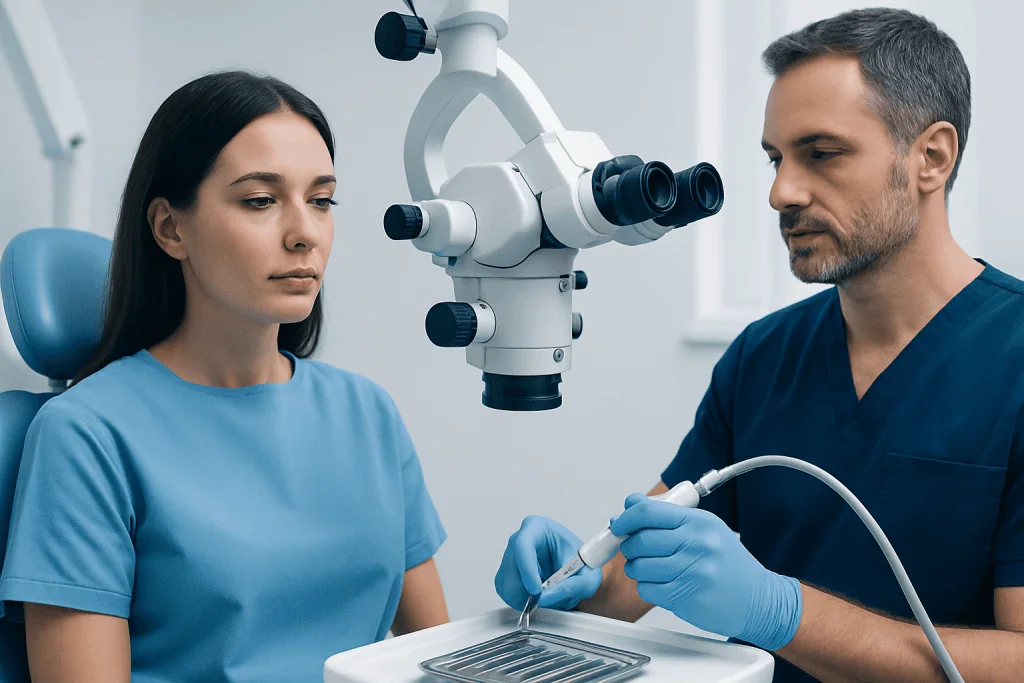
A bone graft may be recommended when dental imaging shows that there is not enough bone to support an implant securely. This can happen in the upper or lower jaw and may involve a small area around one missing tooth or a larger area where several teeth are missing. The need for grafting is determined by a dentist, oral surgeon, periodontist, or implant specialist after a clinical examination and imaging review.
Common situations where grafting may be needed include:
- Tooth loss that occurred months or years earlier, allowing the bone ridge to shrink.
- Advanced gum disease, which can damage the bone supporting the teeth.
- Infection or abscess around a tooth that caused bone destruction.
- Trauma or injury to the jaw or teeth.
- A tooth extraction site where the bone walls are thin or damaged.
- The upper back jaw, where the sinus may be close to the planned implant area.
Bone grafting is not required for every implant patient. Some people have enough natural bone for an implant without additional procedures. Others may need only a small graft at the time of extraction or implant placement, while more complex cases may require staged reconstruction before implants can be placed.
Types of Dental Bone Grafts

Different graft materials may be used depending on the amount of bone needed, the location, the patient’s health, and the treatment plan. The dentist or surgeon explains the recommended material, how it works, and why it is suitable for the case. In many procedures, a protective membrane is also used to guide bone healing and keep soft tissue from growing into the grafted space too quickly.
The main categories of graft material include autograft, which uses the patient’s own bone; allograft, which uses processed donor bone from a human tissue bank; xenograft, which uses processed bone from an animal source; and synthetic graft materials, which are biocompatible and designed to support new bone growth. Each option has advantages and limitations, and all graft materials used in modern dentistry are processed and selected according to safety standards.
Some implant patients may also need a specific procedure such as ridge preservation, ridge augmentation, or sinus lift. Ridge preservation is often performed at the time of tooth extraction to reduce bone shrinkage. Ridge augmentation rebuilds the width or height of a jaw ridge. A sinus lift adds bone to the upper back jaw when the sinus is close to the planned implant site.
How the Procedure Is Planned and Performed
Planning begins with a detailed dental and medical history, an oral examination, and imaging. A panoramic X-ray may be useful, but three-dimensional cone beam CT imaging is often used when precise measurement of bone height, width, and nearby structures is needed. This helps the clinician decide whether grafting is necessary, what type of graft is appropriate, and whether the implant can be placed at the same time.
During the procedure, local anesthesia is used to numb the area, and sedation may be considered for selected patients depending on the extent of treatment and individual preference. The gum tissue is gently opened, the graft material is placed in the planned area, and the site is usually covered with a membrane or carefully closed with stitches. The goal is to protect the graft and allow stable healing.
In some cases, the implant and graft are placed during the same visit, especially when only a minor defect is present and the implant can still achieve primary stability. In other cases, the graft is allowed to heal first, and the implant is placed later. Staged treatment may be safer when a larger amount of bone must be rebuilt or when infection has recently been present.
Healing Time and What to Expect
Healing after a dental bone graft is gradual. Mild swelling, tenderness, minor bleeding, or bruising can occur in the first few days, and these usually improve with the aftercare instructions provided by the dental team. Patients are commonly advised to eat soft foods, avoid disturbing the surgical area, and take prescribed or recommended medications exactly as directed.
The time needed for the graft to mature varies. Small grafts placed around an extraction site may heal sufficiently in a few months, while larger grafts or sinus lift procedures may require a longer healing period before implant placement. The clinician monitors healing and may take follow-up imaging to confirm that the bone is ready.
Patients can support healing by keeping the mouth clean without aggressively brushing the surgical site, avoiding smoking or vaping, limiting alcohol during early healing, and attending follow-up appointments. It is also important to avoid chewing hard foods directly on the grafted area until the dentist confirms it is safe.
Benefits, Risks, and Success Factors
The main benefit of bone grafting is that it can make dental implant treatment possible when the natural jawbone is insufficient. It may also improve the position of the implant, the support for the gum tissue, and the appearance of the final restoration. For many patients, grafting is an important step toward restoring chewing function and replacing missing teeth in a stable way.
As with any surgical procedure, there are possible risks. These may include infection, delayed healing, graft shrinkage, bleeding, temporary discomfort, or the need for additional treatment if the graft does not develop enough bone. Rarely, there can be numbness, sinus-related symptoms in upper jaw procedures, or complications related to medical conditions or medications.
Several factors influence healing and implant readiness. Good oral hygiene, controlled gum disease, stable general health, and avoiding tobacco are important. Conditions such as uncontrolled diabetes, certain immune problems, previous radiation therapy to the jaw, or some bone-related medications require careful evaluation and may affect the treatment plan.
Prevention, Self-Care, and When to See a Dentist
Not all jawbone loss can be prevented, but early dental care can reduce the need for larger grafting procedures. Replacing missing teeth in a timely manner, treating gum disease, and planning extractions carefully can help preserve bone. In some cases, a dentist may recommend ridge preservation at the time a tooth is removed to maintain the area for a future implant.
Patients considering dental implants should schedule an evaluation if they have missing teeth, loose dentures, difficulty chewing, visible gum recession, or a history of gum disease. A consultation is also important if a tooth has been missing for a long time, because bone changes may not be obvious without imaging.
Prompt dental attention is recommended for increasing pain, swelling, fever, pus, a bad taste that persists, heavy bleeding, or stitches that open after grafting. These signs do not always mean a serious problem, but they should be assessed by a qualified dental professional. Acibadem International’s multidisciplinary dental and surgical specialists in JCI-accredited hospitals diagnose and treat implant-related bone loss for international patients, including cases requiring coordinated care.
Frequently asked questions
Is bone grafting always required before a dental implant?
No. Many patients have enough healthy jawbone for an implant without grafting. A bone graft is recommended only when examination and imaging show that additional bone is needed for safe and stable implant placement.
Does a dental bone graft hurt?
The procedure is performed with local anesthesia, so patients should not feel sharp pain during treatment. Some soreness, swelling, or pressure is expected afterward, and it is usually managed with the dentist's aftercare plan and appropriate medication guidance.
How long after a bone graft can an implant be placed?
Timing depends on the size and location of the graft, the type of procedure, and the patient's healing response. Some implants can be placed at the same appointment as the graft, while others are placed after several months of healing.
Can the body reject a dental bone graft?
Dental bone grafts are not rejected in the same way as organ transplants. However, a graft may not heal as planned if there is infection, movement of the graft, poor blood supply, smoking, uncontrolled medical conditions, or inadequate aftercare.
What should patients avoid after a dental bone graft?
Patients are usually advised to avoid smoking, vaping, hard or crunchy foods, vigorous rinsing, drinking through a straw in some cases, and touching the surgical area. The exact instructions depend on the procedure and should be followed carefully.
Is a sinus lift the same as a bone graft?
A sinus lift is a type of bone grafting procedure for the upper back jaw. It gently raises the sinus membrane and places graft material underneath to create enough bone height for a dental implant.
References
- American Academy of Periodontology
- American Association of Oral and Maxillofacial Surgeons
- European Association for Osseointegration
- Mayo Clinic
- National Institute of Dental and Craniofacial Research
This article is for general information only and is not a substitute for professional medical advice. Please consult a qualified doctor about your individual situation.
Dental Implants in Turkey — costs, top hospitals & a free quote
JCI-accredited · board-certified surgeons · reply within 24h
Add us as a Preferred Source to see more of our trusted health content across Google Search, AI Overviews and Discover.

Dental & Oral Health
Full-scope dental care from implants and aesthetics to oral and maxillofacial surgery.
158 specialists in this unitRelated Treatments
More from the Health Library



Related Specialists

Assoc. Prof. Dr. Ferit Bayram
Oral & Dental Health
Dt. Alara Naz Kenir
Oral & Dental Health
Dt. Gonca Katmer
Oral & Dental HealthDt. Doğa Baysal
Oral & Dental Health