

Breast Reconstruction After Mastectomy: Implant vs Flap Surgery

Breast reconstruction may be done at the time of mastectomy or later, depending on cancer care and patient preference. Implant reconstruction usually involves a shorter operation, while flap reconstruction uses the patient’s own tissue and may feel more natural.
Key Takeaways
- Breast reconstruction may be done at the time of mastectomy or later, depending on cancer care and patient preference.
- Implant reconstruction usually involves a shorter operation, while flap reconstruction uses the patient’s own tissue and may feel more natural.
- Prior or planned radiation therapy can affect which reconstruction option is most suitable.
- Both implant and flap surgery have benefits, risks, and different recovery patterns.
- A shared decision with breast surgeons, plastic surgeons, and oncology specialists helps match treatment to the patient’s needs.
Breast reconstruction after mastectomy can help restore breast shape and body balance using implants or the patient’s own tissue. The right approach depends on personal goals, body type, cancer treatment history, recovery preferences, and advice from a qualified breast and plastic surgery team.
Overview: what breast reconstruction after mastectomy means
Breast reconstruction after mastectomy is surgery to rebuild the shape of a breast after all or part of the breast has been removed. Some people choose reconstruction to feel more comfortable in clothing, improve body symmetry, or support emotional recovery after breast cancer treatment. Others prefer not to have reconstruction, and that choice is also valid.
Reconstruction may be performed immediately, during the same operation as mastectomy, or delayed until months or years later. Immediate reconstruction can reduce the number of major surgeries for some patients, while delayed reconstruction may be recommended when cancer treatment, overall health, or personal readiness make waiting a better option.
The two main approaches are implant reconstruction and flap reconstruction. Implant reconstruction uses a silicone or saline breast implant. Flap reconstruction uses tissue taken from another part of the body, such as the abdomen, back, thigh, or buttock, to create a new breast mound. In some cases, both methods are combined.
Many patients benefit from discussing options in a center experienced in breast reconstruction. The goal is not only to rebuild shape, but also to choose an approach that fits the patient’s cancer plan, lifestyle, and long-term expectations.
Who may consider reconstruction and when it can be done
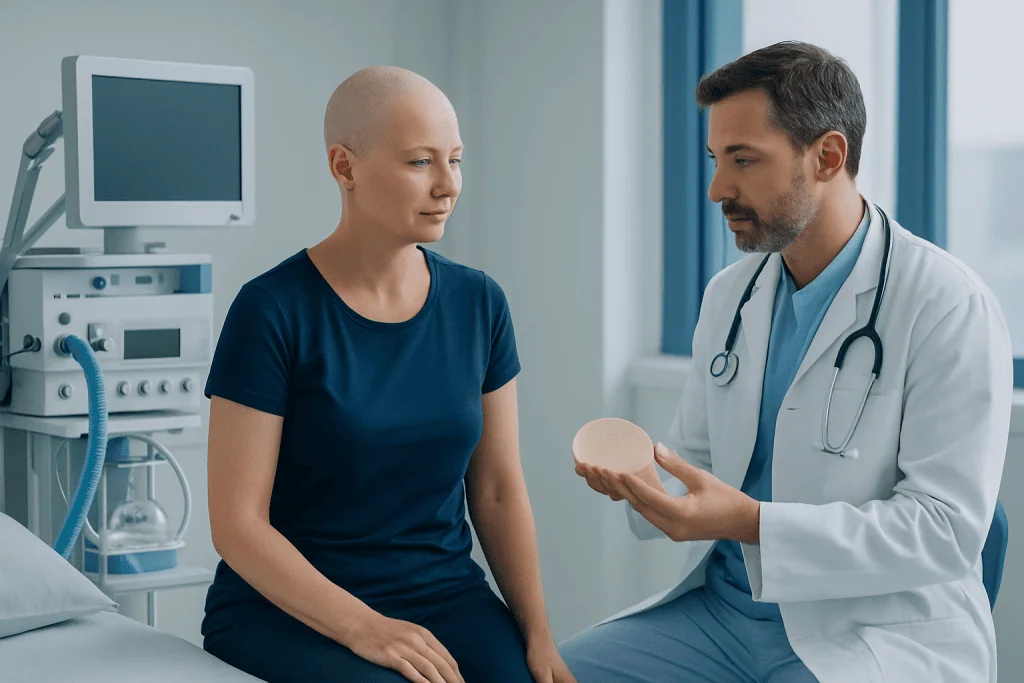
Most people having a mastectomy for breast cancer or risk-reducing surgery can ask about reconstruction. Suitability depends on the stage of cancer, need for radiation therapy, smoking status, diabetes control, body weight, previous surgeries, and general health. Age alone does not automatically rule out reconstruction; overall fitness and treatment priorities matter more.
Immediate reconstruction is often considered when the skin can be preserved and cancer treatment allows it. Delayed reconstruction may be advised if radiation is planned, if the patient wants more time to decide, or if medical issues need to be optimized first. Some patients begin with a temporary tissue expander and move to a final reconstruction later.
There are also different reconstructive goals. Some patients want one breast reconstructed to match the remaining breast, while others may need or choose surgery on both sides for balance. In selected cases, the opposite breast may be adjusted with procedures such as aesthetic breast surgery to improve symmetry.
Personal preference is important. Some people prioritize the shortest recovery possible, while others prefer to avoid implants and use their own tissue. A careful consultation helps clarify these goals before surgery.
Implant reconstruction: how it works, benefits, and limits
Implant reconstruction rebuilds the breast using a prosthetic implant. This may be done in one stage, with the final implant placed during the initial operation, or in two stages, beginning with a tissue expander placed beneath the skin and chest muscle or supportive mesh. The expander is gradually filled over time to create space for the final implant.
One reason patients consider implants is that the operation is usually shorter than flap surgery and does not require moving tissue from another area of the body. This means there is no second surgical wound at a donor site. Recovery is often more straightforward in the early weeks, although total reconstruction may still take more than one procedure.
Implants can provide good breast shape and are widely used, but they also have limitations. An implant is not living tissue, so it can feel firmer and may not change with weight fluctuations in the same way as the natural body. Implants can also develop complications over time, including rupture, leakage, displacement, infection, or scar tightening around the implant, known as capsular contracture.
Radiation therapy can make implant reconstruction more challenging because it may increase the risk of firmness, pain, poor healing, or changes in appearance. For that reason, surgeons often discuss whether implants are the best option when chest wall radiation is planned or has already been given.
Flap reconstruction: how it works, benefits, and limits
Flap reconstruction uses the patient’s own skin, fat, and sometimes muscle to form a new breast. Common donor areas include the lower abdomen, back, thigh, or buttock. Some flaps remain attached to their original blood supply and are moved into place, while others are completely detached and reconnected to blood vessels in the chest using microsurgery.
Because flap reconstruction uses living tissue, the rebuilt breast often feels softer and more natural than an implant. It may also age and change with the body more naturally over time. In patients who have had radiation, flap surgery can sometimes provide healthier tissue to the chest area and may tolerate radiation-related changes better than an implant alone.
The trade-off is that flap surgery is usually more complex. The operation takes longer, recovery can be more demanding, and there is an additional scar where the donor tissue is taken. Risks include wound healing problems, fluid collections, weakness at the donor site, partial tissue loss, or complete flap failure if the blood supply is compromised.
Not everyone is a good candidate for every type of flap. Previous abdominal surgery, low body fat, circulation problems, or smoking may limit certain options. A plastic surgeon will assess body shape, blood vessels, medical history, and expectations to decide which flap procedures are realistic and safe.
Implant vs flap surgery: key differences to discuss with the surgeon
Choosing between implant and flap reconstruction is not about one method being universally better. It is about finding the option that best matches the patient’s anatomy, cancer treatment, personal values, and tolerance for surgery. In general, implant reconstruction may suit patients who want a shorter initial operation and do not want tissue taken from another part of the body. Flap reconstruction may appeal to those who want a more natural feel or wish to avoid long-term implant-related concerns.
Several practical questions can guide the decision:
- Will radiation therapy be needed?
- Is the patient healthy enough for a longer operation?
- Is there enough donor tissue for a flap?
- How important is avoiding implants?
- How much recovery time is manageable at home and at work?
- Would future revisions or maintenance surgeries be acceptable?
It is also important to understand that reconstruction is often a process rather than a single event. Some patients need revision surgery to improve shape, position, or symmetry. Nipple reconstruction or tattooing may be considered later. Scar quality can vary from person to person, and patients prone to keloid scars should mention this during planning.
For some individuals, a hybrid approach may be used, combining an implant with the patient’s own fat or flap tissue to improve contour. This individualized planning is one reason multidisciplinary review is valuable.
Diagnosis, planning, and preparing for surgery
Before reconstruction, the care team reviews the patient’s cancer diagnosis, pathology results, imaging, prior surgeries, and planned treatments. The timing of chemotherapy and radiation can strongly influence the reconstructive plan. The surgeon also examines the skin envelope, chest wall, body proportions, and possible donor sites for flap procedures.
Medical conditions that affect healing should be addressed in advance. Stopping smoking is especially important because nicotine reduces blood flow and increases the risk of poor wound healing, infection, and flap complications. Good nutrition, blood sugar control, and medication review also help prepare the body for surgery.
Patients should ask what scars to expect, how drains are managed, when exercise can restart, and whether more than one procedure is likely. Seeing before-and-after examples of similar cases and reviewing realistic outcomes can help set clear expectations. It is also useful to discuss whether sensation is likely to change permanently after mastectomy and reconstruction.
Reconstructive planning sometimes overlaps with other chest wall or skin concerns, especially in patients with prior operations, injury, or severe skin damage such as burns. Each factor helps shape a safe and personalized surgical roadmap.
Recovery, possible risks, and long-term follow-up
Recovery varies by procedure. Implant reconstruction often allows an earlier return to routine activities, although discomfort, chest tightness, and limited arm movement are common at first. Flap reconstruction usually requires a longer hospital stay and more help at home during the first phase of recovery because two surgical areas must heal.
After either approach, temporary drains may be used to remove extra fluid. Follow-up visits allow the team to check healing, manage pain, and watch for infection, bleeding, fluid buildup, or delayed wound closure. Patients are usually encouraged to move gently, avoid heavy lifting for a period, and follow instructions on sleeping position, showering, and supportive garments.
Long-term issues can differ by method. Implants may eventually need replacement or revision, and some patients develop capsular contracture or asymmetry over time. Flap reconstruction can also need revision for contour, volume, or symmetry, and donor-site tightness or weakness may persist in some cases.
Patients should contact their doctor promptly for increasing redness, fever, sudden swelling, drainage with a bad odor, severe pain, or changes in skin color over a flap. Ongoing follow-up is important not only for the reconstruction but also for regular breast cancer surveillance as recommended by the oncology team.
Living with reconstruction and when to seek specialist advice
Breast reconstruction can support physical and emotional recovery, but it does not have to be chosen immediately. Some patients decide on surgery later, and some use an external breast prosthesis instead of reconstruction. What matters most is that the patient feels informed, supported, and comfortable with the decision.
It is reasonable to seek specialist advice before mastectomy whenever possible, especially if radiation is likely or if there is uncertainty about implant versus flap surgery. A consultation with both the breast surgeon and reconstructive surgeon can help coordinate cancer treatment and cosmetic goals from the start. A second opinion may also be helpful when options are complex.
Patients should seek prompt medical review if they notice new breast or chest wall changes after reconstruction, persistent swelling, severe asymmetry, implant hardening, or wounds that are not healing. Concerns about body image, intimacy, or recovery mood are also important to discuss, as emotional support can be part of care.
For international patients, Acibadem International’s multidisciplinary specialists and JCI-accredited hospitals diagnose and treat patients who need reconstructive care, including breast reconstruction and selected supportive procedures such as body contouring when appropriate after recovery.
Frequently asked questions
Is breast reconstruction after mastectomy medically necessary or cosmetic?
Breast reconstruction is a reconstructive procedure, not simply a cosmetic one. It aims to restore breast shape after mastectomy and can be an important part of recovery for many patients. The decision to have it is personal, and choosing not to have reconstruction is also a valid option.
Which is better: implant reconstruction or flap reconstruction?
Neither option is best for everyone. Implant reconstruction often involves a shorter operation, while flap reconstruction uses the patient’s own tissue and may feel more natural. The better choice depends on health, body type, cancer treatment plans, and personal priorities.
Can breast reconstruction be done at the same time as mastectomy?
Yes, many patients have immediate reconstruction during the same operation as mastectomy. Others have delayed reconstruction later because of radiation, chemotherapy timing, medical reasons, or personal preference. A breast surgeon and plastic surgeon can explain which timing is most suitable.
Does radiation therapy affect reconstruction choices?
Yes, radiation can significantly affect healing and final cosmetic results. It may increase the risk of firmness, tightness, and complications with implants. In some cases, flap reconstruction may be preferred, but the best plan depends on the individual situation.
How long does recovery take after breast reconstruction?
Recovery time depends on the type of surgery and the patient’s overall health. Implant reconstruction often has a shorter early recovery, while flap surgery usually takes longer because it involves both the chest and a donor site. Full healing and final shaping can take several months.
Will the reconstructed breast have normal feeling?
Sensation often changes after mastectomy and reconstruction, and the reconstructed breast may feel numb or less sensitive. Some sensation may return over time, but it is often different from before surgery. Patients should ask their surgeon what to expect in their specific case.
References
- American Cancer Society
- National Cancer Institute
- American Society of Plastic Surgeons
- National Comprehensive Cancer Network
- Breastcancer.org
This article is for general information only and is not a substitute for professional medical advice. Please consult a qualified doctor about your individual situation.
Breast Reconstruction in Turkey — costs, top hospitals & a free quote
JCI-accredited · board-certified surgeons · reply within 24h
Add us as a Preferred Source to see more of our trusted health content across Google Search, AI Overviews and Discover.

Plastic, Reconstructive & Aesthetic Surgery
Reconstructive and aesthetic procedures for the face and body, performed by experienced surgeons.
35 specialists in this unitRelated Treatments
Related Conditions
More from the Health Library



Related Specialists
Assoc. Prof. Dr. Erdem Güven (m)
Aesthetic Plastic & Reconstructive Surgery
Prof. Dr. Şükrü Yazar
Aesthetic Plastic & Reconstructive Surgery
Prof. Dr. Hakan Ağır
Aesthetic Plastic & Reconstructive Surgery
Prof. Dr. Bülent Saçak
Aesthetic Plastic & Reconstructive Surgery