Butt Kicks — Explained by Medical Evidence, Not Myths
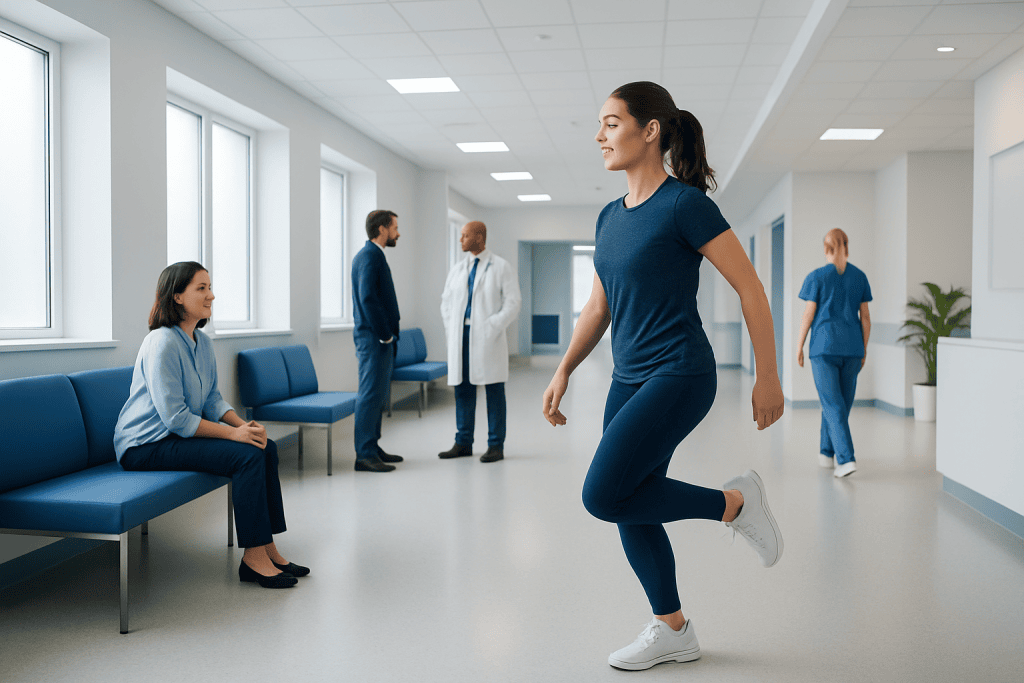
Butt kicks are mainly used as a warm-up drill, coordination exercise, or light cardio movement. They primarily involve the hamstrings, calves, hip flexors, and core for balance and control.
Key Takeaways
- Butt kicks are mainly used as a warm-up drill, coordination exercise, or light cardio movement.
- They primarily involve the hamstrings, calves, hip flexors, and core for balance and control.
- Good technique matters more than speed; the goal is quick, controlled heel recovery rather than exaggerated kicking.
- Butt kicks should not cause joint pain, limping, or a pulling sensation in the back of the thigh.
- People with knee, hip, ankle, or balance concerns may need a lower-impact version or medical advice before starting.
Butt kicks are a simple exercise and running drill in which the heels lift toward the buttocks in alternating steps. When performed with good form, they can help warm the body, support coordination and running mechanics, and provide light to moderate cardiovascular activity, but they are not a cure-all and should be adapted if they cause pain.
What are butt kicks?
Butt kicks are a basic movement drill in which a person jogs or steps in place while bringing one heel and then the other toward the buttocks. The exercise is common in warm-ups for running, field sports, and fitness classes because it raises body temperature, encourages rhythmic movement, and prepares the lower limbs for activity.
From a medical and movement perspective, butt kicks are best understood as a coordination and conditioning drill rather than a miracle exercise. They can help some people practice leg turnover and hamstring activation, but they do not automatically fix running form, prevent all injuries, or strengthen the body on their own. Their value depends on how they are used within a broader exercise plan.
There are several ways to perform butt kicks. Some people do them while moving forward over a short distance, while others do them in place as part of a home workout. The pace can vary from gentle marching to faster athletic drills, and the safest version is the one that matches the individual’s fitness, balance, and joint comfort.
What muscles do butt kicks work and what are the benefits?
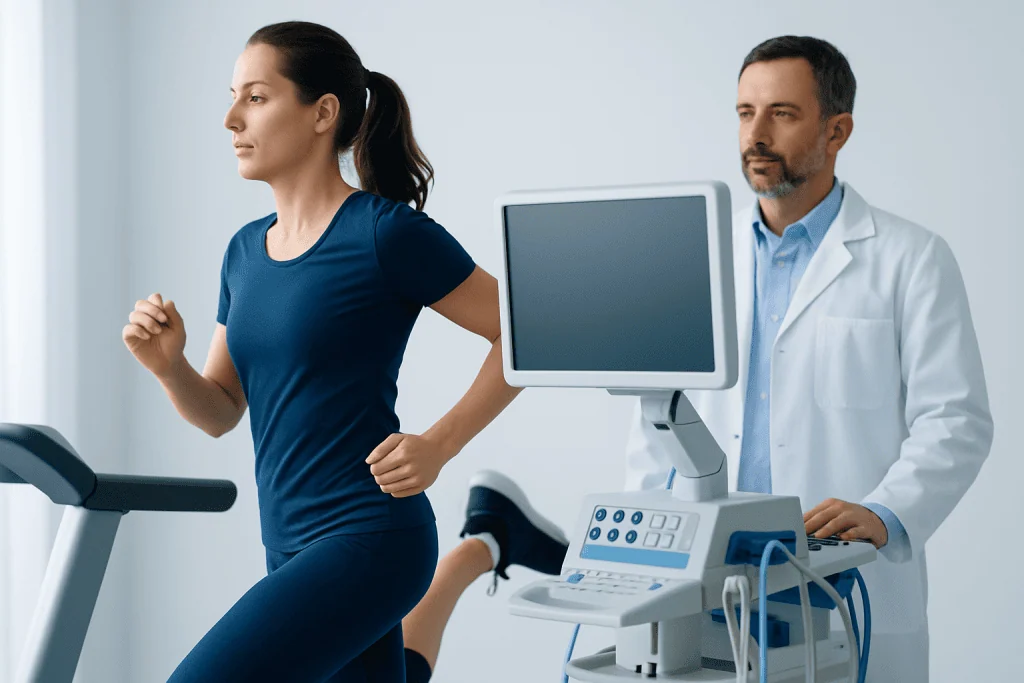
Butt kicks mainly involve the hamstrings, which bend the knee and help bring the heel upward. The calves assist with pushing off the ground, while the hip flexors help lift the leg during the cycling motion. The abdominal and lower back muscles also work in the background to keep the trunk steady and upright.
One practical benefit is that butt kicks can serve as a dynamic warm-up. Unlike static stretching, dynamic drills keep the body moving while gently increasing heart rate and circulation to muscles. This can help a person feel more prepared for walking, jogging, running, or sports practice.
Butt kicks may also support coordination and rhythm. In runners, they are sometimes used to reinforce quick leg recovery and cadence awareness, especially when combined with other drills. As a fitness movement, they can add variety to short cardio sessions and can be adjusted for beginners by lowering speed and impact.
- Can raise heart rate gradually before exercise
- May improve coordination and lower-limb timing
- Can help activate the back of the thighs and calves
- May be used as light cardio in small spaces
- Can be modified for different fitness levels
How to do butt kicks with proper form
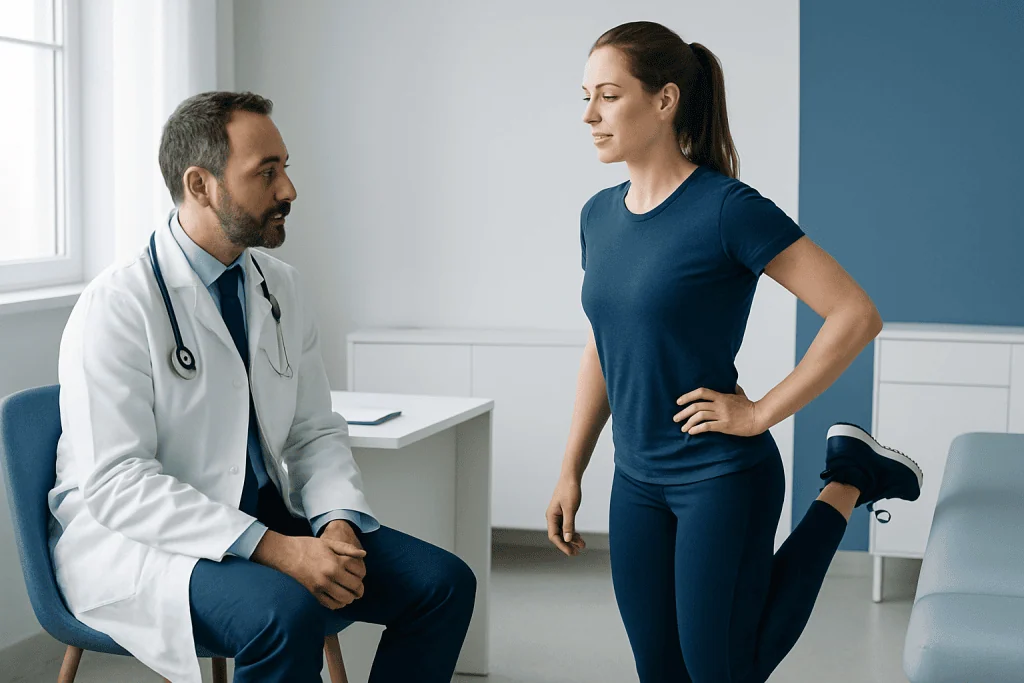
Proper form starts with an upright posture. The head should stay neutral, the shoulders relaxed, and the chest gently lifted. Instead of leaning far forward or arching the lower back, the person should keep the trunk fairly stable while taking quick, light steps.
The movement comes from alternating the legs so that each heel travels toward the buttocks without forcefully slamming into them. The knees should point generally downward rather than lifting high in front, because butt kicks are different from high knees. The arms can swing naturally at the sides, similar to easy jogging, to help with rhythm and balance.
It is usually better to begin slowly and focus on control. A person can start with 20 to 30 seconds in place, rest, and repeat for a few rounds. If there is pain, loss of balance, or a feeling of strain in the hamstring or front of the knee, the movement should be reduced, modified, or stopped until the cause is clearer.
A lower-impact option is a marching butt kick, where one heel is lifted toward the buttocks at a time without hopping. This can be useful for beginners, older adults, or people returning to exercise after illness or injury.
Common myths and mistakes
A common myth is that butt kicks are mainly a glute-building exercise. In reality, they are more closely associated with hamstring activity, calf work, and movement practice. The gluteal muscles still contribute to overall lower-body control, but butt kicks are not usually the most direct exercise for building glute strength.
Another misconception is that faster is always better. In fact, rushing the drill often leads to excessive bouncing, leaning forward, noisy foot strikes, or poor balance. These changes can reduce the quality of the movement and may place more stress on the knees, ankles, or lower back.
One frequent error is pulling the heel up aggressively while letting the knees drift forward too much. This can turn the drill into a mixed movement that does not clearly train either butt kicks or high knees. Another mistake is performing them without a warm-up at all, especially before intense exercise, when the muscles may still feel stiff.
People with known movement limitations sometimes try to push through discomfort because the exercise looks simple. However, pain is not a normal sign of effective technique. If repeated exercise causes symptoms related to muscle strain or overuse, a medical assessment may be appropriate.
Who should be cautious with butt kicks?
Although butt kicks are generally safe for many healthy adults, they are not ideal for everyone in every setting. People with recent injuries involving the hamstrings, knees, ankles, hips, or lower back may need to avoid them temporarily or perform a modified version. The same is true for anyone with poor balance, dizziness, or limited mobility.
Joint pain during this drill deserves attention. Pain at the front of the knee may suggest irritation from repeated impact or technique problems. Pain in the back of the thigh can point to hamstring overload. Symptoms around the Achilles tendon or calf may also develop if the person suddenly increases intensity, especially after a period of inactivity.
For people with ongoing musculoskeletal issues, it may help to pair exercise with a structured assessment and recovery plan. Depending on the problem, a clinician may recommend activity modification, strengthening, gait evaluation, or physical therapy and rehabilitation. When symptoms are persistent or severe, imaging such as MRI may be considered to clarify soft-tissue or joint problems.
How butt kicks fit into a safe workout
Butt kicks are usually most useful near the start of exercise, after a few minutes of gentle walking or easy movement. They can be part of a dynamic warm-up alongside leg swings, marching, calf raises, and mobility work. For many people, short intervals are enough, such as 2 to 4 rounds of 20 to 30 seconds.
As a stand-alone cardio exercise, butt kicks can be included in interval training, home circuits, or low-equipment routines. Even then, variety matters. A balanced plan should also include strength training, flexibility work, and exercises that improve the hips, core, and overall endurance.
Anyone training for running should remember that no single drill corrects all mechanics. Butt kicks may support preparation, but recurring pain with running can have several causes, including training errors, footwear issues, or underlying conditions. In some cases, symptoms may overlap with problems seen in runner's knee, which may need targeted evaluation rather than more drills.
People recovering from injury or returning to sport may benefit from supervised progression. If movement quality is poor, a sports medicine, rehabilitation, or orthopedic team can advise on safer alternatives and, when necessary, more advanced options such as orthopedic surgery for structural problems that do not improve with conservative care.
Prevention and self-care tips
The best way to avoid problems with butt kicks is to build up gradually. Sudden increases in speed, duration, or workout frequency can overload muscles and tendons. A person should choose a stable surface, wear supportive footwear, and begin only after a brief general warm-up.
Technique is another part of prevention. The movement should feel springy but controlled, with soft landings and a steady trunk. Shorter sets often work better than long sets that lead to fatigue and sloppy form. Rest is also important, especially after intense training days or if the legs feel unusually tight.
At home, simple recovery steps may help mild post-exercise soreness. These can include gentle walking, hydration, light stretching after the workout, and allowing enough time between hard sessions. If discomfort continues beyond normal soreness, repeats every time the drill is performed, or limits daily activity, it is wise to pause and seek professional guidance.
When to seek medical care
Medical care is appropriate if butt kicks trigger sharp pain, swelling, bruising, limping, a popping sensation, or pain that does not settle with rest. These signs can suggest more than routine exercise soreness. New symptoms in the knee, calf, ankle, or hamstring should be assessed if they interfere with walking, sport, or sleep.
A doctor should also be consulted if a person has repeated pain during warm-ups, frequent falls, numbness, weakness, or a known history of joint instability. In children, older adults, and people with chronic medical conditions, an individualized exercise plan may be safer than following generic online advice.
When specialist care is needed, Acibadem International’s multidisciplinary teams in JCI-accredited hospitals evaluate exercise-related injuries and movement concerns for international patients. The aim is to identify the cause of symptoms, recommend evidence-based treatment, and help the person return to activity safely.
Frequently asked questions
Are butt kicks a good exercise?
Butt kicks can be a useful exercise when the goal is warming up, practicing coordination, or adding light cardio. They are most helpful when done with good posture and control as part of a broader fitness routine.
What do butt kicks primarily work?
Butt kicks mainly involve the hamstrings and calves, with support from the hip flexors and core. They are more of a dynamic movement drill than a heavy strengthening exercise.
Do butt kicks help with running?
They may help some runners prepare for activity by promoting rhythm, leg turnover, and warm-up readiness. However, they do not by themselves correct all running form problems or prevent all injuries.
Can butt kicks hurt the knees?
They can aggravate the knees if technique is poor, impact is excessive, or an underlying knee problem is already present. Pain is a sign to slow down, modify the movement, or seek medical advice if symptoms continue.
Should beginners do butt kicks in place or moving forward?
Beginners often do better starting in place because it is easier to control speed and balance. Once the movement feels comfortable and pain-free, they may progress to a gentle forward version.
What is the difference between butt kicks and high knees?
Butt kicks emphasize bringing the heel toward the buttocks with relatively low knee lift, while high knees emphasize lifting the knees upward in front of the body. They train different movement patterns and are often used for different warm-up goals.
References
- American College of Sports Medicine
- American Academy of Orthopaedic Surgeons
- National Institute of Arthritis and Musculoskeletal and Skin Diseases
- Centers for Disease Control and Prevention
- National Health Service
This article is for general information only and is not a substitute for professional medical advice. Please consult a qualified doctor about your individual situation.
Heart care in Turkey — expert evaluation and treatment
JCI-accredited · board-certified surgeons · reply within 24h
Add us as a Preferred Source to see more of our trusted health content across Google Search, AI Overviews and Discover.
Check your numbers in seconds
BMI, calories, due date, blood pressure and 30+ more clinical calculators — free, instant, doctor-reviewed ranges.