Cataract Surgery: Step-by-Step Procedure and Lens Choices

Cataract surgery usually involves removing the cloudy lens through a small incision and placing an artificial intraocular lens. The best time for surgery depends on how much cataracts affect daily activities such as reading, driving, or recognizing faces.
Key Takeaways
- Cataract surgery usually involves removing the cloudy lens through a small incision and placing an artificial intraocular lens.
- The best time for surgery depends on how much cataracts affect daily activities such as reading, driving, or recognizing faces.
- Lens options include monofocal, toric, multifocal, and other specialty lenses, each with different benefits and trade-offs.
- Most people recover well, but temporary blurry vision, light sensitivity, and mild discomfort are common early in healing.
- A full eye examination helps identify other eye conditions that may affect vision results after surgery.
- Patients should follow postoperative instructions closely and contact a doctor if they develop severe pain, sudden vision loss, or increasing redness.
Cataract surgery is a common procedure that removes the eye’s cloudy natural lens and replaces it with a clear artificial lens. Understanding each step and the available lens choices can help patients feel more prepared and confident when discussing treatment with an eye specialist.
Overview: What Cataract Surgery Is
Cataracts happen when the eye’s natural lens becomes cloudy. This clouding can make vision blurry, faded, dim, or more sensitive to glare. Cataract surgery treats this problem by removing the cloudy lens and replacing it with a clear artificial lens called an intraocular lens, or IOL.
It is one of the most commonly performed eye procedures worldwide and is generally very successful at improving vision affected by cataracts. Surgery is usually considered when cataracts begin to interfere with everyday tasks such as reading, driving, using a phone, watching television, or seeing clearly in bright light or at night.
Cataract surgery does not treat every cause of poor vision. If a person also has another eye problem, such as diabetic retinopathy or macular disease, the final visual result may depend on both the cataract and the underlying retinal condition. For that reason, a careful eye examination before surgery is an important part of planning.
When Surgery May Be Needed and Common Symptoms
The main reason to consider cataract surgery is reduced quality of life from cloudy vision. A cataract does not always need to be removed right away. In early stages, stronger glasses, brighter lighting, and anti-glare measures may help for some time. Surgery is usually recommended when these steps no longer provide enough improvement.
Common symptoms of cataracts include blurred or hazy vision, increased sensitivity to sunlight or headlights, poor night vision, colors appearing dull or yellowed, and frequent changes in glasses prescription. Some people also notice double vision in one eye or feel that a room looks dim even when it is well lit.
An eye doctor may also advise surgery if the cataract is interfering with the diagnosis or treatment of another eye condition. For example, a very dense cataract can make it harder to examine the retina properly. Patients who want to learn more about the condition itself may also review cataracts as a related topic.
Before the Procedure: Evaluation and Preparation

Before surgery, the ophthalmologist performs a detailed eye examination. This usually includes checking visual acuity, measuring the pressure inside the eye, examining the cornea and retina, and confirming that the cataract is the main cause of vision problems. The doctor will also ask about general health conditions, medications, allergies, and any previous eye surgeries.
Special measurements are taken to choose the correct power of the artificial lens. These measurements help estimate how the eye will focus after surgery. This planning is especially important for people considering premium lens options or those with astigmatism, prior refractive surgery, or other eye conditions that may affect accuracy.
Patients may be advised to stop certain medicines only if their doctor says it is safe. On the day of surgery, they are often asked not to wear eye makeup, perfume, or contact lenses. The care team explains how to use prescribed eye drops, what to expect on arrival, and how to arrange transportation home, since driving immediately after surgery is usually not recommended.
At this stage, lens selection is a key discussion. The surgeon may explain options such as intraocular lenses designed for one focal point or specialty lenses that can reduce dependence on glasses in some situations. The right choice depends on lifestyle, eye anatomy, and expectations.
Cataract Surgery Step by Step
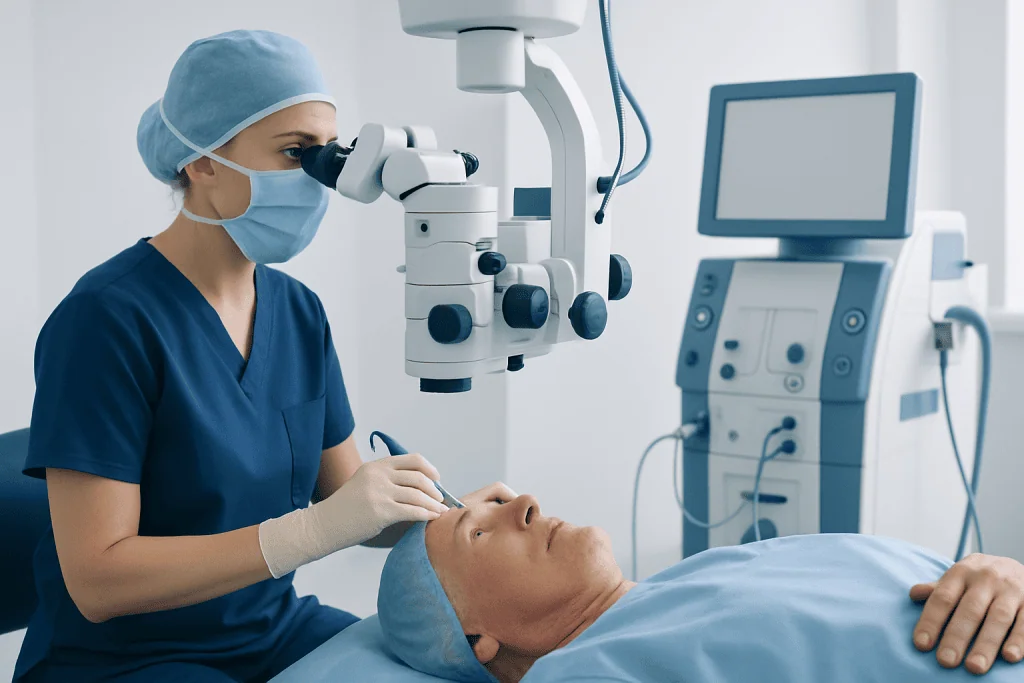
Cataract surgery is most often performed as an outpatient procedure, meaning the patient goes home the same day. The eye is numbed with drops, and sometimes medication is given to help the patient feel calm and relaxed. General anesthesia is not usually needed for routine adult cataract surgery.
First, the surgeon makes a very small incision at the edge of the cornea. A circular opening is created in the thin capsule that surrounds the natural lens. The cloudy lens is then broken into tiny pieces, usually with ultrasound energy in a method called phacoemulsification, and those pieces are gently removed from the eye.
Once the cloudy lens has been removed, the surgeon places the folded artificial lens into the lens capsule, where it opens and stays in position. In many cases, the incision is so small that stitches are not needed. The eye may then be protected with a shield before the patient goes to the recovery area.
Although the general steps are similar for most patients, the exact technique can vary. Some surgeons may use laser-assisted methods for selected cases, and complex cataracts may require additional devices or a modified approach. Patients interested in procedure details can discuss cataract surgery options with their ophthalmologist.
Lens Choices: Monofocal, Toric, Multifocal and More
The artificial lens placed during surgery is a central part of treatment planning. A standard monofocal lens gives clear focus at one main distance, usually far. Many people who choose monofocal lenses still need glasses for reading or close work, and some may need glasses for certain distance tasks as well.
People with astigmatism may benefit from a toric lens, which is designed to correct that specific refractive error. For patients who want greater independence from glasses, multifocal or other presbyopia-correcting lenses may be considered. These lenses split or extend focus across more than one distance, but they can also have trade-offs, such as glare, halos, or reduced contrast sensitivity in some people.
Lens selection should be individualized. Eye health, pupil size, corneal shape, retinal disease, past refractive surgery, work habits, hobbies, and night-driving needs can all affect which lens is most suitable. Patients with significant corneal irregularity or retinal disease may be better served by simpler lens designs that maximize image quality.
A discussion about multifocal lenses may be helpful for some patients, while others may need treatment planning that also considers astigmatism correction. No lens is perfect for every person, so clear expectations are an important part of decision-making.
Recovery, Results and Possible Risks
Vision often begins to improve within a few days, although full healing can take several weeks. It is common to have mild irritation, watery eyes, light sensitivity, or a feeling that the eye is slightly scratchy at first. Colors may appear brighter once the cloudy lens has been removed.
Patients are usually prescribed eye drops to reduce inflammation and help prevent infection. They are commonly told not to rub the eye and to avoid activities that could increase pressure or expose the eye to dirt or water while healing. Follow-up visits help the surgeon monitor recovery and check whether the lens is stable and the eye is healing well.
As with any procedure, cataract surgery has possible risks, although serious complications are uncommon. These may include infection, bleeding, inflammation, swelling of the cornea or retina, increased eye pressure, retinal detachment, lens position problems, or persistent visual symptoms such as glare. In some people, the thin capsule behind the new lens becomes cloudy months or years later; this is often treatable with a quick laser procedure.
Most patients are pleased with the results, especially when the expected outcome has been discussed clearly before surgery. However, vision may still be limited if there are other eye conditions present. Glasses may also still be needed depending on the lens type chosen and the eye’s final focusing result.
Self-care After Surgery and When to See a Doctor
After surgery, practical self-care supports a smoother recovery. Patients should use all prescribed eye drops exactly as directed, wear the protective shield if advised, and attend all follow-up appointments. Sunglasses outdoors can help with temporary light sensitivity, and rest is often helpful in the first day or two.
For a short period, the doctor may recommend avoiding heavy lifting, swimming, hot tubs, dusty environments, and eye makeup. Showering is usually possible, but patients should try to keep soap, shampoo, and unclean water out of the operated eye. Reading, walking, and light daily activities are often allowed unless the surgeon advises otherwise.
Medical advice should be sought promptly if there is severe eye pain, sudden drop in vision, flashes of light, many new floaters, increasing redness, marked swelling, or discharge. These symptoms do not always mean a serious problem, but they need timely assessment by an eye specialist.
For international patients seeking coordinated care, Acibadem International’s multidisciplinary specialists and JCI-accredited hospitals diagnose and treat cataracts and related eye conditions with individualized planning and follow-up support.
Frequently asked questions
How long does cataract surgery take?
The procedure itself is often completed in less than an hour, and many cases are much shorter. However, the full visit usually takes longer because of preparation, monitoring, and recovery time before going home.
Is cataract surgery painful?
Most people feel little or no pain during cataract surgery because the eye is numbed with drops and sometimes supported with calming medication. Mild discomfort, scratchiness, or light sensitivity can happen afterward, but severe pain is not typical and should be assessed by a doctor.
Will glasses still be needed after cataract surgery?
Many patients still need glasses for some activities, depending on the lens selected and the final healing result. Monofocal lenses often provide clear vision at one distance, while multifocal or other specialty lenses may reduce reliance on glasses for some people.
What is the best lens for cataract surgery?
There is no single best lens for everyone. The most suitable choice depends on the person’s eye health, astigmatism, daily activities, reading needs, driving habits, and willingness to accept possible trade-offs such as halos or glare.
How soon can normal activities be resumed?
Many people return to light daily activities within a day or two, but the exact timeline varies. The surgeon may ask the patient to avoid heavy lifting, swimming, rubbing the eye, and other activities that could interfere with healing for a short period.
Can cataracts come back after surgery?
The cataract itself does not come back because the cloudy natural lens has been removed. However, the capsule that supports the artificial lens can become cloudy later, causing blurred vision that is often treated with a simple laser procedure.
References
- American Academy of Ophthalmology
- National Eye Institute
- Royal College of Ophthalmologists
- Mayo Clinic
- World Health Organization
This article is for general information only and is not a substitute for professional medical advice. Please consult a qualified doctor about your individual situation.
Cataract Surgery in Turkey — costs, top hospitals & a free quote
JCI-accredited · board-certified surgeons · reply within 24h
Add us as a Preferred Source to see more of our trusted health content across Google Search, AI Overviews and Discover.

Ophthalmology
Comprehensive eye care from laser vision correction to retina, cornea and cataract surgery.
75 specialists in this unit