Chalazion Surgery: When a Persistent Eyelid Lump Needs Removal

A chalazion is a blocked oil gland in the eyelid, not usually a dangerous condition. Many chalazia improve with warm compresses, but persistent or recurrent lumps may need surgery.
Key Takeaways
- A chalazion is a blocked oil gland in the eyelid, not usually a dangerous condition.
- Many chalazia improve with warm compresses, but persistent or recurrent lumps may need surgery.
- Chalazion surgery is typically a short outpatient procedure performed under local anesthesia.
- A doctor may suggest biopsy or closer evaluation if the lump looks unusual or does not behave like a typical chalazion.
- Good eyelid hygiene can help reduce the chance of future chalazia.
Chalazion surgery may be recommended when a painless eyelid lump does not go away with self-care or keeps coming back. The procedure is usually brief and effective, and most people recover quickly with simple aftercare.
Overview
A chalazion is a small lump in the eyelid caused by blockage of a meibomian gland, one of the tiny oil glands that help keep the eye surface comfortable. It often develops gradually and may feel firm or rubbery. Unlike many infections, a chalazion is usually not painful, especially after the earliest stage.
Most chalazia are harmless and improve over time with conservative care such as warm compresses and gentle eyelid hygiene. However, some remain for weeks to months, become large enough to press on the eye, or return repeatedly in the same area. In those situations, a doctor may discuss chalazion treatment and whether surgery is the best next step.
Chalazion surgery is a minor procedure used to drain and remove the blocked material inside the lump. It is generally done as an outpatient treatment, meaning the patient goes home the same day. For many people, it provides relief when the lesion is persistent, bothersome, or affecting vision or appearance.
Symptoms and When a Chalazion Becomes a Problem
A chalazion commonly appears as a rounded swelling on the upper or lower eyelid. Early on, the eyelid may be mildly red or tender, but many chalazia later become painless lumps. The surrounding eyelid can look puffy, and some people notice a feeling of heaviness or mild irritation rather than sharp pain.
If the lump becomes large, it may press on the front surface of the eye and temporarily blur vision. This can happen because pressure on the cornea changes the way light enters the eye. Some people also feel self-conscious if the swelling is noticeable.
A medical review is more important when symptoms do not fit a typical chalazion. Warning signs include significant pain, fever, spreading redness, discharge, rapidly increasing swelling, or changes in the eye itself. These features may suggest a different problem, such as an infection, and can require prompt care.
- A painless or mildly tender eyelid lump
- Localized eyelid swelling or fullness
- Redness, especially early in the course
- Blurred vision if the lump is large
- Recurring lumps in the same area
Causes and Risk Factors

Chalazia form when an oil gland in the eyelid becomes blocked. The trapped oily material triggers inflammation, which leads to the characteristic lump. This is different from a stye, which is more often an acute, tender infection near an eyelash or gland opening. Sometimes a stye can later evolve into a chalazion once the active infection settles.
Certain skin and eyelid conditions can increase the chance of gland blockage. These include blepharitis, rosacea, and oily skin. People who have had one chalazion before may also be more likely to develop another. In some cases, poor eyelid hygiene, heavy eye makeup use, or not removing contact lenses properly can contribute to irritation around the eyelids, although they are not the sole cause.
Less commonly, a lump that seems like a chalazion may actually be another eyelid condition. That is why persistent, recurrent, or unusual lesions should be assessed by an eye specialist. An eye doctor may recommend a full eye examination to confirm the diagnosis and rule out other causes.
How Doctors Diagnose a Persistent Eyelid Lump
Diagnosis is usually made through a clinical examination. The doctor looks at the eyelid, asks how long the lump has been present, whether it has changed, and what symptoms are present. In many cases, no scans or laboratory tests are needed.
The doctor will consider whether the lesion behaves like a typical chalazion or whether another diagnosis should be considered. Conditions that may resemble a chalazion include a stye, cyst, chronic inflammation, or, rarely, an eyelid tumor. Repeated chalazia in exactly the same location or lumps with an unusual appearance may need more careful evaluation.
If there is concern about the diagnosis, the tissue removed during surgery may be sent for laboratory analysis. This is not needed for every patient, but it can be helpful if the chalazion is recurrent, atypical, or not responding as expected. The goal is to make sure the eyelid lump has been correctly identified and managed safely.
When Chalazion Surgery Is Recommended
Doctors usually begin with nonsurgical treatment because many chalazia settle on their own. Warm compresses applied regularly can soften thickened oil and encourage drainage. Gentle eyelid massage and cleansing may also help, particularly when blepharitis is present. Some patients are treated with medicines or, in selected cases, a steroid injection.
Chalazion surgery may be advised when the lump remains despite several weeks of conservative treatment, becomes large, affects vision, causes cosmetic concern, or keeps recurring. Surgery can also be appropriate when a firm lump has been present for a long time and is unlikely to resolve completely on its own.
The decision is individualized. Factors such as age, the chalazion’s size and location, a history of recurrence, and the possibility of another diagnosis are all considered. An ophthalmologist can explain whether simple observation, office-based removal, or another approach is the most suitable plan.
What Happens During Chalazion Surgery
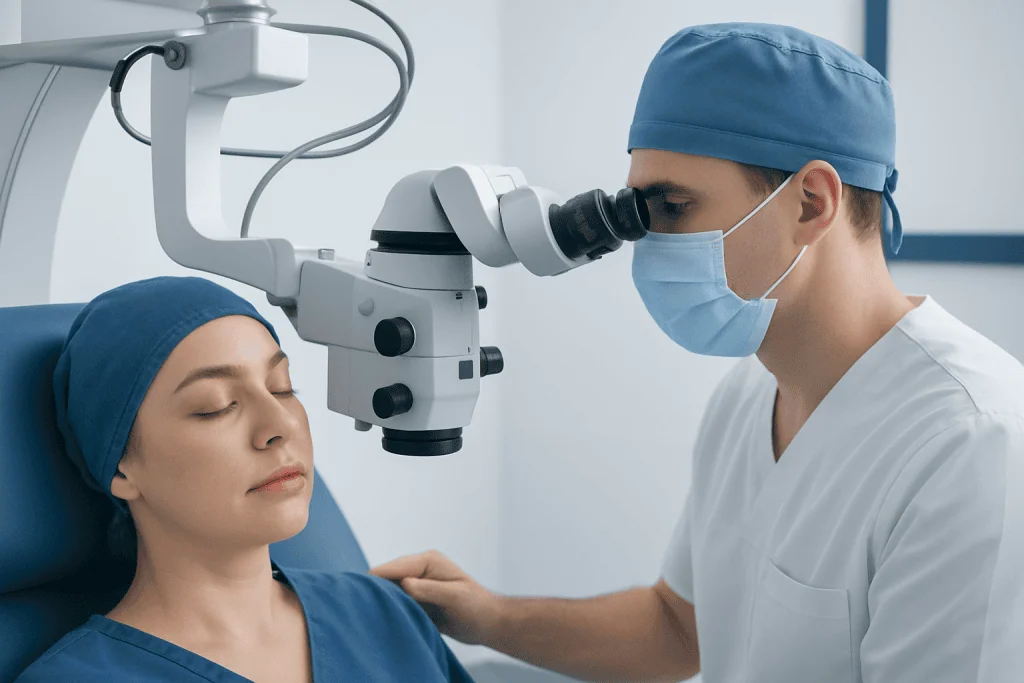
Chalazion surgery is usually performed under local anesthesia in a clinic or day-surgery setting. The eyelid is numbed so the patient remains comfortable. In children or in adults who are very anxious, a different anesthesia plan may sometimes be considered.
Once the area is numb, the surgeon gently stabilizes the eyelid and makes a small incision, most often on the inner side of the eyelid to avoid a visible skin scar. The blocked inflammatory material is then drained and the cavity is cleaned. The procedure is typically short, and stitches are often not needed.
After the procedure, the eyelid may be padded briefly, and the patient is usually given instructions about cleaning the eye area and using prescribed ointment or drops. This type of minor eye surgery is generally well tolerated, and most people return home soon afterward.
In some situations, especially if the lesion is on the outer eyelid surface or has unusual features, the surgical approach may vary slightly. If tissue is sent for analysis, the patient will be told when to expect results and whether further follow-up is needed.
Recovery, Risks, and Self-Care After Surgery
Recovery after chalazion surgery is usually straightforward. Mild swelling, bruising, tenderness, or a small amount of blood-tinged discharge can occur for a short time. These effects generally improve over several days. Patients are usually advised not to rub the eye and to follow all aftercare instructions carefully.
Simple aftercare may include warm compresses when recommended, prescribed antibiotic or anti-inflammatory medication, and temporary avoidance of eye makeup or contact lenses until the eyelid has healed. People who wear lenses may need guidance on when it is safe to resume them; in some cases, broader eye comfort and lens hygiene habits can be reviewed along with contact lens use.
Complications are uncommon but can include bleeding, infection, scarring, incomplete removal, or recurrence. Sometimes a small residual bump remains for a while even after successful drainage because inflammation takes time to settle. Follow-up helps the doctor confirm that healing is progressing well.
To lower the risk of future chalazia, ongoing lid hygiene can be useful, especially for people with blepharitis or rosacea. Regular cleansing of the eyelid margins, careful makeup removal, and management of underlying eyelid inflammation all support healthier oil gland function. For patients with recurring eyelid or ocular surface problems, specialists in external eye disease care may help guide long-term management.
When to See a Doctor
A person should see a doctor if an eyelid lump lasts more than a few weeks, keeps coming back, becomes large, or causes blurred vision or significant discomfort. Medical advice is also important if home treatment has not helped or if the diagnosis is uncertain.
Urgent assessment is recommended for severe pain, fever, marked redness spreading around the eye, trouble opening the eye, or changes in vision. These symptoms may point to an infection or another condition that needs prompt attention. It is better to have persistent eyelid lumps checked rather than assuming they are all harmless chalazia.
Near the end of the care pathway, some patients may benefit from multidisciplinary evaluation, especially when eyelid disease is recurrent or accompanied by other eye surface concerns. Acibadem International’s ophthalmology teams in JCI-accredited hospitals diagnose and treat chalazia and other eyelid conditions for international patients with individualized care plans.
Frequently asked questions
Can a chalazion go away without surgery?
Yes. Many chalazia improve with warm compresses, gentle eyelid care, and time. Surgery is usually considered only when the lump persists, recurs, becomes large, or causes bothersome symptoms.
Is chalazion surgery painful?
The procedure is usually done with local anesthesia, so the eyelid is numbed first. Patients may feel pressure or movement, but significant pain during the procedure is uncommon. Mild soreness afterward can usually be managed with routine aftercare.
How long does recovery take after chalazion removal?
Most people recover quickly, with swelling and bruising improving over several days to about one to two weeks. The exact timeline depends on the size of the chalazion and the person's healing response. A doctor will advise when normal activities, makeup, or contact lenses can be resumed.
Can a chalazion come back after surgery?
Yes, recurrence is possible, especially in people with blepharitis, rosacea, or ongoing eyelid gland blockage. Surgery treats the current lump, but it does not remove the tendency to develop future ones. Good eyelid hygiene may help lower the risk.
What is the difference between a chalazion and a stye?
A stye is usually a more acute, painful infection near an eyelash or gland opening. A chalazion is typically a blocked oil gland that forms a firmer, often less painful lump. Sometimes a stye can later turn into a chalazion.
When should a persistent eyelid lump be checked for something else?
A lump should be evaluated more carefully if it keeps returning in the same spot, looks unusual, bleeds, changes the skin, or does not improve as expected. In some cases, a doctor may send removed tissue for analysis. This helps rule out less common but important alternative diagnoses.
References
- American Academy of Ophthalmology
- National Eye Institute
- NHS
- Merck Manual Consumer Version
This article is for general information only and is not a substitute for professional medical advice. Please consult a qualified doctor about your individual situation.
Chalazion in Turkey — costs, top hospitals & a free quote
JCI-accredited · board-certified surgeons · reply within 24h
Add us as a Preferred Source to see more of our trusted health content across Google Search, AI Overviews and Discover.

Ophthalmology
Comprehensive eye care from laser vision correction to retina, cornea and cataract surgery.
75 specialists in this unit