

Cheek Augmentation: Implants vs Fat Transfer for Facial Volume

Cheek augmentation can add volume, improve facial balance, and support a more youthful contour. Cheek implants offer a predictable shape and long-lasting structure.
Key Takeaways
- Cheek augmentation can add volume, improve facial balance, and support a more youthful contour.
- Cheek implants offer a predictable shape and long-lasting structure.
- Fat transfer uses the patient’s own tissue and may feel very natural, but some of the added volume can be reabsorbed.
- The best option depends on facial anatomy, skin quality, available donor fat, and personal goals.
- A qualified surgeon can help choose the safest technique and plan realistic results.
Cheek augmentation is a cosmetic procedure used to restore or enhance facial volume, improve balance, and create more defined cheek contours. The two main approaches are cheek implants and fat transfer, each with different benefits, limitations, and recovery profiles.
Overview
Cheek augmentation is a facial cosmetic procedure designed to enhance the shape and projection of the cheeks. It may be chosen to restore age-related volume loss, improve facial harmony, or create a stronger midface contour.
Two common approaches are cheek implants and fat transfer. Cheek implants use a shaped medical implant to add structure, while fat transfer uses the patient’s own fat, usually harvested from another area of the body and carefully placed in the cheeks.
Although both methods can improve facial fullness, they are not the same. The better choice depends on the person’s facial anatomy, how much volume is needed, how long-lasting the result should be, and whether the patient prefers an implant-based or tissue-based option.
Symptoms and Reasons People Seek Treatment

Cheek augmentation is not usually performed for a medical symptom in the traditional sense. Instead, people seek it because they feel their face looks flat, tired, or less youthful than they would like.
Common reasons include naturally underdeveloped cheekbones, facial asymmetry, volume loss with aging, or changes after weight loss. Some people also want improved definition in profile or a better balance between the cheeks, chin, and jawline.
Patients may notice one or more of the following concerns:
- Hollowing under the eyes or through the midface
- Reduced cheek projection
- A flatter appearance from the front or side
- Loss of facial support with age
- Uneven cheek shape or mild asymmetry
Causes & Risk Factors
Facial volume changes are often a normal part of aging. As the skin, fat pads, and supporting tissues of the face shift over time, the cheeks may appear less full and less defined. Genetics also play a major role in cheek shape and bone structure.
Weight loss can make cheek volume loss more noticeable, especially in people who already have a lean facial structure. In some cases, previous trauma, congenital differences, or prior facial surgery may contribute to a desire for cheek augmentation.
Not everyone is a good candidate for every technique. People with significant skin laxity, active skin infection, certain autoimmune conditions, or unrealistic expectations may need a different plan or may be advised to delay treatment. A careful preoperative assessment helps determine the safest and most appropriate approach.
Diagnosis and Consultation
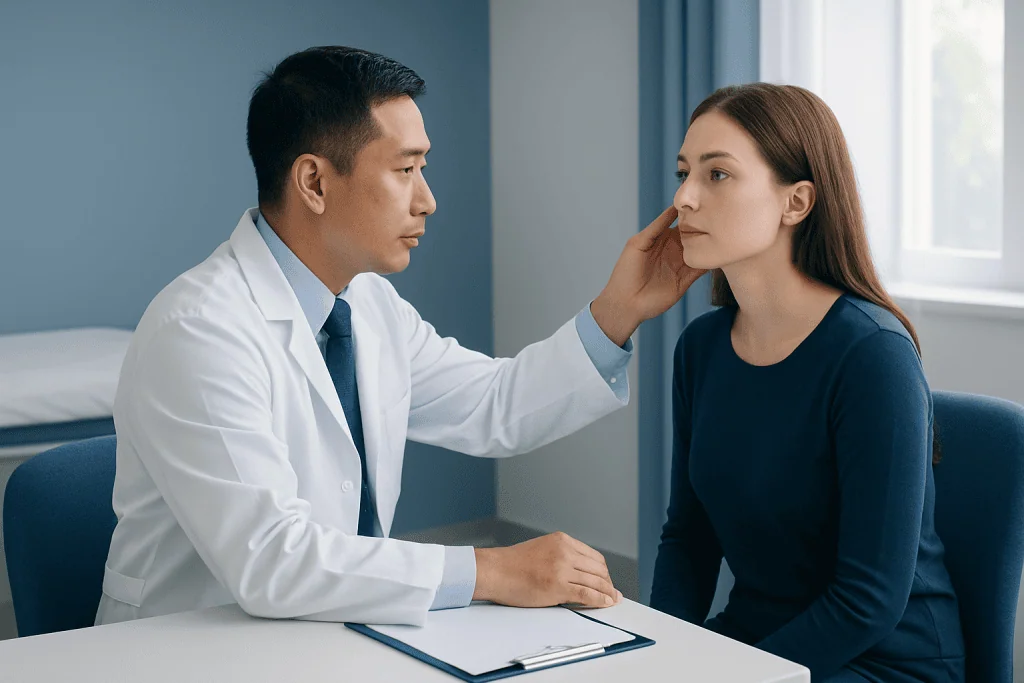
Cheek augmentation begins with a detailed consultation rather than a diagnostic test. The surgeon evaluates facial proportions, bone structure, soft tissue thickness, skin quality, and the patient’s goals.
During this discussion, the surgeon may examine the face from multiple angles, review medical history, ask about previous procedures, and talk through likely outcomes. In some cases, photographs or imaging may be used to support surgical planning.
This is also the stage where the differences between cheek augmentation techniques are explained. A patient who wants a firmer, more defined contour may be better suited to implants, while a patient who wants softer, tissue-based volume may prefer fat transfer. A surgeon may also suggest combining procedures when appropriate, such as using cheek augmentation alongside chin aesthetic treatment to improve overall facial balance.
Treatment Options: Implants vs Fat Transfer
Cheek implants are shaped devices placed over the cheekbone through a small incision, usually inside the mouth or sometimes near the lower eyelid. They provide a defined, predictable increase in projection and are often chosen when structural enhancement is the main goal.
Implants are available in different shapes and sizes, which allows the surgeon to tailor the contour to the patient’s face. Because the implant remains in place permanently unless removed or replaced, the result can be long-lasting. However, as with any foreign material, there is a small risk of movement, infection, or the need for revision.
Fat transfer, also called facial fat grafting, uses fat taken from another area such as the abdomen, thighs, or flanks. The fat is processed and injected into the cheeks in small amounts to build volume and soften contours. Since the material comes from the patient’s own body, many people appreciate the natural feel and the absence of an implant.
Fat transfer can be especially useful when the goal is gentle rejuvenation rather than a sharply defined cheekbone. The main limitation is that not all transferred fat survives, so the final volume may be less predictable and sometimes a second session is needed. For patients looking for broader facial rejuvenation, a surgeon may discuss options such as BBL & Lipofilling when multiple areas would benefit from autologous fat use.
Some patients are candidates for other facial procedures at the same time. For example, facial contouring may be planned alongside aesthetic neck contouring or selected eye-area procedures such as oculoplastic care when the aim is overall facial harmony. The best plan is individualized rather than based on one technique alone.
Recovery and What to Expect
Recovery depends on the method used. After cheek implants, swelling and bruising are common for several days to a few weeks, and temporary discomfort is expected. If the incision is inside the mouth, soft foods and careful oral hygiene may be recommended during early healing.
After fat transfer, there may be swelling both where the fat was removed and where it was placed. Some of the initial fullness comes from swelling and gradually settles over time, so the cheeks may look larger at first than they will after healing is complete.
Most patients return to light daily activities relatively soon, but strenuous exercise, pressure on the cheeks, and facial massage are usually avoided for a period of time. The surgeon will provide specific aftercare guidance based on the procedure and the patient’s healing progress.
Prevention & Self-care
It is not always possible to prevent natural facial volume loss, but healthy habits may help support skin and tissue quality. Good sun protection, balanced nutrition, adequate hydration, and avoiding smoking can all contribute to healthier aging of the face.
For patients considering cheek augmentation, self-care also means choosing the right procedure for the right reason. A thoughtful consultation, realistic expectations, and understanding the trade-offs between implants and fat transfer can lead to a better experience and more satisfying results.
After treatment, following postoperative instructions is important. Patients are usually advised to sleep with the head elevated for a short time, avoid pressure on the cheeks, attend follow-up visits, and report any unusual pain, redness, fever, or changes in skin color to their surgeon promptly.
When to See a Doctor
Anyone considering cheek augmentation should meet with a qualified plastic surgeon or facial specialist to discuss goals, medical history, and the most suitable technique. A consultation is especially helpful when facial asymmetry, age-related hollowing, or previous surgery makes planning more complex.
Patients should seek medical review after treatment if swelling becomes worse instead of better, if pain increases unexpectedly, or if there are signs of infection or implant-related concerns. Early assessment allows the care team to address issues before they become more difficult to manage.
For international patients, Acibadem International offers multidisciplinary specialists and JCI-accredited hospitals that diagnose and treat cheek augmentation needs in a coordinated setting.
Frequently asked questions
What is the main difference between cheek implants and fat transfer?
Cheek implants add structure with a shaped medical device, while fat transfer adds volume using the patient’s own fat. Implants are generally more predictable in shape, while fat transfer often feels more natural and can be used for softer rejuvenation.
Which option lasts longer?
Cheek implants are designed to be long-lasting, although they may need revision or removal in some cases. Fat transfer can also provide durable improvement, but some of the transferred fat may not survive, so the final result can vary.
Is fat transfer safer because it uses my own tissue?
Using the body’s own fat avoids an implant, which some patients prefer. However, every procedure has its own risks, and fat transfer still involves surgery, healing, and the possibility that some volume will not remain.
Can cheek augmentation improve aging-related hollowing?
Yes. Both implants and fat transfer can help restore lost midface volume and make the face look fuller or more balanced. The best choice depends on how much correction is needed and the patient’s overall facial structure.
How long is recovery after cheek augmentation?
Recovery varies by technique and by person. Swelling and bruising are common for a period after treatment, and many people return to light activities fairly soon, but final results take time to settle.
Who is a good candidate for cheek augmentation?
A good candidate is generally a healthy person with realistic expectations who wants to improve cheek volume or contour. A surgeon will also consider skin quality, facial proportions, and whether there is enough donor fat for transfer.
References
- American Society of Plastic Surgeons
- American Board of Cosmetic Surgery
- Mayo Clinic
- Cleveland Clinic
This article is for general information only and is not a substitute for professional medical advice. Please consult a qualified doctor about your individual situation.
Cheek Augmentation in Turkey — costs, top hospitals & a free quote
JCI-accredited · board-certified surgeons · reply within 24h
Add us as a Preferred Source to see more of our trusted health content across Google Search, AI Overviews and Discover.

Plastic, Reconstructive & Aesthetic Surgery
Reconstructive and aesthetic procedures for the face and body, performed by experienced surgeons.
35 specialists in this unitRelated Treatments
Related Conditions
More from the Health Library



Related Specialists

Prof. Dr. Şükrü Yazar
Aesthetic Plastic & Reconstructive Surgery
Assoc. Prof. Dr. Erdem Güven (m)
Aesthetic Plastic & Reconstructive Surgery
Prof. Dr. Hakan Ağır
Aesthetic Plastic & Reconstructive Surgery
Prof. Dr. Bülent Saçak
Aesthetic Plastic & Reconstructive Surgery