Cheek Augmentation
Cheek augmentation improves midface volume and facial balance using implants, fat transfer or injectable fillers. The approach is personalized to anatomy, aesthetic goals and recovery needs.
Quick answer
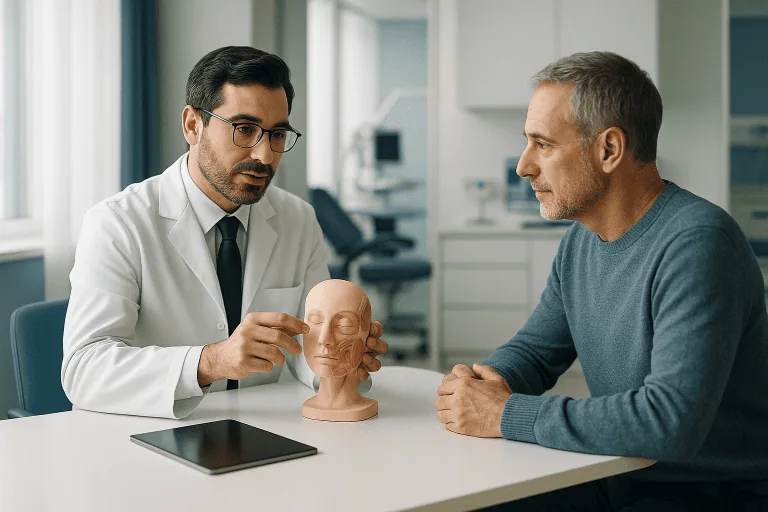
Cheek augmentation adds shape, projection or volume to the middle of the face. It can be done surgically, with cheek implants placed over the cheekbone or a transfer of your own fat, or non-surgically with injectable fillers. Implants give a durable structural change; fat transfer restores soft volume; fillers are temporary and adjustable. The right method depends on your anatomy, goals and recovery preferences.
Cheek Implants and Other Ways to Augment the Cheeks
Cheek augmentation is a cosmetic procedure that adds shape, projection or volume to the middle of the face. It can be done surgically, with cheek implants placed over the cheekbone, or with a transfer of your own fat, or non-surgically with injectable dermal fillers. It suits adults who are bothered by flat cheekbones, midface hollowing, asymmetry or age-related volume loss, and who want better facial balance rather than a dramatic transformation.
People arrive at this decision from different directions. For some, the concern has been present since youth: naturally low cheek projection, a narrow midface, or proportions that make the lower face appear heavier than it should. For others, the change came gradually, ageing, significant weight loss or a period of illness slowly reduced the volume beneath the eyes and over the cheekbones, leaving the face looking tired or drawn even on good days.
If you are researching this treatment from abroad, your questions are probably practical. Will the result look natural? Which option is safer, implants, fat transfer or fillers? How long does recovery take, and how long should you plan to stay near the hospital? Can the procedure be combined with other facial treatments in one trip? And how do you choose a medical team in another country and still feel confident your face will look like your own?
These concerns are reasonable, and this page addresses them directly. Cheek augmentation is not simply about adding volume. A good result depends on facial anatomy, bone structure, soft-tissue support, skin quality, the pattern of age-related change and your own aesthetic goals. A well-planned treatment can improve midface contour, restore harmony and create a more rested appearance. A poorly chosen approach can look artificial, create imbalance or require correction later, and correction is always harder than getting the first plan right.
At Acibadem, cheek augmentation is planned as a personalised facial procedure rather than a standard formula. Plastic surgeons evaluate the whole face, not only the cheeks, and explain the advantages and the limits of each technique. For international patients, that planning stage matters even more, because the treatment plan must also account for travel timing, recovery needs and follow-up after you return home.
What Is Cheek Augmentation?
Cheek augmentation is a cosmetic procedure that enhances the shape, projection or volume of the cheek area. It is used to improve midface definition, support facial balance and address volume loss that can make the face look drawn or tired. Depending on your anatomy and goals, augmentation may be performed with cheek implants, fat transfer or injectable dermal fillers. These three approaches are often discussed together, but they behave very differently in the tissue, age differently and carry different commitments.
Each method works in its own way. Cheek implants are solid, biocompatible devices placed over the cheekbone through small incisions to provide a defined, durable change in facial structure. Fat transfer uses your own fat, usually taken from the abdomen, waist or thighs, which is processed and injected into the cheeks in small amounts to restore or enhance soft-tissue volume. Injectable fillers are non-surgical: gel-like materials are placed beneath the skin in carefully selected layers to add volume and contour, with limited downtime and a temporary effect.
The purpose is not always to create visibly larger cheeks. In many cases the goal is more subtle: lifting the visual centre of the face, softening hollowness beneath the eyes, improving the line from cheekbone to jawline, or creating better balance with the nose, chin and lips. Restoring support in the midface can also reduce the impression of sagging, because tissue that has lost its underlying volume tends to look as though it has fallen.
How can cheek augmentation shape your face?
Cheek augmentation shapes the face by changing where light falls and where the eye reads structure. Adding projection over the cheekbone creates a highlight that draws attention upward and outward, which makes the midface look wider at its strongest point and the lower face comparatively lighter. Filling the hollow between the lower eyelid and the cheek softens the shadow that reads as fatigue. Supporting the submalar region, the flatter area just below the cheek prominence, reduces a gaunt or sunken look. Which of these effects you need is a diagnostic question, not a matter of taste alone, and it determines which technique makes sense.
Can cheek augmentation make my face look more feminine?
It can contribute, but it is one element among several. Higher, fuller cheek projection with a smooth transition into the lower eyelid is a feature many people read as feminine, so augmenting the cheeks is a common component of facial feminisation. On its own, however, it will not change the impression created by the brow, nose, jawline or chin. If feminisation is your goal, say so explicitly during consultation: the surgeon can then assess the whole face and tell you honestly whether cheek work alone will move you towards that goal or whether a combined plan would serve you better. The same logic applies in reverse for patients who want a more angular, sculpted look: the technique and implant shape chosen for softness are not the ones chosen for definition.
Who May Consider Cheek Augmentation?
Cheek augmentation may be considered by adults who are bothered by flat cheeks, weak cheekbone definition, midface hollowing or facial asymmetry. Candidates often describe looking tired even when they feel well, or a face that appears less youthful after weight loss or ageing. Some want a more sculpted contour; others want to restore what has gradually changed over time.
Typical concerns that lead patients to request an evaluation include:
- Flat or underprojected cheekbones
- Loss of volume in the middle of the face
- Hollowness beneath the eyes or around the upper cheeks
- Facial asymmetry, with one cheek appearing smaller or flatter
- A lower face that looks heavy because the midface lacks support
- Changes after significant weight loss
- Desire for improved facial harmony after rhinoplasty or chin surgery
- Age-related descent of facial tissues combined with volume loss
Diagnosis and planning begin with a detailed consultation. The surgeon examines the cheekbones, lower eyelids, nasolabial folds, jawline, chin and overall facial proportions. Photographs are taken from several angles to assess symmetry and contour. The medical team also reviews your general health, prior surgeries, allergies, medications, smoking history and any conditions that could affect healing.
For surgical cheek augmentation, additional evaluation may include blood tests and an anaesthesia assessment. In selected cases, imaging is used to understand bone anatomy or plan implant placement. For fillers or fat transfer, the focus is usually on soft-tissue quality, volume distribution and the safest injection planes. A history of previous fillers, facial surgery or facial trauma changes the plan more often than patients expect, so it belongs in the consultation from the start.
A good candidate has realistic expectations, stable overall health and a clear understanding of the difference between temporary and longer-lasting approaches. Cheek augmentation may not be appropriate if there is active skin infection, untreated dental or sinus infection, certain uncontrolled medical conditions or goals that no technique can honestly meet. In those cases, the responsible course is to address the underlying issue first, or to reconsider the plan altogether.
Conditions and Indications Cheek Augmentation Can Address
Cheek augmentation is most commonly performed for aesthetic reasons, but the underlying indications vary, some relate to natural anatomy, others to ageing, weight change or previous procedures. Identifying the correct indication is essential, because different problems require different solutions, and the most common planning error is treating the wrong one.
Low cheek projection is a common indication in younger adults. The cheekbones may be naturally less prominent, giving the face a flatter appearance from the front or in profile. Here, implants or structural fillers may be considered when the goal is definition, while fat transfer may be selected when the goal is softer fullness.
Age-related midface volume loss occurs as facial fat compartments shrink or shift over time. This can hollow the area beneath the eyes and deepen the folds between the nose and mouth. Fat transfer or fillers are frequently used for this kind of soft-tissue restoration. Where there is significant skin laxity, cheek augmentation may be combined with lifting procedures rather than used alone, volume cannot substitute for a lift when the real problem is descent.
Facial asymmetry can be mild and natural, or related to trauma, previous surgery or developmental differences. Cheek augmentation can improve symmetry, but perfect symmetry is neither a realistic nor a necessary goal. The aim is a balanced appearance that looks natural in motion and at rest.
Post-weight-loss facial changes may include hollow cheeks, thinner soft tissues and a more angular look than desired. Fat transfer can be useful for restoring volume in selected patients, provided there is enough donor fat and the patient understands that some transferred fat is naturally absorbed during healing.
Revision or corrective needs arise after previous fillers, implants or facial surgery, and these cases require particular care. The surgeon may need to dissolve certain fillers, remove or replace implants, address scar tissue or stage the work across more than one session. In revision cases, previous operative notes, implant details and records of the injectable products used directly affect safety and planning, which is why keeping a record of every product and procedure your face has had is genuinely valuable.
How Cheek Augmentation Is Performed
The technique is selected according to anatomy, goals, recovery preferences and how long you want the result to last. At Acibadem, the process begins with an individualised assessment and a frank discussion of the three main options, implants, fat transfer and fillers, each of which has a different preparation process, procedural experience and recovery profile.
Preparation and Treatment Planning
Before treatment, your physician evaluates your facial proportions and asks precisely what you want to change. This conversation matters more than it sounds: patients use the word “cheeks” to describe several different areas: the cheekbone itself, the under-eye hollow, the apple of the cheek, or the transition from cheek to lower face. Precise mapping at this stage is what prevents overfilling the wrong area.
Medical preparation depends on the method. For surgery, you may be asked to stop smoking well in advance and to complete preoperative tests; your medicines are reviewed by the treating team, and any adjustment to blood-thinning or other medication is a decision the doctors make with you: the practical process is described in how Acibadem manages your medicines before and after treatment. For fat transfer, the donor area is assessed, and you are told to expect swelling at both the face and the liposuction site. For fillers, preparation is simpler, but you should still disclose medications, allergies, prior filler treatments and any history of cold sores or autoimmune disease.
Standardised clinical photography is used for documentation and planning, with consistent angles, lighting and expression so that changes can be judged honestly afterwards. Some patients also see digital analysis or simulation tools during the discussion. Treat these as guides, not predictions: the final plan rests on surgical judgement, anatomy and shared decision-making, not on a rendered image.
Cheek Implant Surgery: What Happens in the Operating Room
Cheek implant surgery is typically performed under general anaesthesia, or under sedation with local anaesthesia, depending on the case and your medical profile. The surgeon places the implants through small incisions, most often inside the mouth, sometimes near the lower eyelid, depending on the technique and whether other procedures are being done at the same time. The implant sits over the cheekbone in a carefully created pocket and is secured when needed to reduce movement. Because the usual incisions are intraoral, there is often no visible external scar.
Surgery time varies with complexity and with whether cheek implants are combined with other procedures. Many isolated cheek implant operations are completed within a few hours, but your total time at the hospital includes anaesthesia preparation, recovery monitoring and discharge planning. Some patients go home the same day; others stay overnight, based on the surgical plan and medical considerations. After placement, the incisions are closed and the face may be supported with dressings or a light compression garment.
Malar Implants and Submalar Implants
Malar implants sit directly over the cheekbone and increase its projection: this is the classic choice when the goal is stronger, higher cheekbone definition. Submalar implants sit slightly lower, supporting the softer area beneath the cheek prominence, and suit faces that look hollow or gaunt rather than flat. Combined designs address both zones at once. The distinction is not academic: choosing a malar shape for a submalar problem, or the reverse, is one of the recognisable causes of an unnatural result, which is why implant selection follows the examination rather than a catalogue.
Cheekbone Implants: Materials, Shapes and Fixation
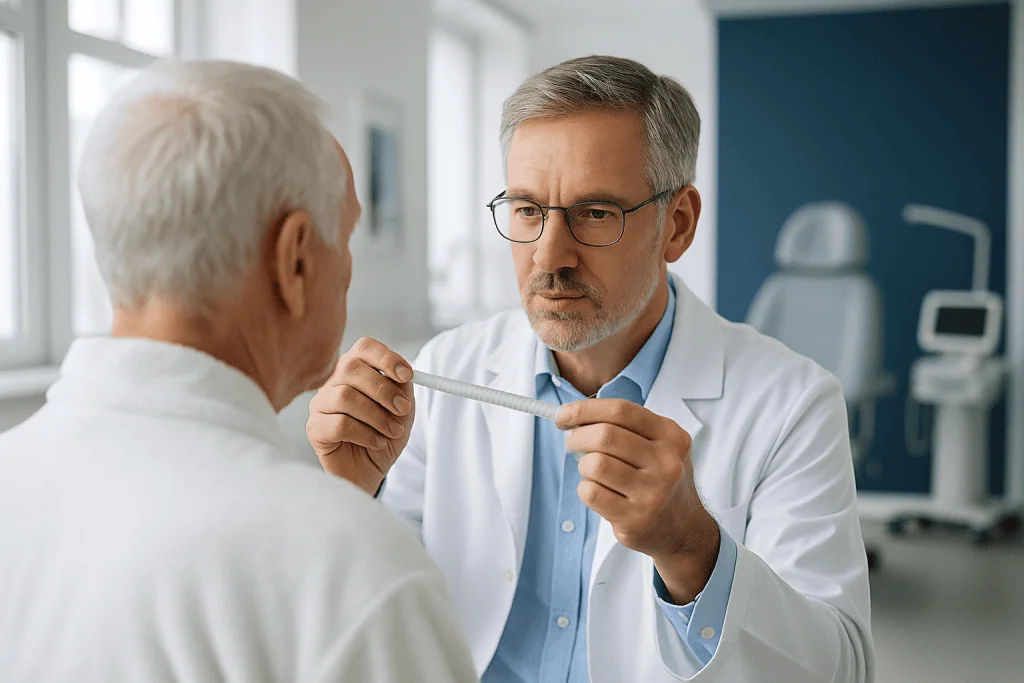
Cheekbone implants are made from solid, biocompatible materials, most commonly medical-grade silicone or porous polyethylene, manufactured in a range of shapes, sizes and projections. Silicone implants sit within a tissue pocket and can be removed or exchanged later if needed; porous materials allow some tissue ingrowth, which increases stability but makes later removal more involved. The surgeon may fix the implant with small screws or rely on a precisely sized pocket. During surgery, the surgeon may also use sizers, temporary trial shapes, to judge projection on your anatomy before the definitive implant is placed, and slightly different sizes can be chosen for each side when natural asymmetry calls for it. The aim, whichever material is selected, is to enhance structure without creating an exaggerated appearance.
Cheekbone Augmentation with Fat Transfer
Cheekbone augmentation does not always require an implant: your own fat can do structural work when the goal is soft, natural-feeling volume. Fat transfer, also called facial fat grafting, involves three steps: harvesting, processing and injection. Fat is removed by gentle liposuction from a donor area, purified so that healthy fat cells survive the move, and then injected into the cheeks in small amounts across multiple layers to build smooth contour and encourage integration with surrounding tissue.
Fat transfer is often preferred by patients who want a result that feels like their own tissue, because it is, and who are comfortable with a surgical procedure. It suits soft volume restoration better than firm structural projection. Because not all transferred fat survives, surgeons plan with this biological behaviour in mind, and some patients later choose a touch-up session if additional volume is wanted. Recovery involves swelling and bruising in both the cheeks and the donor area, and the cheeks typically look fuller than the final result at first. The remaining fat settles over several months, so the honest final assessment comes late, not early.
Injectable Fillers for Cheek Augmentation
Injectable cheek augmentation is the non-surgical option for patients who want volume enhancement with limited downtime. The physician injects filler into carefully selected areas of the cheek to improve projection, contour or support, usually in a clinic setting with topical numbing cream or local anaesthetic techniques for comfort. The appointment itself is usually brief.
Fillers offer flexibility: the amount and location can be adjusted gradually, across sessions if needed. They suit patients seeking a temporary result, those who want to preview the effect of augmentation before committing to surgery, and those with mild to moderate volume loss. Certain filler types, hyaluronic acid products in particular, can be dissolved with an enzyme if clinically appropriate, which is a genuine safety and planning advantage. Products differ in firmness, lifting capacity and how long they last; the physician selects for the tissue plane and the effect required, not by brand name alone. Whatever the product, safety depends on knowledge of facial blood vessels, sterile technique and restraint with volume.
Technology and Safety Measures in Planning and Treatment
Modern cheek augmentation relies on more than the implant, fat or filler itself. High-quality medical photography, structured facial analysis, imaging when indicated, refined anaesthesia monitoring and sterile surgical environments all contribute to safer, more predictable care. Surgical cases take place in operating rooms equipped for continuous monitoring and careful control of bleeding, positioning and sterility. For fat transfer, specialised processing systems prepare the harvested fat for reinjection. For injectables, physicians choose between fine needles and blunt cannulas according to anatomy and injection plane, to improve precision and reduce tissue trauma. The most important “technology”, though, remains the physician’s anatomical judgement: the ability to match the right method to the right patient.
Recovery After Cheek Augmentation
Recovery differs significantly between implants, fat transfer and fillers, and planning your time off, or your travel dates, around the wrong method’s timeline is a common mistake. Broadly: fillers involve days of visible recovery, fat transfer involves weeks of swelling in two areas, and implant surgery involves a structured surgical recovery with activity limits in the early phase.
Is cheek implant surgery painful?
You do not feel the operation itself, because it is performed under anaesthesia; afterwards, most patients describe tightness, swelling, pressure and soreness rather than sharp pain, and this discomfort is managed with prescribed medication in the early days. Chewing can feel uncomfortable for several days when the incisions are inside the mouth, which is why a soft diet is usually advised at first.
After implant surgery, expect swelling, tightness and bruising. If your incisions are intraoral, you will receive specific instructions on oral hygiene and diet to reduce irritation and infection risk, and strenuous activity is limited during early healing. After fat transfer, swelling is more diffuse at first and the cheeks can look overfilled temporarily; the donor site needs its own care, with bruising and soreness expected there too. After fillers, downtime is usually shortest, though bruising, swelling and tenderness can still be visible for several days, and you will be advised to avoid pressure on the treated area, strenuous exercise and certain heat exposures for a short period.
Simple measures do a great deal of the work in the first days: sleeping with the head elevated, applying cold compresses as instructed, avoiding bending and heavy lifting, and keeping the mouth clean with the rinses your team recommends when incisions are intraoral. Swelling typically peaks around the second or third day before it starts to subside, so a face that looks worse at day two than at day one is usually following the normal curve of healing rather than signalling a problem.
Your physician will give you individualised instructions for sleep position, medications, oral care, skin care, physical activity and follow-up. If you are travelling for treatment, build the timeline around healing rather than flights: our guide on flying home with medical implants or prostheses covers the practical side. Your surgeon will confirm when it is safe to fly, how long to remain near the hospital, and how follow-up will be coordinated once you are back home.
When will you see the final result?
The final result appears on a different schedule for each method. Filler results are visible immediately, but the true contour shows once swelling settles over the following one to two weeks. After implant surgery, most of the obvious swelling improves within the first weeks, yet subtle swelling can mask the final definition for several months, which is why surgeons ask patients not to judge symmetry or size too early. Fat transfer takes the longest to declare itself: the cheeks look overfilled at first, some of the transferred fat is absorbed during healing, and the volume that remains around the sixth month is a fair indication of the lasting result. Building this timeline into your expectations, and into any travel plans, prevents unnecessary worry during normal healing.
Recovery Timeline After Cheek Augmentation
Recovery varies by method, but the following timeline gives a general sense of what many patients can expect after implants, fat transfer or fillers.
| Time Period | What Patients Can Expect |
|---|---|
| Day 1 | Swelling, tightness and mild to moderate discomfort are common after surgery or fat transfer. After fillers, patients may notice tenderness, redness or early bruising. Instructions focus on cooling, head elevation, medication use and avoiding pressure on the cheeks. |
| First Week | Bruising and swelling usually become more visible before improving. Surgical patients may follow a soft diet if incisions are inside the mouth. Many filler patients return to routine activities sooner, depending on swelling and bruising. |
| First Month | Most early swelling improves, and facial contours begin to look more natural. Implant patients gradually resume more activities as approved. Fat transfer results continue to evolve as swelling decreases and transferred fat stabilises. |
| Longer Term | Implants provide a durable structural change. Fat transfer settles over several months, with the remaining volume becoming more stable. Fillers gradually metabolise over time and may require maintenance treatments if the patient wants to preserve the result. |
How Long Do Cheek Implants Last?
Cheek implants are designed as long-term devices: solid implants do not dissolve, degrade or need routine replacement, so for most patients they are effectively permanent. That said, “permanent implant” does not mean “permanent result”, because the face around the implant continues to age, skin laxity, fat redistribution and bone change over the decades all alter how the implant reads on the face. Implants can also be removed, exchanged or repositioned later if problems arise or preferences change; silicone implants are generally the most straightforward to revise. By contrast, fillers metabolise over time and require maintenance to preserve the effect, while fat transfer is long-lasting once healed but the retained volume can change with significant weight fluctuation.
Are cheek implants better than fillers?
Neither is better in the abstract: they solve different problems, and the honest answer depends on what your face needs and what commitment you are prepared to make. As a working comparison:
- Durability: implants provide a stable, long-term structural change; fillers are temporary by design and need repeat treatment to maintain.
- Character of the result: implants excel at firm skeletal definition over the cheekbone; fillers and fat excel at soft volume restoration and subtle refinement.
- Commitment and reversibility: fillers are low-commitment, and some can be dissolved; implants require surgery to place and surgery to change.
- Downtime: fillers involve the least; implant surgery involves a genuine surgical recovery.
- Cumulative logic: a patient who intends to maintain filler volume indefinitely may reasonably discuss whether a one-time surgical solution suits them better; a patient unsure of what they want should usually not start with an implant.
Many patients use fillers first as a reversible preview, then decide whether a structural change is worth surgery. That sequence is clinically sensible and your surgeon should be willing to discuss it without steering you.
Cheek Augmentation Before and After: How to Read Results Honestly
Cheek augmentation before and after photographs are the most useful evidence you can review while researching, and the easiest to misread. Look for images taken with consistent lighting, angles, distance and expression; a raised chin, a smile or softer lighting can fake half the result. Look for patients whose starting anatomy resembles yours, because a technique that transforms a hollow midface may do little for a flat one. And look for late photographs, not just early ones: swelling flatters fat transfer and filler results in the first weeks. In short, judge clinical photography the way a clinician would, by comparing like with like, rather than the way an advertisement invites you to.
What do cheek implants before and after photos actually show?
Cheek implants before and after images should show a change in bone-level structure: stronger projection over the cheekbone, an improved highlight line, and better balance between the midface and lower face, visible from the front, the oblique view and the profile. What they should not show is a face that reads as “operated”: overly wide cheeks, an abrupt shelf under the eyes, or projection that fights the nose and chin instead of balancing them. If a surgeon’s gallery consistently shows one identical cheek shape on very different faces, that is a formula, not planning.
How Much Does Cheek Augmentation Cost?
There is no single honest price for cheek augmentation, because the cost is determined by clinical decisions that have not been made until you have been assessed. The main drivers are: which method you need (a clinic-based filler session, a fat transfer with liposuction, or implant surgery in an operating theatre), the type of anaesthesia, whether you stay overnight, the implant or product selected, whether other procedures are combined in the same operation, and how complex your case is, revision work after previous implants or fillers takes longer and demands more. Follow-up arrangements and, for travelling patients, accommodation during recovery sit on top of the medical episode itself.
How much are cheek implants compared with fillers or fat transfer?
The methods are priced on different logic, which matters more than any single number. Implant surgery is a one-time surgical episode: theatre, anaesthesia and hospital care are concentrated in one bill, and the result is long-term. Fillers cost less per session but are recurring by nature, maintaining the result means paying again at intervals for as long as you want to keep it. Fat transfer sits between the two: a surgical episode with long-lasting volume, sometimes followed by a planned touch-up. A meaningful quote can only follow an individual assessment of your anatomy, goals and medical history; be cautious with any clinic that quotes a fixed all-inclusive figure before anyone has examined you.
Why Timing Matters and the Risks of Delay
Cheek augmentation is elective, so it is rarely medically urgent. Even so, thoughtful timing makes a real difference. Patients who delay a proper consultation often keep pursuing temporary or poorly matched fixes without understanding the underlying cause of their concern, adding filler to the lower face when the true issue is midface volume loss, for example, can create heaviness rather than balance.
In ageing-related cases, volume loss progresses alongside skin laxity. An earlier evaluation clarifies whether augmentation alone is reasonable or whether a lifting procedure, eyelid treatment or skin-quality work would produce the better result. Waiting does not usually close the door on treatment, but it can change which options remain appropriate.
Timing also matters for anyone carrying previous fillers, implants or asymmetry. Problems such as chronic inflammation, implant movement, infection or persistent nodules become harder to correct with time, because revision planning grows more complex as scar tissue accumulates or when the details of earlier treatments are lost. This is another reason to keep records of every product and procedure your face has had.
For patients travelling for treatment, deciding early buys time for medical review, travel planning, a realistic recovery schedule and unhurried decision-making. A careful consultation before travel clarifies whether the approach you have in mind is realistic and whether additional assessments are needed first.
What Are the Risks of Cheek Augmentation?
Every technique carries risks, and a page that lists benefits without them is not informing you. With implant surgery, the recognised risks include infection, bleeding, implant displacement or asymmetry, temporary or occasionally persistent numbness from nerve irritation, unfavourable scarring, and dissatisfaction with size or shape leading to revision. With fat transfer, the main uncertainties are unpredictable fat retention, contour irregularity, and the usual surgical risks at both the facial and donor sites. With fillers, common effects include bruising, swelling, tenderness and temporary lumpiness; rarer but serious complications involve injection into or compression of a blood vessel, which is precisely why anatomical expertise, appropriate products and sterile technique are non-negotiable.
Risk is managed, not eliminated: careful patient selection, honest screening of your medical history, correct technique choice, hospital-standard sterility for surgical cases and structured follow-up all reduce the likelihood and the consequences of complications. Smoking, uncontrolled diabetes and poor nutrition work against healing, so addressing these before elective treatment is part of the plan rather than an afterthought. Your surgeon should walk you through the risks that apply to your specific case before you consent, if that conversation does not happen, ask for it.
Benefits of Cheek Augmentation
The potential benefits depend on the technique used and on your anatomy, but the main advantages relate to proportion, contour and facial support.
| Benefit | What It Means for You |
|---|---|
| Improved midface volume | Cheek augmentation can restore or create fullness in areas that look flat, hollow or depleted, helping the face appear more balanced. |
| Enhanced cheekbone definition | Implants or carefully placed fillers can improve contour over the cheekbones and create a more structured facial profile. |
| More harmonious facial proportions | By improving the relationship between the cheeks, nose, chin and jawline, treatment can support a more balanced overall appearance. |
| Softening of tired facial features | Restoring midface support may reduce the impression of fatigue, especially when hollowness under the eyes contributes to a drawn look. |
| Personalised treatment options | Patients can choose among surgical and non-surgical approaches based on goals, recovery time and desired duration of effect. |
Factors That Influence Outcomes and a Good Result
A successful result depends on much more than adding volume. The single most important factor is matching the technique to the specific problem: a patient with low bone projection may benefit from an implant or structural filler; a patient with soft-tissue depletion may be better suited to fat transfer or carefully layered filler; a patient with significant sagging may need lifting rather than volume at all.
Anatomy strongly influences the plan. Bone structure, skin thickness, facial fat distribution, muscle movement and natural asymmetry all affect how the cheeks respond to augmentation. Very thin skin shows irregularities more easily; heavier soft tissue needs stronger support before definition becomes visible.
Proportion is equally important. Cheeks that look attractive on one face look excessive on another. The surgeon must weigh the forehead, eyes, nose, lips, chin and jawline together, and in some cases a small adjustment elsewhere, the chin, for instance, is worth discussing, because facial balance is three-dimensional.
Product and implant selection matters. Fillers differ in firmness, lifting capacity and duration; implants vary in shape and projection; fat transfer depends on harvesting, processing, injection method and your biological healing response. The safest, most natural choice is the one matched to the tissue plane and the desired effect.
Technique is central to both appearance and safety. With fillers, correct injection depth and awareness of vascular anatomy reduce complication risk. With implants, precise pocket creation and stable positioning protect symmetry. With fat transfer, small-volume placement across multiple layers produces smoother contour and better graft survival.
Healing behaviour varies between patients. Bruising, swelling, scar formation, fat retention and tissue response are never identical from one person to the next. Smoking, uncontrolled diabetes, certain medications and poor nutrition all interfere with healing, and following your postoperative instructions is a genuine part of the outcome, not an optional extra.
Expectations shape satisfaction. Cheek augmentation can improve volume and contour; it cannot stop ageing or create perfect symmetry. Fillers are temporary, fat transfer can shift with weight fluctuation, and implants occasionally need revision over time. A good consultation aligns the medical plan with what the treatment can honestly achieve, and tells you plainly when it cannot achieve what you have asked for.
Cheek Augmentation at Acibadem
For patients considering cheek augmentation abroad, medical quality and trust matter as much as the aesthetic result. The face is personal and permanently on display; choosing a hospital and physician requires confidence in training, safety systems, communication and follow-up. Acibadem provides cheek augmentation within hospital settings that operate established systems for surgical safety, anaesthesia care, infection control and international patient coordination.
Treatment is planned by experienced physicians who evaluate facial structure comprehensively rather than fixating on a single feature. Where a patient’s goals involve several areas of the face, the plan may draw on related specialists or team discussion, particularly relevant for combined procedures such as rhinoplasty, eyelid surgery, facelift, neck lift or skin treatments performed in a single trip. Plans follow evidence-informed medical standards, and patients receive a clear explanation of the options, including the differences between implants, fat transfer and fillers, the expected recovery, the limitations, the risks and the alternatives.
Acibadem’s international patient services handle the practical side: appointment coordination, medical record transfer, language assistance in more than 20 languages, hospital admission guidance and help organising follow-up communication after you return home. The aim is to remove logistical confusion for patients travelling from the United States, Europe, the Middle East and elsewhere, while keeping every medical decision inside the physician–patient relationship.
The clinical environment matters too. Surgical cheek augmentation and fat transfer are performed in hospitals equipped for anaesthesia monitoring and postoperative observation; non-surgical treatments are performed with attention to sterile technique, anatomical safety and appropriate product selection. When imaging, laboratory testing or additional medical assessments are needed, they can usually be coordinated within the same hospital system rather than across separate providers.
Personalisation is the consistent thread. Some patients want a restoration so subtle that no one else notices; some want stronger cheekbone definition; some need correction after previous treatment elsewhere; others must fit surgery and early recovery into a limited travel window and need to know, before booking flights, what is realistic. Where appropriate, physicians review photographs, medical history and prior treatment details ahead of an in-person consultation: a review that can also function as a second opinion, which sometimes leads to the most valuable outcome of all: the recommendation not to have a procedure, or to have a different one than the patient first assumed.
Making an Informed Decision
Cheek augmentation, done well, is a refined way to improve midface volume, contour and overall facial balance. The right approach depends on the cause of the concern, bone structure, soft-tissue volume loss, ageing, asymmetry or the after-effects of previous treatment. Implants, fat transfer and fillers each have a legitimate role; none is universally superior; and each demands careful planning to produce a result that looks natural on your particular face. Take the time to understand which problem you actually have before choosing a solution for it, review before-and-after evidence critically, and expect any physician you consult to explain not only what a technique can do, but what it cannot.
Preparation
- Preparation starts with a plastic surgery consultation to assess facial structure, skin quality and desired cheek projection. Patients may need to stop blood-thinning medicines, avoid smoking and complete routine preoperative tests. If general anesthesia is planned, fasting instructions are provided before the procedure.
Aftercare
- Mild swelling, bruising and tightness are common in the first days and usually improve gradually. Patients should keep the head elevated, avoid pressure on the cheeks and limit strenuous activity until cleared by the doctor. Follow-up visits help monitor healing and final contour development.
Frequently Asked Questions
What affects the cost of cheek augmentation?
The main factors are the chosen technique, product or implant type, surgeon expertise, anaesthesia needs, facility setting, preoperative assessment, and aftercare. Travel, accommodation, interpreter support, and package inclusions can also affect the total for international patients.
How can I get a personalised quote for cheek augmentation in Turkey?
A personalised quote usually requires photos, medical history, aesthetic goals, and a specialist review. Acibadem International can arrange a free consultation to assess suitability and explain what is included in the proposed package.
Are fillers, fat transfer, and implants priced in the same way?
No. Fillers are usually influenced by product type and the amount needed, fat transfer involves both donor-area and cheek treatment, and implants involve surgical facility, anaesthesia, and implant-related costs. A specialist can explain which option fits your anatomy and goals.
What is typically included in an international patient package?
Depending on the plan, a package may include consultation, hospital or clinic services, the procedure, anaesthesia if needed, procedure-related medications, transfers, interpreter support, and follow-up checks. Inclusions should always be confirmed before booking.
Is cheek augmentation abroad safe?
Safety depends on the specialist, facility standards, patient selection, technique, and follow-up plan. Patients should check credentials, accreditation such as JCI where applicable, anaesthesia arrangements, and clear aftercare instructions. This information is general and is not a substitute for medical or financial advice.
Medically reviewed by the Acıbadem International Medical Board September 1, 2026
See our medical review board →
Update history
- PublishedJune 8, 2026
- Medical review approvedSeptember 1, 2026
- Last content updateSeptember 1, 2026
Trusted care for international patients
From the Acibadem Blog

Cheek Augmentation Recovery: Swelling Stages, Sleeping Upright and When Contours Emerge
Cheek augmentation recovery follows a fairly predictable arc: swelling and bruising usually peak within the first two to three days, ease noticeably over two…

How Cheek Augmentation Surgery Is Done: Implant Placement Through the Mouth or Lower Eyelid
Cheek implant surgery places a shaped, solid implant over the cheekbone through a small incision either inside the mouth, above the upper gum, or…
Doctors Performing This Treatment



Aesthetic Plastic & Reconstructive Surgery
Prof. Mehmet Veli Karaaltın, MD

Aesthetic Plastic & Reconstructive Surgery
Assoc. Prof. Erdem Güven, MD

Aesthetic Plastic & Reconstructive Surgery
Assoc. Prof. Ahmet Küçükçelebi, MD
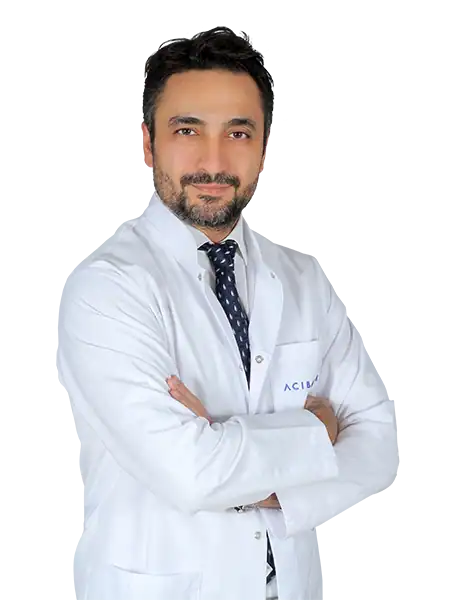
Aesthetic Plastic & Reconstructive Surgery
Assoc. Prof. Mehmet Altıparmak, MD

Aesthetic Plastic & Reconstructive Surgery