Children’s Eye Specialist: An Evidence-Based Patient Guide
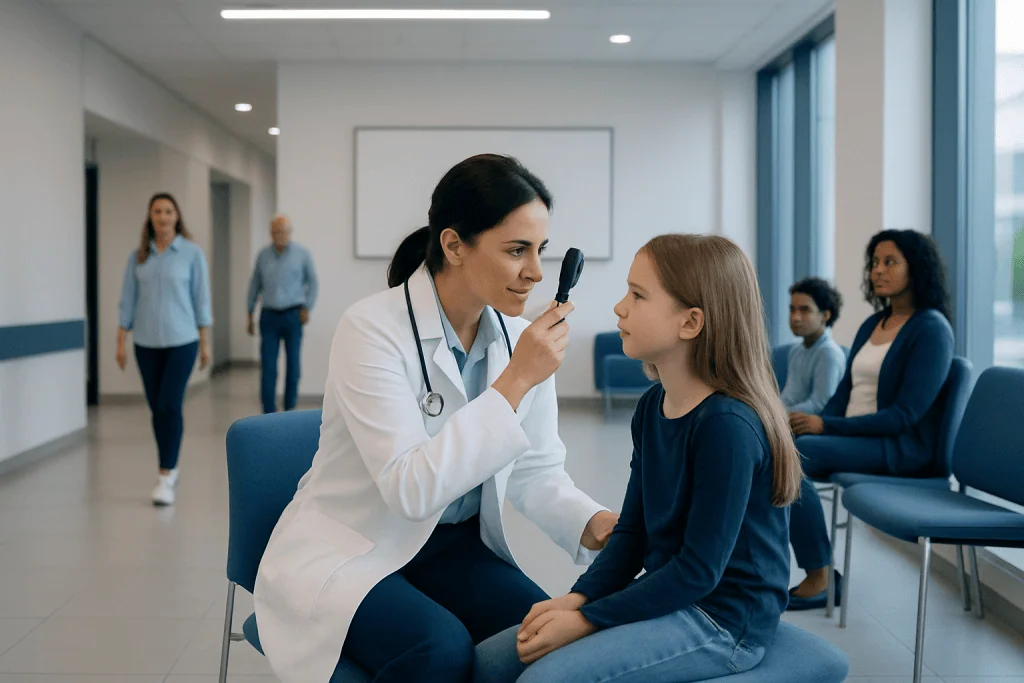
Children may not recognize or report vision problems, so routine screening and timely eye examinations are important. A children's eye specialist evaluates both eye health and how the eyes and brain work together to develop vision.
Key Takeaways
- Children may not recognize or report vision problems, so routine screening and timely eye examinations are important.
- A children's eye specialist evaluates both eye health and how the eyes and brain work together to develop vision.
- Examinations are adapted to a child's age and may use pictures, symbols, lights, drops and specialized instruments.
- Treatment can include glasses, patching, medicines, monitoring or surgery, depending on the diagnosis.
- Urgent assessment is needed for sudden vision loss, significant eye injury, severe eye pain, a white pupil or a persistently red, swollen eye.
A children's eye specialist is an ophthalmologist with expertise in assessing, diagnosing and treating eye and vision conditions in infants, children and adolescents. They use child-friendly examination methods to identify concerns such as refractive errors, strabismus, amblyopia, eye infections and developmental eye conditions early.
Overview: What Does a Children's Eye Specialist Do?
A children’s eye specialist, often called a pediatric ophthalmologist, is a medical doctor who focuses on eye health and visual development from infancy through adolescence. These specialists diagnose and treat conditions affecting the eyes, eyelids, tear ducts, eye alignment and the pathways that allow the brain to interpret visual information. Their work is especially important because vision continues to develop during childhood.
Children’s eye care specialists use examination approaches suited to a child’s age, communication skills and level of cooperation. A baby may be assessed by observing eye movements and responses to light, while an older child may identify pictures, matching symbols or letters on a children’s eye exam chart. The goal is not simply to measure how clearly a child sees, but also to check whether both eyes are healthy, aligned and working together.
A referral may come from a pediatrician, family doctor, school screening program, optometrist or another clinician. Parents may also arrange an assessment when they notice a possible concern. Early assessment can be valuable because several childhood conditions respond best while the visual system is still developing.
Why Childhood Eye Examinations Matter
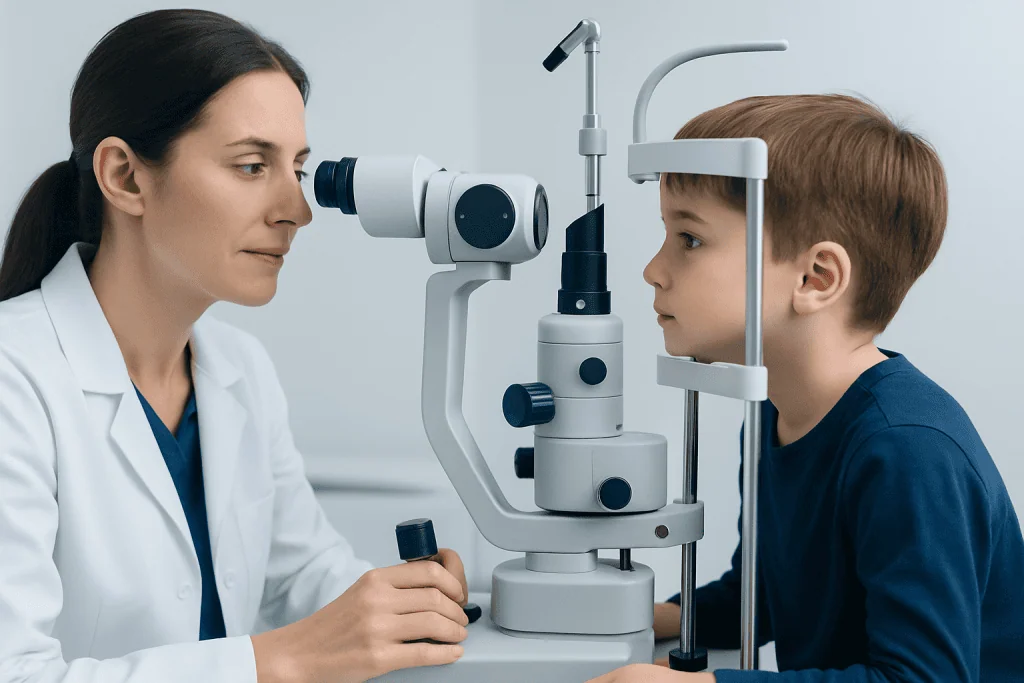
Healthy-looking eyes do not always mean that a child has normal vision. Some children adapt to blurred sight by sitting close to objects, tilting their head or relying more heavily on one eye. Others have no obvious symptoms, particularly when only one eye is affected. This is why screening during routine child health visits and comprehensive examinations when recommended are important.
An evidence based clinical practice guideline comprehensive pediatric eye and vision examination generally emphasizes evaluating vision appropriate to the child’s age, eye alignment, eye movements, pupil responses, refractive error and the health of the front and back of the eye. The exact timing and frequency of examinations should be individualized according to screening results, symptoms, family history and medical needs.
A comprehensive assessment is particularly useful when a child has developmental delay, premature birth, neurologic conditions, diabetes, a history of eye injury, or relatives with childhood eye disorders. Children who wear glasses should have follow-up appointments as advised, since their prescription and visual needs may change as they grow.
Symptoms and Signs Parents May Notice

Vision concerns can look different at different ages. Babies may have eyes that do not seem to move together after the early infant period, persistent tearing, unusual sensitivity to light or a white, cloudy or enlarged-looking pupil. In toddlers and school-age children, parents may notice frequent blinking, eye rubbing, squinting, head tilting, closing one eye, sitting unusually close to screens or books, or difficulty tracking objects.
Some symptoms are less specific but still deserve discussion with a clinician. These include headaches linked with close work, reduced concentration during reading, avoiding detailed tasks, declining school performance, complaints of blurred or double vision, or repeatedly losing place while reading. Such symptoms can have causes beyond the eyes, so an examination helps clarify whether a vision issue is contributing.
Misaligned eyes may be intermittent or constant. One eye may turn inward, outward, upward or downward, especially when a child is tired or unwell. Eye alignment concerns should not be dismissed as a phase without medical advice, as they can sometimes be associated with reduced vision in one eye.
- Squinting or moving very close to objects
- Eyes that appear crossed or drift apart
- Frequent headaches, eye fatigue or double vision
- Persistent tearing, discharge, redness or light sensitivity
- Changes in the appearance of the pupil or eyelid
Common Conditions a Specialist Evaluates
One of the most common reasons for referral is a refractive error, meaning that the eye does not focus light precisely on the retina. Nearsightedness, farsightedness and astigmatism can cause blurry vision and may be corrected with glasses or, in selected circumstances, contact lenses. A specialist can determine whether correction is needed and monitor visual development over time.
Children’s eye specialists also assess strabismus, in which the eyes are not consistently aligned, and amblyopia, often called “lazy eye.” Amblyopia occurs when the brain favors one eye or receives an unclear image during early visual development. It may result from unequal prescriptions, strabismus or a blockage of vision such as a cataract. Amblyopia often requires prompt, individualized treatment to give the affected eye the best opportunity to develop vision.
Other conditions include blocked tear ducts, eyelid disorders, allergic or infectious eye inflammation, congenital cataracts, glaucoma, retinal disorders and eye problems related to systemic disease. A specialist may coordinate care with pediatricians, neurologists, geneticists, endocrinologists or other clinicians when eye findings are part of a broader health condition.
What Happens During the Appointment?
A pediatric eye appointment begins with a medical and family history. The specialist may ask about pregnancy and birth history, developmental milestones, past illnesses, medicines, injuries, previous vision screening, family eye conditions and the specific changes parents or teachers have observed. Bringing current glasses, prior reports and a list of medications can be helpful.
The examination is tailored to the child. It may include checking visual behavior or visual acuity, assessing pupil responses, examining eye movements and alignment, testing depth perception when age-appropriate, and measuring how the eyes focus. The clinician may use a handheld light, picture-based or letter-based charts, lenses, cameras and other noninvasive instruments.
Eye drops that widen the pupils are commonly used to examine the retina and obtain a more accurate measurement of focusing error. These drops can cause temporary light sensitivity and blurred near vision, usually for several hours. Parents may wish to bring sunglasses or a hat for the journey home. In some cases, additional imaging, visual field testing, laboratory evaluation or consultation with another specialty is recommended.
Some services offer a children’s eye physicians patient portal for appointment details, test results and secure communication. A portal can support follow-up, but it does not replace urgent medical assessment when a child has concerning symptoms.
Treatment Options: How Care Is Planned and Delivered
Treatment is based on the diagnosis, the child’s age, the effect on vision and whether the condition is stable or progressing. Some children need observation alone, while others benefit from glasses, eye drops, patching, vision-focused rehabilitation, treatment of inflammation or infection, or a procedure. The specialist explains the expected purpose of treatment and the follow-up plan in terms that parents and children can understand.
For amblyopia, the plan may involve correcting a refractive error with glasses and encouraging use of the weaker eye through patching or other approaches selected by the clinician. Adherence is important, but treatment should be guided by the child’s eye specialist to avoid over-treatment and to monitor progress safely.
Eye muscle surgery may be considered for some children with strabismus when glasses, monitoring or other non-surgical measures are not sufficient. Strabismus surgery adjusts one or more eye muscles to improve alignment. It is performed under general anesthesia in children, and the surgical plan is individualized after detailed measurements of eye position and movement.
When surgery is recommended, candidacy depends on the type and cause of the condition, eye measurements, vision in each eye, general health and the goals of care. The usual process includes preoperative assessment, anesthesia review, the procedure itself and scheduled follow-up. Recovery often involves temporary redness, discomfort, tearing or light sensitivity; the care team provides specific activity, hygiene and medication instructions. Benefits may include improved eye alignment and comfort, while potential risks include infection, bleeding, persistent or recurrent misalignment, need for further treatment and anesthesia-related risks.
Supporting Eye Health at Home
Parents can support eye health by attending recommended screenings and follow-up visits, encouraging consistent use of prescribed glasses or patches, and sharing changes in symptoms promptly. Glasses should fit comfortably and be checked periodically, especially when children are active or growing quickly. Children should not use another person’s prescription glasses or eye drops unless a clinician specifically advises this.
Balanced routines also support comfort and general well-being. Regular outdoor activity, adequate sleep, breaks during prolonged close work and good lighting can help reduce visual strain. Screens should be used with age-appropriate limits and regular breaks, but screen use alone does not explain every vision symptom; persistent concerns should be assessed rather than managed only by changing screen habits.
Parents looking for children’s eye specialists reviews may find that reviews describe communication, scheduling or family experience, but they cannot establish whether a clinician is right for a particular medical issue. Practical factors include pediatric expertise, referral requirements, access to urgent care, the ability to coordinate with other clinicians and clear explanations of the proposed care plan.
For international patients, Acibadem International’s multidisciplinary specialists and JCI-accredited hospitals provide assessment and treatment for childhood eye conditions, with care coordinated around the child’s clinical needs.
When to Seek Medical Care
Parents should arrange a routine appointment with a children’s eye specialist if a child fails a vision screening, has persistent squinting, complains of blurred or double vision, struggles with visual tasks, develops frequent headaches with close work, or has a family history of significant childhood eye disease. New eye misalignment, even if it comes and goes, should be evaluated.
Urgent medical assessment is appropriate for sudden loss or major reduction of vision, severe eye pain, a significant eye injury, chemical exposure, a deep cut near the eye, severe light sensitivity, or a red and swollen eye accompanied by fever or worsening pain. A white reflex in the pupil, a suddenly drooping eyelid, or a new unequal pupil also requires prompt evaluation.
After an eye injury or chemical exposure, parents should avoid rubbing the eye or attempting to remove an embedded object. For chemical exposure, gently rinse the eye with clean lukewarm water while seeking urgent medical advice. A clinician can determine whether emergency treatment, imaging or specialist review is needed.
Frequently asked questions
What is the difference between a children's eye specialist and an optometrist?
A children's eye specialist is usually a pediatric ophthalmologist, a medical doctor trained to diagnose and treat eye disease and perform eye surgery when needed. Optometrists assess vision, prescribe glasses and contact lenses, and may identify concerns requiring referral. Both can play important roles in a child's eye care, depending on the child's needs and local services.
At what age should a child have an eye examination?
Eye health and vision should be screened from infancy during routine child health visits. A comprehensive eye examination may be recommended after a failed screening, when symptoms or risk factors are present, or according to guidance from a child's clinician. The appropriate schedule differs between children.
Can a young child have an eye examination if they cannot read?
Yes. Children's eye specialists can assess babies and young children without requiring them to read letters. They may use light responses, eye movement observations, picture charts, matching games, fixation targets and specialized instruments.
Do dilating eye drops hurt children?
The drops may sting briefly when applied, and they can temporarily blur near vision and increase light sensitivity. They help the specialist examine the inside of the eye and measure focusing error more accurately. The clinical team can explain what to expect and how long the effects may last.
Does an eye turn always mean a child needs surgery?
No. Treatment depends on the cause, frequency and severity of the eye turn, as well as the child's vision and focusing needs. Glasses, monitoring, amblyopia treatment or other approaches may be appropriate, while surgery is considered for selected cases.
What should parents bring to a pediatric eye appointment?
Parents should bring the child's current glasses or contact lens information, a medication list, prior examination reports and relevant family medical history. It can also help to note when symptoms began, what seems to trigger them and any observations from teachers or caregivers.
References
- American Academy of Ophthalmology
- American Association for Pediatric Ophthalmology and Strabismus
- American Optometric Association
- National Eye Institute
- World Health Organization
This article is for general information only and is not a substitute for professional medical advice. Please consult a qualified doctor about your individual situation.
Explore treatments in Turkey — costs, top hospitals & a free quote
JCI-accredited · board-certified surgeons · reply within 24h
Add us as a Preferred Source to see more of our trusted health content across Google Search, AI Overviews and Discover.