Choosing a Hospital for Neuroradiology in Turkey: Imaging Quality, Expertise, and Safety

High-quality neuroradiology depends on both advanced imaging equipment and experienced specialists. Patients should ask about accreditation, safety protocols, reporting standards, and multidisciplinary care.
Key Takeaways
- High-quality neuroradiology depends on both advanced imaging equipment and experienced specialists.
- Patients should ask about accreditation, safety protocols, reporting standards, and multidisciplinary care.
- The right hospital can support both diagnosis and, when needed, minimally invasive treatment planning.
- Clear communication, second-opinion options, and structured follow-up are important for international patients.
- A strong neuroradiology service should be closely connected to neurology, neurosurgery, and stroke care.
Choosing a hospital for neuroradiology in Turkey involves more than location or price. The best choice usually depends on imaging quality, the experience of the neuroradiology team, patient safety systems, and how well the hospital coordinates diagnosis and treatment.
Overview: What Neuroradiology Means and Why Hospital Choice Matters
Neuroradiology is the branch of medicine that uses imaging to examine the brain, spine, head, neck, and nervous system. It includes tests such as MRI, CT, angiography, and other specialized studies that help doctors evaluate symptoms like headaches, dizziness, stroke signs, seizures, weakness, numbness, vision changes, or suspected tumors. In some hospitals, neuroradiology also works closely with interventional teams that perform image-guided procedures for certain vascular conditions.
When a person is choosing a hospital for neuroradiology in Turkey, the decision is important because imaging quality can directly affect diagnosis and treatment planning. A scan is not only about the machine itself. It also depends on the protocols used, the skill of the technologists, the expertise of the radiologist interpreting the images, and the ability of the hospital to connect findings with the next steps in care.
A hospital with strong neuroradiology services usually offers more than standard imaging. It often has subspecialist radiologists, advanced MRI and CT capabilities, emergency access for urgent cases, and close collaboration with neurology, neurosurgery, oncology, and stroke teams. This integrated approach can be especially valuable for complex conditions that need precise evaluation.
For international patients, practical issues matter too. A good hospital should provide clear communication, organized appointment planning, help with medical records review, and timely reporting. These features can make the process smoother while also supporting safe, informed medical decisions.
Imaging Quality: What to Look For
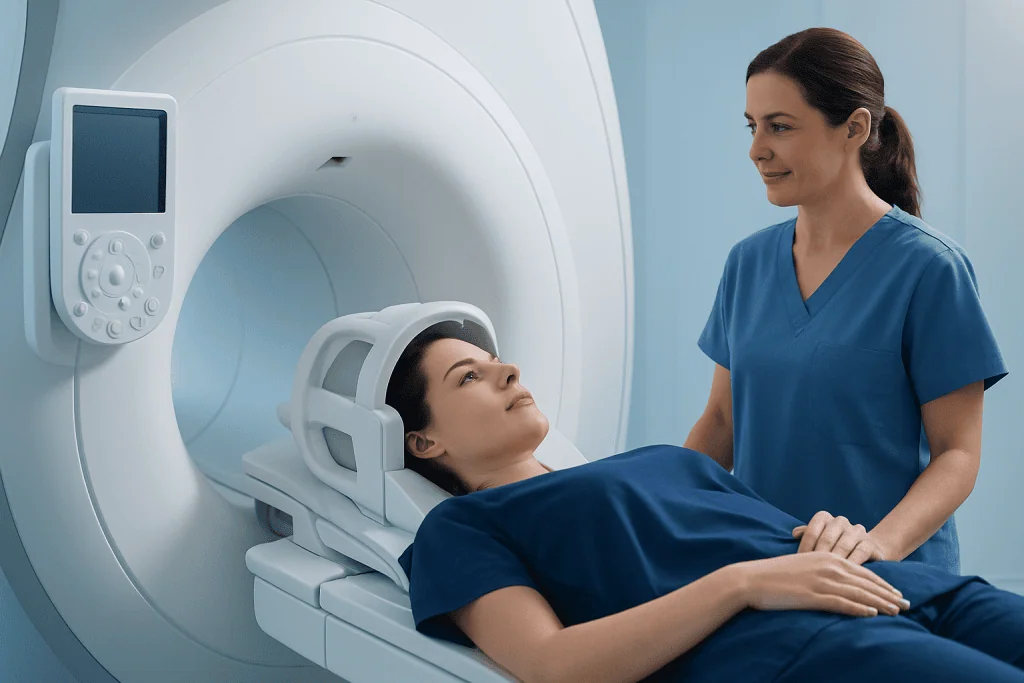
Imaging quality is one of the most important factors in neuroradiology. High-resolution MRI and CT systems can help doctors identify subtle abnormalities that may be difficult to see on lower-quality images. Hospitals should also use condition-specific imaging protocols, because the ideal scan for stroke, epilepsy, multiple sclerosis, a spinal disorder, or a vascular problem may differ significantly.
Patients may wish to ask whether the hospital performs advanced techniques such as diffusion imaging, perfusion studies, MR angiography, CT angiography, functional imaging, or spine-focused protocols when clinically appropriate. These tools can help clarify uncertain findings, evaluate blood flow, or guide treatment planning. However, the key point is not simply whether the technology exists, but whether it is used appropriately and interpreted by the right specialists.
Image quality also depends on technical standards behind the scenes. Good hospitals pay careful attention to patient positioning, motion reduction, contrast safety checks, radiation dose management for CT, and quality control for all imaging systems. Pediatric patients, older adults, and people who have difficulty remaining still may need extra support to obtain useful studies without unnecessary repeat scans.
Helpful questions include:
- Does the hospital have dedicated neuroradiology protocols for brain, spine, and vascular imaging?
- Are studies interpreted by radiologists with neuroradiology experience?
- How quickly are urgent results communicated?
- Will patients receive a written report and access to their images for follow-up care?
Specialist Expertise and Multidisciplinary Care

Expertise is often what separates a routine imaging center from a hospital that is well equipped for complex neurological care. Neuroradiologists are radiologists with focused training in diseases of the nervous system. Their experience can be especially important when imaging findings are subtle, when several possible diagnoses are being considered, or when treatment decisions carry significant consequences.
Many neurological conditions require input from several specialties. For example, a patient with a suspected stroke may need immediate coordination between neuroradiology, emergency medicine, neurology, and possibly stroke treatment teams. A person with a brain mass may need collaboration among neuroradiology, neurosurgery, oncology, and pathology. This team-based model can improve efficiency and reduce delays in care.
Hospitals with regular multidisciplinary meetings often review complex cases together, combining imaging findings with symptoms, examination results, and laboratory data. This can be useful in conditions such as brain tumors, inflammatory disorders, vascular malformations, or spinal cord disease. It may also support more accurate decisions about whether a patient needs observation, repeat imaging, medication, surgery, or an endovascular procedure.
If a hospital offers interventional services, patients can ask whether there is close collaboration with interventional neuroradiology specialists. Even when a procedure is not needed, having that expertise available can be reassuring for patients with aneurysms, arteriovenous malformations, or other neurovascular conditions.
Safety, Accreditation, and Patient-Centered Standards
Safety in neuroradiology includes far more than the imaging test itself. Hospitals should have systems to screen for allergies, kidney problems, pregnancy, implanted devices, and other factors that may affect MRI or contrast use. They should also have procedures for emergencies, infection prevention, medication review, and safe patient identification at every step.
For CT-based studies, radiation dose management is an important sign of quality. Hospitals should aim to use the lowest radiation dose that still gives images of adequate diagnostic quality. For MRI, safety screening is essential because some metal implants, devices, or retained fragments may be unsafe in the magnetic environment. Good hospitals explain these issues clearly before the scan.
Accreditation and hospital-wide quality programs can offer added reassurance. International patients often look for organizations that follow recognized standards for patient safety, staff training, and clinical governance. Accreditation does not guarantee a specific outcome, but it can be a helpful indicator that structured quality systems are in place.
Patient-centered care also matters. This includes informed consent, privacy, language support, explanation of results, and a clear plan for what happens next. A hospital should be prepared to explain why a scan is recommended, what the risks and benefits are, whether contrast is needed, and when the report will be available.
Questions to Ask Before Choosing a Hospital in Turkey
Before traveling or scheduling a study, patients may benefit from preparing a short list of practical and medical questions. A good hospital should be willing to explain its process in understandable terms. This can help patients compare options based on quality and safety rather than on convenience alone.
Important questions may include who will review prior scans, whether additional imaging is likely, how urgent findings are managed, and whether there is support if a serious diagnosis is discovered. For some conditions, rapid access to neurosurgery or other specialist treatment may be important after imaging. It is helpful to know whether these services are available within the same hospital or network.
International patients may also ask about translation services, digital image sharing, help with transferring outside records, expected timelines, and whether the hospital can provide a medical summary for doctors back home. These details can make follow-up more consistent and reduce stress after the visit.
A helpful checklist includes:
- Is there a dedicated neuroradiology team?
- What imaging technologies and protocols are available for my condition?
- How are contrast safety and MRI safety assessed?
- Can the hospital coordinate with neurology, neurosurgery, oncology, or stroke specialists if needed?
- How are reports delivered, and can I obtain copies of images?
- What support is available for international patients?
Common Conditions Evaluated in Neuroradiology
Neuroradiology can help evaluate a wide range of neurological and spinal problems. These include stroke, brain tumors, aneurysms, vascular malformations, epilepsy, head injury, multiple sclerosis, infections, nerve compression, and degenerative spine disease. Imaging is also commonly used to investigate persistent headaches, balance problems, memory changes, or unexplained neurological symptoms.
In some cases, imaging is used for screening or surveillance rather than first-time diagnosis. For example, a patient with a known aneurysm, prior tumor treatment, or chronic inflammatory disease may need periodic scans to monitor stability or response to therapy. In these situations, consistency of technique and expert comparison with earlier images are very important.
Some conditions benefit from highly specialized imaging pathways. A patient with suspected stroke may require emergency brain imaging and blood vessel assessment within a narrow time window. A patient with chronic back pain and weakness may need detailed spine MRI and, in some cases, referral for spine surgery evaluation if compression is identified. Matching the hospital’s strengths to the patient’s clinical needs can make the evaluation more efficient.
Because imaging findings must be interpreted in context, scans should never be viewed in isolation. Symptoms, examination findings, prior medical history, and laboratory results all contribute to a complete diagnosis. A strong hospital team recognizes this and communicates clearly about what the images do and do not show.
After the Scan: Reporting, Follow-Up, and Care Coordination
The quality of care does not end when the scan is finished. Timely reporting and clear communication are central parts of safe neuroradiology practice. Patients should know when to expect results, who will explain them, and what the next step will be if the findings are urgent, uncertain, or normal but symptoms continue.
Well-organized hospitals often provide structured reports, copies of images, and recommendations for follow-up when appropriate. If a scan suggests a condition that needs further attention, the patient may be referred to the relevant specialist promptly. This could include neurology, neurosurgery, oncology, rehabilitation, or interventional teams depending on the findings.
For international patients, continuity of care is especially important. The hospital should help ensure that reports are understandable and transferable to physicians in the patient’s home country. Secure digital sharing of images and a clear medical summary can make future consultations easier and reduce the need to repeat tests unnecessarily.
Near the end of the care pathway, some patients may also value support from hospitals experienced in international coordination. Acibadem International’s multidisciplinary specialists and JCI-accredited hospitals diagnose and treat neurological conditions for international patients, with neuroradiology services integrated into broader specialist care when needed.
Making an Informed Decision
Choosing a hospital for neuroradiology in Turkey is ultimately about finding the right balance of technology, specialist expertise, safety systems, and coordinated care. The most appropriate option may differ depending on whether the patient needs routine outpatient imaging, urgent stroke evaluation, a second opinion on a complex scan, or planning for a possible intervention.
Patients are often best served by hospitals that combine advanced imaging with subspecialty interpretation and direct access to related services. It can be helpful to gather previous imaging studies, reports, medication lists, and a short summary of symptoms before the appointment. This preparation allows the neuroradiology team to compare findings and make more informed recommendations.
It is also reasonable to seek clarification when information is unclear. Patients may ask why a specific scan was chosen, whether an alternative is available, and what the expected benefit is. A trustworthy hospital welcomes informed questions and explains the process in a calm, transparent way.
When there is uncertainty, a second opinion may be valuable, especially for rare, complex, or high-stakes findings. Careful hospital selection can support more accurate diagnosis, smoother treatment planning, and greater confidence throughout the patient’s medical journey.
Frequently asked questions
What is neuroradiology used for?
Neuroradiology is used to examine the brain, spine, head, neck, and nervous system with imaging tests such as MRI, CT, and angiography. It helps doctors diagnose and monitor conditions like stroke, tumors, aneurysms, multiple sclerosis, spinal disorders, and unexplained neurological symptoms.
How can a patient judge the quality of a neuroradiology hospital?
A patient can look at the hospital's imaging technology, the experience of its neuroradiologists, and whether it uses dedicated protocols for neurological conditions. It also helps to ask about accreditation, report turnaround times, multidisciplinary care, and access to follow-up specialists.
Is newer imaging equipment always better?
Not necessarily on its own. Modern equipment can improve image quality, but the value also depends on how well the hospital uses it, how the scans are tailored to the clinical question, and the expertise of the specialist reading the images.
Why is multidisciplinary care important in neuroradiology?
Many neurological conditions need more than an imaging report. Multidisciplinary care allows neuroradiologists to work closely with neurologists, neurosurgeons, stroke physicians, and other specialists so that results are interpreted in the right clinical context and treatment decisions can be made more efficiently.
What safety points should patients ask about before MRI or CT?
Patients should ask about MRI screening for implants or metal, contrast safety, allergy precautions, and kidney function assessment when contrast may be used. For CT, it is also reasonable to ask how the hospital manages radiation dose while still maintaining good image quality.
Can international patients arrange follow-up after returning home?
Yes, many hospitals can provide digital images, written reports, and summary documents that can be shared with doctors in the patient's home country. Before traveling, it is helpful to confirm how records will be delivered and whether the hospital can assist with remote follow-up communication if needed.
References
- World Health Organization
- Radiological Society of North America
- American College of Radiology
- European Society of Neuroradiology
- National Institute of Neurological Disorders and Stroke
This article is for general information only and is not a substitute for professional medical advice. Please consult a qualified doctor about your individual situation.
Neuroradiology in Turkey — costs, top hospitals & a free quote
JCI-accredited · board-certified surgeons · reply within 24h
Add us as a Preferred Source to see more of our trusted health content across Google Search, AI Overviews and Discover.