Chronic Sinusitis: Nasal Congestion, Facial Pressure, and Treatment Options

Chronic sinusitis means sinus inflammation lasting 12 weeks or longer, even if symptoms vary in intensity. Common symptoms include nasal congestion, facial pressure, postnasal drip, thick mucus, cough, and reduced sense of smell.
Key Takeaways
- Chronic sinusitis means sinus inflammation lasting 12 weeks or longer, even if symptoms vary in intensity.
- Common symptoms include nasal congestion, facial pressure, postnasal drip, thick mucus, cough, and reduced sense of smell.
- Allergies, nasal polyps, asthma, infections, irritants, and structural nasal problems can contribute to ongoing sinus inflammation.
- Diagnosis may include a medical history, nasal endoscopy, allergy assessment, and sometimes CT imaging of the sinuses.
- Treatment often combines saline rinses, nasal corticosteroids, allergy care, selected medicines, and in some cases endoscopic sinus surgery.
- Medical evaluation is important if symptoms are persistent, recurrent, worsening, or associated with eye swelling, severe headache, or high fever.
Chronic sinusitis is a long-lasting inflammation of the sinuses that can cause nasal blockage, facial pressure, thick drainage, and reduced smell. With the right diagnosis and a stepwise treatment plan, many people can control symptoms and improve daily comfort.
Overview
Chronic sinusitis, also called chronic rhinosinusitis, is a condition in which the lining of the nose and sinus cavities remains inflamed for 12 weeks or longer. The sinuses are air-filled spaces in the bones around the nose, cheeks, forehead, and eyes. They normally make mucus that helps moisten the nasal passages and trap particles. When swelling blocks normal drainage, mucus can build up and symptoms may persist.
Unlike a short-term cold or acute sinus infection, chronic sinusitis often develops gradually and may continue even when there is no active bacterial infection. Symptoms can come and go, with periods of worsening called flare-ups. Many people describe feeling constantly blocked, needing to clear the throat, or having pressure in the face that affects sleep, concentration, and energy.
Chronic sinusitis is common in ENT practice and can affect adults and children. It may occur with or without nasal polyps, which are soft, noncancerous swellings in the nasal or sinus lining. Because several conditions can mimic or contribute to sinus symptoms, careful evaluation helps identify the main cause and choose the most appropriate treatment.
Symptoms of Chronic Sinusitis

The main symptoms of chronic sinusitis are nasal congestion, thick nasal discharge, facial pressure, and a reduced sense of smell. Symptoms must generally last for at least 12 weeks to be considered chronic, although their severity may change from day to day. Some people have constant blockage, while others mainly notice symptoms during allergy seasons, after viral infections, or when exposed to irritants.
Common symptoms include:
- Blocked or stuffy nose, often on both sides
- Thick yellow, green, or clear mucus from the nose
- Postnasal drip, with mucus running down the throat
- Pressure or fullness around the cheeks, forehead, nose, or eyes
- Reduced or lost sense of smell and taste
- Cough, especially at night or in the morning
- Bad breath, tiredness, ear pressure, or a feeling of head heaviness
Facial pain alone does not always mean sinusitis. Dental problems, migraine, tension headache, temporomandibular joint disorders, and nerve-related pain may cause similar discomfort. This is why an ENT assessment can be helpful when facial pressure or nasal congestion does not improve with simple measures.
Causes and Risk Factors
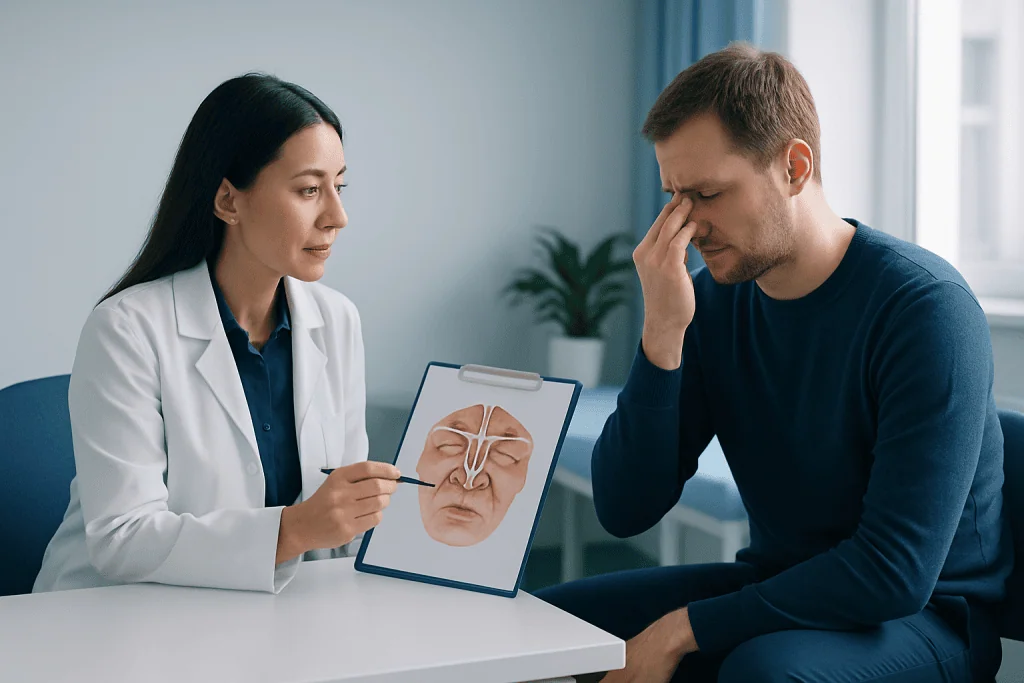
Chronic sinusitis usually results from long-term inflammation rather than a single cause. Inflammation makes the nasal and sinus lining swollen, which narrows drainage pathways and traps mucus. Over time, this can create a cycle of congestion, irritation, and recurrent flare-ups. Bacteria may contribute in some cases, but chronic sinusitis is not always primarily an infection.
Several factors can increase the risk. Allergic rhinitis can keep the nasal lining inflamed and reactive. Nasal polyps may physically block airflow and sinus drainage. A deviated nasal septum, enlarged turbinates, previous nasal injury, or narrow sinus openings can make congestion more likely. Asthma and sensitivity to aspirin or other nonsteroidal anti-inflammatory drugs may also be associated with more persistent sinus inflammation in some patients.
Environmental and lifestyle factors can play a role as well. Tobacco smoke, air pollution, strong odors, workplace chemicals, and dry air may irritate the nasal passages. Frequent viral upper respiratory infections, immune system problems, cystic fibrosis, and certain dental infections can also contribute. Identifying personal triggers is an important part of long-term control.
Diagnosis
Diagnosis begins with a detailed medical history and physical examination. The doctor will ask about the duration of symptoms, nasal blockage, discharge, smell changes, allergies, asthma, previous sinus infections, medicines, and any prior nasal surgery. It is also important to discuss headache patterns, dental symptoms, reflux symptoms, and exposure to smoke or irritants, as these may change the treatment plan.
An ENT specialist may perform nasal endoscopy, a simple office procedure using a thin, lighted instrument to look inside the nasal passages. This can show swelling, mucus, polyps, a deviated septum, or signs of drainage from the sinus openings. Endoscopy helps distinguish chronic sinusitis from other causes of nasal obstruction and may guide further testing.
A CT scan of the sinuses may be recommended when symptoms are persistent, before surgery, or when the diagnosis is uncertain. CT imaging provides detailed pictures of the sinus anatomy and areas of inflammation or blockage. Allergy testing, cultures of nasal drainage, blood tests, or immune evaluation may be considered in selected cases, especially if infections are frequent or difficult to treat.
Treatment Options
Treatment for chronic sinusitis is usually stepwise and individualized. The goal is to reduce inflammation, improve sinus drainage, control triggers, treat flare-ups, and protect quality of life. Many patients benefit from a combination of daily self-care and prescribed medicines rather than a single treatment.
Common medical treatments may include saline nasal irrigation, nasal corticosteroid sprays, allergy medicines, and treatment of asthma or allergic rhinitis when present. Saline rinses can help clear mucus and irritants, while corticosteroid sprays reduce swelling over time. Antibiotics are not needed for every case of chronic sinusitis, but they may be prescribed if there is evidence of bacterial infection or a significant acute flare-up. Oral corticosteroids or other targeted medicines may be used in selected patients, especially those with nasal polyps, under medical supervision.
If symptoms continue despite appropriate medical treatment, endoscopic sinus surgery may be considered. This minimally invasive surgery is performed through the nostrils to open blocked sinus pathways, remove polyps if present, and improve drainage. Surgery does not replace ongoing care for inflammation, but it can make topical treatments work better and reduce obstruction in carefully selected patients.
Patients should avoid using over-the-counter decongestant nasal sprays for more than a few days unless advised by a doctor, because prolonged use can worsen congestion. Treatment should also be adapted for children, pregnant patients, people with glaucoma or high blood pressure, and those taking multiple medicines.
Prevention and Self-Care
Self-care can support medical treatment and may reduce flare-ups. Regular saline nasal rinsing, when performed with sterile, distilled, or previously boiled and cooled water, can help remove mucus, allergens, and irritants. Keeping indoor air comfortably humid, drinking enough fluids, and managing allergies may also help the nasal lining function better.
People with chronic sinusitis are often encouraged to avoid smoke and strong irritants whenever possible. If allergies are a trigger, measures such as reducing dust exposure, washing bedding regularly, controlling mold, and keeping windows closed during high-pollen periods may be useful. For those with workplace exposures, protective equipment and occupational health advice may be needed.
Good general health supports sinus care. Adequate sleep, regular physical activity, hand hygiene, and timely treatment of colds, dental infections, and allergy symptoms can reduce irritation and complications. Patients with asthma or reflux should follow their care plans, because uncontrolled airway or throat inflammation can worsen nasal and sinus symptoms.
When to See a Doctor
A doctor should evaluate symptoms that last longer than 10 days without improvement, keep returning, or persist for 12 weeks or more. Medical care is also appropriate when nasal congestion, facial pressure, or postnasal drip affects sleep, work, school, or daily activities. People with asthma, immune system conditions, nasal polyps, or previous sinus surgery may need earlier assessment.
Prompt medical attention is important if symptoms are severe or unusual, such as swelling around the eye, changes in vision, confusion, a stiff neck, a high fever, or a sudden intense headache. These situations are uncommon, but they require urgent evaluation. Persistent one-sided nasal blockage, bleeding, or foul-smelling discharge should also be checked to rule out other conditions.
An ENT specialist can help confirm the diagnosis and develop a plan that may include medical therapy, allergy management, imaging, or surgery when needed. Acibadem International provides diagnosis and treatment for chronic sinusitis through multidisciplinary specialists and JCI-accredited hospitals for international patients. Any treatment decision should be made after an individual medical evaluation.
Frequently asked questions
What is the difference between chronic sinusitis and a sinus infection?
A sinus infection often refers to acute sinusitis, which usually develops after a cold and improves within days to a few weeks. Chronic sinusitis lasts 12 weeks or longer and is usually driven by ongoing inflammation, with or without infection. Treatment is therefore focused on reducing inflammation and improving drainage, not only on antibiotics.
Can chronic sinusitis go away on its own?
Mild symptoms may improve at times, especially if triggers such as allergies or irritants are reduced. However, chronic sinusitis often needs a consistent treatment plan to keep inflammation under control. A doctor can help determine whether symptoms are truly sinus-related and which treatments are appropriate.
Are antibiotics always needed for chronic sinusitis?
No. Antibiotics are not required for every person with chronic sinusitis because inflammation, allergies, polyps, or structural blockage may be the main problem. A doctor may prescribe antibiotics when there are signs of bacterial infection or a significant acute flare-up. Using antibiotics only when appropriate helps reduce side effects and antibiotic resistance.
Do nasal rinses help chronic sinusitis?
Saline nasal rinses can help many people by clearing mucus, allergens, and irritants from the nasal passages. They should be prepared with sterile, distilled, or previously boiled and cooled water to reduce infection risk. Patients should follow their doctor's advice if they have recent nasal surgery, frequent nosebleeds, or ear problems.
When is sinus surgery considered?
Endoscopic sinus surgery may be considered when symptoms continue despite appropriate medical treatment or when nasal polyps or blocked sinus pathways are significant. The aim is to improve drainage and access for topical medicines. Surgery is usually part of a long-term care plan rather than a complete cure for inflammation.
Can allergies cause chronic sinusitis?
Allergies can contribute by keeping the nasal lining swollen and irritated, which may block normal sinus drainage. Treating allergic rhinitis with avoidance measures, nasal sprays, or allergy medicines can improve sinus symptoms in some patients. Allergy testing may be useful when symptoms are seasonal, triggered by exposures, or difficult to control.
References
- American Academy of Otolaryngology-Head and Neck Surgery
- European Position Paper on Rhinosinusitis and Nasal Polyps
- Mayo Clinic
- National Institute for Health and Care Excellence
- Centers for Disease Control and Prevention
This article is for general information only and is not a substitute for professional medical advice. Please consult a qualified doctor about your individual situation.
Sinusitis in Turkey — costs, top hospitals & a free quote
JCI-accredited · board-certified surgeons · reply within 24h
Add us as a Preferred Source to see more of our trusted health content across Google Search, AI Overviews and Discover.

Otorhinolaryngology (ENT)
Care for ear, nose, throat and head-and-neck conditions, including hearing and balance disorders.
126 specialists in this unitRelated Treatments
Related Conditions
More from the Health Library



Related Specialists

Prof. Dr. Nazim Korkut
Otorhinolaryngology
Prof. Dr. Hasan M. Tanyeri
Ear Nose & Throat
Prof. Dr. Güler Berkiten
Otorhinolaryngology
Assoc. Prof. Dr. A. Erdem Kilavuz
Ear Nose & Throat