Coarctation of the Aorta in Adults: Symptoms, Diagnosis, and Repair Options

Coarctation of the aorta is a narrowing of the main artery that can raise blood pressure and strain the heart. Some adults have no symptoms, while others notice headaches, nosebleeds, chest discomfort, or leg fatigue during exercise.
Key Takeaways
- Coarctation of the aorta is a narrowing of the main artery that can raise blood pressure and strain the heart.
- Some adults have no symptoms, while others notice headaches, nosebleeds, chest discomfort, or leg fatigue during exercise.
- Diagnosis often involves blood pressure checks in both arms and legs, echocardiography, CT, or MRI.
- Treatment may include catheter-based stenting or surgical repair, depending on the anatomy and prior history.
- Long-term follow-up is important because high blood pressure and re-narrowing can occur even after successful repair.
Coarctation of the aorta in adults is a congenital narrowing of the aorta that may remain unnoticed until later life or persist after childhood treatment. With proper diagnosis, monitoring, and repair when needed, most adults can be treated effectively and followed safely over time.
Overview
Coarctation of the aorta is a congenital heart condition in which part of the aorta is narrower than usual. The aorta is the large artery that carries oxygen-rich blood from the heart to the rest of the body. When one section is tight, the heart has to pump harder to move blood past the narrowing, and blood pressure may rise in the upper body.
Although coarctation is present from birth, some people are not diagnosed until adolescence or adulthood. In adults, it may be discovered during evaluation for high blood pressure, a heart murmur, differences in pulse strength, or symptoms such as headaches and leg tiredness. Others were treated in childhood and later need reassessment because narrowing can recur or related heart and blood vessel problems may develop over time.
Adult coarctation can appear alone or together with other congenital heart abnormalities. A bicuspid aortic valve, enlargement of the aorta, or aortic regurgitation may occur in some patients. For this reason, care usually focuses not only on the narrowed segment itself, but also on the heart, aortic valve, and long-term blood pressure control.
Symptoms
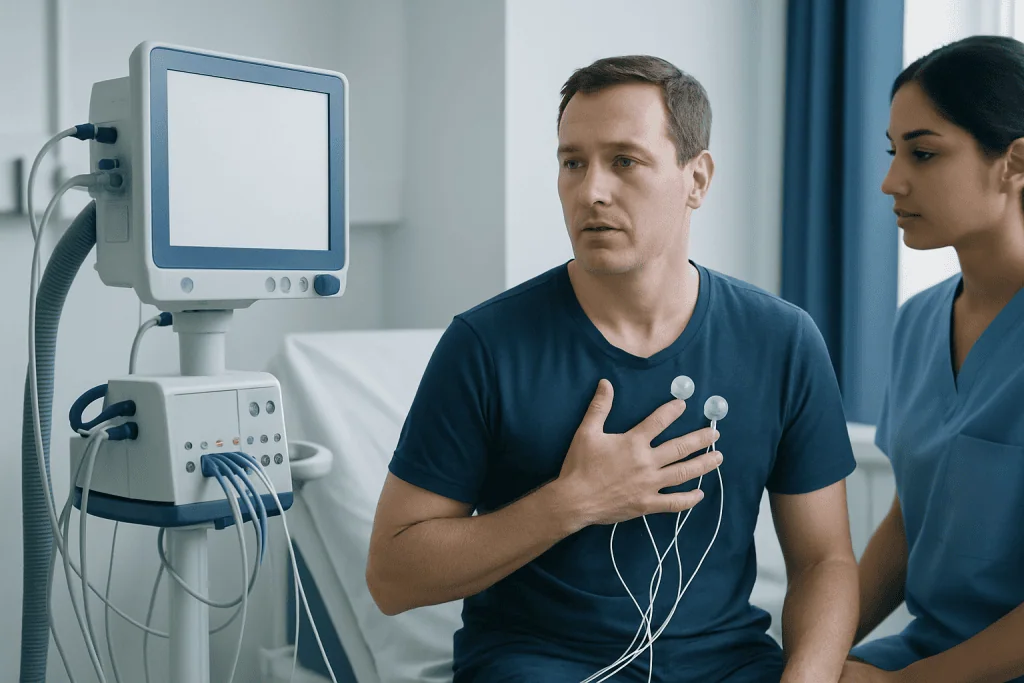
Symptoms vary widely. Some adults have no clear symptoms and learn about the condition only after a routine exam shows elevated blood pressure in the arms. Others develop signs related to reduced blood flow beyond the narrowed area or to the extra workload placed on the heart.
Possible symptoms may include headaches, dizziness, nosebleeds, chest discomfort, shortness of breath with exertion, or feeling the heartbeat strongly. Some people notice cold feet, leg cramps, or unusual leg fatigue during walking, running, or climbing stairs because blood flow to the lower body can be reduced.
On examination, clinicians may find stronger pulses in the arms than in the legs, a difference in blood pressure between upper and lower limbs, or a murmur caused by turbulent blood flow. In more advanced cases, untreated coarctation can contribute to complications such as persistent heart failure, enlargement of the heart, or problems affecting the aorta and brain blood vessels.
- High blood pressure, especially at a younger age
- Headaches or nosebleeds
- Chest pain or shortness of breath during activity
- Leg weakness, cramping, or fatigue with exercise
- Cold feet or reduced pulses in the legs
Causes and Risk Factors

Coarctation of the aorta is usually congenital, meaning it develops before birth. The exact cause is often not known. It is not caused by lifestyle choices, and adults who receive this diagnosis should know that they did not do anything to create the condition.
Many adults with coarctation also have other structural heart findings. A bicuspid aortic valve is especially common, and some people have associated congenital conditions such as septal defects or more complex heart anatomy. Even when the narrowing itself is moderate, associated abnormalities can affect symptoms, treatment planning, and long-term follow-up.
Risk in adulthood is shaped by how severe the narrowing is, whether it was repaired before, and whether blood pressure has remained elevated. Long-standing upper-body hypertension can increase strain on the heart and blood vessels. Adults with repaired coarctation may also face re-coarctation, aneurysm formation, or persistent vascular stiffness, which is why regular specialist care remains important even after successful treatment.
How Doctors Diagnose It
Diagnosis begins with a careful history and physical examination. A clinician may compare blood pressure in both arms and in the legs, listen for heart murmurs, and check whether pulses in the groin or feet are delayed or weaker than those in the arms. These clues often raise suspicion for coarctation.
Imaging confirms the diagnosis and helps define the exact anatomy. Echocardiography can show how the heart is functioning and identify associated valve problems or other congenital findings. In adults, CT angiography or MR angiography is commonly used to visualize the aorta, measure the narrowed segment, and look for enlargement of nearby vessels or the development of collateral blood vessels that bypass the blockage.
Additional tests may include an electrocardiogram, chest X-ray, or exercise testing in selected patients. Cardiac catheterization may be used when pressure measurements are needed or when a catheter-based repair is being planned. Because elevated blood pressure is common, the evaluation often includes assessment and management of hypertension treatment and monitoring as part of the overall care plan.
Treatment and Repair Options
Treatment depends on the severity of the narrowing, symptoms, blood pressure levels, the shape and location of the coarctation, and whether the person has been treated before. In general, significant coarctation is often repaired because it can reduce pressure overload on the heart, improve blood flow, and help lower the risk of future complications. Even after repair, some patients still need medicine to control blood pressure.
One common option in adults is catheter-based repair, often using balloon angioplasty and stent placement. Through a blood vessel, doctors guide a catheter to the narrowed area and expand it, sometimes placing a stent to hold the artery open. This approach may be suitable for many adults, especially when anatomy is favorable, and may be discussed within broader stent procedures or endovascular surgery planning.
Surgical repair may be recommended when the anatomy is complex, the narrowing is long or severe, there is associated aneurysm disease, or prior repair makes catheter treatment less suitable. Surgical techniques vary and can include removing the narrowed segment or enlarging the area with reconstruction. In congenital heart centers, this type of operation is part of specialized congenital correction and cardiothoracic surgery care.
Choosing between surgery and catheter-based treatment is individualized. The treating team considers age, symptoms, blood pressure, imaging findings, associated valve or aortic disease, and previous procedures. A clear discussion of benefits, risks, recovery, and long-term follow-up helps patients make informed decisions with their cardiologist and surgeon.
Long-Term Follow-Up and Self-Care
Repair does not end care. Adults with coarctation need lifelong follow-up with a cardiologist familiar with congenital heart disease. This is because blood pressure may remain high, the aorta can change over time, and the repaired area may occasionally narrow again or develop weakness. Periodic imaging is often recommended to monitor the aorta and nearby vessels.
Self-care focuses on heart health and blood pressure control. Taking prescribed medicines regularly, checking blood pressure as advised, and attending follow-up appointments are essential. Patients should also ask their doctor which types of exercise are appropriate, because recommendations can vary depending on blood pressure, aortic size, and whether repair has already been performed.
General cardiovascular habits are helpful: avoiding smoking, maintaining a healthy body weight, staying physically active within medical advice, getting enough sleep, and eating a balanced diet lower in excess salt. If pregnancy is being considered, pre-pregnancy counseling is important because coarctation and associated aortic disease may affect pregnancy planning and monitoring.
When to See a Doctor
An adult should seek medical evaluation if high blood pressure appears at a younger age than expected, especially if it is difficult to control or is accompanied by headaches, chest discomfort, or exercise-related leg fatigue. A doctor should also assess unexplained differences in pulse strength, fainting, shortness of breath, or a newly detected heart murmur.
People who were treated for coarctation in childhood should continue regular cardiology follow-up even if they feel well. Symptoms can be subtle, and blood vessel changes may develop gradually. Monitoring is especially important if blood pressure rises again, exercise tolerance decreases, or new chest or back pain occurs.
Urgent medical attention is needed for severe chest pain, sudden back pain, fainting, signs of stroke, or severe shortness of breath. Near the end of the care pathway, some international patients may choose centers with congenital and vascular expertise; Acibadem International’s multidisciplinary specialists and JCI-accredited hospitals diagnose and treat this condition for international patients.
Frequently asked questions
Can coarctation of the aorta be first diagnosed in adulthood?
Yes. Some people have mild or moderate narrowing that does not cause obvious symptoms in childhood, so it may only be discovered later during evaluation for high blood pressure or a heart murmur. Others were treated when young and are reassessed as adults because of renewed symptoms or follow-up imaging findings.
Is coarctation of the aorta serious in adults?
It can be significant because it increases the workload on the heart and may contribute to persistent high blood pressure and other complications over time. However, many adults do very well when the condition is recognized, treated appropriately, and monitored regularly by specialists.
What is the difference between surgery and stent treatment?
Stent treatment is a catheter-based approach that opens the narrowed area from inside the blood vessel and may allow a shorter recovery for selected patients. Surgery is an open repair used when the anatomy is more complex, the narrowing is extensive, or the aorta needs reconstruction. The best option depends on individual imaging findings and overall health.
Will blood pressure return to normal after repair?
Blood pressure often improves after successful repair, but it does not always return completely to normal. Some adults still need medication because blood vessels may remain stiff or hypertension may have developed over many years. Ongoing monitoring is important even when treatment has gone well.
Can coarctation come back after treatment?
Yes, re-narrowing can happen in some patients, particularly after earlier childhood repair or depending on the original anatomy. This is one reason lifelong follow-up with periodic imaging is recommended. Early detection of recurrence allows timely treatment if needed.
Can adults with coarctation exercise?
Many adults can remain active, but exercise advice should be individualized. The safest level and type of activity depend on blood pressure control, the size of the aorta, symptoms, and whether repair has already been performed. A cardiologist can give tailored guidance.
References
- American Heart Association
- European Society of Cardiology
- National Heart, Lung, and Blood Institute
- Adult Congenital Heart Association
- Mayo Clinic
This article is for general information only and is not a substitute for professional medical advice. Please consult a qualified doctor about your individual situation.
Explore treatments in Turkey — costs, top hospitals & a free quote
JCI-accredited · board-certified surgeons · reply within 24h
Add us as a Preferred Source to see more of our trusted health content across Google Search, AI Overviews and Discover.
Check your numbers in seconds
BMI, calories, due date, blood pressure and 30+ more clinical calculators — free, instant, doctor-reviewed ranges.

Cardiology Department
Diagnosis and treatment of heart and vascular conditions, from prevention to advanced interventional procedures.
93 specialists in this unit