Contact Lenses vs Glasses: How to Choose What Fits Your Vision Needs

Glasses and contact lenses both correct refractive errors effectively when properly prescribed. Lifestyle, comfort, eye dryness, hygiene habits, and budget all influence the best choice.
Key Takeaways
- Glasses and contact lenses both correct refractive errors effectively when properly prescribed.
- Lifestyle, comfort, eye dryness, hygiene habits, and budget all influence the best choice.
- Contact lenses require careful cleaning, replacement, and follow-up eye care to reduce infection risk.
- Glasses are simple to use and low maintenance, but some people prefer contacts for sports or appearance.
- An eye doctor can help decide whether one option or a combination of both is most suitable.
Choosing between contact lenses and glasses depends on vision needs, daily routine, comfort, eye health, and personal preference. Both can provide clear vision, and the best option is often the one that fits safely and comfortably into everyday life.
Overview: Glasses and Contact Lenses Both Have a Place
When comparing contact lenses vs glasses, there is no single right answer for everyone. Both are common, effective ways to correct refractive errors such as nearsightedness, farsightedness, astigmatism, and age-related near vision changes. The best choice depends on how a person sees, lives, works, and cares for their eyes.
Glasses sit in front of the eyes and are usually easy to put on, remove, and maintain. Contact lenses rest directly on the surface of the eye and can offer a wider field of vision without frames. Many people enjoy the convenience or appearance of one option over the other, while others use both for different situations.
Some people wear glasses most of the time but choose contact lenses for exercise, social events, or work. Others prefer contacts daily and keep glasses as a backup. In some cases, an eye specialist may also discuss longer-term vision correction approaches such as LASIK, ReLEx SMILE, or presbyopia treatment when they are appropriate.
What Vision Problems Can Each Option Correct?
Both glasses and contact lenses can correct most common refractive errors. These include myopia (nearsightedness), hyperopia (farsightedness), and age-related difficulty focusing up close, called presbyopia. They can also correct many cases of astigmatism, although the lens design and fit may differ depending on the degree and type.
Glasses can be especially straightforward for people with complex prescriptions because lenses can be made in many designs. Contact lenses are also available in a wide range of prescriptions, including toric lenses for astigmatism and multifocal lenses for presbyopia. However, not every lens type is equally comfortable or suitable for every eye.
Some eye conditions can affect whether contact lenses are a good option. For example, irregular corneal shape, significant dryness, allergies, or certain surface problems may make lens wear more difficult. In more specialized situations, a doctor may assess the cornea in detail and discuss care such as keratoconus treatment or other corneal management if needed.
Benefits of Glasses

Glasses are often the simplest and lowest-maintenance way to correct vision. They do not touch the eye, so they do not require direct handling of the eye surface and generally carry a lower risk of eye infection than contact lenses. For many people, this makes glasses a practical first choice.
They are also easy to clean, quick to use, and suitable for people of many ages. Glasses can include additional features such as blue light filtering, sun protection, progressive lenses, or coatings to reduce glare and scratches. For people who spend long hours at screens or need to switch between near and far tasks, certain lens designs can be very helpful.
Another advantage is that glasses may be more comfortable for people with dry eyes, allergies, or sensitive eyes. They can also serve as a physical barrier against dust, wind, and minor environmental irritation. On the other hand, some people find frames inconvenient during sports, in humid weather, or when masks cause lenses to fog.
- Usually easy to use and maintain
- Lower infection risk than contact lenses
- Helpful for dry or sensitive eyes
- Available in many lens styles and frame options
Benefits and Challenges of Contact Lenses
Contact lenses can provide a more natural field of view because they move with the eye and do not have visible frames. Many people prefer them for sports, active jobs, or cosmetic reasons. They do not usually fog in cold or humid conditions, and they can fit easily under protective eyewear or sunglasses.
Modern contact lenses come in daily, biweekly, monthly, rigid, toric, and multifocal forms. This allows eye doctors to match lens choice to eye shape, tear quality, prescription, and lifestyle. For some users, contacts may give sharper or more stable vision in certain prescriptions, especially when glasses create edge distortion or feel heavy.
However, contact lenses require regular hygiene and careful wear habits. Hands must be clean before handling lenses, and replacement schedules should be followed exactly. Wearing lenses too long, sleeping in lenses that are not approved for overnight use, or exposing them to water can increase the risk of irritation, inflammation, or infection. Contacts may also feel less comfortable in dry environments, during long screen sessions, or when allergies flare.
How Lifestyle, Comfort, and Eye Health Influence the Choice
The decision between glasses or contacts often becomes clearer when daily routines are considered. Someone who plays contact sports, wears helmets, or needs an unobstructed field of vision may prefer contacts. Someone who wants quick, simple vision correction with little upkeep may lean toward glasses.
Comfort matters just as much as convenience. People with dry eye symptoms, seasonal allergies, eyelid inflammation, or difficulty touching their eyes may struggle with contact lenses. Certain eye surface problems can make lens wear uncomfortable until they are treated. If redness, discharge, or irritation develops, an eye doctor may need to rule out issues such as conjunctivitis or other causes of eye inflammation.
Budget also plays a role. Glasses often involve a higher upfront cost but may last longer with proper care. Contact lenses may seem flexible day to day, but recurring costs include replacement lenses, cleaning solutions, and follow-up visits. Many people find that keeping both glasses and contacts offers the most balanced approach, giving flexibility while ensuring a backup option.
How Eye Doctors Help You Decide
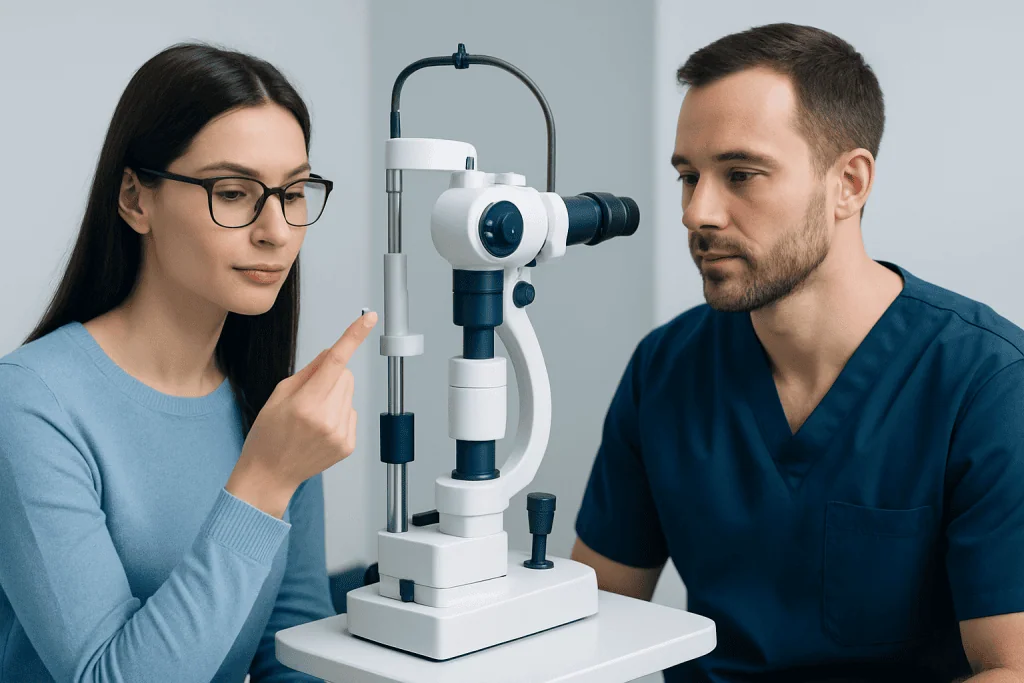
An eye exam is the safest starting point for anyone deciding between contact lenses and glasses. A routine vision test checks prescription needs, but contact lens fitting usually goes further. The doctor may measure the shape of the cornea, evaluate tear film quality, inspect the eye surface, and determine whether lenses sit and move properly on the eye.
This assessment is important because not every eye tolerates every lens material or design. A person may need a specific lens for astigmatism, multifocal needs, or a corneal condition. Follow-up visits are often needed after the first fitting to confirm comfort, visual clarity, and eye health over time.
Doctors also look for signs that an underlying eye problem may be affecting vision or comfort. If eye strain, headaches, reduced vision, or unusual symptoms are present, more specialized evaluation may be recommended. In settings such as Acibadem International, multidisciplinary specialists in JCI-accredited hospitals diagnose and treat eye conditions for international patients, helping guide safe choices for vision correction.
Care, Safety, and Practical Self-Care Tips
Whether a person chooses glasses, contact lenses, or both, proper care helps protect eye health. Glasses should be cleaned with suitable lens products or mild soap and water, then dried with a clean microfiber cloth. Frames should fit well and be adjusted if they slide, pinch, or cause pressure.
For contact lens users, good hygiene is essential. Lenses should be handled only with clean, dry hands and stored as directed. Unless a doctor specifically approves it, lenses should not be slept in, rinsed with tap water, or worn while swimming or showering. Replacement schedules should be followed exactly, even if the lenses still feel comfortable.
People who spend long hours on digital screens can also support comfort by blinking regularly, taking short visual breaks, and asking whether lubricating eye drops are suitable. If contact lenses repeatedly feel uncomfortable, dry, or blurry, it is best not to keep experimenting alone. A refit, material change, or temporary switch to glasses may be safer.
- Keep a current pair of backup glasses
- Never share contact lenses
- Replace lens cases regularly if reusable lenses are used
- Stop lens wear and seek advice if pain, redness, or light sensitivity occurs
When to See a Doctor
A routine eye examination is important even when vision seems stable. Children, adults with changing prescriptions, contact lens users, and people with chronic conditions such as diabetes may need regular follow-up based on a doctor’s advice. Eye exams can detect changes that are not obvious in daily life.
Prompt medical attention is important if there is sudden blurred vision, eye pain, marked redness, light sensitivity, discharge, or the feeling that something is stuck in the eye. These symptoms may be caused by infection, corneal injury, inflammation, or another problem that should not be ignored. Contact lens users should be especially cautious because some infections can worsen quickly if treatment is delayed.
A doctor should also be consulted if glasses no longer seem clear, contact lenses are consistently uncomfortable, or headaches and eye strain are becoming frequent. The prescription may need to be updated, or a different correction method may be more suitable. Safe, personalized advice is the best way to choose what truly fits a person’s vision needs.
Frequently asked questions
Are contact lenses better than glasses?
Neither option is universally better. Contact lenses may suit active lifestyles and provide a wider field of vision, while glasses are easier to maintain and may be better for people with dry or sensitive eyes. The best choice depends on eye health, comfort, routine, and personal preference.
Can a person switch between glasses and contact lenses?
Yes, many people use both. For example, they may wear contacts during work or exercise and switch to glasses at home or when the eyes feel tired. Keeping a current pair of glasses is also important as a backup.
Who may not be a good candidate for contact lenses?
Some people with significant dry eye, allergies, poor lens hygiene habits, certain corneal conditions, or frequent eye infections may have difficulty wearing contacts safely or comfortably. This does not always rule them out completely, but it means a careful fitting and follow-up are important. An eye doctor can advise whether a different lens type or glasses would be safer.
Do contact lenses increase the risk of eye infection?
Yes, contact lenses can increase infection risk if they are not cleaned, stored, and replaced properly. Sleeping in lenses without approval, exposing lenses to water, or wearing them too long can raise that risk further. Careful hygiene greatly improves safety.
Are glasses cheaper than contact lenses?
Often, glasses may be more economical over time, especially if the prescription stays stable and the frames last well. Contact lenses usually involve ongoing costs for replacement lenses and cleaning supplies. Total cost varies by lens type, prescription, and how often updates are needed.
Can children wear contact lenses?
Some children and teenagers can wear contact lenses successfully if they are mature enough to handle cleaning and wearing instructions. The decision depends more on responsibility, eye health, and family support than on age alone. A pediatric eye specialist or optometrist can help decide what is appropriate.
References
- American Academy of Ophthalmology
- American Optometric Association
- National Eye Institute
- Centers for Disease Control and Prevention
- World Health Organization
This article is for general information only and is not a substitute for professional medical advice. Please consult a qualified doctor about your individual situation.
Contact Lenses in Turkey — costs, top hospitals & a free quote
JCI-accredited · board-certified surgeons · reply within 24h
Add us as a Preferred Source to see more of our trusted health content across Google Search, AI Overviews and Discover.

Ophthalmology
Comprehensive eye care from laser vision correction to retina, cornea and cataract surgery.
75 specialists in this unit