Corneal Arcus: An Evidence-Based Guide for Patients

Corneal arcus is a ring of lipid deposits near the edge of the cornea. It usually does not affect vision or cause pain.
Key Takeaways
- Corneal arcus is a ring of lipid deposits near the edge of the cornea.
- It usually does not affect vision or cause pain.
- In older adults, it is commonly a harmless age-related finding.
- In younger people, corneal arcus may be associated with high cholesterol or inherited lipid disorders.
- An eye exam can confirm the diagnosis, and some patients may also need blood tests.
Corneal arcus is a gray, white, or bluish ring that appears near the outer edge of the cornea. It is often a benign age-related change, but in younger adults it can sometimes suggest abnormal blood lipid levels and should be medically assessed.
What corneal arcus is
Corneal arcus is a gray, white, or faintly blue ring that forms near the outer edge of the cornea, the clear front surface of the eye. It develops when fats, mainly cholesterol-related lipids, collect in the peripheral cornea. In many people, especially older adults, this finding is harmless and discovered during a routine eye examination.
The ring is usually separated from the colored part of the eye by a narrow clear zone, which helps eye specialists distinguish it from other eye conditions. Corneal arcus often appears in both eyes and tends to become more noticeable over time. It does not typically interfere with the central cornea, so vision is usually unaffected.
Another common name for this condition is arcus senilis when it occurs with aging. When it appears in younger adults, clinicians may simply call it corneal arcus and consider whether there could be an underlying lipid disorder. This age-related distinction is important because the appearance itself is not dangerous, but its meaning can differ from person to person.
How it looks and what symptoms it causes
Most people with corneal arcus have no symptoms at all. The ring is usually noticed in a mirror, by a family member, or during an eye checkup. It may look white, gray, or bluish and usually forms a partial or complete circle around the iris.
Corneal arcus does not usually cause blurred vision, redness, discharge, or eye pain. If these symptoms are present, another eye problem may be responsible and should be evaluated separately. This is one reason an eye examination is helpful rather than relying only on appearance.
Because people often search for a “white ring around the eye,” it is important to note that several conditions can look similar. An ophthalmologist can tell corneal arcus apart from problems such as calcium deposits, corneal degeneration, or rings associated with other diseases. In some cases, a doctor may also assess for related eye issues such as glaucoma if the overall eye examination suggests it.
Why corneal arcus happens

Corneal arcus happens when lipids are deposited in the cornea near its edge. This area is close to tiny blood vessels that can allow lipids to enter the corneal tissue over time. Since the center of the cornea stays clear, sight is typically preserved.
In older adults, these deposits often reflect normal aging rather than disease. The term arcus senilis is commonly used in this setting. Many healthy older people develop it without having a serious cholesterol problem.
In younger adults, however, corneal arcus may be more clinically meaningful. It can be associated with high cholesterol, high triglycerides, or inherited disorders of lipid metabolism. Doctors are especially attentive when the ring appears before age 45 to 50, when there is a strong family history of early heart disease, or when other signs of abnormal cholesterol are present.
Corneal arcus itself is not the same as a cardiovascular disease diagnosis, but it can be a clue that leads to further evaluation. If blood lipid levels are elevated, treatment focuses on the underlying metabolic risk rather than the eye ring itself. Related conditions such as high cholesterol and other lipid disorders may need long-term follow-up.
Who is more likely to develop it
Age is the most common risk factor for corneal arcus. The condition becomes more frequent with advancing years and is often seen in otherwise healthy older adults. Men may develop it earlier than women, although it can occur in any sex.
A person may also be more likely to develop corneal arcus if they have elevated LDL cholesterol, high triglycerides, or inherited lipid conditions such as familial hypercholesterolemia. A family history of early heart attack, stroke, or significant cholesterol problems can make the finding more important, especially in younger adults.
Other cardiovascular risk factors may also matter in the broader health assessment. These can include smoking, diabetes, high blood pressure, excess weight, physical inactivity, and diets high in saturated or trans fats. Corneal arcus does not confirm these problems on its own, but it may prompt a useful preventive discussion with a doctor.
- Common in older age
- May appear earlier in men
- More significant when seen in younger adults
- Can be associated with inherited or acquired lipid disorders
How doctors diagnose corneal arcus
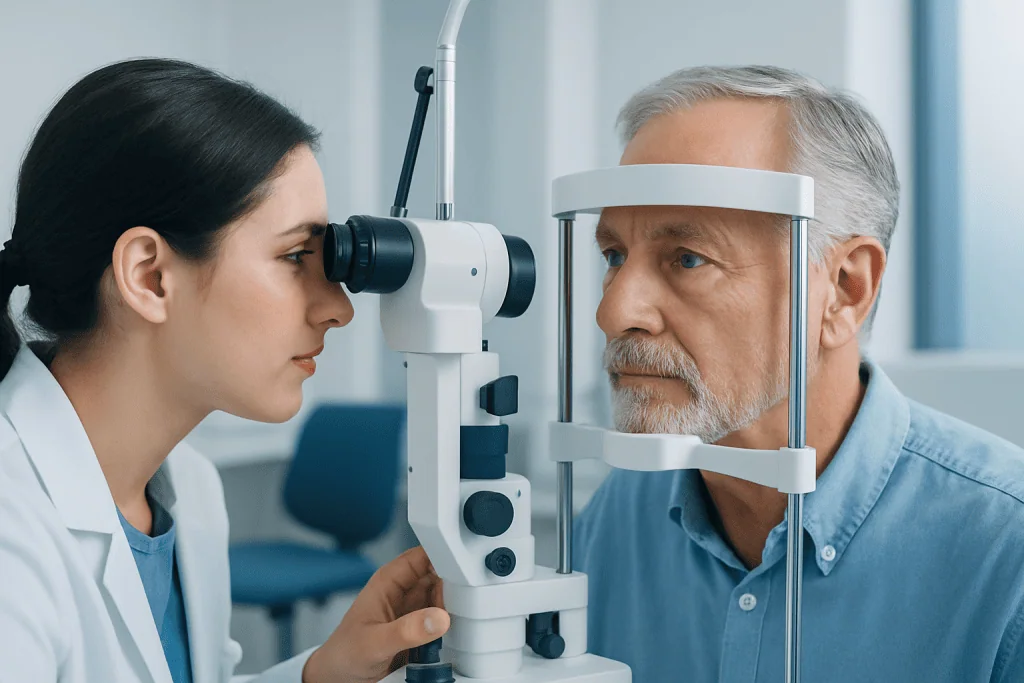
Diagnosis usually begins with a standard eye examination. An ophthalmologist or optometrist looks at the cornea with magnification, often using a slit lamp, to confirm that the ring is located at the corneal periphery and has the characteristic appearance of arcus. This exam also helps rule out other causes of corneal rings or discoloration.
Because corneal arcus is usually painless and does not reduce sight, diagnosis is often straightforward. Still, the doctor may ask when the ring was first noticed, whether it has changed, and whether there is a personal or family history of high cholesterol or early cardiovascular disease. General medical history matters as much as the eye findings.
If the patient is relatively young or has cardiovascular risk factors, blood tests may be recommended to check cholesterol and triglyceride levels. Depending on the full picture, a doctor may advise broader heart and metabolic assessment. If a more detailed eye evaluation is needed, it may be carried out through a comprehensive eye examination by an ophthalmology team.
Treatment and what to expect
Corneal arcus itself usually does not need direct treatment. The ring is typically permanent, and because it does not affect vision, removing it is generally not necessary or recommended. Eye drops, home remedies, or supplements do not reliably clear the corneal deposits.
The most important step is deciding whether the finding is simply age-related or whether it may reflect an underlying lipid problem. If cholesterol or triglycerides are high, treatment may include dietary changes, regular physical activity, weight management, smoking cessation, and medication when prescribed by a doctor. The aim is to reduce cardiovascular risk, not to treat the cornea directly.
Some patients may benefit from coordinated care involving ophthalmology, internal medicine, cardiology, or endocrinology. If a clinician suspects inherited severe cholesterol elevation, prompt assessment is especially useful because early treatment can improve long-term health outcomes. In this setting, care may involve evaluation and treatment for cholesterol management based on the person’s overall risk profile.
For international patients seeking multidisciplinary assessment, Acibadem International’s specialists in JCI-accredited hospitals evaluate eye findings together with relevant metabolic and cardiovascular factors. This can be helpful when corneal arcus appears at a younger age or alongside other health concerns.
Prevention and self-care
There is no guaranteed way to prevent age-related corneal arcus. However, protecting overall cardiovascular health is a sensible approach, especially for younger adults or anyone with a family history of lipid disorders. Healthy lifestyle habits can reduce the chance of untreated cholesterol abnormalities going unnoticed.
Helpful self-care steps include having regular medical checkups, knowing personal cholesterol numbers, eating a balanced diet rich in vegetables, fruits, whole grains, legumes, and unsaturated fats, and limiting tobacco use. Routine physical activity and weight management also support heart and metabolic health.
It is also wise to keep up with regular eye exams, even when vision seems normal. A simple eye check can identify corneal arcus and distinguish it from other problems that may need treatment, such as cataracts or surface disease. If vision changes are present, further ophthalmic assessment may be appropriate, and some patients may also need evaluation related to cataract treatment if a separate lens problem is found.
When to seek medical care
Corneal arcus is usually not an emergency. Still, it is reasonable to arrange an eye exam if a new white or gray ring appears around the cornea, especially if the person is younger than expected for age-related changes. Medical review is also sensible when there is a strong family history of high cholesterol or early cardiovascular disease.
Prompt care is more important if the ring is accompanied by eye pain, redness, sudden vision changes, light sensitivity, or discharge, because these symptoms suggest a different eye condition. Sudden loss of vision or severe eye pain should be assessed urgently. These symptoms are not typical of corneal arcus itself.
A doctor should also be consulted if blood tests have never been done or if there are risk factors such as diabetes, smoking, obesity, or known cardiovascular disease. In many cases, the visit provides reassurance. In others, it creates an opportunity to detect and manage an underlying health issue early.
Frequently asked questions
Is corneal arcus dangerous?
Corneal arcus itself is usually not dangerous and does not harm vision. In older adults, it is often a normal age-related change. In younger adults, however, it may be a clue to high cholesterol or an inherited lipid disorder, so medical evaluation is important.
Can corneal arcus affect eyesight?
Corneal arcus usually does not affect eyesight because it forms at the outer edge of the cornea rather than in the center. Most people have no visual symptoms at all. If vision is blurred or painful, another eye condition may be present.
Is corneal arcus the same as high cholesterol?
No. Corneal arcus is an eye finding, not a blood test result or a diagnosis by itself. It may be associated with high cholesterol, particularly in younger people, but many older adults have corneal arcus without a serious lipid disorder.
Can corneal arcus go away on its own?
Corneal arcus usually does not go away once it has formed. Even when cholesterol is treated, the ring often remains visible. The main goal is to address any underlying cardiovascular risk rather than to remove the corneal ring.
How is corneal arcus diagnosed?
It is usually diagnosed during an eye exam, often with a slit-lamp examination. The doctor looks at the location and pattern of the ring and checks for signs of other eye conditions. Younger patients may also need blood tests to evaluate cholesterol and triglycerides.
At what age is corneal arcus more concerning?
Corneal arcus is generally more concerning when it appears in younger adults, especially before middle age. In that setting, doctors may look more closely for familial hypercholesterolemia or other lipid abnormalities. The younger the patient, the more likely blood lipid testing will be recommended.
This article is for general information only and is not a substitute for professional medical advice. Please consult a qualified doctor about your individual situation.
Explore treatments in Turkey — costs, top hospitals & a free quote
JCI-accredited · board-certified surgeons · reply within 24h
Add us as a Preferred Source to see more of our trusted health content across Google Search, AI Overviews and Discover.
Check your numbers in seconds
BMI, calories, due date, blood pressure and 30+ more clinical calculators — free, instant, doctor-reviewed ranges.

More from the Health Library

Knee knock disease: A Complete Medical Guide for Patients

Shin Bone — Explained by Medical Evidence, Not Myths

Hypertrophy Training — Explained by Medical Evidence, Not Myths

Over the Counter Viagra: What Patients Need to Know

Apple Cider Vinegar for Hair — Explained by Medical Evidence, Not Myths