

Dental Implants: Benefits, Risks, and Recovery Timeline

Dental implants are designed to replace missing tooth roots and support crowns, bridges, or dentures. A successful implant plan depends on healthy gums, adequate jawbone, careful imaging, and control of medical risk factors.
Key Takeaways
- Dental implants are designed to replace missing tooth roots and support crowns, bridges, or dentures.
- A successful implant plan depends on healthy gums, adequate jawbone, careful imaging, and control of medical risk factors.
- Recovery happens in stages, with bone healing around the implant often taking several months before the final tooth is placed.
- Possible risks include infection, implant failure, nerve irritation, sinus complications, and gum or bone loss around the implant.
- Daily cleaning, not smoking, and regular dental visits are important for protecting implants over the long term.
Dental implants are a long-term option for replacing one or more missing teeth by placing a small artificial tooth root in the jawbone. With careful planning, good oral hygiene, and regular dental follow-up, implants can restore chewing function, support facial structure, and improve confidence.
Overview
Dental implants are artificial tooth roots used to replace missing teeth. They are usually made from biocompatible materials, most commonly titanium, and are placed into the jawbone during a minor oral surgical procedure. After healing, the implant can support a crown, bridge, or denture, depending on how many teeth need to be replaced.
The goal of implant dentistry is to restore function and appearance in a way that feels stable and natural. Unlike removable dentures, implants are anchored in the bone. Unlike a traditional dental bridge, a single implant does not usually require reshaping the neighboring healthy teeth.
Dental implants are not instant teeth for every patient. The process requires a detailed dental examination, imaging, treatment planning, and a healing period. When used for the right patient and maintained well, implants can be a predictable and durable missing teeth treatment.
Who May Benefit from Dental Implants
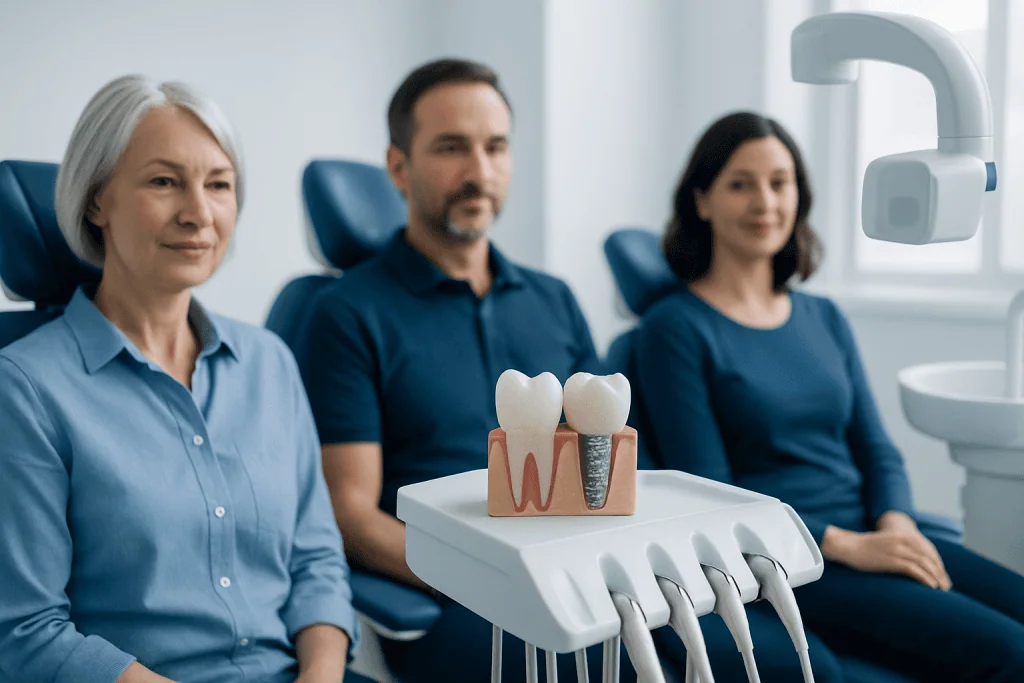
Dental implants may be considered for adults who have lost one tooth, several teeth, or all teeth. They may help people who have difficulty chewing because of missing teeth, loose dentures, or gaps that affect speech and bite balance. Implants can also support removable or fixed dentures, improving comfort and stability.
A good candidate generally has healthy gums, enough jawbone to hold the implant, and a commitment to daily oral hygiene. If the jawbone has shrunk after tooth loss, bone grafting or sinus lift procedures may be discussed to create better support. Gum disease should be treated before implant placement because active infection can reduce the chance of long-term success.
Medical history is also important. Conditions such as uncontrolled diabetes, heavy smoking, certain immune problems, previous radiation therapy to the jaw, and some medicines that affect bone healing may influence planning. These factors do not always rule out implants, but they require careful evaluation by a dentist, oral surgeon, or periodontist.
Benefits of Dental Implants

The main benefit of dental implants is stable tooth replacement. Because the implant is placed in the jawbone, it can provide strong support for biting and chewing. Many patients find that implant-supported teeth feel more secure than removable dentures, especially when eating or speaking.
Implants also help protect oral structures. When a tooth is lost, the jawbone in that area can gradually shrink because it no longer receives chewing stimulation. An implant can help maintain bone volume around the replacement tooth and support the shape of the gums and face. It may also prevent nearby teeth from shifting into the empty space.
Common benefits may include:
- Improved chewing ability compared with untreated gaps or unstable dentures
- A natural-looking replacement tooth matched to the surrounding teeth
- No need to remove enamel from adjacent teeth for a single-tooth bridge in many cases
- Better denture stability when implants are used to anchor overdentures
- Support for speech and confidence in social situations
Benefits vary depending on bone quality, oral hygiene, bite forces, and the type of restoration used. A dentist can explain whether an implant, bridge, or denture is the most appropriate option for an individual situation.
Risks and Possible Complications
Dental implant surgery is commonly performed, but it is still a surgical procedure and has potential risks. Most short-term effects, such as swelling, bruising, mild bleeding, and discomfort, improve within the first days after treatment. Dentists provide instructions for pain control, cleaning, eating, and when to seek help.
Possible complications include infection around the implant, delayed healing, failure of the implant to bond with the bone, or loosening over time. Gum inflammation around an implant, called peri-implant mucositis, can progress to peri-implantitis if bone is affected. This is more likely when plaque control is poor, gum disease is present, or smoking continues.
Less common risks depend on the implant location. In the lower jaw, nerve irritation may cause numbness, tingling, or pain in the lip, chin, or gums. In the upper back jaw, an implant may be close to the sinus cavity, so sinus anatomy must be assessed carefully. Planning with modern imaging helps reduce these risks.
Implants can also be affected by heavy grinding or clenching, an uneven bite, or poor-quality restorative work. For this reason, treatment should include both surgical and prosthetic planning: where the implant is placed, how the final tooth will fit, and how forces will be distributed during chewing.
Diagnosis and Treatment Planning
Before a tooth implant procedure, the dental team examines the mouth, gums, remaining teeth, bite, and jawbone. Dental X-rays and, in many cases, three-dimensional cone beam CT imaging may be used to measure bone height, width, and important structures such as nerves and sinuses. Photographs, digital scans, or impressions may also be taken to design the final restoration.
The dentist will review medical history, current medicines, allergies, smoking habits, and previous dental problems. Patients should mention conditions such as diabetes, heart disease, bleeding disorders, osteoporosis treatment, immune disorders, and any history of radiation therapy. This information helps the team plan safely and decide whether medical clearance is needed.
Treatment planning also includes discussing alternatives. For some people, a conventional bridge, removable partial denture, full denture, or no treatment may be considered. The best option depends on oral health, cost, time, personal goals, and the condition of neighboring teeth.
A clear plan should explain the number of visits, whether extraction or bone grafting is needed, the expected healing time, the type of temporary tooth if required, and the final restoration. Patients are encouraged to ask questions so they understand each stage before treatment begins.
Procedure and Recovery Timeline
The dental implant process can vary, but it often begins with tooth removal if the damaged tooth is still present. In selected cases, an implant may be placed immediately after extraction. In other cases, the socket needs time to heal first, or bone grafting may be performed to improve support before implant placement.
During implant placement, the area is numbed with local anesthesia, and sedation may be considered for anxious patients or more complex procedures. The dentist or surgeon places the implant into the jawbone and closes the gum tissue, sometimes leaving a small healing cap visible. The first few days are focused on rest, gentle cleaning as instructed, soft foods, and avoiding pressure on the surgical area.
A typical recovery timeline may include:
- First 24 to 72 hours: swelling, tenderness, and minor bleeding may occur and usually begin to settle with proper care.
- First 1 to 2 weeks: gum tissues usually heal enough for a follow-up check and, if needed, removal of stitches.
- Next several months: the implant bonds with the bone in a process called osseointegration. The timing varies by bone quality, implant location, grafting, and overall health.
- Restoration stage: once healing is adequate, an abutment and final crown, bridge, or denture are fitted and adjusted.
Patients should follow the specific instructions given by their dental team. This may include using prescribed medicines correctly, avoiding smoking, not chewing hard foods on the implant area during healing, and attending follow-up appointments. Healing time is individual, and rushing the final restoration can increase the risk of complications.
Long-Term Care, Prevention, and When to See a Dentist
Dental implants cannot decay like natural teeth, but the gums and bone around them can become inflamed or infected. Daily plaque removal is essential. Patients should brush thoroughly, clean between teeth and around implants with recommended tools, and attend regular professional cleanings. A dentist or hygienist can show the safest method for cleaning under implant bridges or around overdenture attachments.
Long-term protection also includes managing risk factors. Smoking increases the risk of implant complications and delayed healing. Grinding or clenching may require a night guard. Gum disease, poorly controlled diabetes, and missed dental visits can also raise the risk of bone loss around implants.
Patients should contact a dentist if they notice increasing pain, swelling, pus, fever, persistent bleeding, a loose implant or crown, changes in bite, numbness, or an unpleasant taste that does not improve. Early care can often manage inflammation before it becomes more serious. Regular reviews also allow the dentist to check the implant, screws, bite, and surrounding tissues.
For international patients who need assessment or treatment, Acibadem International provides access to multidisciplinary dental and surgical specialists in JCI-accredited hospitals. A qualified dental professional should always evaluate the individual case and explain the most suitable options, expected recovery, and follow-up needs.
Frequently asked questions
Are dental implants painful?
The procedure is usually performed with local anesthesia, so patients should not feel sharp pain during placement. Some soreness, swelling, or bruising may occur afterward and is usually manageable with the dentist’s instructions. If pain worsens instead of improving, the dental team should be contacted.
How long does dental implant recovery take?
Soft tissue healing often improves within one to two weeks, but bone healing around the implant usually takes several months. The exact timeline depends on bone quality, implant location, whether grafting was needed, and general health. The final crown or bridge is placed when the implant is stable enough to support it.
Can anyone get dental implants?
Not everyone is immediately ready for implants, but many people can become candidates after treating gum disease, improving oral hygiene, or rebuilding bone. A dental evaluation and imaging are needed to check bone support and medical risk factors. The dentist will also compare implants with other tooth replacement options.
How long do dental implants last?
Dental implants can last many years when they are well planned, well placed, and properly maintained. The crown, bridge, or denture attached to the implant may need repair or replacement over time due to normal wear. Regular check-ups and daily cleaning are important for long-term success.
What foods should be avoided after implant surgery?
In the early healing period, patients are usually advised to eat soft foods and avoid chewing directly on the surgical area. Hard, crunchy, sticky, or very hot foods may irritate the site or disturb healing. The dentist will explain when normal chewing can safely resume.
What is the difference between an implant and a bridge?
A dental implant replaces the tooth root and supports a new tooth without necessarily involving neighboring teeth. A traditional bridge uses adjacent teeth as supports and may require reshaping them. The better option depends on the condition of the nearby teeth, bone, gums, bite, and patient preferences.
References
- American Dental Association
- European Association for Osseointegration
- American Academy of Periodontology
- National Institute of Dental and Craniofacial Research
- International Team for Implantology
This article is for general information only and is not a substitute for professional medical advice. Please consult a qualified doctor about your individual situation.
Dental Implants in Turkey — costs, top hospitals & a free quote
JCI-accredited · board-certified surgeons · reply within 24h
Add us as a Preferred Source to see more of our trusted health content across Google Search, AI Overviews and Discover.

Dental & Oral Health
Full-scope dental care from implants and aesthetics to oral and maxillofacial surgery.
158 specialists in this unitRelated Treatments
More from the Health Library



Related Specialists

Assoc. Prof. Dr. Ferit Bayram
Oral & Dental Health
Dt. Alara Naz Kenir
Oral & Dental Health
Dt. Gonca Katmer
Oral & Dental HealthDt. Doğa Baysal
Oral & Dental Health