Dental implants in Turkey: Hospitals, Safety & What to Expect

Dental implants replace missing tooth roots and support a crown, bridge or denture after healing. A dental examination, imaging and review of general health are essential before treatment planning.
Key Takeaways
- Dental implants replace missing tooth roots and support a crown, bridge or denture after healing.
- A dental examination, imaging and review of general health are essential before treatment planning.
- Implant treatment often takes place in stages, with healing time needed before the final tooth restoration is fitted.
- Good oral hygiene, smoking cessation and regular follow-up are important for long-term implant health.
- International patients should plan enough time for clinical reviews and understand how aftercare will be arranged after travel.
Dental implants in Turkey may be a suitable option for people seeking replacement teeth, provided treatment is based on a thorough clinical assessment, clear treatment planning and reliable follow-up care. Choosing an appropriately accredited hospital, qualified dental specialists and a plan that accounts for travel and healing helps support safe, predictable care.
Overview: dental implants in Turkey
Dental implants in Turkey are used to replace one or more missing teeth with fixed or removable tooth restorations supported by small posts placed in the jawbone. The treatment can be safe and effective when it is delivered after a careful assessment by experienced dental professionals, in a hospital or clinic with appropriate infection-control standards, imaging capabilities and a clear aftercare plan.
An implant is usually made of biocompatible titanium or another suitable material. It acts like an artificial tooth root. After it is placed, the bone gradually heals around it in a process called osseointegration. A connecting component, called an abutment, and a custom crown, bridge or denture can then restore the visible tooth portion.
For people travelling internationally, the quality of planning is as important as the procedure itself. A responsible treatment pathway includes a review of medical and dental records, diagnostic scans, discussion of alternatives, written consent, time for healing and guidance about follow-up both during the visit and after returning home.
How dental implants work and who may be suitable
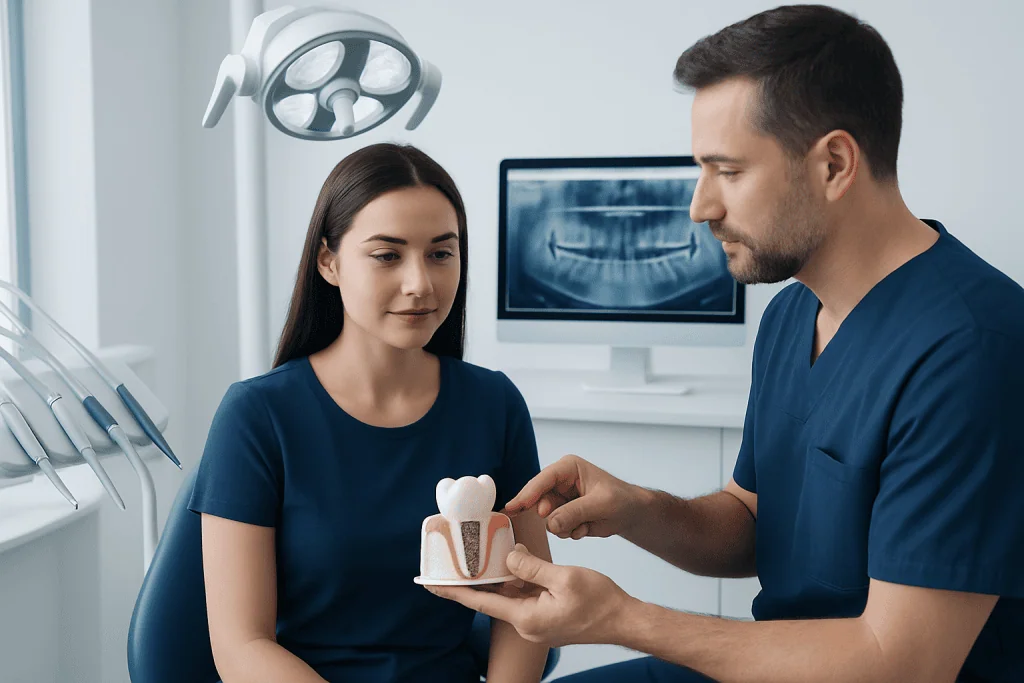
Implants can support a single replacement tooth, several teeth in a bridge, or a full-arch restoration. Unlike a conventional bridge, a single-tooth implant may avoid the need to reshape neighboring healthy teeth. Implants may also help stabilize dentures that move while speaking or eating.
Suitability depends on more than the number of missing teeth. The dentist considers jawbone volume and quality, gum health, bite alignment, oral hygiene, existing restorations and expectations for appearance and function. Three-dimensional imaging may be used to assess anatomical structures and plan the implant position safely.
People with active gum disease, untreated tooth decay, poorly controlled diabetes, heavy tobacco use, certain bone disorders or medications that affect bone healing may need additional assessment or treatment first. Previous radiotherapy to the jaw and some medical conditions require specialist input. Having these factors does not automatically rule out implants, but it can change the treatment plan, timing or expected risks.
A detailed consultation should also cover non-implant alternatives, such as a removable denture or a conventional bridge. Patients can explore the overall process of dental implant treatment with their dental team before deciding whether it fits their clinical needs and travel circumstances.
Assessment and treatment planning before travel

A safe plan starts with information gathering rather than an immediate procedure. Before travel, the dental team may request recent dental X-rays, photographs, medical history, medication details and information about allergies. However, final decisions generally require an in-person oral examination and diagnostic imaging, because remote images may not show every issue affecting treatment.
At the initial appointment, the dentist assesses teeth, gums, bite, jawbone and any signs of infection. Panoramic X-rays and, where indicated, cone-beam CT scans help identify available bone and the location of nerves and sinus spaces. The clinician can then explain whether bone grafting, sinus lifting, gum treatment, tooth extraction or temporary teeth are needed.
International patients should ask who will carry out each stage of care, what materials and laboratory standards are used, what appointments are expected, and how urgent concerns are handled after they return home. They should also disclose all medicines, including blood thinners, immune-suppressing medicines and drugs used for osteoporosis or cancer-related bone conditions. Medication changes should only be made with the advice of the prescribing clinician.
Travel arrangements should allow flexibility. Treatment may be postponed if an examination identifies inflammation, insufficient bone, an unstable bite or a medical issue that needs attention. A careful delay can be safer than proceeding with a plan based only on preliminary information.
The dental implant procedure: step by step
Dental implant treatment is individualized, but it commonly follows a staged sequence. First, any active infection, advanced gum disease or non-restorable teeth are managed. If a tooth must be removed, an implant may sometimes be placed at the same visit; in other situations, the socket is allowed to heal first. Bone or soft-tissue grafting may also be performed when needed to create a more stable foundation.
During implant placement, the dentist numbs the area with local anesthesia and makes a small opening in the gum to prepare the jawbone precisely. The implant is placed into the bone and the site is closed or fitted with a healing component. Sedation may be considered for selected patients, depending on the procedure, medical history and local clinical protocols.
Healing can take several months, as the implant integrates with the jawbone. A temporary restoration may be used in some cases, but it must be designed to avoid placing excessive force on the healing implant. Immediate placement of a final-looking tooth is not appropriate for every patient and should not be viewed as a universal standard.
Once healing is adequate, the dentist attaches an abutment and takes digital or conventional impressions for the permanent crown, bridge or denture. The final restoration is checked for fit, appearance, speech and bite balance. Ongoing maintenance appointments are needed to protect the gums, bone and restoration.
Recovery timeline, benefits and possible risks
After implant surgery, mild discomfort, swelling, bruising or minor bleeding can occur for several days. The dental team may advise a soft diet, gentle cleaning, avoiding vigorous rinsing initially and using prescribed or recommended pain relief. Patients should follow their own clinician’s instructions, particularly if they have medical conditions or take regular medicines.
Many people return to light daily activities within a day or two, but healing beneath the gums takes longer. The time from implant placement to the final restoration varies according to bone quality, implant stability, grafting needs, the number of implants and individual healing. It is important not to rush the final restoration before the implant and surrounding tissues are ready.
Potential benefits include improved chewing ability, improved stability compared with loose dentures and a natural-looking replacement option. Implants can also help maintain bone volume around a missing tooth area, although they do not eliminate the need for daily oral care or professional cleaning.
Possible complications include infection, delayed healing, implant failure to integrate, gum recession, inflammation around an implant, injury to nearby structures, sinus-related issues in the upper jaw, bite problems or aesthetic concerns. These problems are not inevitable, and their likelihood can be reduced through good planning, careful technique, oral hygiene and review appointments. Smoking and uncontrolled gum disease can increase the risk of complications.
Safety standards, travel planning and aftercare
When considering dental implants in another country, patients should focus on clinical credentials and continuity of care rather than convenience alone. Useful questions include whether the facility follows recognized quality and infection-prevention standards, whether the treating professionals have relevant implant experience, whether imaging and emergency support are available, and whether the treatment plan is documented in a language the patient understands.
JCI accreditation is one recognized hospital-quality framework that assesses systems such as patient safety, infection prevention, medication management and care processes. Accreditation does not replace an individual clinical assessment, but it can be one factor to consider when comparing hospitals. Patients should also confirm the credentials of the dentist or oral and maxillofacial surgeon who will provide care.
Accommodation should be close enough to allow planned check-ups without travel strain, particularly after surgery. Patients should avoid scheduling long-distance flights immediately after a complex procedure unless their clinician confirms it is appropriate. They should keep copies of imaging, implant details, clinical notes and the final restoration information for a dentist at home.
Acibadem International’s multidisciplinary specialists and JCI-accredited hospitals provide assessment and treatment planning for international patients, including support in coordinating the clinical process and follow-up recommendations. A personal treatment recommendation should always be based on an in-person evaluation and the patient’s overall health needs.
Prevention and long-term self-care
Implants need the same consistent attention as natural teeth. Brushing twice daily with a soft toothbrush, cleaning between teeth and around implants with the devices recommended by the dental team, and attending professional hygiene visits help reduce plaque buildup. The exact cleaning method depends on whether the implant supports a crown, bridge or removable prosthesis.
Stopping smoking or avoiding tobacco is one of the most helpful steps for gum health and implant healing. A balanced diet and good management of diabetes and other chronic conditions can also support oral healing. People who grind or clench their teeth may benefit from assessment for a protective night guard, as excessive bite forces can damage restorations or surrounding tissues.
Implant-supported teeth should be reviewed regularly even if they feel comfortable. At these visits, the dental team checks gum health, bite forces, restoration integrity and, when needed, bone levels around the implant. Early inflammation is often easier to manage than more advanced disease around an implant.
When to seek medical care
Patients should contact their dentist promptly if they develop increasing pain after the first few days, persistent or worsening swelling, fever, pus, a bad taste that does not settle, prolonged bleeding, a loose implant or a loose temporary restoration. New numbness, difficulty swallowing or breathing, or severe facial swelling requires urgent medical assessment.
After returning home, a local dentist should assess any concern rather than waiting for a planned overseas visit. This is particularly important if there are signs of infection or if a restoration feels high, cracks or moves. Bringing the treatment records and implant information can help the local clinician provide appropriate care.
Routine review is also important when there are no symptoms. Implant problems may begin with mild bleeding on brushing, tenderness or gum changes, and early professional advice can help protect the long-term result.
Frequently asked questions
Are dental implants in Turkey safe?
Dental implants in Turkey can be safe when treatment is based on a full clinical assessment, appropriate imaging, qualified dental care and reliable infection-control processes. Patients should verify the provider's credentials, understand the treatment stages and arrange follow-up care before travelling.
How long should a patient stay in Turkey for dental implants?
The required stay depends on the procedure and whether extraction, grafting or temporary restorations are needed. Implant treatment is often staged, so a patient may need more than one visit separated by a healing period; the treating dentist should provide an individualized travel schedule.
Can implants be placed immediately after a tooth is removed?
In some cases, an implant can be placed at the same appointment as tooth removal. This depends on factors such as infection, bone condition, gum tissue, implant stability and bite forces, so it is not suitable for every patient.
Is dental implant surgery painful?
The procedure is usually performed with local anesthesia, so pain should be controlled during surgery. Some tenderness and swelling are common afterward, but these are often manageable with the aftercare plan advised by the dental team.
What happens if there is not enough jawbone for an implant?
The dentist may consider bone grafting, sinus-lift procedures in the upper jaw, a different implant position or another tooth-replacement option. The best approach depends on imaging findings, medical history and the desired restoration.
How long do dental implants last?
An implant can function for many years with healthy gums, good oral hygiene, regular dental reviews and a balanced bite. The crown or bridge attached to the implant may need maintenance or replacement over time because it is exposed to normal chewing forces.
References
- World Health Organization
- International Team for Implantology
- American Dental Association
- National Institute for Health and Care Excellence
- Joint Commission International
This article is for general information only and is not a substitute for professional medical advice. Please consult a qualified doctor about your individual situation.
Dental Implants in Turkey — costs, top hospitals & a free quote
JCI-accredited · board-certified surgeons · reply within 24h
Add us as a Preferred Source to see more of our trusted health content across Google Search, AI Overviews and Discover.

Dental & Oral Health
Full-scope dental care from implants and aesthetics to oral and maxillofacial surgery.
158 specialists in this unitMore from the Health Library



Related Specialists
Prof. Dr. Metin Keskin
General Surgery
Dr. Buket Özel Bingöl
Otorhinolaryngology
Dr. Hakan Kutlu
Infectious Diseases & Clinical Microbiology
Assoc. Prof. Dr. Yasemin Koyuncu
Dermatology