Does Chlorine Kill Lice? Here Is What the Evidence Says

Pool chlorine is not a reliable treatment for head lice or nits. Head lice do not usually carry or spread disease, but scratching can irritate the scalp.
Key Takeaways
- Pool chlorine is not a reliable treatment for head lice or nits.
- Head lice do not usually carry or spread disease, but scratching can irritate the scalp.
- Finding live, crawling lice confirms an active infestation; nits alone may be old or empty.
- Treatment may include an age-appropriate lice product, thorough combing, and a repeat treatment when recommended.
- Families should avoid using bleach, insecticides for the home, or unproven chemical remedies on the scalp.
Chlorine in swimming pools does not reliably kill head lice or their eggs, also called nits. Head lice are common and usually harmless, but effective treatment requires a proven lice medicine or wet-combing approach rather than swimming or household chemicals.
Does Chlorine Kill Lice?
No. Chlorine at the levels used in properly maintained swimming pools does not reliably kill head lice or their eggs. Swimming may wet the hair and temporarily make lice harder to see, but it should not be considered a treatment. Head lice can hold tightly to hair and can survive being underwater for a period of time.
Head lice are very common, especially among school-age children, and they are usually more frustrating than medically serious. They do not generally spread disease. However, persistent itching and scratching can cause scalp irritation, and broken skin can occasionally become infected. A clinician should be consulted if there are signs of infection, uncertainty about the diagnosis, repeated treatment failure, or lice in a very young child.
The most dependable approach is to confirm that live lice are present, then use an evidence-based treatment as directed and remove lice and nits with a fine-toothed comb. Pool water, hot water, hair dryers, and strong cleaning products are not safe or reliable alternatives.
Why Pool Water Does Not Treat Head Lice

Chlorine is added to pool water to reduce germs in the water, not to treat parasites living on a person’s scalp. The concentration in a safe swimming pool is carefully controlled and is not designed to penetrate lice or destroy eggs attached to hair shafts. Brief exposure during a swim is therefore unlikely to eliminate an infestation.
Adult lice have small claws that help them grip hair near the scalp. They can also reduce water entry into their breathing openings while submerged. Nits are attached to the hair with a glue-like substance and are especially difficult to remove. Even if a swim affected some live lice, surviving lice and eggs could allow the infestation to continue.
It is important not to increase chlorine exposure in an attempt to kill lice. Applying pool chemicals, bleach, disinfectants, kerosene, gasoline, or other harsh products to the hair can burn the skin, irritate the eyes and airways, or cause poisoning. These substances should never be used as a lice treatment.
Recognizing Head Lice and Nits
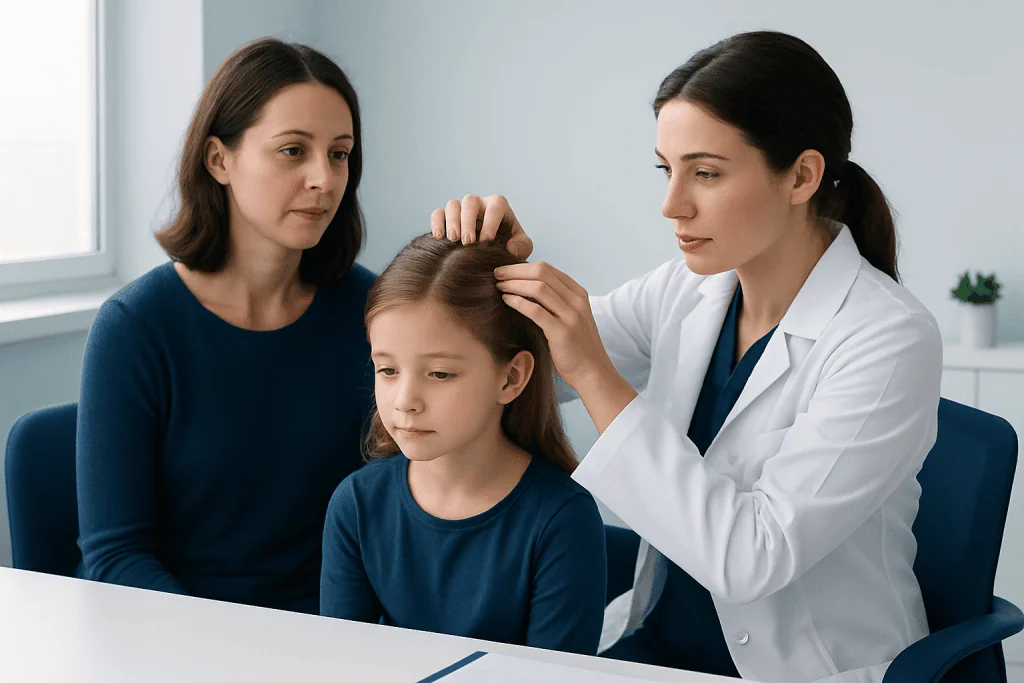
The most common symptom of head lice is scalp itching, particularly behind the ears and at the back of the neck. Some people feel a tickling sensation or notice small irritated bumps from scratching. Itching can begin soon after exposure or may take several weeks, especially during a first infestation.
The best way to identify active head lice is to find a live, crawling louse. They are small, wingless insects that move quickly and are often easier to detect on damp hair using a fine-toothed lice comb. Good lighting and a magnifying glass can be helpful. A clinician or pharmacist can assist when the finding is unclear.
Nits are tiny oval eggs attached firmly to one side of a hair shaft, usually close to the scalp. Unlike dandruff, hair-product residue, or lint, they do not brush away easily. However, nits alone do not always mean that live lice remain; empty egg casings can stay attached as hair grows. This is why finding live lice is the most useful confirmation before treatment.
How Head Lice Spread
Head lice spread mainly through direct head-to-head contact. This can happen during close play, sports, sleepovers, selfies, or other activities where heads touch. Lice crawl; they do not jump or fly. Anyone can get head lice, and having them is not a sign of poor hygiene or an unclean home.
Spread through shared items such as hats, hair accessories, headphones, pillows, or brushes is possible but less common. Lice usually survive only a short time away from the human scalp because they need regular blood meals. Pets do not spread human head lice and do not need treatment.
Children and close household contacts may be checked when one person has confirmed live lice. Routine treatment of everyone in the household is not necessary unless live lice are found. Informing close contacts can help them check promptly and reduce the chance of lice passing back and forth.
Evidence-Based Treatment Options
Treatment should begin after live lice are identified. Many over-the-counter lice treatments are available, and some prescription options may be considered when appropriate. The best product depends on a person’s age, medical history, allergies, local patterns of treatment resistance, and whether previous treatment was used correctly. A doctor or pharmacist can advise on a suitable option.
All lice products should be used exactly according to their instructions. Some treatments do not kill every egg and need to be repeated after a specified interval to target newly hatched lice. Applying more product than directed, leaving it on longer, or combining treatments does not make treatment more effective and may increase the risk of side effects.
Careful combing is an important part of management. Using a fine-toothed lice comb on wet, conditioned hair can remove live lice and nits. Families may repeat combing regularly over the following days and check the scalp for live lice. If live crawling lice are still present after a correctly used treatment, medical advice is appropriate before repeating or changing products.
Practical Home Care and Prevention
After a diagnosis, simple cleaning measures are usually enough. Recently used pillowcases, bedding, hats, and clothing can be washed and dried using heat if the fabric allows. Combs and brushes can be cleaned by removing hairs and soaking them in hot water. Items that cannot be washed may be set aside for a short period, following local public health guidance.
Extensive cleaning is not needed. Lice do not live long away from the scalp, so insecticide sprays, fumigation, or deep-cleaning an entire home are not recommended. These approaches add chemical exposure without proven benefit. Vacuuming areas where the affected person has rested may provide reassurance, but it is not the main part of treatment.
To reduce future spread, children and adults can avoid head-to-head contact when possible and avoid sharing hairbrushes, hats, hair ties, helmets, and headphones. Regular scalp checks may be useful during a known outbreak among close contacts. Swimming is generally fine for a person with lice once a treatment plan is in place, although they should avoid sharing towels, caps, or brushes.
When to Seek Medical Care
Medical review is advisable when the scalp has painful sores, spreading redness, swelling, crusting, drainage, fever, or swollen lymph nodes. These features may suggest a skin infection related to scratching and deserve timely assessment. Care should also be sought for significant rash, eye irritation, breathing symptoms, or other reactions after using a lice product.
A doctor can examine the scalp and hair under good light, often using a fine-toothed comb or magnification to look for live lice and distinguish nits from dandruff or other scalp conditions. They can also assess whether symptoms might instead be caused by eczema, psoriasis, fungal infection, or another form of scalp irritation. This avoids unnecessary exposure to lice medicines when lice are not present.
Professional guidance is particularly useful for infants and young children, pregnant or breastfeeding people, people with allergies or scalp disease, and anyone whose lice persist after treatment has been followed correctly. Acibadem International’s multidisciplinary specialists and JCI-accredited hospitals can assess scalp concerns and support evidence-based treatment planning for international patients.
Frequently asked questions
Can lice survive in a chlorinated swimming pool?
Yes, lice may survive exposure to chlorinated pool water. Chlorine in a properly maintained pool is not considered an effective or reliable way to kill lice or their eggs.
Will swimming make head lice worse?
Swimming itself does not usually make a lice infestation worse, but it does not cure it either. A person with lice should avoid sharing swim caps, towels, brushes, and other personal items.
Can chlorine kill lice eggs?
No, chlorine does not reliably kill nits attached to the hair. Nits are protected by their outer shell and firmly attached to hair, so treatment instructions and fine-toothed combing are more effective.
Do head lice mean poor hygiene?
No. Head lice can affect people with clean or unwashed hair and are not a reflection of hygiene, parenting, or household cleanliness. They spread mainly through close head-to-head contact.
Should the whole family be treated for lice?
Only people with confirmed live lice usually need treatment. Household members and close contacts should be checked carefully, because treating people without lice exposes them to medication unnecessarily.
When should treatment for lice be repeated?
The timing depends on the treatment product because some medicines do not kill all eggs. The label or a healthcare professional will state whether and when a second treatment is needed; it is important to follow those instructions exactly.
References
- Centers for Disease Control and Prevention
- American Academy of Pediatrics
- National Health Service
- Mayo Clinic
- American Academy of Dermatology Association
This article is for general information only and is not a substitute for professional medical advice. Please consult a qualified doctor about your individual situation.
Hair transplant in Turkey — costs, graft counts & a free assessment
JCI-accredited · board-certified surgeons · reply within 24h
Add us as a Preferred Source to see more of our trusted health content across Google Search, AI Overviews and Discover.