Ear Blackheads: What Patients Need to Know

Ear blackheads are a type of acne lesion caused by blocked pores. They can appear on the outer ear, behind the ear, or near the ear opening.
Key Takeaways
- Ear blackheads are a type of acne lesion caused by blocked pores.
- They can appear on the outer ear, behind the ear, or near the ear opening.
- Squeezing or using sharp tools can injure the skin and raise the risk of infection.
- Gentle cleansing and non-comedogenic skin products may help prevent recurrence.
- A doctor should assess painful, swollen, draining, or recurrent bumps.
Ear blackheads are clogged pores that form when oil, dead skin cells, and debris collect in or around the ear. They are usually not dangerous, but safe care matters because the skin and ear canal are delicate and easy to irritate.
Overview: what ear blackheads are
Ear blackheads are small clogged pores that develop when oil, dead skin cells, and debris become trapped in a hair follicle and the plug is exposed to air. The surface darkens through oxidation, creating the familiar black appearance. They can form on the outer ear, earlobe, behind the ear, or near the entrance of the ear canal.
In most cases, ear blackheads are harmless and are not a sign of poor hygiene. They are simply a localized form of acne. What makes them different from blackheads on the nose or forehead is the location: the ear has narrow curves, delicate skin, and areas that are hard to see and reach safely.
This is why self-treatment needs extra care. Many patients try to squeeze, scrape, or probe the area, but this can cause skin injury, bleeding, infection, or deeper blockage. A calm, gentle approach is usually best, especially if the spot is inside the ear opening.
Where they appear and how they look
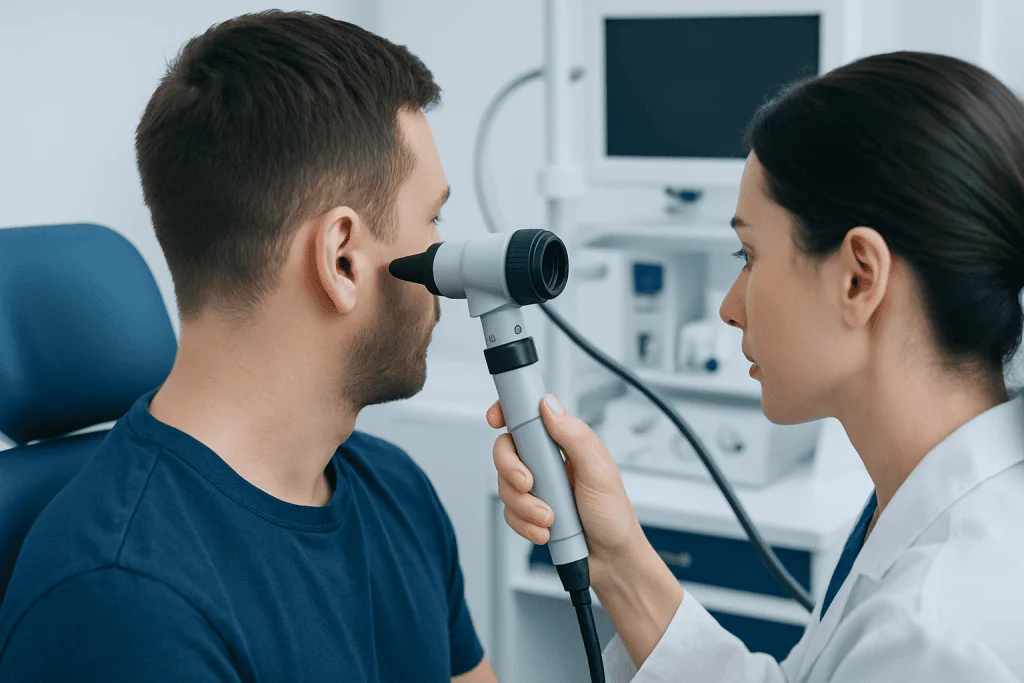
Ear blackheads may appear as tiny dark dots, small raised plugs, or rough bumps on the skin. Some are easy to see on the outer rim of the ear or earlobe, while others are noticed only when they become irritated. They may occur alone or alongside whiteheads, small pimples, or oily skin in nearby areas.
Common locations include the concha of the ear, the outer rim, the skin behind the ear, and the area just outside the ear canal. A blackhead generally stays small and does not cause major symptoms, though it can feel bothersome because of its location.
It is helpful to know that not every dark or raised ear lesion is a blackhead. Some bumps may be inflamed acne, cysts, ingrown hairs, dermatitis, or an ear infection. If the area is painful, red, warm, draining, or rapidly changing, a clinician may need to rule out other conditions such as acne-related inflammation or an ear skin infection.
Why ear blackheads happen

Blackheads develop when a pore becomes blocked. The main ingredients are natural skin oil, also called sebum, and dead skin cells. In the ear area, this process can be encouraged by sweat, hair products, sunscreen, makeup, or friction from items that touch the skin regularly.
Several everyday factors may contribute:
- Oily or combination skin
- Use of heavy hair oils, pomades, or styling products
- Earbuds, headphones, helmets, or hearing devices that trap heat and oil
- Infrequent cleaning of devices that touch the ears
- Hormonal changes that increase oil production
- Picking at the skin or using irritating products
Genetics also play a role. Some people are simply more prone to clogged pores. Ear blackheads are not contagious, and they are not caused by dirt alone. Over-washing or using harsh products can actually worsen irritation and make skin care more difficult.
How to remove ear blackheads safely
The safest first step is to avoid squeezing. Because the ear has thin, curved skin and a tight space near the canal, pressure can push material deeper, tear the skin, or trigger inflammation. This is especially important if the blackhead is inside the ear opening, where vision is limited and instruments can cause injury.
For mild cases on the outer ear, gentle skin care may help. Washing with a mild cleanser once or twice daily and using non-comedogenic products can reduce buildup. Some patients benefit from topical acne ingredients used carefully on the outer ear skin, but these should not be placed deep into the ear canal unless a doctor specifically advises it.
If blackheads are persistent or difficult to reach, a dermatologist may recommend a professional extraction or a structured acne plan such as acne treatment. Professional removal is generally safer than home extraction because the clinician can confirm the lesion, use sterile technique, and protect the surrounding skin.
Diagnosis and when another condition may be suspected
Doctors usually diagnose ear blackheads by examining the area and asking about symptoms, skin type, skin care habits, and any products used around the ears or hairline. In many cases, no tests are needed. The main goal is to make sure the lesion really is a blackhead and not a cyst, inflamed acne bump, infection, or another skin condition.
A different diagnosis may be considered if the bump is very painful, swollen, recurrent, filled with pus, or associated with crusting or hearing symptoms. In these situations, a clinician may evaluate for conditions affecting the ear or nearby skin. If there is more significant swelling, a trapped sac under the skin, or repeated inflammation, the problem may resemble an sebaceous cyst rather than a simple blackhead.
If the lesion is larger than expected or does not improve, treatment can be tailored to the cause. Some patients may need evaluation by a dermatologist, while others may benefit from an ear, nose, and throat specialist if the area is close to the ear canal and symptoms involve tenderness, discharge, or hearing changes.
Treatment options and what to avoid at home
Treatment depends on the location, number of blackheads, and whether there is inflammation. For isolated blackheads on the external ear, a doctor may advise gentle cleansing, topical acne care, and avoiding greasy products that collect around the ear. Persistent lesions sometimes need professional extraction or a more complete skincare plan.
If there are signs of repeated blockage, surrounding acne, or mixed lesions such as whiteheads and inflamed pimples, care may overlap with broader dermatology treatment. In some cases, clinicians recommend agents that help normalize skin cell turnover or reduce oil buildup, but these should be used carefully because ear skin can be sensitive.
What should be avoided? Sharp tools, metal picks, cotton swabs inserted into the ear canal, and repeated squeezing are common causes of complications. Home remedies such as undiluted essential oils, toothpaste, or abrasive scrubs may irritate the skin and should generally be avoided. If a lump is deep, painful, or repeatedly returns, a clinician can decide whether removal or another procedure, such as sebaceous cyst removal, is more appropriate.
Prevention and daily self-care
Prevention focuses on reducing oil and buildup without damaging the skin barrier. Cleaning the outer ear gently during bathing is usually enough. The goal is not to scrub deeply, but to remove surface sweat, hair product residue, and excess oil from the folds of the ear and the skin behind it.
Helpful habits may include:
- Use a gentle facial cleanser on the outer ear area
- Choose non-comedogenic sunscreen, makeup, and hair products
- Wipe earbuds, headphones, and hearing devices regularly
- Shower after sweating heavily
- Avoid picking, scratching, or squeezing bumps
- Keep long hair and oily styling products from resting on the ear when possible
People who are prone to acne on the face, scalp, chest, or back may be more likely to develop ear blackheads as well. A consistent skin-care routine can help limit recurrence. Near the end of the care pathway, if expert assessment is needed, Acibadem International’s multidisciplinary specialists and JCI-accredited hospitals diagnose and treat skin and ear-related conditions for international patients.
When to seek medical care
Medical care is a good idea if a supposed blackhead becomes painful, swollen, red, warm, or begins to drain fluid. These changes may suggest inflammation or infection rather than a simple clogged pore. Care is also important if the spot is deep in the ear opening, if it interferes with hearing devices, or if self-care has not helped.
Prompt evaluation is especially helpful when a bump keeps coming back in the same place, grows larger, or feels like a firm lump under the skin. Children, people with diabetes, and those with weakened immune systems should be cautious about ear lesions because infection may need earlier attention.
Any sudden hearing loss, significant ear pain, fever, bleeding, or spreading redness should be assessed by a qualified doctor. A clinician can confirm the diagnosis, treat the lesion safely, and advise on prevention so the area can heal with less risk of scarring or recurrence.
Frequently asked questions
Are ear blackheads dangerous?
Ear blackheads are usually harmless clogged pores. They become more concerning if they are painful, swollen, draining, or repeatedly inflamed, because those features may point to infection or another type of lesion.
Can a person pop a blackhead in the ear?
It is generally best not to pop a blackhead in the ear. Squeezing can damage delicate skin, push the blockage deeper, and increase the risk of infection, especially near the ear canal.
Why do blackheads form in the ears?
They form when oil, dead skin cells, and debris block a pore. Heat, sweat, oily hair products, earbuds, headphones, and naturally oily skin can all make this more likely.
How are ear blackheads treated?
Mild cases may improve with gentle cleansing and careful use of suitable skin-care products on the outer ear. Persistent or hard-to-reach blackheads may need professional extraction or evaluation by a dermatologist or ENT specialist.
Are ear blackheads the same as ear pimples?
Not exactly. A blackhead is an open clogged pore, while a pimple is usually inflamed and may look red, tender, or filled with pus. Some people can have both in the same area.
How can ear blackheads be prevented?
Prevention includes gentle cleaning of the outer ear, avoiding heavy or greasy products around the ears, and keeping earbuds or headphones clean. It also helps to avoid picking at the skin and to use non-comedogenic personal care products.
This article is for general information only and is not a substitute for professional medical advice. Please consult a qualified doctor about your individual situation.
Explore treatments in Turkey — costs, top hospitals & a free quote
JCI-accredited · board-certified surgeons · reply within 24h
Add us as a Preferred Source to see more of our trusted health content across Google Search, AI Overviews and Discover.

More from the Health Library

Phrenic Nerve: What Patients Need to Know

Premenstrual Stress: A Complete Medical Overview

Mottled Skin: A Complete Medical Overview

Nuclara — Explained by Medical Evidence, Not Myths

Cauliflower Ear: An Evidence-Based Guide for Patients