Embryo: What Patients Need to Know

An embryo forms after fertilization and develops rapidly during the first weeks of pregnancy. In natural conception and IVF, successful implantation is essential for pregnancy to continue.
Key Takeaways
- An embryo forms after fertilization and develops rapidly during the first weeks of pregnancy.
- In natural conception and IVF, successful implantation is essential for pregnancy to continue.
- Embryo development can be influenced by age, genetics, uterine health, and overall reproductive health.
- Doctors assess embryo progress with ultrasound, laboratory observation, and pregnancy hormone testing.
- Questions about embryo growth, implantation, or IVF outcomes should be discussed with a fertility or obstetrics specialist.
An embryo is the earliest stage of human development after an egg is fertilized by a sperm. Patients most often hear the term during early pregnancy or fertility treatment, where embryo quality, growth, and implantation are carefully monitored.
Overview: what an embryo is
An embryo is the early developing form of a human after fertilization, when a sperm joins an egg. In simple terms, the word describes the first stage of development before the fetus stage begins. Patients usually encounter this term when learning about early pregnancy, miscarriage, or fertility treatment such as in vitro fertilization (IVF).
During the first days after fertilization, the embryo divides into more cells and travels toward the uterus. If conditions are favorable, it attaches to the uterine lining in a process called implantation. From that point onward, the pregnancy can continue to develop, supported by the placenta and changing hormone levels.
In medical practice, the term embryo is also used in laboratory fertility care. Specialists may observe embryos closely during IVF treatment to assess how they are growing before transfer to the uterus. This helps guide decisions, but it is important to remember that embryo appearance is only one part of the overall picture.
How embryo development happens

Embryo development starts immediately after fertilization. The fertilized egg, also called a zygote, begins to divide into multiple cells. Over several days it becomes a compact group of cells and then a blastocyst, a structure that is prepared to implant in the uterus.
Implantation usually occurs a few days after the embryo reaches the uterus. Once implanted, the embryo begins establishing the structures that will support growth, including the early placenta and amniotic sac. In the weeks that follow, the foundations of the brain, spinal cord, heart, and other organs begin to form.
Doctors often divide development into stages because timing matters in both natural pregnancy and assisted reproduction. In IVF, embryos may be transferred at different points depending on the clinical plan. Some patients also hear about related topics such as infertility when embryo formation or implantation does not happen as expected.
- Day 0: fertilization occurs
- Days 1-3: rapid cell division
- Days 5-6: blastocyst stage may be reached
- Days 6-10: implantation may begin
- Weeks 3-8 of pregnancy: major early structures form
Why embryos matter in pregnancy and IVF
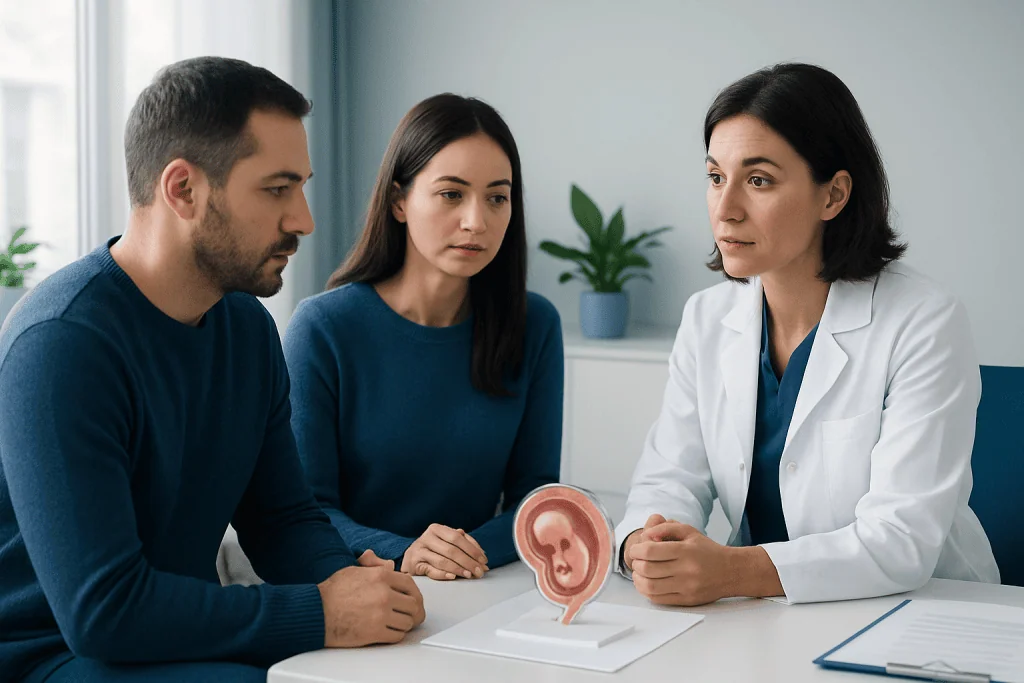
For patients, the embryo matters because it represents the earliest point at which a pregnancy begins to develop. Healthy embryo growth and successful implantation are necessary for a pregnancy to continue. If the embryo does not develop normally or cannot implant, the pregnancy may not progress.
In fertility care, embryo assessment is a routine part of treatment planning. Specialists look at how an embryo is dividing, whether it reaches expected developmental stages, and whether the uterine environment appears suitable for transfer. Depending on the clinical situation, some patients may also need embryo transfer as part of IVF.
Patients often worry that one laboratory observation can fully predict pregnancy success, but this is not the case. Embryo growth, uterine receptivity, genetic factors, maternal age, hormone balance, and general health all contribute. Because of this, care is individualized and follow-up is important.
What can affect embryo development
Several factors can influence whether an embryo forms, develops, and implants normally. One of the most important is age, especially maternal age, because egg quality tends to decline over time. Sperm quality, genetic changes, and certain reproductive health conditions can also affect embryo development.
The uterine environment matters as well. Fibroids, polyps, inflammation, hormone imbalance, or disorders that affect the lining of the uterus may make implantation more difficult. In some cases, doctors evaluate related reproductive conditions such as endometriosis because they can affect fertility and early pregnancy.
Lifestyle and medical history may also play a role. Smoking, significant alcohol use, uncontrolled chronic disease, poor nutrition, and certain infections can reduce the chance of a healthy pregnancy. However, many embryo development problems are not caused by anything a patient did or did not do, and reassurance and individualized evaluation are often needed.
- Maternal and paternal age
- Egg and sperm quality
- Chromosomal or genetic abnormalities
- Hormonal balance
- Uterine lining health
- Underlying fertility conditions
- General health and lifestyle factors
How doctors evaluate embryo health
Evaluation depends on whether conception happened naturally or through fertility treatment. In natural pregnancy, doctors do not directly see the embryo until ultrasound can identify early pregnancy structures. Blood tests for human chorionic gonadotropin (hCG) and follow-up ultrasound help determine whether the pregnancy is developing in the expected way.
In IVF, embryologists can observe embryos in the laboratory over several days. They may assess the number and appearance of cells, the pace of development, and whether the embryo reaches the blastocyst stage. In selected cases, some clinics may discuss additional laboratory techniques, but these are not necessary for every patient.
If there are concerns about repeated failed implantation, recurrent pregnancy loss, or other fertility problems, a broader evaluation may be recommended. This can include hormone testing, imaging of the uterus and ovaries, semen analysis, and investigation of possible gynecologic or endocrine issues. When appropriate, patients may benefit from specialist-led infertility treatment planning.
Treatment options and supportive care
There is no single treatment that applies to every embryo-related concern because the underlying reason may be different from one patient to another. In natural conception, care often focuses on confirming pregnancy location and viability, managing medical conditions, and supporting healthy early pregnancy. In fertility care, treatment may involve ovulation support, egg retrieval, laboratory fertilization, embryo culture, and transfer.
If implantation is not occurring or pregnancy losses are repeated, doctors may look for treatable causes. These can include uterine abnormalities, hormone disorders, thyroid disease, certain infections, or male factor fertility issues. Treatment is then tailored to the diagnosis rather than to the embryo alone.
Supportive care is also important. Patients often benefit from clear counseling about timing, realistic expectations, and follow-up testing. Near the end of the care journey, some international patients choose Acibadem International, where multidisciplinary specialists in JCI-accredited hospitals diagnose and treat fertility and early pregnancy conditions using individualized plans.
Prevention, self-care, and when to seek medical care
Although not all embryo development problems can be prevented, general reproductive health can be supported before and during early pregnancy. Useful steps include taking prenatal folic acid when trying to conceive, avoiding smoking and recreational drugs, limiting alcohol, managing chronic conditions, maintaining a balanced diet, and attending regular medical checkups. Patients undergoing fertility treatment should follow their team’s instructions closely.
Emotional well-being also matters. Waiting for pregnancy test results, ultrasound findings, or IVF updates can be stressful. Many patients find it helpful to ask for written instructions, clarify the next step in the plan, and seek emotional support from trusted family members, counselors, or fertility support services.
Medical care should be sought promptly for heavy bleeding, severe pelvic or abdominal pain, fainting, shoulder pain, fever, or symptoms of dehydration. Patients should also contact a doctor if they have a positive pregnancy test but concerning symptoms, or if they have questions after embryo transfer or early ultrasound. Early assessment can help rule out miscarriage, ectopic pregnancy, or other conditions that need timely attention.
Frequently asked questions
What is an embryo in simple terms?
An embryo is the earliest stage of human development after an egg is fertilized by a sperm. It describes the first weeks of development, before the term fetus is used.
How is an embryo different from a fetus?
The word embryo is used for the very early stage of development, when the basic structures of the body are forming. Later in pregnancy, after this early developmental phase, the term fetus is used.
How long does it take for an embryo to implant?
After fertilization, an embryo usually reaches the uterus within several days and may implant shortly afterward. Exact timing can vary, especially between natural conception and IVF treatment.
Can an embryo be healthy even if pregnancy symptoms are mild?
Yes. Early pregnancy symptoms vary widely, and mild symptoms do not automatically mean there is a problem with the embryo. Doctors use blood tests and ultrasound, rather than symptoms alone, to assess how a pregnancy is developing.
What affects embryo quality in IVF?
Embryo quality in IVF can be influenced by egg and sperm quality, age, genetics, and laboratory conditions. Even so, embryo appearance in the lab cannot predict outcomes with complete certainty.
When should a patient worry about embryo development?
Patients should contact a doctor if they have heavy bleeding, severe pain, fainting, fever, or concerning symptoms after a positive pregnancy test or embryo transfer. They should also seek advice if follow-up tests or ultrasound results are unclear.
References
- World Health Organization
- American College of Obstetricians and Gynecologists
- American Society for Reproductive Medicine
- Centers for Disease Control and Prevention
- National Institute of Child Health and Human Development
This article is for general information only and is not a substitute for professional medical advice. Please consult a qualified doctor about your individual situation.
IVF & fertility treatment in Turkey — success rates and costs
JCI-accredited · board-certified surgeons · reply within 24h
Add us as a Preferred Source to see more of our trusted health content across Google Search, AI Overviews and Discover.