ESWL Recovery Time: What to Expect After Shock Wave Lithotripsy

Most people recover from ESWL within a few days, though passing stone fragments can continue for days to weeks. Light blood in the urine, mild back or flank soreness, and cramping are common after treatment.
Key Takeaways
- Most people recover from ESWL within a few days, though passing stone fragments can continue for days to weeks.
- Light blood in the urine, mild back or flank soreness, and cramping are common after treatment.
- Drinking fluids, resting, and following the doctor’s instructions can support smoother recovery.
- Fever, severe pain, inability to urinate, or heavy bleeding should be assessed promptly.
- Follow-up imaging may be needed to confirm that the stone has cleared.
ESWL recovery time is often short, and many people return to normal activities within a few days after shock wave lithotripsy. Mild pain, blood in the urine, and passing stone fragments are common parts of recovery, but some symptoms need medical review.
Overview of ESWL Recovery Time
Extracorporeal shock wave lithotripsy, or ESWL, is a noninvasive treatment used to break kidney stones and some upper urinary tract stones into smaller pieces. These fragments can then pass more easily through the urine. Because ESWL does not require a surgical incision, recovery is usually quicker than with more invasive stone procedures.
ESWL recovery time is often measured in days rather than weeks. Many people go home the same day and gradually resume routine activities within 24 to 72 hours, depending on how they feel and whether they received sedation or anesthesia. Even when a person feels well quickly, it is still normal for the body to need time to pass stone fragments over the following days or weeks.
Recovery can vary from person to person. It often depends on the stone’s size, location, and hardness, as well as whether there was any blockage, infection, or irritation in the urinary tract before treatment. People being treated for kidney stones may notice that their symptoms improve as fragments pass, but some discomfort during this stage is common.
What Symptoms Are Normal After ESWL?
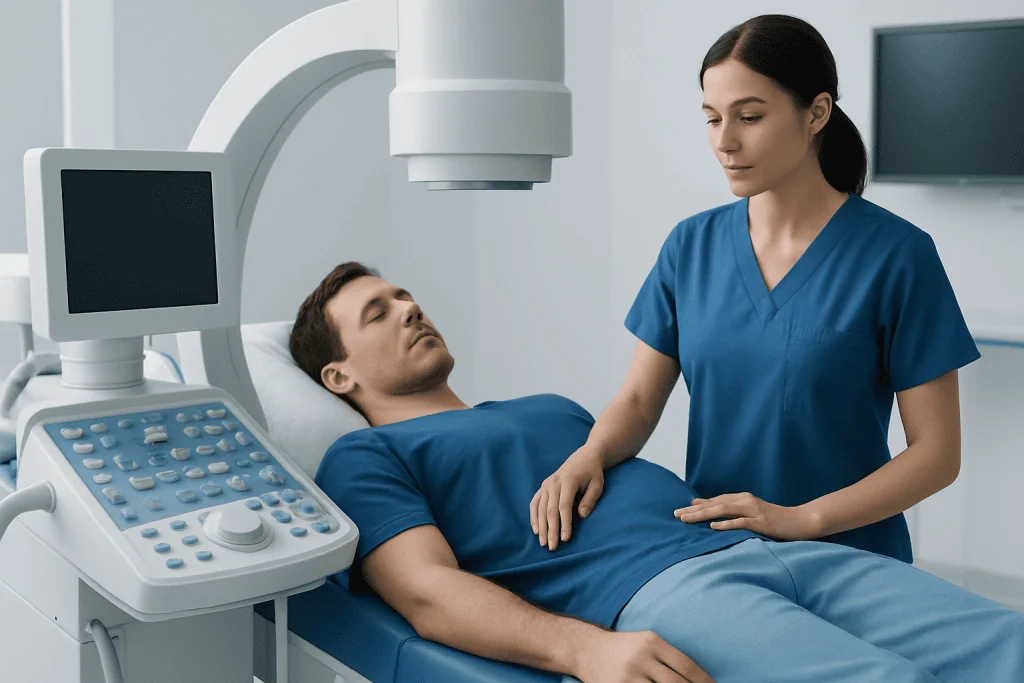
Several symptoms are expected after shock wave lithotripsy and usually improve on their own. The most common is blood in the urine, which is often light pink or red for a short time after the procedure. Mild soreness in the back, side, or abdomen can also happen because the shock waves pass through the body to reach the stone.
Some people feel cramping or waves of pain as the small stone pieces move through the urinary tract. This discomfort may come and go rather than stay constant. Nausea, tiredness, and grogginess can also occur for a day after sedation or anesthesia.
Other normal experiences can include:
- Small stone fragments or sandy particles in the urine
- Urinary urgency or mild burning for a short time
- Bruising or tenderness over the treatment area
- Temporary fatigue and reduced energy
Although these symptoms can be unpleasant, they are often a sign that the treatment is working. A doctor may ask the patient to strain the urine so stone fragments can be collected and analyzed. This can help guide future prevention strategies.
How Long Does Recovery Usually Take?

For many patients, the initial ESWL recovery time is one to three days. During this period, rest, hydration, and pain control are usually the main needs. People with desk-based work may return relatively quickly, while those with physically demanding jobs may need a little longer, especially if they still have cramping or fatigue.
Passing stone fragments can take longer than the first few recovery days. Some people pass most fragments within several days, while others continue to pass pieces for a few weeks. This does not always mean something is wrong. The exact timeline depends on the stone size, how effectively it broke up, and how easily the urinary tract allows fragments to pass.
Some patients need more than one treatment session if the stone is large, dense, or difficult to fragment. In these cases, the overall treatment course may be longer even though recovery after each session remains relatively short. Follow-up evaluation, sometimes with renal ultrasonography, can help confirm whether stone fragments remain.
What Affects ESWL Recovery Time?
Several factors can influence how quickly someone feels better after ESWL. Stone-related factors are important, including the stone’s size, location, and composition. Stones in certain positions may be harder to break or pass, and harder stones may not fragment as easily. If there are multiple stones, recovery can also feel less straightforward.
Patient-related factors matter too. General health, age, hydration status, kidney function, and previous urinary tract problems can all affect recovery. People with swelling of the urinary tract, a narrowed passage, or infection may need closer follow-up. A person’s pain tolerance and how their body responds to sedation can also change the recovery experience.
Doctors also consider whether another urinary condition may complicate healing. For example, urinary discomfort or infection symptoms after treatment may need assessment for urinary infections. In some cases, other tests or procedures, such as cystoscopy, may be recommended if symptoms persist or if stone fragments do not pass as expected.
Aftercare and Self-Care at Home
At-home care after ESWL is usually simple but important. Drinking enough fluids is often one of the most helpful steps, unless a doctor has given fluid restrictions for another medical reason. Good hydration can support urine flow and may help small fragments pass more easily. Doctors may also recommend prescribed or over-the-counter pain relief, depending on the individual case.
Gentle movement such as walking may help some patients during recovery, while heavy lifting and intense exercise are usually best avoided for a short time. Rest is still important, especially on the first day. If sedation or anesthesia was used, driving and making important decisions should wait until the care team says it is safe.
Helpful self-care measures often include:
- Drink water regularly, unless otherwise advised
- Take medicines exactly as prescribed
- Use a urine strainer if requested
- Watch for changes in pain, bleeding, or fever
- Attend follow-up appointments and imaging tests
Near the end of recovery planning, some patients may benefit from broader review of stone prevention and urinary health. Acibadem International’s multidisciplinary specialists in JCI-accredited hospitals diagnose and treat urinary stone disease for international patients, including ESWL and follow-up care when appropriate.
Possible Risks and Warning Signs
ESWL is generally considered safe, but complications can occur. One possible issue is that stone fragments can collect in the ureter and create a temporary blockage. This may cause stronger pain, nausea, or difficulty passing urine. In some cases, the doctor may need to provide additional treatment to help the fragments move.
Infection is another concern, especially if bacteria were already present in the urinary tract before the procedure. Fever, chills, or worsening urinary symptoms should not be ignored. Heavy bleeding in the urine, severe persistent pain, or vomiting that prevents drinking fluids also deserves prompt medical attention.
People should contact a doctor or seek urgent care if they have:
- Fever or chills
- Severe or worsening pain not relieved by prescribed medicine
- Inability to urinate or very little urine output
- Heavy bleeding or blood clots in the urine
- Persistent nausea or vomiting
- Signs of fainting, weakness, or dehydration
These warning signs do not always mean a serious complication is present, but they do need medical assessment. Early review can help prevent a small problem from becoming more difficult to treat.
Follow-Up, Prevention, and When to See a Doctor
Follow-up is an important part of ESWL recovery. A person may feel much better but still have remaining stone fragments. Imaging or urine testing can help the doctor see whether the stone has cleared and whether more treatment is needed. The doctor may also review the type of stone and discuss how to reduce the chance of future stones.
Prevention often focuses on hydration, diet, and identifying underlying causes. Depending on the stone type, a clinician may advise changes such as reducing excess salt, balancing animal protein intake, or adjusting certain foods. Not every stone has the same cause, so personalized guidance is helpful. Some people with repeated stones may need evaluation for metabolic or kidney-related conditions, including medical kidney management when appropriate.
A person should see a doctor if symptoms are not improving, if pain keeps returning in strong waves, or if urine remains heavily bloody. Medical review is also sensible if fragments do not seem to pass, if new urinary symptoms appear, or if there are repeated stone episodes in the future. Timely assessment can help protect kidney function and reduce the risk of recurrence.
Frequently asked questions
How long does it take to recover from ESWL?
Many people recover from the procedure itself within one to three days. However, passing stone fragments may continue for several days or a few weeks, depending on the stone and the person’s urinary tract.
Is blood in the urine normal after shock wave lithotripsy?
Yes, light blood in the urine is common for a short time after ESWL. It should gradually improve, but heavy bleeding, clots, or bleeding that continues or worsens should be discussed with a doctor.
When can normal activities be resumed after ESWL?
Many patients return to light daily activities within a day or two. Strenuous activity, heavy lifting, or driving after sedation should wait until the treating doctor says it is safe.
What does passing stone fragments feel like?
Some people feel mild discomfort, pressure, or cramping as fragments move through the urinary tract. Others may notice gritty particles in the urine with only minimal symptoms.
When should a doctor be called after ESWL?
A doctor should be contacted for fever, chills, severe pain, heavy bleeding, inability to urinate, or ongoing vomiting. These symptoms can suggest blockage, infection, or another complication that needs prompt care.
Can ESWL fail to remove the whole stone?
Yes, sometimes the stone does not break completely or all fragments do not pass. If that happens, follow-up imaging and additional treatment may be needed.
References
- National Institute of Diabetes and Digestive and Kidney Diseases
- American Urological Association
- European Association of Urology
- National Health Service
- Mayo Clinic
This article is for general information only and is not a substitute for professional medical advice. Please consult a qualified doctor about your individual situation.
ESWL in Turkey — costs, top hospitals & a free quote
JCI-accredited · board-certified surgeons · reply within 24h
Add us as a Preferred Source to see more of our trusted health content across Google Search, AI Overviews and Discover.