Eye Check Up Cost: What Patients Really Pay

A routine vision examination and a medical eye examination are different services and may be billed differently. Insurance coverage depends on whether the visit is covered as vision care or medically necessary eye care.
Key Takeaways
- A routine vision examination and a medical eye examination are different services and may be billed differently.
- Insurance coverage depends on whether the visit is covered as vision care or medically necessary eye care.
- A comprehensive exam may include vision testing, eye-pressure measurement, dilation, and assessment of eye health.
- Glasses costs reflect frames, lenses, prescription complexity, coatings, and optional features as well as the eye examination.
- Sudden vision changes, eye pain, flashes, or a curtain-like shadow require prompt medical assessment.
Eye check up cost depends on whether the visit is routine or medically necessary, the professional providing care, the tests needed, and local healthcare pricing. A clear estimate should separate the examination, any additional imaging or dilation, and the cost of glasses, contact lenses, or treatment if needed.
Eye Check Up Cost: What Patients Really Pay
Eye check up cost is not one fixed amount. It varies according to the country and city, whether the appointment is a routine vision test or a medical eye assessment, the clinician’s qualifications, the tests required, and whether insurance or a vision plan contributes to payment. Patients can usually obtain the most useful estimate by asking for the examination fee, likely test fees, dilation-related charges, and any separate charges for prescriptions or optical products.
A standard eye check may focus on determining whether glasses or contact lenses are needed. A comprehensive medical assessment may also look for cataracts, glaucoma, retinal disease, diabetes-related eye changes, dry eye disease, infection, and other concerns. Because the purpose and scope differ, comparing prices is most meaningful when patients compare like-for-like appointments rather than relying on a single advertised starting fee.
Cost should not be the only consideration. The appropriate provider and testing should match the person’s symptoms, age, medical history, family history, and visual needs. Asking what is included before booking can help prevent unexpected expenses while ensuring the assessment is suitable.
What a Full Eye Check Up Includes
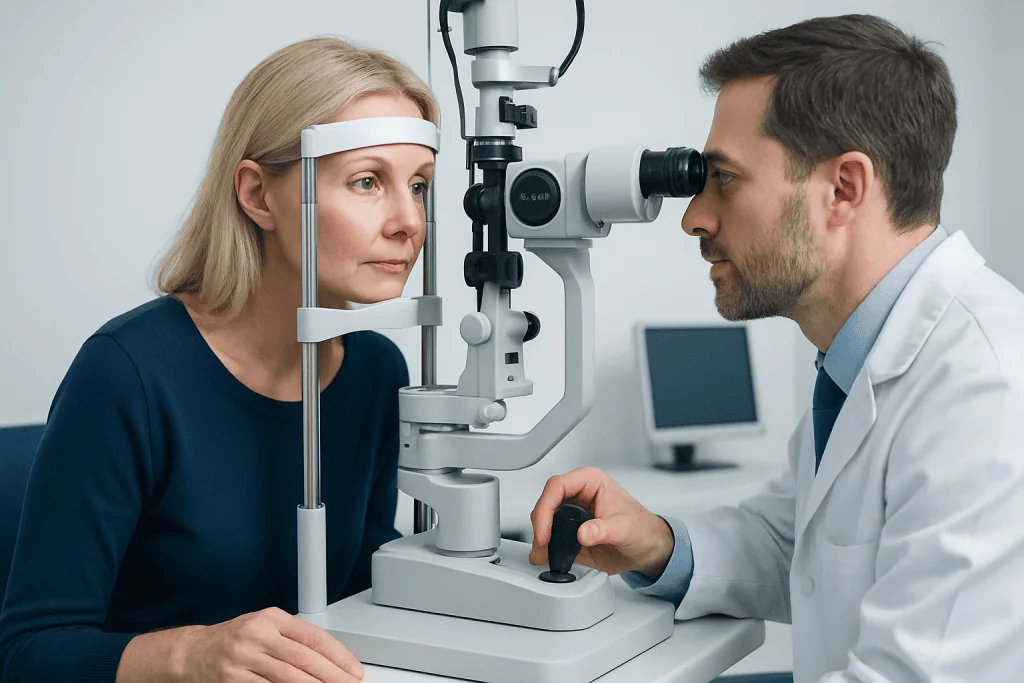
A comprehensive eye check up generally begins with a discussion of symptoms, medical conditions, medications, previous eye care, and family history. The clinician may assess visual acuity, refraction for glasses or contact lenses, eye movements, pupil responses, peripheral vision, and the health of the front and back of the eye.
Tests may include measurement of eye pressure, examination with a slit lamp microscope, and retinal assessment. Eye drops may be used to dilate the pupils so that the optic nerve and retina can be examined in more detail. Dilation can temporarily blur close vision and increase sensitivity to bright light, so patients may wish to arrange transport or bring sunglasses when advised.
Additional tests are not necessarily required at every appointment. Optical coherence tomography, visual-field testing, corneal mapping, retinal photography, or imaging may be recommended when there are symptoms, risk factors, or findings that need closer assessment. These services can affect the total eye check up cost, so it is reasonable to ask why a test is recommended and whether it is included in the quoted fee.
How Eye Check Up Costs Are Determined

The main influence on cost is the type of visit. A routine refraction, which determines the prescription for glasses or contact lenses, may be priced differently from an examination for pain, redness, reduced vision, diabetes, glaucoma risk, or an existing eye condition. In many health systems, medical eye care and routine vision care are also covered through different benefit arrangements.
The clinician and practice setting can matter as well. Optometrists commonly provide routine eye examinations, vision correction, contact lens care, and detection of many eye health concerns. Ophthalmologists are medical doctors who diagnose and treat eye disease and can perform eye surgery. A hospital-based consultation may involve different resources and charges than a retail optical setting or community clinic.
Other practical factors include the complexity of the prescription, the need for specialized testing, urgent appointments, age-related screening needs, and whether the visit includes contact lens fitting. Patients should also confirm whether a quoted price includes both the examination and a written prescription, since these may be handled separately in some settings.
- Ask whether the quote is for a routine vision check, a comprehensive exam, or a medical consultation.
- Ask if dilation, imaging, visual-field testing, or contact lens fitting could carry additional charges.
- Check whether insurance requires a referral, network provider, copayment, or preauthorization.
- Request a written estimate when ongoing tests or treatment may be needed.
How much do eye check ups cost without insurance?
Without insurance, patients generally pay the full self-pay fee for the appointment and any separately billed tests. There is no universal price because healthcare systems, local operating costs, professional fees, appointment length, and the purpose of the examination vary widely. A basic routine vision examination may cost less than a comprehensive medical assessment that includes dilation, imaging, or diagnostic testing.
The most reliable way to estimate personal cost is to contact the clinic before the visit and explain the reason for the appointment. Patients can ask for the self-pay price, what the fee includes, whether a refraction is included, and the likely cost of any tests the clinician may recommend. If symptoms suggest eye disease rather than a need for updated glasses, it is especially important to book an appropriate medical eye assessment rather than choosing solely by the lowest advertised examination fee.
People with diabetes, a family history of glaucoma, prior eye surgery, high levels of short-sightedness, or new visual symptoms may need more detailed assessment. In these circumstances, comprehensive evaluation can help identify conditions such as glaucoma or retinal changes at an earlier stage, when management options may be broader.
Is $600 a lot for glasses?
Whether $600 is a lot for glasses depends on what is included and on local pricing. The total price may combine the frame, prescription lenses, lens material, thinning for stronger prescriptions, progressive or multifocal design, protective coatings, tinting, and optional features. It may also reflect the retailer’s fitting service, adjustment policy, warranty, or replacement terms.
A pair of glasses with a simple single-vision prescription and a basic frame is usually different from glasses with customized progressive lenses or high-index lenses for a stronger prescription. For this reason, a total price alone does not show whether a pair is appropriate or good value. Patients can ask for an itemized quote that separates the frame from the lenses and identifies each optional lens feature.
It is reasonable to discuss visual priorities with the optical team. For example, people who drive frequently, work at screens, use multifocal lenses, or have a high prescription may benefit from specific lens choices, while other options may be less essential. The eye examination itself should remain focused on eye health and accurate refraction, regardless of whether glasses are purchased at the same location.
How much is a full eye exam at Walmart?
The price of a full eye exam at Walmart can vary by location because many vision centers are operated by independent optometrists. Services offered, local regulations, appointment type, insurance participation, and whether contact lens fitting or additional testing is needed can all affect the final charge. For an accurate current amount, patients should contact the specific Walmart Vision Center or the independent eye doctor practicing there.
Before booking, it is helpful to ask whether the advertised or quoted fee includes a comprehensive eye health evaluation, refraction for glasses, dilation when clinically indicated, and a prescription. People seeking contact lenses should confirm whether a separate contact lens evaluation and fitting fee applies, as a glasses prescription is not automatically a contact lens prescription.
Retail vision services can be suitable for many routine needs, but new concerning symptoms should be assessed in an appropriate medical setting. A patient with sudden visual loss, significant eye pain, injury, marked redness, or flashes and floaters should seek prompt professional advice rather than waiting for a routine appointment.
Do ophthalmologists charge more than optometrists?
Ophthalmologists may charge more than optometrists for some visits because they are physicians trained to diagnose and medically or surgically treat eye diseases, and appointments may involve more complex assessment or hospital resources. However, the actual cost depends on the reason for the visit, the tests performed, the local healthcare system, and insurance coverage. It is not always accurate to assume one professional will be more expensive for every service.
Optometrists are often an appropriate first point of care for routine eye examinations, prescription updates, and contact lens care. They can also identify many problems and refer patients to an ophthalmologist when specialist medical or surgical care is needed. Ophthalmology assessment is particularly important for suspected cataract, glaucoma, retinal disease, severe dry eye, eye trauma, or unexplained changes in vision.
If cataract surgery is being considered, the assessment and planning process may include measurements and discussions beyond a standard glasses examination. Patients can learn more about cataract surgery and ask their eye specialist which investigations and follow-up visits are clinically appropriate for their individual situation.
When to Seek Medical Care
Routine eye checks are valuable for maintaining clear vision and detecting eye disease, but certain symptoms need more urgent assessment. Patients should seek prompt medical care for sudden loss or marked reduction of vision, severe eye pain, a chemical splash or eye injury, sudden double vision, new flashing lights, a large increase in floaters, or a shadow or curtain moving across the visual field.
Urgent review is also appropriate for a red eye with pain, light sensitivity, nausea, headache, or reduced vision. These symptoms can have many causes, and timely assessment helps protect vision. People should not drive themselves if vision is impaired and should follow local emergency-care guidance when symptoms are severe or sudden.
For non-urgent concerns such as gradual blurring, eyestrain, difficulty reading, persistent dryness, or an overdue prescription review, booking a comprehensive appointment is a sensible next step. Acibadem International’s multidisciplinary specialists and JCI-accredited hospitals diagnose and treat eye conditions for international patients, with care planned according to individual clinical needs.
Frequently asked questions
What should patients ask before booking an eye examination?
Patients should ask what type of examination is being booked and what is included in the stated fee. Useful questions include whether refraction, dilation, retinal imaging, eye-pressure testing, contact lens fitting, and a written prescription are included or charged separately.
Does a routine eye exam check for eye disease?
A comprehensive eye examination can assess for signs of several eye conditions, including cataracts, glaucoma, retinal disease, and dry eye disease. The tests used depend on age, symptoms, health history, and the clinician’s findings.
Is vision insurance the same as medical insurance?
Not always. Vision plans often help with routine examinations, glasses, or contact lenses, while medical insurance may cover evaluation and treatment of eye symptoms or diagnosed disease. Coverage rules vary, so patients should confirm benefits with their insurer and provider.
Why might dilation be recommended during an eye check up?
Dilation enlarges the pupils, allowing the clinician to examine the retina and optic nerve more thoroughly. It can cause temporary light sensitivity and blurred near vision, but these effects usually wear off over several hours.
How often should adults have an eye check up?
The appropriate interval depends on age, vision needs, risk factors, and previous findings. Adults with diabetes, glaucoma risk, high prescriptions, eye disease, or new symptoms may need more frequent reviews than people without these factors.
Can an eye check up identify health problems outside the eyes?
Eye examinations can sometimes reveal changes associated with conditions such as diabetes, high blood pressure, autoimmune disease, or neurological problems. An eye finding does not confirm a systemic diagnosis, but it may prompt referral for further medical evaluation.
References
- American Academy of Ophthalmology
- American Optometric Association
- National Eye Institute
- World Health Organization
This article is for general information only and is not a substitute for professional medical advice. Please consult a qualified doctor about your individual situation.
Explore treatments in Turkey — costs, top hospitals & a free quote
JCI-accredited · board-certified surgeons · reply within 24h
Add us as a Preferred Source to see more of our trusted health content across Google Search, AI Overviews and Discover.

More from the Health Library



Related Specialists

Asst. Prof. Dr. Ezgi Yakupoğlu
Neurology
Fzt. Çağlar Dal
Physical Medicine & Rehabilitation
Dr. Anıl Doğan
Pediatrics
Assoc. Prof. Dr. Şafak Yılmaz Baran
Gynecology & Obstetrics