Eye Exercises — Explained by Medical Evidence, Not Myths

Eye exercises are evidence-based for selected binocular vision conditions, particularly convergence insufficiency. They do not cure myopia, hyperopia, astigmatism, presbyopia, cataracts, glaucoma, or retinal disease.
Key Takeaways
- Eye exercises are evidence-based for selected binocular vision conditions, particularly convergence insufficiency.
- They do not cure myopia, hyperopia, astigmatism, presbyopia, cataracts, glaucoma, or retinal disease.
- Regular visual breaks and comfortable screen habits may ease digital eye strain symptoms, although they do not strengthen eyesight.
- New double vision, eye pain, sudden vision loss, flashes, or a curtain-like shadow require prompt medical assessment.
- An ophthalmologist or optometrist can identify whether symptoms are caused by an eye coordination problem, dry eye, an uncorrected prescription, or another condition.
Eye exercises have a limited but important role in eye care: they may improve certain eye coordination disorders when prescribed by an eye professional. They do not remove the need for glasses, reverse common eye diseases, or permanently correct refractive errors such as nearsightedness.
Eye Exercises: What They Can and Cannot Do
Eye exercises can be useful when they are prescribed for a specific problem with how the eyes work together. The clearest evidence supports structured vision therapy or orthoptic exercises for convergence insufficiency, a condition in which the eyes have difficulty turning inward together for close work. For many other claims, including promises to eliminate glasses or permanently improve eyesight, medical evidence is lacking.
The term “eye exercises” is used broadly. It may describe simple habits such as looking away from a screen, guided focusing activities, or a supervised treatment program for an eye movement disorder. These approaches are not interchangeable. The right approach depends on the cause of symptoms, which may include an outdated glasses prescription, dry eye, migraine, eye muscle imbalance, or an eye disease needing medical treatment.
Healthy eye muscles do not usually need strengthening in the same way as body muscles. Eye movement is controlled by a highly coordinated system involving the eyes, muscles, nerves, and brain. Repetitive exercises cannot reshape the eyeball or correct the optical focusing changes that cause most common refractive errors.
Understanding the Difference Between Eye Comfort and Vision Correction
Many people notice tired, dry, or uncomfortable eyes after reading or using digital devices. These symptoms are often called digital eye strain. They can be related to reduced blinking, glare, prolonged close focus, poor posture, dry air, fatigue, or a glasses prescription that is no longer suitable. Taking regular breaks may improve comfort, but it does not change the underlying sharpness of a person’s vision.
Nearsightedness, farsightedness, and astigmatism occur when the eye’s shape and focusing system do not bring light precisely onto the retina. Presbyopia, the age-related difficulty with near focus, develops as the natural lens becomes less flexible. Eye exercises cannot reverse these physical and optical changes. Glasses, contact lenses, and, for suitable individuals, refractive procedures are the evidence-based ways to correct refractive error.
Similarly, exercises do not treat cataracts, glaucoma, diabetic eye disease, macular degeneration, or retinal detachment. These conditions may develop with few early symptoms, so routine eye examinations remain important. A person should not delay an examination or proven treatment while trying online exercise programs.
Conditions That May Benefit From Prescribed Exercises

Convergence insufficiency is the best-known condition for which exercises may be recommended. When looking at something nearby, both eyes normally move inward and maintain alignment. In convergence insufficiency, this response is reduced. Symptoms can include eyestrain, headaches during reading, blurred or double vision at close range, difficulty concentrating on text, or losing one’s place while reading.
For children and adults with confirmed convergence insufficiency, a clinician may recommend office-based vision therapy with home practice, or a structured home program. Treatment is tailored to the individual and monitored over time. It is important to distinguish this from general online “eye workouts”: effective therapy uses defined techniques, appropriate progression, and reassessment of symptoms and eye alignment.
Exercises may also be part of rehabilitation for selected eye movement or focusing difficulties, including problems that occur after certain neurological illnesses or injuries. In these situations, care may involve an ophthalmologist, orthoptist, optometrist, neurologist, or rehabilitation specialist. The treatment plan should be based on a complete assessment because double vision and focusing problems can have many causes.
Children with visual development concerns require individualized assessment. For example, amblyopia, sometimes called lazy eye, is not simply an eye muscle problem. Its treatment may involve glasses, patching, atropine drops, and carefully selected visual activities, depending on the child’s age and diagnosis.
Common Eye Exercise Claims and the Evidence
Palming, eye rolling, tracing shapes with the eyes, shifting focus between near and distant objects, and similar exercises are widely shared online. Some people find that pausing, relaxing, or changing focus feels temporarily refreshing. However, there is no reliable evidence that these activities cure refractive errors, stop myopia progression, remove a need for glasses, or reverse presbyopia.
The Bates method and related programs have historically claimed that relaxation exercises can restore natural vision and eliminate glasses. These claims are not supported by high-quality medical evidence. A person may feel more comfortable after resting their eyes, but comfort should not be interpreted as a permanent change in eye structure or visual acuity.
For screen-related symptoms, the most practical intervention is often a visual break rather than a complex exercise. The commonly used 20-20-20 approach means looking at something about 20 feet away for 20 seconds every 20 minutes. It can remind a person to relax near focus and blink, although the exact schedule can be adapted to work demands and personal comfort.
Exercises should stop if they cause persistent dizziness, nausea, headache, pain, or worsening double vision. These symptoms do not mean the eyes are becoming stronger; they may indicate that the activity is unsuitable or that a condition needs evaluation.
Practical Habits for Screen Comfort and Eye Health
For many people, improving the visual environment is more helpful than performing eye exercises. Keeping screens at a comfortable distance, reducing glare, enlarging text, and using adequate room lighting can reduce the effort involved in close work. A screen should generally be positioned slightly below eye level so that the eyelids cover more of the eye surface and may help reduce evaporation of tears.
Frequent blinking is important because people tend to blink less completely when concentrating on a screen. If the eyes feel dry, a clinician may suggest preservative-free lubricating drops or evaluate for dry eye disease. Redness, burning, gritty sensation, and fluctuating vision are not always caused by screen use alone.
Regular time outdoors is associated with a lower risk of myopia development and progression in children. This is different from eye exercises. Families should discuss age-appropriate outdoor activity, reading habits, and myopia monitoring with an eye care professional, especially when a child’s prescription is changing quickly.
- Take regular visual breaks during prolonged close work.
- Blink fully and use a comfortable, well-lit workspace.
- Wear prescribed glasses or contact lenses as advised.
- Arrange regular eye examinations based on age, symptoms, and medical history.
- Avoid staring directly at the sun or using unproven devices marketed to “train” vision.
How Eye Problems Are Evaluated
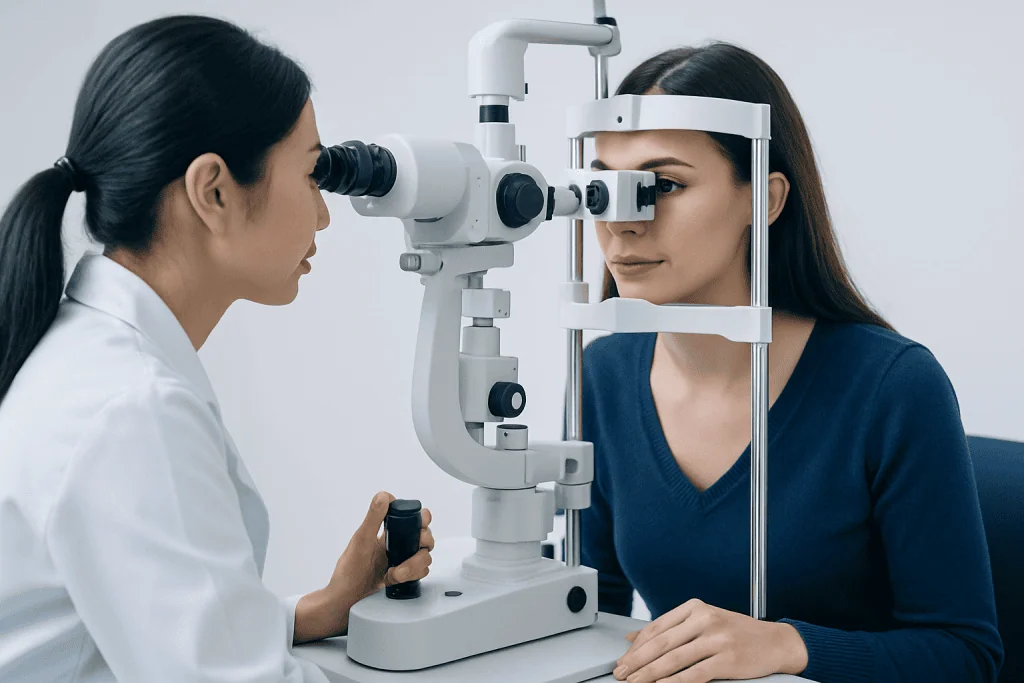
An eye examination helps determine whether exercises are likely to help. Assessment may include measurement of visual acuity, refraction to check for glasses needs, examination of the front and back of the eye, and tests of eye movements, focusing, and binocular alignment. The clinician will also ask when symptoms occur, whether they affect near or distance vision, and whether there are headaches, dizziness, or double vision.
Symptoms that seem like an eye coordination problem can have other explanations. Dry eye, allergies, medication effects, migraine, sleep deprivation, anxiety, neurological conditions, and uncorrected refractive error can all contribute to visual discomfort. Identifying the cause matters because the appropriate treatment may be different for each one.
If a binocular vision disorder is found, the clinician may discuss supervised therapy, home exercises, prism lenses, glasses changes, or treatment of an associated condition. Follow-up is useful to confirm that symptoms and objective eye alignment are improving. A commercially advertised program should not replace this assessment.
Acibadem International’s multidisciplinary specialists and JCI-accredited hospitals can evaluate eye symptoms and coordinate care for international patients when a detailed eye or neurological assessment is needed.
When to Seek Medical Care
A routine eye appointment is appropriate for persistent eyestrain, headaches with reading, difficulty concentrating at close range, recurring blurred vision, or concern that glasses are no longer working well. Children who avoid reading, hold material unusually close, frequently lose their place, or complain of headaches should also have an eye assessment rather than starting exercises without guidance.
Prompt medical attention is needed for sudden vision loss, a new curtain or shadow in the visual field, new flashes of light, a sudden increase in floaters, severe eye pain, marked redness with reduced vision, or a chemical injury to the eye. These symptoms can indicate conditions that require urgent treatment.
New or persistent double vision should be assessed promptly, particularly if it begins suddenly or occurs with weakness, facial drooping, severe headache, difficulty speaking, imbalance, or numbness. A person should seek emergency care for these neurological warning signs. It is safer to have new symptoms evaluated than to assume they are caused by fatigue or screen use.
Frequently asked questions
Can eye exercises improve eyesight naturally?
Eye exercises do not correct common refractive errors such as nearsightedness, farsightedness, astigmatism, or presbyopia. They may help selected eye coordination disorders when they are prescribed and monitored by an eye care professional.
Can eye exercises remove the need for glasses?
No reliable evidence shows that eye exercises can permanently remove the need for glasses or contact lenses in people with refractive errors. Glasses and contact lenses correct how light focuses in the eye; exercises do not change the eye’s shape or lens flexibility.
Do eye exercises help with digital eye strain?
Visual breaks, looking into the distance, and conscious blinking may reduce discomfort linked to prolonged screen use. These habits support eye comfort, but they do not improve a glasses prescription or cure dry eye disease.
What is convergence insufficiency?
Convergence insufficiency is a problem with maintaining inward eye alignment during close work such as reading. It may cause headaches, eyestrain, blurred or double vision, and difficulty keeping place on a page. Structured vision therapy can be helpful after a proper diagnosis.
Are online eye exercise programs safe?
Simple rest breaks are generally safe for most people, but online programs should not be used as a substitute for an eye examination. A program that promises to cure myopia, eliminate glasses, or treat glaucoma or cataracts is not supported by medical evidence.
Should a child do eye exercises for reading difficulties?
A child with reading difficulties should first have a comprehensive eye assessment and, when appropriate, educational evaluation. Some children have convergence or focusing problems that may benefit from targeted treatment, but eye exercises do not treat all learning or reading disorders.
This article is for general information only and is not a substitute for professional medical advice. Please consult a qualified doctor about your individual situation.
Explore treatments in Turkey — costs, top hospitals & a free quote
JCI-accredited · board-certified surgeons · reply within 24h
Add us as a Preferred Source to see more of our trusted health content across Google Search, AI Overviews and Discover.

More from the Health Library

Stringy Poop: What Patients Need to Know

Broken Hip: An Evidence-Based Guide for Patients

Baby Teeth Chart: An Evidence-Based Guide for Patients

Fever: An Evidence-Based Guide for Patients

Eyebrow Is Thinning: What Patients Need to Know