Eye Inside Red — Explained by Medical Evidence, Not Myths

Eye inside red is a symptom, not a diagnosis, and it can have several causes. Common reasons include dryness, allergies, conjunctivitis, and minor irritation.
Key Takeaways
- Eye inside red is a symptom, not a diagnosis, and it can have several causes.
- Common reasons include dryness, allergies, conjunctivitis, and minor irritation.
- Severe pain, blurred vision, sensitivity to light, or one-sided redness require prompt medical evaluation.
- Contact lens use can increase the risk of serious eye surface infection.
- Treatment depends on the underlying cause, so self-medicating with leftover eye drops is not recommended.
Eye inside red most often refers to redness in the white part of the eye or the inner eyelid caused by irritation, dryness, allergy, or infection. In many cases it improves with simple care, but pain, discharge, light sensitivity, or changes in vision can point to a condition that needs medical attention.
What does eye inside red mean?
When people say eye inside red, they usually mean that the white part of the eye looks pink or red, or that the inner lining of the eyelid appears inflamed. This happens when tiny blood vessels on the eye’s surface become enlarged because of irritation, dryness, allergy, infection, or inflammation. In many cases the cause is mild, but the symptom should be interpreted together with other signs such as pain, discharge, itching, or blurred vision.
Redness can involve one eye or both. It may appear suddenly after dust exposure, poor sleep, prolonged screen use, or crying, or it can develop gradually from allergies or infection. The location of the redness also matters: diffuse surface redness often suggests conjunctival irritation, while a sharply defined bright red patch can be a small bleed under the conjunctiva.
Although many people call all redness “pink eye,” the term is not specific. Redness can also be linked to dry eye, a scratched cornea, eyelid inflammation, or deeper inflammation inside the eye. That is why medical evaluation becomes important when redness does not improve, keeps returning, or appears together with more serious symptoms.
Common symptoms that may occur with red eyes
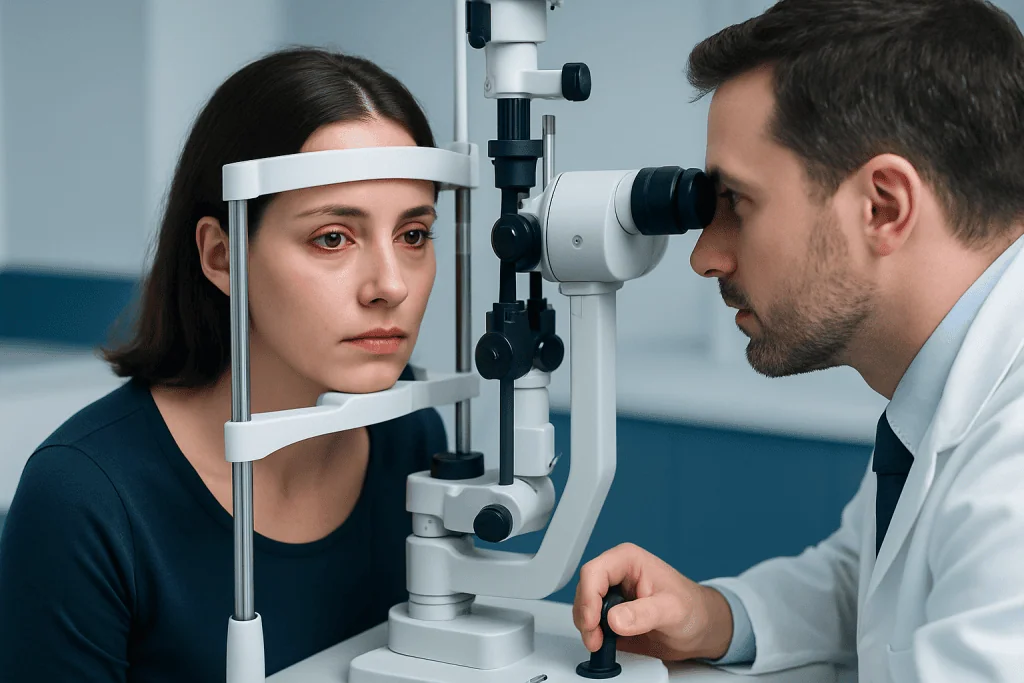
The symptom pattern helps doctors narrow the cause of a red eye. Some people notice only mild redness and a gritty or tired feeling. Others may have itching, burning, watering, or a sensation that something is stuck in the eye. These symptoms are common with dryness, allergy, and mild surface irritation.
Discharge is another important clue. Watery discharge is more common with viral irritation or allergies, while thicker yellow or green discharge may suggest bacterial infection. Crusting on waking can occur with eyelid inflammation or conjunctivitis. In contact lens wearers, discharge with pain or light sensitivity deserves quicker assessment.
Certain symptoms are more concerning and should not be ignored. These include:
- Moderate to severe eye pain
- Blurred vision or sudden vision changes
- Sensitivity to light
- Redness mainly in one eye with significant discomfort
- A visible injury or chemical exposure
- New headache, nausea, or halos around lights
These features may signal a more serious eye problem rather than simple irritation. They are reasons to seek medical advice rather than relying only on home remedies.
Possible causes and risk factors

The most common causes of eye redness are irritation, dryness, allergy, and infection. Dry indoor air, prolonged screen time, smoke, dust, and swimming pool chemicals can all irritate the eye surface. Allergies often cause redness in both eyes along with itching and tearing. Viral or bacterial conjunctivitis can also make the eyes red, watery, and uncomfortable; readers can learn more about conjunctivitis when redness is paired with discharge or contagious symptoms.
Dry eye is another frequent reason the eye looks red from the inside. Tears are needed to protect and lubricate the cornea and conjunctiva. When tears evaporate too quickly or are not produced in adequate quality, the surface becomes inflamed. This may be more likely in older adults, people using screens for long hours, and those taking certain medications. Persistent irritation may be related to dry eye rather than infection.
Other causes include a subconjunctival hemorrhage, which is a small broken blood vessel on the white of the eye. It often looks dramatic but is usually painless and harmless, especially if vision is normal. Eyelid inflammation, called blepharitis, can also contribute to red, irritated eyes with crusting around the lashes.
Less common but more urgent causes include corneal abrasion, corneal infection, inflammation inside the eye, and glaucoma-related pressure problems. Risk factors for serious causes include contact lens wear, recent eye surgery, eye trauma, immune system problems, and use of steroid eye drops without medical supervision.
How doctors diagnose the cause
Diagnosis starts with a careful history. A doctor will ask when the redness began, whether one or both eyes are affected, and whether symptoms include pain, itching, discharge, blurred vision, or light sensitivity. They may also ask about contact lens use, recent colds, allergies, injuries, chemical exposure, and any previous eye conditions.
The eye examination usually includes checking vision, looking at the eyelids and conjunctiva, and assessing the cornea and pupil. Special light and magnification can reveal scratches, inflammation, or signs of infection. In some cases, eye pressure may be measured, especially if the person has pain, headache, or halos around lights.
Testing is not always extensive for mild cases, but prompt examination is important when symptoms suggest a deeper eye problem. Contact lens wearers deserve special caution because surface infections can progress more quickly. If the redness is persistent or recurrent, an ophthalmologist may assess tear quality, eyelid health, and other less obvious triggers.
Treatment options based on the cause
Because red eyes have different causes, treatment should match the diagnosis. Mild irritation and dryness may improve with preservative-free artificial tears, rest from screens, and avoiding smoke or harsh environments. If the problem is driven by chronic dryness, an eye specialist may recommend a structured approach to dry eye treatment to improve tear film quality and reduce inflammation.
Allergy-related redness is typically managed by limiting exposure to triggers and using doctor-recommended allergy eye drops or oral allergy treatment when appropriate. Viral conjunctivitis often improves with supportive care such as cool compresses and hygiene measures, while bacterial infection may require prescribed antibiotic drops. It is important not to share towels, cosmetics, or contact lens supplies during infectious episodes.
If the eye is red because of eyelid inflammation, daily lid hygiene and warm compresses can help. A scratched cornea or a contact lens-related problem may require urgent evaluation and medical treatment to protect vision. Deeper inflammation inside the eye should be treated by an eye specialist and may require prescription anti-inflammatory therapy.
People should avoid using leftover drops from a previous illness, especially steroid drops, unless they are specifically prescribed after an examination. Wrong treatment can worsen infection, delay healing, or mask a more serious condition. When a surgical eye condition or another advanced cause is identified, specialized ophthalmology care may be needed.
Self-care, prevention, and habits that protect the eyes
Simple daily habits can reduce episodes of eye redness. Taking regular breaks from screens, blinking more often, and maintaining good room humidity can support the eye surface. People who spend long hours reading or working on computers often develop dryness because they blink less. Artificial tears may help if a doctor has confirmed dryness as the main issue.
Hygiene also matters. Hands should be washed before touching the eyes or handling contact lenses. Contact lenses should be cleaned and replaced exactly as instructed, and they should never be worn longer than recommended. Sleeping in lenses when they are not approved for overnight use can significantly increase the risk of infection.
For allergy-prone individuals, avoiding triggers where possible and keeping windows closed during high-pollen periods may reduce redness and itching. Eye makeup should be replaced regularly and removed before sleep. Protective eyewear is a good idea during sports, home repairs, or work that involves dust, debris, or chemicals.
Prevention is especially important if redness keeps returning. Recurrent episodes can suggest untreated allergies, eyelid disease, or chronic dryness. Addressing the root cause is often more effective than repeatedly treating redness alone.
When to seek medical care
Medical care is recommended if eye redness lasts more than a few days, keeps coming back, or does not improve with simple measures. Professional evaluation is also appropriate if there is discharge, swelling, or a feeling that the eye cannot be opened comfortably. People with chronic eye disease, weakened immunity, or recent eye surgery should contact a doctor sooner.
Urgent care is important for pain, vision loss, increasing light sensitivity, severe headache, nausea, or redness after injury or chemical exposure. The same applies to contact lens wearers who develop redness with pain or blurred vision, because corneal infection must be ruled out quickly. If a person is unsure whether symptoms are minor or urgent, it is safest to ask a qualified clinician.
Near the end of the care pathway, some patients may benefit from specialist assessment in a center that offers coordinated eye services. Acibadem International’s multidisciplinary specialists and JCI-accredited hospitals evaluate and treat eye conditions for international patients when further assessment is needed.
Frequently asked questions
Is eye inside red usually serious?
Not always. Many cases are caused by dryness, mild irritation, or allergies and improve with simple care. However, redness with pain, vision changes, or light sensitivity can indicate a more serious problem and should be checked promptly.
What is the most common cause of a red eye?
Common causes include dry eye, allergies, and conjunctivitis. Irritation from smoke, dust, chlorine, lack of sleep, or long screen time can also make the eye look red. The most likely cause depends on associated symptoms such as itching, discharge, or pain.
Can a red eye go away on its own?
Yes, mild redness from tiredness, dryness, or minor irritation may settle on its own. Supportive measures such as resting the eyes and avoiding irritants can help. If redness persists, worsens, or comes with other symptoms, medical advice is recommended.
Should contact lenses be worn if the eye is red?
No, it is generally best to stop wearing contact lenses until the eye has been assessed and the redness has resolved. Redness in a lens wearer can sometimes be related to corneal irritation or infection. Continuing to wear lenses may worsen the problem.
Are over-the-counter redness-relief drops always safe?
Not necessarily. Some drops temporarily shrink blood vessels but do not treat the underlying cause, and frequent use can sometimes lead to rebound redness. It is safer to use products recommended by a doctor, especially if symptoms are recurring.
How can someone tell if red eye is from allergy or infection?
Allergies often affect both eyes and usually cause itching, watering, and puffiness. Infection may cause more discharge, crusting, and sometimes starts in one eye before spreading. Because symptoms can overlap, persistent or uncomfortable redness should be evaluated by a clinician.
References
- American Academy of Ophthalmology
- National Eye Institute
- American Optometric Association
- Centers for Disease Control and Prevention
- Mayo Clinic
This article is for general information only and is not a substitute for professional medical advice. Please consult a qualified doctor about your individual situation.
Explore treatments in Turkey — costs, top hospitals & a free quote
JCI-accredited · board-certified surgeons · reply within 24h
Add us as a Preferred Source to see more of our trusted health content across Google Search, AI Overviews and Discover.

More from the Health Library



Related Specialists

Dr. Fatma Kutlusoy Güçlü
Gynecology & Obstetrics
Dr. Erdem Toku
Emergency Service
Dr. Göksel Seçkin
General Surgery
Dr. Mesut Fatih
Orthopedic Surgery & Traumatology