

Fat Transfer: Facial and Body Volume Restoration with Your Own Fat

Fat transfer removes fat from one area of the body and injects purified fat into another area where volume or contour improvement is desired. Common treatment areas include the face, breasts, buttocks, hands, and selected body contour irregularities.
Key Takeaways
- Fat transfer removes fat from one area of the body and injects purified fat into another area where volume or contour improvement is desired.
- Common treatment areas include the face, breasts, buttocks, hands, and selected body contour irregularities.
- Some transferred fat is naturally absorbed by the body, so final results may take several months to become clear.
- Good candidates are generally healthy, have enough donor fat, and have realistic expectations about results and recovery.
- As with any procedure, fat transfer has risks, including swelling, bruising, infection, asymmetry, and the possibility of needing additional treatment.
Fat transfer, also called fat grafting or autologous fat transfer, uses a person’s own fat to restore volume, improve contours, and soften signs of aging. It is a surgical procedure that requires careful planning, realistic expectations, and treatment by a qualified plastic surgeon.
Overview
Fat transfer is a plastic surgery technique that uses fat from a person’s own body to restore or enhance volume in another area. It is also known as fat grafting, autologous fat transfer, or lipofilling. The procedure typically involves gentle liposuction from a donor area, processing or purifying the fat, and then carefully injecting small amounts into the target area.
Because the material comes from the patient’s own body, fat transfer is different from synthetic fillers or implants. It may be used to soften facial hollows, improve facial balance, restore volume lost with aging, refine body contours, or add fullness to selected areas. The result is intended to look and feel natural, although outcomes vary from person to person.
Fat transfer is a surgical procedure, even when performed through small incisions and injections. It should be planned with a qualified plastic surgeon who can assess anatomy, skin quality, donor fat availability, medical history, and expectations. A detailed consultation helps determine whether fat transfer is the most appropriate option or whether another treatment may be better suited.
How Fat Transfer Works
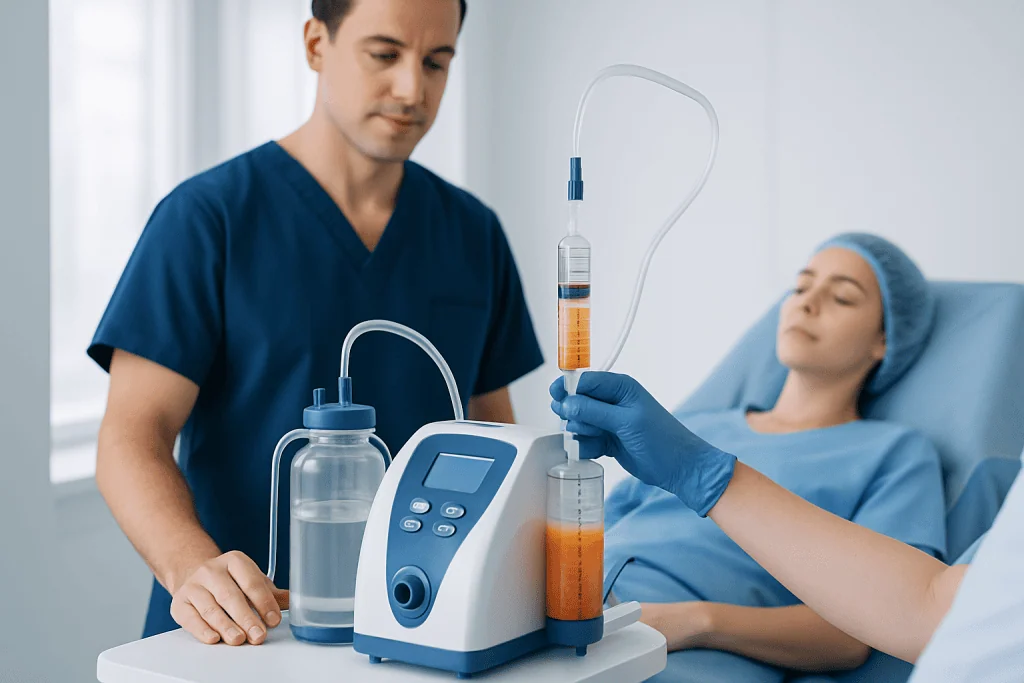
Fat transfer is usually performed in three main stages: harvesting, processing, and placement. During harvesting, fat is removed from a donor area such as the abdomen, flanks, thighs, or hips using liposuction. The surgeon aims to collect viable fat cells while minimizing trauma to the tissue.
After removal, the fat is prepared for injection. This may involve filtering, washing, or separating the fat from excess fluid, oil, and blood. The goal is to keep healthy fat cells that have the best chance of establishing a blood supply after transfer.
The prepared fat is then injected into the treatment area in small, layered amounts. This careful placement is important because transplanted fat cells need contact with surrounding tissue to survive. Over time, some of the transferred fat is reabsorbed by the body, while a portion may remain long term. For this reason, final results are not immediate and may continue to settle over several months.
Common Treatment Areas
Fat transfer can be used for both facial rejuvenation and body contouring. In the face, it is often chosen to address volume loss associated with aging, weight changes, or individual anatomy. Common facial areas include the cheeks, temples, under-eye hollows, jawline, chin, lips, and nasolabial folds. In suitable patients, it can provide a softer, more refreshed appearance without changing a person’s natural facial identity.
In the body, fat transfer may be used to enhance shape or correct contour irregularities. It may be considered for breast volume refinement, buttock enhancement, hand rejuvenation, or improvement of small depressions following injury, surgery, or previous liposuction. The amount of volume that can be safely transferred depends on the treatment area, tissue capacity, and available donor fat.
Fat transfer is not the same as general weight-loss treatment. The liposuction component can shape donor areas, but the main purpose is to move fat to another region for volume restoration or contour improvement. Patients who are seeking major weight reduction are usually advised to achieve a stable, healthy weight before considering aesthetic surgery.
Who May Be a Good Candidate
A good candidate for fat transfer is usually someone in overall good health who has enough donor fat for the desired treatment. The person should have realistic expectations, understand that some fat absorption is normal, and be prepared for a recovery period. Stable body weight is also important because significant weight gain or loss after the procedure can affect the appearance of both donor and treated areas.
Fat transfer may be suitable for people who prefer using their own tissue rather than synthetic fillers or implants. It may also be considered when a longer-lasting volume improvement is desired, although the degree of fat survival cannot be guaranteed. Skin elasticity, tissue quality, circulation, and smoking status can influence healing and results.
Some people may not be ideal candidates or may need additional medical evaluation before surgery. These include individuals with uncontrolled chronic disease, active infection, significant bleeding disorders, unrealistic expectations, or conditions that increase surgical risk. Smoking and nicotine use can reduce blood flow and may interfere with fat survival and wound healing, so surgeons often recommend stopping nicotine before and after surgery.
Consultation, Planning, and Diagnosis of Suitability
Before fat transfer, the surgeon performs a detailed consultation to decide whether the procedure is appropriate. This usually includes a review of medical history, previous surgeries, medications, allergies, smoking or nicotine use, and aesthetic goals. The surgeon also examines donor areas and the area to be treated, assessing fat availability, tissue quality, asymmetry, scars, and skin laxity.
Photographs may be taken for planning and comparison. In some cases, additional tests may be requested before surgery, especially for patients with medical conditions or those undergoing a larger procedure. The exact preparation depends on the patient’s health, the treatment area, anesthesia plan, and whether fat transfer is being combined with another operation.
A clear treatment plan should explain the expected benefits, limitations, recovery, and risks. Patients should ask how much improvement is realistic, whether more than one session might be needed, and what alternatives are available. For example, facial fillers, implants, skin tightening, facelift surgery, or non-surgical treatments may be discussed depending on the concern.
Treatment, Recovery, and Results
Fat transfer may be performed under local anesthesia with sedation or under general anesthesia, depending on the size and location of the procedure. Smaller facial fat transfer may require a shorter procedure, while larger body contouring treatments may take longer. The surgeon makes small access points for liposuction and uses fine cannulas or needles to place the processed fat into the target area.
After the procedure, swelling, bruising, tenderness, and temporary firmness are common. These effects usually improve gradually, although swelling in some areas may take weeks to settle. Patients may be asked to wear compression garments on donor areas, avoid pressure on treated areas, sleep in a recommended position, and limit strenuous activity for a period of time.
Results develop in stages. At first, treated areas may appear fuller because of swelling and the volume of newly transferred fat. As swelling decreases and some fat is naturally absorbed, the appearance becomes more stable. Final results are often assessed after several months, once healing has progressed and surviving fat has integrated into the tissue.
Recovery instructions should be followed carefully. General aftercare may include keeping incision sites clean, taking prescribed medicines as directed, attending follow-up visits, and avoiding smoking or nicotine. Patients should not massage or apply pressure to treated areas unless specifically instructed by their surgeon.
Benefits, Limitations, and Possible Risks
One of the main benefits of fat transfer is that it uses the patient’s own tissue. This can provide a natural feel and may improve contour in both the donor area and the treated area. In selected cases, fat transfer can be combined with other procedures, such as facelift surgery, eyelid surgery, breast procedures, or body contouring, to achieve a more balanced result.
However, fat transfer also has limitations. Not all transferred fat survives, and the amount of long-term volume retention varies. Some patients may need a second session to reach their desired result. It may not be suitable for people who are very lean, need a large predictable volume increase, or have significant skin laxity that would be better treated with lifting or tightening procedures.
Possible risks include bruising, swelling, bleeding, infection, delayed healing, contour irregularity, asymmetry, fat necrosis, cysts, calcifications, overcorrection, undercorrection, and changes in skin sensation. Rare but serious complications can occur, particularly if fat is injected into unsafe tissue planes or blood vessels. For this reason, choosing a trained surgeon with appropriate anatomical knowledge and surgical experience is essential.
Patients should contact their surgical team promptly if they develop increasing pain, worsening redness, fever, unusual drainage, sudden swelling, shortness of breath, chest pain, or any symptom that feels concerning. For international patients considering treatment abroad, Acibadem International’s multidisciplinary specialists and JCI-accredited hospitals can provide evaluation and treatment planning for fat transfer and related aesthetic procedures.
Prevention, Self-Care, and When to See a Doctor
Good self-care can support healing and help maintain results. Patients are generally advised to keep a stable weight, follow a nutritious diet, stay hydrated, avoid nicotine, and follow all post-operative instructions. Protecting the skin from excessive sun exposure is especially important after facial procedures, as healthy skin quality contributes to the overall result.
Before choosing fat transfer, a person should see a qualified plastic surgeon for an individualized assessment. A consultation is also important if there is facial volume loss, body contour irregularity, asymmetry, or a previous cosmetic result that the patient would like to improve. The surgeon can explain whether fat transfer, another procedure, or a combined approach is most appropriate.
Medical advice should be sought without delay if symptoms after surgery are more than expected or worsening rather than improving. While mild swelling and bruising are common, severe pain, fever, increasing redness, foul-smelling drainage, sudden shortness of breath, or one-sided leg swelling require urgent medical evaluation. Early communication with the care team helps manage concerns safely and effectively.
Frequently asked questions
Is fat transfer permanent?
Some of the transferred fat may survive long term, while some is naturally absorbed by the body during healing. The final retained volume varies between patients and treatment areas. Results are usually assessed after several months, and some people may need more than one session.
How is fat transfer different from dermal fillers?
Fat transfer uses the patient’s own fat, while dermal fillers are injectable products made from materials such as hyaluronic acid or other substances. Fillers are usually quicker and non-surgical, but they are temporary and may need repeat treatments. Fat transfer is a surgical procedure with a longer recovery, but it may provide longer-lasting volume in suitable patients.
Does fat transfer leave scars?
The procedure usually uses small access points for liposuction and injection, so scars are often small and placed as discreetly as possible. Scar appearance varies depending on skin type, healing, incision care, and the area treated. Patients should follow wound-care instructions and discuss scar concerns with their surgeon.
Can fat transfer be used for the face and body in the same procedure?
In some cases, yes. A surgeon may combine facial fat transfer with body contouring or other procedures if it is safe and appropriate for the patient. The decision depends on overall health, procedure length, anesthesia considerations, donor fat availability, and recovery planning.
How much downtime is needed after fat transfer?
Downtime depends on the size of the procedure and the areas treated. Mild facial procedures may require less recovery than larger body fat transfer operations. Swelling and bruising are common, and patients should ask their surgeon when it is safe to return to work, exercise, travel, and normal daily activities.
Can someone lose the transferred fat after surgery?
Yes, weight changes can affect both donor and treated areas. If a person loses significant weight after fat transfer, the transferred fat cells may shrink like fat cells elsewhere in the body. Maintaining a stable, healthy weight helps preserve the overall contour achieved by the procedure.
Is fat transfer safe?
Fat transfer is generally considered safe when performed for appropriate candidates by a qualified and experienced surgeon. However, it is still a surgical procedure and carries risks such as infection, bleeding, asymmetry, and fat absorption. A careful consultation and proper surgical technique are important for reducing risks.
References
- American Society of Plastic Surgeons
- International Society of Aesthetic Plastic Surgery
- American Society for Aesthetic Plastic Surgery
- U.S. Food and Drug Administration
- National Health Service
This article is for general information only and is not a substitute for professional medical advice. Please consult a qualified doctor about your individual situation.
Fat Transfer in Turkey — costs, top hospitals & a free quote
JCI-accredited · board-certified surgeons · reply within 24h
Add us as a Preferred Source to see more of our trusted health content across Google Search, AI Overviews and Discover.

Related Treatments
Related Conditions
More from the Health Library



Related Specialists

Prof. Dr. Şükrü Yazar
Aesthetic Plastic & Reconstructive Surgery
Assoc. Prof. Dr. Erdem Güven (m)
Aesthetic Plastic & Reconstructive Surgery
Prof. Dr. Hakan Ağır
Aesthetic Plastic & Reconstructive Surgery
Prof. Dr. Bülent Saçak
Aesthetic Plastic & Reconstructive Surgery