Gastric Lavage: What Patients Need to Know

Gastric lavage is not a routine treatment and is only used in carefully selected situations. It may be considered soon after swallowing a potentially dangerous substance, but timing and the type of substance matter.
Key Takeaways
- Gastric lavage is not a routine treatment and is only used in carefully selected situations.
- It may be considered soon after swallowing a potentially dangerous substance, but timing and the type of substance matter.
- Doctors must first protect the airway and assess breathing, circulation, and the risk of aspiration.
- Activated charcoal, antidotes, supportive care, and monitoring are often preferred over lavage.
- Anyone with a suspected poisoning or overdose should seek urgent medical advice rather than trying home remedies.
Gastric lavage, sometimes called stomach pumping, is a procedure used to remove material from the stomach in selected emergencies. It is now used far less often than many people assume, because doctors weigh its possible benefit against important risks and often choose safer alternatives.
Overview: what gastric lavage is and when it is used
Gastric lavage is a medical procedure in which a tube is passed through the mouth or nose into the stomach so that stomach contents can be removed by repeated flushing and suction. In everyday language, it is sometimes called “stomach pumping.” Although the term is widely known, the procedure is not a standard response to every poisoning, overdose, or stomach problem.
Modern emergency care uses gastric lavage only in specific situations, usually when a person has swallowed a potentially life-threatening substance very recently and when the healthcare team believes the expected benefit may outweigh the risks. In many cases, other treatments work as well or better and carry fewer complications. This is why a person may come to the hospital after an overdose and not receive lavage.
Gastric lavage is performed in a monitored medical setting, not at home. Before it is considered, doctors assess the person’s airway, breathing, circulation, level of consciousness, and the substance involved. If needed, they may focus first on stabilization, imaging, blood tests, or endoscopic evaluation if another digestive problem is suspected rather than poisoning.
How the procedure is performed
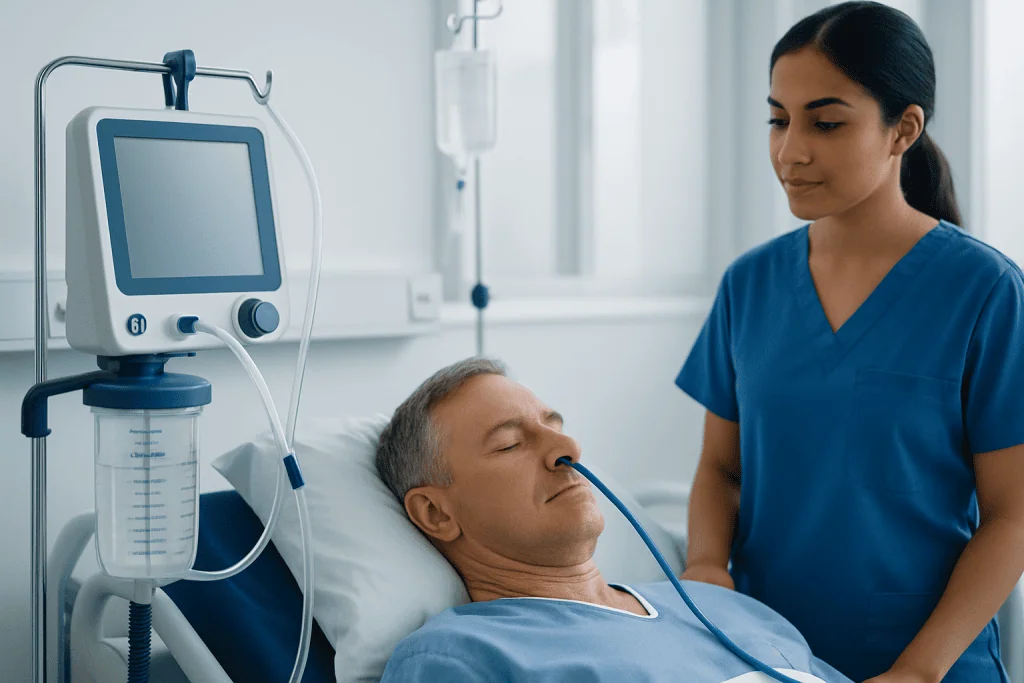
If gastric lavage is judged appropriate, the patient is placed in a position that helps reduce the chance of stomach contents entering the lungs. A healthcare professional inserts a tube into the stomach, confirms its placement, and then introduces small amounts of fluid, which are removed along with stomach contents. This may be repeated several times.
Throughout the procedure, the team monitors oxygen levels, heart rate, blood pressure, and the patient’s overall condition. If the person is very drowsy, confused, seizing, or unable to protect the airway, the airway may need to be secured before lavage. This step is important because one of the main concerns is aspiration, meaning fluid or stomach contents entering the lungs.
The goal is not to “clean out” the entire digestive tract. Gastric lavage only targets material still in the stomach, so it becomes less useful as time passes and the swallowed substance moves onward through the intestines. In some poisoning cases, doctors may instead use activated charcoal, antidotes, or observation with supportive care.
When doctors may consider gastric lavage

Gastric lavage may be considered after a recent ingestion of a potentially severe toxin or overdose, especially if a dangerous amount may still be present in the stomach. The exact decision depends on factors such as how long ago the substance was swallowed, whether it slows stomach emptying, and whether there is a safer or more effective treatment available.
It is not commonly used for mild poisonings or situations in which the substance is unlikely to cause serious harm. It is also generally not used simply because someone feels nauseated, vomited once, or has routine indigestion. Stomach symptoms can have many causes, including gastritis or gastroenteritis, and these conditions are evaluated and treated differently.
Situations in which lavage may be avoided include swallowing corrosive substances, hydrocarbons such as some fuels or solvents, or objects that could increase the risk of injury during tube placement. Doctors also take extra care in people with a high aspiration risk, altered mental status, seizures, or known problems affecting the esophagus or stomach.
- Possible reason to consider lavage: very recent ingestion of a potentially life-threatening substance
- Common reasons not to use it: low expected benefit, high aspiration risk, corrosive ingestion, or safer alternatives available
- Key point: the decision is individualized and made by emergency or toxicology specialists
Risks, side effects, and limitations
Like any invasive procedure, gastric lavage carries risks. The main concern is aspiration, which can lead to breathing problems or pneumonia if stomach contents enter the lungs. Other possible complications include throat irritation, nosebleed when a nasal tube is used, vomiting, low oxygen levels, fluid or electrolyte imbalance, and injury to the esophagus or stomach in rare cases.
Another limitation is that lavage does not reliably remove everything that has been swallowed. Many substances move beyond the stomach quickly, and some are absorbed early. Because of this, the procedure may offer little benefit if too much time has passed or if the substance does not remain in the stomach long enough to be removed.
These risks and limitations explain why current emergency care is selective rather than routine. Doctors balance the potential amount of toxin remaining in the stomach against the risks of tube placement and lavage. In some patients, observation, antidotes, or intensive care support may be a safer and more effective approach.
Diagnosis and decision-making in the emergency setting
When a patient presents after a possible poisoning or overdose, the first priority is stabilization. Emergency teams assess consciousness, breathing, blood pressure, pulse, temperature, and blood sugar if needed. They also try to identify the substance, amount, timing, and whether alcohol or other medications were involved.
Tests may include blood work, electrocardiography, and targeted imaging depending on symptoms. In selected digestive emergencies, doctors may use gastroenterology evaluation to look for bleeding, obstruction, or another cause of symptoms. This matters because not every episode of vomiting, abdominal pain, or altered mental status is due to poisoning.
Toxicology experts or poison control services often help guide treatment. Their advice may include whether gastric lavage is reasonable, whether activated charcoal might help, and whether an antidote or prolonged monitoring is necessary. This careful decision-making helps reduce unnecessary procedures while still treating serious cases promptly.
Treatment options besides gastric lavage
Many poisonings are managed without gastric lavage. Supportive care is often the most important treatment and can include oxygen, intravenous fluids, seizure control, heart monitoring, and help with breathing if needed. Some patients improve with careful observation alone, while others need specific antidotes depending on the substance involved.
Activated charcoal may be used in selected cases to bind certain substances in the digestive tract and reduce absorption. It is not suitable for every poisoning, and like lavage, it is used based on timing, the type of substance, and the person’s condition. Whole bowel irrigation and endoscopic removal may also be considered in special situations, but only when medically appropriate.
If there are concerns about severe injury to the digestive tract, perforation, or a separate gastrointestinal problem, specialists may investigate further. For patients who need advanced hospital care, multidisciplinary teams can coordinate emergency medicine, intensive care, toxicology, and digestive system evaluation. Acibadem International’s multidisciplinary specialists and JCI-accredited hospitals diagnose and treat complex emergency and digestive conditions for international patients.
What patients and families should do: self-care and when to seek medical care
If someone may have swallowed a dangerous substance, it is important not to try to induce vomiting or attempt stomach pumping at home. Home remedies can delay proper treatment and may increase the risk of choking or aspiration. If possible, keep the medication packet, bottle, or product label and bring it to the emergency department.
Call local emergency services or a poison information center right away if there is any concern about overdose or poisoning. While waiting for help, follow professional advice closely and do not give food, drink, or other substances unless instructed. If the person becomes sleepy, has trouble breathing, has a seizure, or collapses, urgent emergency care is needed.
Medical care should also be sought promptly after swallowing corrosive cleaners, acids, alkalis, fuels, or unknown substances, even if symptoms seem mild at first. Ongoing abdominal pain, repeated vomiting, coughing, chest discomfort, confusion, or blood in vomit are additional warning signs. Early assessment helps doctors choose the safest treatment and decide whether gastric lavage has any role at all.
Frequently asked questions
Is gastric lavage the same as stomach pumping?
Yes. Gastric lavage is the medical term for what many people call stomach pumping. It involves placing a tube into the stomach and removing contents by flushing and suction in a hospital setting.
Is gastric lavage commonly used today?
No, it is used much less often than in the past. Doctors now reserve it for selected emergencies because the benefits must clearly outweigh the risks, and other treatments are often safer or more effective.
How soon after swallowing something dangerous can gastric lavage help?
It is generally most relevant very soon after ingestion, when a harmful substance may still be in the stomach. The exact time window is not the same for every case, so doctors consider the substance, amount, and the patient’s condition before deciding.
Can gastric lavage be done at home?
No. Gastric lavage should only be performed by trained medical professionals in a monitored setting. Trying to do it at home can cause choking, aspiration, or injury and may delay lifesaving care.
What are the main risks of gastric lavage?
The most important risk is aspiration, which means stomach contents entering the lungs. Other risks include vomiting, throat or esophageal injury, low oxygen levels, and fluid or electrolyte problems.
What should someone do if they think a poisoning or overdose has happened?
They should seek urgent medical advice immediately by calling emergency services or a poison information center. They should not try to induce vomiting unless a qualified professional specifically instructs them to do so.
This article is for general information only and is not a substitute for professional medical advice. Please consult a qualified doctor about your individual situation.
Persistent digestive symptoms? Get evaluated in Turkey
JCI-accredited · board-certified surgeons · reply within 24h
Add us as a Preferred Source to see more of our trusted health content across Google Search, AI Overviews and Discover.
Check your numbers in seconds
BMI, calories, due date, blood pressure and 30+ more clinical calculators — free, instant, doctor-reviewed ranges.

More from the Health Library

Things You Can’t Do with a Pacemaker — Explained by Medical Evidence, Not Myths

Coffee Enema: An Evidence-Based Guide for Patients

Waist to Hip Ratio: An Evidence-Based Guide for Patients

Cream and Sugar: A Complete Medical Overview

Aldactone: An Evidence-Based Guide for Patients