

Hair Plugs for Black Males: Are They Still Used Today?

Traditional hair plugs are rarely used today because they often look less natural than modern hair transplantation methods. Black men may need a tailored surgical plan because tightly curled hair and scalp characteristics can affect harvesting, graft placement, and scarring risk.
Key Takeaways
- Traditional hair plugs are rarely used today because they often look less natural than modern hair transplantation methods.
- Black men may need a tailored surgical plan because tightly curled hair and scalp characteristics can affect harvesting, graft placement, and scarring risk.
- Modern options such as follicular unit-based transplantation usually provide a more natural hairline and density.
- An experienced surgeon is especially important for afro-textured hair because curl pattern changes how follicles sit beneath the scalp.
- Not everyone is a candidate for surgery, and treatment may also include medications, scalp care, or non-surgical camouflage.
Hair plugs are an older type of hair transplantation that can create an unnatural, tufted look, especially in afro-textured hair. Today, most specialists prefer more refined techniques that can better respect curl pattern, hairline design, and the higher risk of visible scarring in some Black patients.
Overview: What are hair plugs?
Hair plugs are an older form of hair transplantation in which relatively large round grafts of hair-bearing scalp were taken from one area and placed into thinning or bald areas. Because each graft often contained many hairs, the result could look patchy or “doll-like,” especially at the front hairline where softness and irregularity are important for a natural appearance.
When people ask about hair plugs for Black males, they are often really asking whether older transplant methods are still used and whether modern hair restoration can work well for afro-textured hair. In most current practices, true hair plugs have largely been replaced by follicular unit-based methods that transplant naturally occurring hair groupings. These updated techniques are usually better at creating a natural look.
For Black men, hair restoration planning deserves special care. Tightly curled hair can offer excellent visual coverage once transplanted, but the follicles are also curved beneath the skin, which can make harvesting and implantation more technically demanding. The scalp may also have a greater tendency toward certain scarring patterns in some individuals, so careful evaluation matters.
Are hair plugs still used today?
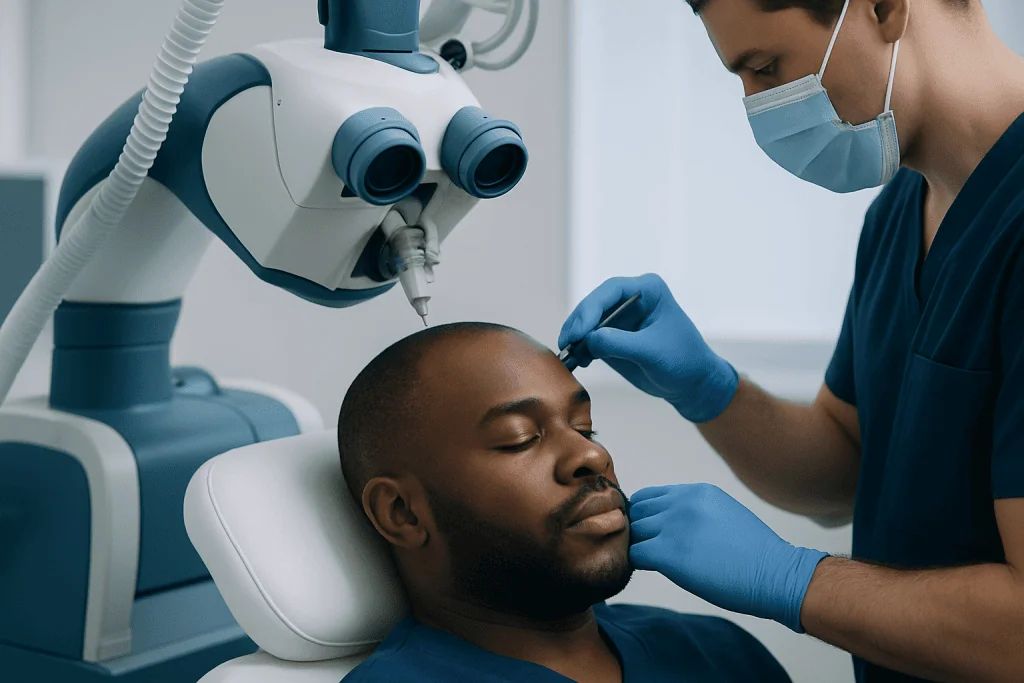
In general, traditional hair plugs are no longer the preferred approach. Modern hair transplant surgery focuses on using smaller, more precise grafts that match the natural way hair grows. This allows the surgeon to build a more realistic hairline, improve density gradually, and reduce the obvious clustered appearance often seen with older plug techniques.
That said, people may still use the term “hair plugs” casually to describe any hair transplant. This can be confusing. A person considering treatment should ask exactly which method is being offered, how grafts are harvested, and how the surgeon plans for hairline shape, density, and long-term hair loss.
For Black men, choosing a center familiar with afro-textured hair is particularly important. Modern surgical planning may be part of a broader aesthetic scalp surgery approach, especially when scarring, previous procedures, or scalp conditions also need attention. A surgeon with specific experience in curly and coiled hair can often better anticipate the angle, curl direction, and cosmetic goals that affect the final result.
Why Black male hair needs a tailored approach

Afro-textured hair has unique characteristics that can be an advantage in hair restoration. Because the hair shaft curls and coils, it can provide the appearance of fuller coverage than straighter hair at the same graft density. This means a carefully planned transplant may create a strong cosmetic improvement without requiring the same visual density needed in straight hair.
At the same time, the follicle itself is often curved under the scalp. This makes extraction more technically challenging, particularly with methods that remove individual follicular units. If the natural curve is not respected, follicles may be damaged during harvesting, reducing graft survival.
Scarring considerations also matter. Some Black patients may be more prone to thick or raised scars, including keloid scars, although this does not happen to everyone. A history of abnormal scar healing, scalp bumps, or prior surgery should be discussed before any procedure. The surgeon should also evaluate for conditions that can mimic or worsen hair loss, such as traction, inflammation, or central scalp thinning.
Hairline design is another key issue. A natural-looking hairline usually should not be too low, too straight, or too dense in the front. Good planning considers age, facial proportions, future hair loss, and the patient’s grooming style. For many men, the goal is not simply more hair, but a believable result that will age well.
Who may consider treatment and what causes hair loss?
Many Black men seek treatment because of male pattern hair loss, also called androgenetic alopecia. This is a common condition in which hair gradually thins, often at the temples, hairline, or crown. Hair transplantation may be an option if the hair loss pattern is stable enough and there is adequate donor hair on the back or sides of the scalp.
However, not all hair loss should be treated with surgery right away. Hairline loss from tight hairstyles, known as traction alopecia, may improve if the styling cause is addressed early. Inflammatory scalp diseases can also lead to permanent loss and may need medical treatment first. If surgery is performed before the underlying problem is controlled, the outcome may be disappointing.
Other important factors include age, family history, general health, medication use, and personal expectations. A patient who wants very dense coverage in one session may not be an ideal candidate if the donor area is limited. In these situations, a staged approach or a combination of medical and surgical treatment may be more realistic.
Previous scalp injury or scarring can affect candidacy as well. For example, areas altered by trauma or burns may have different blood supply and healing behavior. A specialist may need to assess whether transplantation into scarred skin is likely to succeed and whether additional reconstructive planning is needed.
Diagnosis and consultation: what a specialist evaluates
A proper consultation starts with identifying the cause of hair loss. The doctor usually examines the scalp and donor area, reviews how long the thinning has been present, asks about family history, and looks for signs of inflammation, scarring, or breakage. In some cases, dermoscopy or additional tests may help clarify the diagnosis.
The donor area is especially important because transplanted hair is taken from regions that are relatively resistant to future hair loss. The specialist assesses density, curl pattern, hair shaft thickness, and scalp flexibility. In Black men, the shape and direction of the follicles under the skin are highly relevant because they affect which harvesting method is safest and most efficient.
The consultation should also cover scar history, including any tendency toward thick, dark, or raised scars. If a patient has had surgery before or has concerns about visible marks, the surgeon may explain how different methods compare in terms of healing and incision patterns. Photographs, examples of realistic outcomes, and a detailed discussion of expectations can help support informed decisions.
Finally, the treatment plan should be individualized. Some patients are best served by medication alone, some by transplant surgery, and some by a combination. If cosmetic goals extend beyond hair restoration, broader cosmetic (aesthetic) surgery planning may occasionally be part of the discussion, but hair treatment should still be based on diagnosis, safety, and long-term scalp health.
Treatment options today: from modern transplants to non-surgical care
Modern hair transplantation usually relies on follicular unit grafting rather than large plugs. These smaller grafts can be placed to mimic natural growth patterns and create a softer, more natural hairline. Depending on the case, the surgical team may harvest a strip of donor scalp or remove follicular units individually. Each approach has advantages and trade-offs, particularly in curly hair where follicle shape can complicate extraction.
For some Black men, the main challenge is not whether transplantation works, but which method is most suitable. A surgeon experienced in afro-textured hair can decide how to minimize follicle injury, place grafts at an appropriate angle, and preserve the appearance of the donor area. The curled nature of the hair can help create excellent coverage when grafts survive well and are placed carefully.
Non-surgical treatment may also be recommended. Depending on the type of hair loss, options can include medications, changes in grooming practices, treatment of scalp inflammation, or cosmetic camouflage. These measures may slow progression, improve existing hair, or support surgical results. Some patients benefit from delaying surgery until the hair loss pattern becomes more predictable.
When scarring, contour changes, or previous procedures affect the scalp, a specialist may discuss reconstructive elements alongside transplantation. In selected cases, this can involve specialized scalp procedures to improve the scalp environment before or during restoration. Patients with visible old transplant changes may also ask whether outdated plug-like results can be softened or revised.
Recovery, results, and self-care after treatment
Recovery depends on the technique used, the number of grafts, and the individual’s healing response. Mild swelling, tenderness, crusting, and temporary redness can occur after transplantation. The surgeon usually provides washing instructions, guidance on exercise, and advice about when to return to work, haircuts, and shaving or brushing the transplanted area.
Patience is important because transplanted hair does not look complete right away. It is common for transplanted hairs to shed before new growth starts. Visible improvement often comes gradually over several months, with the final appearance taking longer to mature. Results also depend on the quality of donor hair, the ongoing pattern of hair loss, and how closely aftercare instructions are followed.
Self-care should focus on protecting the scalp and preserving existing hair. Gentle styling, avoiding excessive traction, good scalp hygiene, and prompt treatment of inflammation can all help. Patients should also ask whether they need medical therapy to slow further hair loss in non-transplanted areas, since surgery does not stop the underlying process of male pattern thinning.
If a patient is considering care abroad, it is wise to choose a center with experienced specialists and clear follow-up planning. Near the end of the treatment journey, some international patients seek evaluation at Acibadem International, where multidisciplinary specialists in JCI-accredited hospitals assess and treat hair and scalp concerns with individualized planning.
When to see a doctor
A doctor should be consulted when hair loss is sudden, patchy, painful, itchy, inflamed, or associated with scalp scaling or bumps. These features may suggest a condition that needs medical treatment rather than cosmetic restoration. Early assessment can be especially important if there is a risk of scarring hair loss.
Medical advice is also important before pursuing any transplant in Black men with a history of unusual scarring, prior failed hair procedures, or active scalp disease. A specialist can help determine whether surgery is appropriate now, whether the donor area is sufficient, and what method may best reduce risk while supporting a natural result.
Anyone who has older plug-type transplants and dislikes the appearance can also seek expert review. In some cases, modern revision techniques may improve the hairline or soften an unnatural look. A consultation should be honest about what is achievable, since correction can be more complex than a first-time transplant.
Prompt evaluation is worthwhile if hair loss is affecting confidence or day-to-day wellbeing. Even when surgery is not the best next step, a clinician can often recommend medical treatment, scalp care, styling changes, or long-term monitoring to help protect remaining hair.
Frequently asked questions
Are hair plugs the same as a modern hair transplant?
Not exactly. People often use the term hair plugs loosely, but traditional plugs were larger grafts that often produced an unnatural look. Modern hair transplants usually use smaller follicular unit grafts for a more natural hairline and better blending.
Do hair transplants work well for Black men?
They can work very well when the procedure is planned and performed by a surgeon experienced with afro-textured hair. The natural curl pattern can create excellent visual coverage. However, the curved shape of the follicles under the scalp makes technique especially important.
Why is surgeon experience so important for afro-textured hair?
Afro-textured follicles often curve beneath the skin, which increases the technical challenge of harvesting and placement. If the follicle is damaged during extraction, graft survival may be lower. An experienced surgeon is better able to adapt the method to the patient's hair characteristics and scar risk.
Can old hair plugs be corrected?
In some cases, yes. Revision may involve redistributing grafts, softening the hairline, reducing the appearance of clustered plugs, or using newer transplant techniques to improve blending. The best approach depends on the donor supply, scalp condition, and the appearance of the old grafts.
Is every Black man with a receding hairline a candidate for transplant surgery?
No. The cause of hair loss must be identified first because conditions such as traction alopecia or inflammatory scalp disease may need medical treatment before surgery is considered. Donor hair availability, age, general health, and expectations also affect candidacy.
Can a hair transplant leave visible scars?
Any surgical procedure can leave some scarring, but the type and visibility vary by technique and individual healing. Some people have a higher tendency to form thick or raised scars. That is why discussing scar history with the surgeon before treatment is important.
References
- American Academy of Dermatology
- International Society of Hair Restoration Surgery
- British Association of Dermatologists
- National Institute for Health and Care Excellence
- American Society of Plastic Surgeons
This article is for general information only and is not a substitute for professional medical advice. Please consult a qualified doctor about your individual situation.
Hair transplant in Turkey — costs, graft counts & a free assessment
JCI-accredited · board-certified surgeons · reply within 24h
Add us as a Preferred Source to see more of our trusted health content across Google Search, AI Overviews and Discover.

Related Treatments
Related Conditions
More from the Health Library



Related Specialists

Assoc. Prof. Dr. Erdem Güven (m)
Aesthetic Plastic & Reconstructive Surgery
Prof. Dr. Şükrü Yazar
Aesthetic Plastic & Reconstructive Surgery
Prof. Dr. Hakan Ağır
Aesthetic Plastic & Reconstructive Surgery
Prof. Dr. Bülent Saçak
Aesthetic Plastic & Reconstructive Surgery