High Blood Pressure: Symptoms, Home Monitoring, and Treatment Goals

High blood pressure often causes no symptoms, so regular measurement is the only reliable way to know whether it is elevated. Home blood pressure monitoring can help confirm patterns and guide treatment when the device is validated and used correctly.
Key Takeaways
- High blood pressure often causes no symptoms, so regular measurement is the only reliable way to know whether it is elevated.
- Home blood pressure monitoring can help confirm patterns and guide treatment when the device is validated and used correctly.
- Treatment goals are individualized, but many adults benefit from aiming for blood pressure below 130/80 mmHg when it is safe and appropriate.
- Lifestyle changes such as reducing salt, staying active, managing weight, limiting alcohol, and stopping smoking are central to care.
- Medicines may be needed when lifestyle measures are not enough or when cardiovascular risk is higher.
- Very high readings with chest pain, severe headache, weakness, confusion, or shortness of breath require urgent medical attention.
High blood pressure, also called hypertension, is common and often has no noticeable symptoms, but it can be detected with simple measurements. With accurate monitoring, lifestyle steps, and appropriate treatment, most people can manage their blood pressure and reduce long-term health risks.
Overview
High blood pressure, or hypertension, means that the force of blood against the artery walls remains higher than is healthy over time. Blood pressure is written as two numbers: systolic pressure, the top number, when the heart pumps; and diastolic pressure, the bottom number, when the heart relaxes between beats. A single high reading does not always mean a person has hypertension, but repeated high readings should be assessed by a qualified doctor.
Hypertension matters because it increases the workload on the heart and blood vessels. Over years, untreated high blood pressure can contribute to heart attack, stroke, heart failure, kidney disease, eye problems, and circulation problems. The reassuring point is that hypertension is one of the most manageable cardiovascular risk factors when it is identified and followed carefully.
Blood pressure naturally changes during the day. It can rise with exercise, stress, caffeine, pain, poor sleep, or even anxiety during a clinic visit. For this reason, diagnosis and treatment decisions are usually based on repeated measurements, sometimes including home or ambulatory monitoring, rather than one isolated number.
Symptoms of High Blood Pressure
Most people with high blood pressure do not feel unwell. This is why hypertension is sometimes called a “silent” condition. A person may have elevated readings for months or years without headaches, dizziness, chest discomfort, or any obvious warning sign. Regular measurement is therefore more reliable than waiting for symptoms.
When symptoms do occur, they may be due to very high blood pressure or another health problem. Possible symptoms include headache, blurred vision, nosebleeds, shortness of breath, chest discomfort, palpitations, fatigue, or dizziness. These symptoms are not specific to hypertension, so medical evaluation is important rather than assuming the cause.
Some symptoms should be treated as urgent. A very high blood pressure reading together with chest pain, severe headache, confusion, fainting, weakness on one side of the body, trouble speaking, sudden vision changes, or severe shortness of breath may indicate a medical emergency. In these situations, the person should seek emergency care immediately.
Causes and Risk Factors

For many adults, hypertension develops gradually and is called primary, or essential, hypertension. It is influenced by a combination of genetics, aging, lifestyle, and the health of the blood vessels. Arteries can become less flexible with age, and the body’s systems for controlling salt, water, and vessel tone may become less balanced.
Several factors can increase the likelihood of developing high blood pressure. Some can be changed, while others cannot. Common risk factors include:
- Family history of hypertension or early cardiovascular disease
- Older age
- Excess body weight, especially around the waist
- High-salt eating patterns and low intake of potassium-rich foods, unless restricted for medical reasons
- Physical inactivity
- Smoking or nicotine use
- Excess alcohol intake
- Chronic stress and poor sleep
- Diabetes, kidney disease, high cholesterol, or sleep apnea
In some people, hypertension is secondary, meaning it is caused by another condition or substance. Examples include kidney disease, hormonal disorders, obstructive sleep apnea, certain pain relievers, decongestants, steroids, some contraceptives, stimulants, and other medicines or supplements. Identifying a secondary cause can be important, especially when blood pressure is difficult to control, begins at a young age, or rises suddenly.
Diagnosis and Blood Pressure Categories
Diagnosis starts with correct measurement. In a clinic, the person should ideally sit quietly with back supported, feet flat on the floor, and the arm supported at heart level. The cuff should fit the upper arm properly. Talking, crossing the legs, measuring over clothing, or using a cuff that is too small can lead to inaccurate readings.
Blood pressure categories vary slightly between guidelines and regions, but many clinicians consider normal blood pressure to be below 120/80 mmHg. Readings that are consistently higher may be described as elevated blood pressure or hypertension, depending on the level. A doctor interprets the numbers together with age, other medical conditions, kidney function, diabetes status, medication use, and overall cardiovascular risk.
Because blood pressure can be higher in the medical setting, doctors may recommend home blood pressure monitoring or 24-hour ambulatory blood pressure monitoring. Ambulatory monitoring uses a device that automatically measures blood pressure throughout the day and night. These approaches help identify white-coat hypertension, where clinic readings are high but out-of-office readings are lower, and masked hypertension, where clinic readings look normal but home or daily-life readings are high.
Assessment may also include blood and urine tests, an electrocardiogram, and evaluation for conditions such as kidney disease, diabetes, high cholesterol, and sleep apnea. The goal is not only to label blood pressure but also to understand the person’s overall heart and blood vessel health.
Home Blood Pressure Monitoring
Home monitoring can be very helpful when done consistently and correctly. It gives a more complete picture than occasional clinic readings and can show whether treatment is working. It may also help people become more engaged in healthy routines and medication adherence.
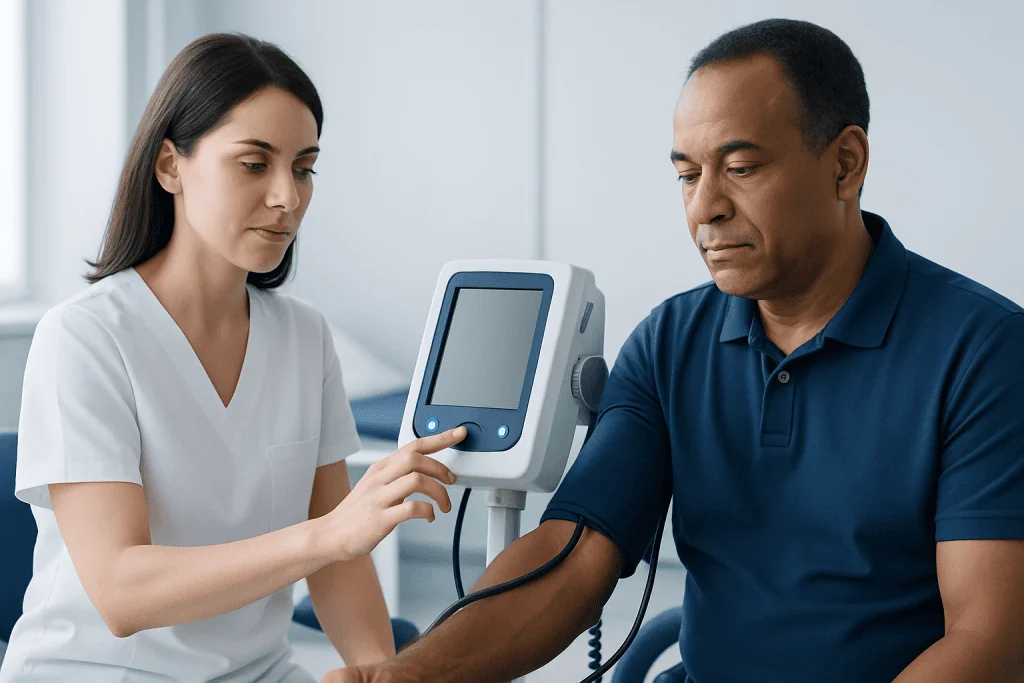
A validated automatic upper-arm monitor is generally preferred over wrist or finger devices because it is usually more reliable. The cuff size should match the arm circumference. The device should be checked periodically, and the person should bring it to a medical appointment if there is concern about accuracy.
For a reliable home reading, the person should avoid exercise, smoking, nicotine, caffeine, and heavy meals for about 30 minutes beforehand when possible. They should empty the bladder, sit quietly for five minutes, keep the back supported and feet flat, place the cuff on bare skin, and keep the arm supported at heart level. Taking two readings one minute apart and recording both can be useful.
Doctors often ask for readings at similar times each day, such as morning and evening, for several days before a visit. The person should record the date, time, blood pressure, pulse, and any relevant notes such as missed medicine, illness, pain, stress, or unusual symptoms. Treatment should not be changed based on home readings without discussing them with a clinician, unless the person has been given a specific plan.
Treatment Options and Treatment Goals
The main aim of treatment is to lower the risk of complications while keeping the person feeling well and safe. Treatment goals are individualized. For many adults, a common goal is below 130/80 mmHg if it can be achieved safely, but some people may need a different target because of age, frailty, dizziness, kidney disease, medication side effects, or other medical conditions.
Lifestyle measures are the foundation of treatment for almost everyone with high blood pressure. These include reducing sodium, eating a heart-healthy diet rich in vegetables, fruits, whole grains, legumes, nuts, and low-fat dairy when appropriate, maintaining a healthy weight, being physically active, limiting alcohol, stopping smoking, and improving sleep. Even when medicines are needed, these habits can improve blood pressure control and overall cardiovascular health.
Medication may be recommended when blood pressure is persistently high, when lifestyle measures alone are not enough, or when the person has higher cardiovascular risk. Common classes include diuretics, ACE inhibitors, angiotensin receptor blockers, calcium channel blockers, and beta blockers in selected situations. The choice depends on the person’s age, other diagnoses, kidney function, pregnancy status, side-effect profile, and other medicines.
It is common for treatment to be adjusted over time. Some people need more than one medicine to reach a safe range. Medicines should be taken as prescribed, and sudden stopping can cause blood pressure to rise again. If side effects occur, the person should contact the doctor; there are often alternative options.
Prevention and Self-Care
Preventing and managing high blood pressure is closely linked to everyday routines. A practical approach is often more successful than a strict short-term plan. Small, repeatable changes in eating, activity, sleep, and stress management can support long-term blood pressure control.
Reducing salt is one of the most useful steps for many people. Much of the sodium in the diet comes from packaged foods, restaurant meals, processed meats, salty snacks, sauces, and ready-made soups. Reading labels, choosing fresh foods more often, flavoring meals with herbs or spices, and asking for less salt when eating out can help. People with kidney disease, heart failure, or those taking certain medicines should discuss potassium-rich salt substitutes with their doctor before using them.
Regular physical activity also helps. Many adults benefit from a combination of aerobic activity, such as brisk walking, cycling, or swimming, and strength exercises, adjusted to their fitness level and medical conditions. People who have chest pain, severe shortness of breath, fainting, uncontrolled blood pressure, or known heart disease should ask a clinician before starting a vigorous exercise program.
Self-care also includes taking medicines consistently, attending follow-up visits, checking blood pressure as advised, and discussing all prescription medicines, over-the-counter products, and supplements with a healthcare professional. Acibadem International’s multidisciplinary specialists and JCI-accredited hospitals can diagnose and treat high blood pressure for international patients, including those who need coordinated cardiology, kidney, endocrine, or lifestyle support.
When to See a Doctor
Adults should have their blood pressure checked regularly, even when they feel well. People with diabetes, kidney disease, heart disease, pregnancy, a family history of hypertension, or previous high readings may need more frequent checks. A doctor can recommend an appropriate schedule based on personal risk.
A medical appointment is recommended if home readings are repeatedly above the range advised by the clinician, if readings are very different between home and clinic, or if there are possible medication side effects such as dizziness, swelling, persistent cough, unusual fatigue, or fainting. It is also important to seek advice before pregnancy or early in pregnancy, because blood pressure management may need special planning.
Emergency care is needed if a very high reading occurs with symptoms such as chest pain, severe headache, confusion, weakness, trouble speaking, sudden vision problems, severe shortness of breath, or fainting. If the person has a very high reading but feels well, they should sit quietly and repeat the measurement correctly, then follow medical advice or contact a healthcare professional promptly for guidance.
Frequently asked questions
Can high blood pressure cause symptoms?
Most people with high blood pressure have no symptoms, even when readings are consistently elevated. Some people may have headache, dizziness, blurred vision, or shortness of breath, but these symptoms can have many causes. Regular measurement is the only reliable way to know whether blood pressure is high.
What is the best time to check blood pressure at home?
Many doctors suggest checking in the morning before medicines and breakfast, and again in the evening, but the best schedule depends on the person’s treatment plan. Readings should be taken after sitting quietly for several minutes. It is helpful to measure at similar times each day and bring the record to appointments.
Is one high blood pressure reading dangerous?
One high reading can happen because of stress, activity, caffeine, pain, or measurement error. The person should rest, repeat the reading correctly, and record the result. If readings remain very high or are accompanied by chest pain, severe headache, weakness, confusion, or shortness of breath, urgent medical care is needed.
Can lifestyle changes replace blood pressure medicine?
Lifestyle changes can significantly improve blood pressure and may be enough for some people with mild elevation and low overall risk. Others need medication as well, especially when blood pressure is higher or there are conditions such as diabetes, kidney disease, or heart disease. A doctor can help decide the safest approach.
What blood pressure goal should a person aim for?
The goal should be personalized. Many adults benefit from a target below 130/80 mmHg if it is safe and tolerated, but older adults, frail individuals, and people with certain medical conditions may need a different goal. The treating clinician should set the target based on overall health and risk.
Why are my home readings different from clinic readings?
Blood pressure changes throughout the day and can rise in a medical setting because of anxiety, known as the white-coat effect. Home technique, cuff size, and device accuracy can also affect results. Bringing the home monitor and reading log to an appointment can help the clinician interpret the differences.
This article is for general information only and is not a substitute for professional medical advice. Please consult a qualified doctor about your individual situation.
Heart care in Turkey — expert evaluation and treatment
JCI-accredited · board-certified surgeons · reply within 24h
Add us as a Preferred Source to see more of our trusted health content across Google Search, AI Overviews and Discover.
Check your numbers in seconds
BMI, calories, due date, blood pressure and 30+ more clinical calculators — free, instant, doctor-reviewed ranges.

Cardiology Department
Diagnosis and treatment of heart and vascular conditions, from prevention to advanced interventional procedures.
93 specialists in this unitRelated Treatments
Related Conditions
More from the Health Library

Cardiac Arrhythmia: Symptoms, Causes, and Diagnosis

Heart-Healthy Eating After CABG: Diet Goals for Long-Term Graft Protection

Returning to Work After Heart Bypass Surgery: Timing, Limits, and Safe Planning

Coronary Artery Disease: Plaque Buildup, Testing, and Treatment
Coronary Artery Bypass Surgery Cost in Turkey: What Influences the Total Price?