How Much Is Corrective Eye Surgery: Procedure, Recovery and Results

Corrective eye surgery includes laser corneal procedures and lens-based procedures, selected according to individual eye measurements. LASIK is usually quick and involves little pain during surgery because anesthetic eye drops are used.
Key Takeaways
- Corrective eye surgery includes laser corneal procedures and lens-based procedures, selected according to individual eye measurements.
- LASIK is usually quick and involves little pain during surgery because anesthetic eye drops are used.
- Most people notice visual improvement soon after LASIK, but vision can fluctuate while the eyes heal.
- Age-related near-vision changes can still occur after successful laser vision correction.
- Not everyone is a suitable candidate; stable prescription, corneal health and overall eye health are important.
- Dryness, glare and temporary visual fluctuations are common early effects, while serious complications are uncommon but possible.
How much is corrective eye surgery cannot be answered with one universal figure because the recommended technique, prescription, corneal health, testing and follow-up needs differ from person to person. A comprehensive eye assessment helps determine whether LASIK, PRK, a lens-based procedure or continued use of glasses and contact lenses is the safest and most suitable option.
Overview: How Much Is Corrective Eye Surgery?
How much is corrective eye surgery depends on the type of procedure needed, the complexity of the prescription, pre-operative testing, the technology used and the follow-up plan. Rather than choosing surgery on price alone, a person should first have a detailed refractive assessment to confirm that surgery is appropriate and to understand what care is included.
Corrective eye surgery, also called refractive surgery, reduces dependence on glasses or contact lenses by changing how light focuses on the retina. Laser procedures such as LASIK and PRK reshape the cornea, while some people may be better suited to lens-based options, particularly when the natural lens has become less flexible or cloudy.
The expected result is clearer uncorrected distance vision for many suitable patients, but results vary. Surgery does not stop normal eye ageing, and some people may still need glasses for reading, night driving or certain detailed tasks.
A refractive surgeon can explain the available approaches after measuring corneal thickness and shape, prescription stability, pupil size, tear film and retinal health. The most appropriate option is based on safety and likely visual quality, not simply convenience.
How Corrective Eye Surgery Works
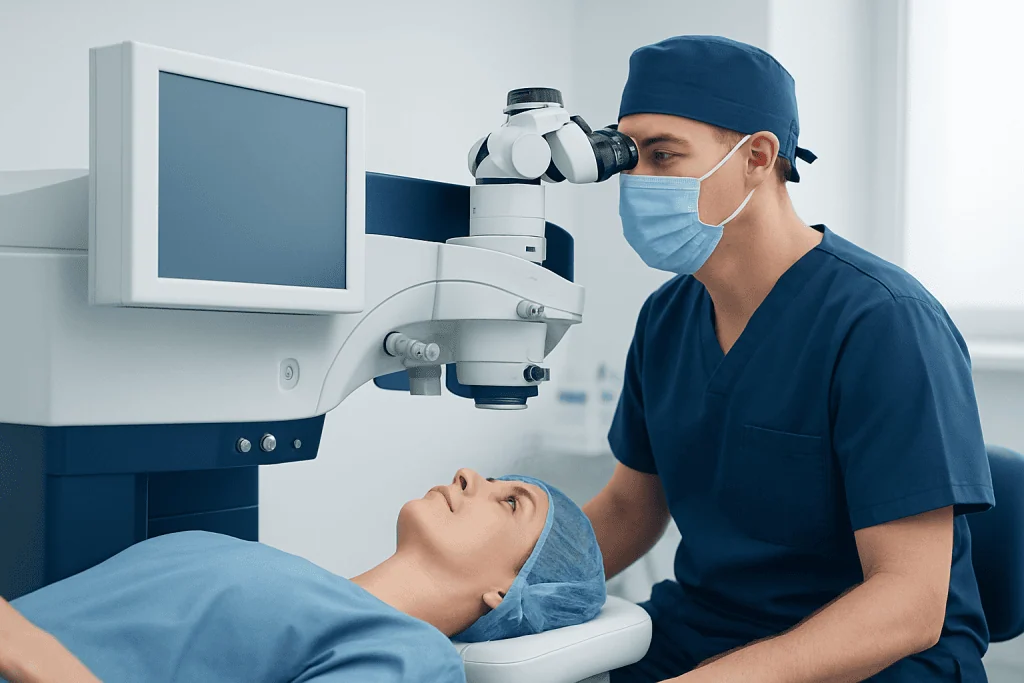
The eye focuses light through the cornea and natural lens onto the retina. Nearsightedness, farsightedness and astigmatism occur when the eye’s focusing power and length do not match perfectly. Corrective surgery aims to alter the optical system so that light is focused more accurately on the retina.
In LASIK, the surgeon creates a thin corneal flap, reshapes underlying corneal tissue with an excimer laser and then repositions the flap. PRK reshapes the corneal surface after the outer cell layer is removed; this may be considered when the cornea is thinner or when a flap procedure is less suitable. Both procedures use highly detailed measurements to plan treatment.
Lens-based procedures may be discussed for people with high prescriptions, unsuitable corneas or age-related focusing changes. These options can include implantable lenses or replacement of the natural lens. A specialist should explain the distinct benefits, healing patterns and risks of each method.
Laser vision correction is an elective procedure. It should be approached as a healthcare decision that balances the potential reduction in glasses or contact lens dependence against the possibility of side effects, additional treatment or ongoing visual aids.
Candidacy and Pre-Procedure Assessment
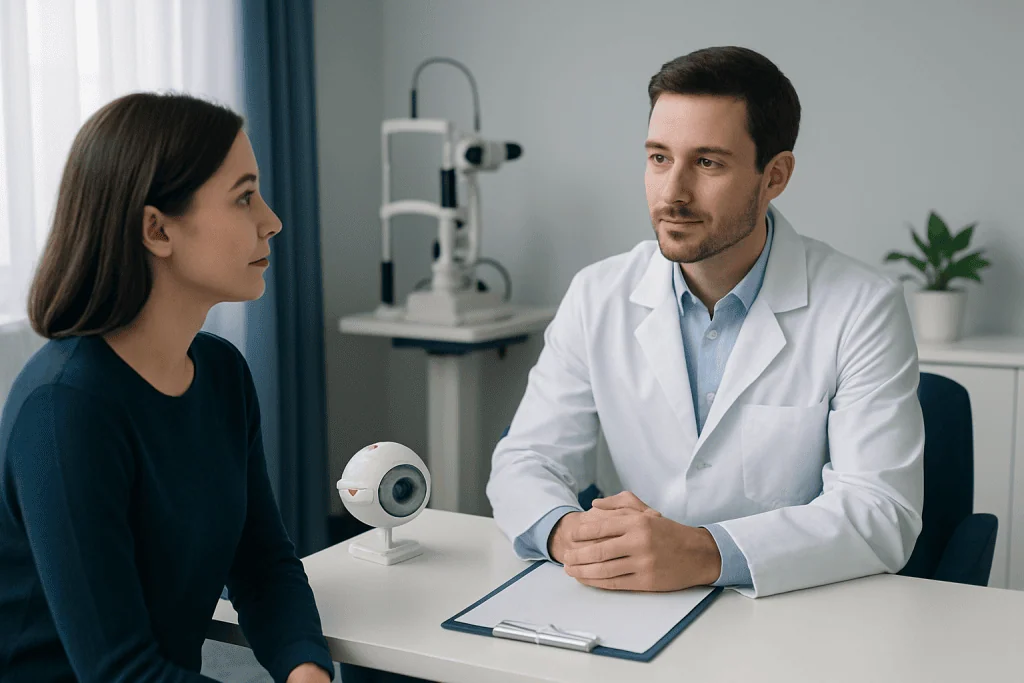
Good candidates are generally adults with a stable prescription, healthy corneas and realistic expectations. Stability is important because a changing prescription may reduce the predictability of results. The assessment also considers dry eye symptoms, previous eye injury or surgery, and general medical conditions that could affect healing.
Testing usually includes a detailed refraction, corneal mapping, corneal thickness measurement, pupil assessment, tear film evaluation and a dilated examination of the retina and optic nerve. Contact lens wear can temporarily alter corneal shape, so a clinician may ask the person to stop wearing lenses for a specified period before testing.
Some conditions require extra caution or may make laser treatment unsuitable. These can include irregular corneal shape, active eye infection or inflammation, significant dry eye, uncontrolled diabetes, certain autoimmune conditions, cataract, glaucoma or retinal disease. Pregnancy and breastfeeding may also be a time to postpone assessment because vision can fluctuate.
A thorough consultation should include discussion of alternatives. Updated glasses, contact lenses, dry-eye treatment or a different refractive procedure may be safer or more effective for an individual’s goals.
Step by Step: What Happens During LASIK?
Before LASIK, numbing drops are placed in the eyes. The person remains awake and lies comfortably under a laser system. An instrument keeps the eyelids open, and the surgical team provides instructions throughout the procedure. Mild pressure may be felt briefly while the corneal flap is created.
The person is asked to look at a fixation light while the laser reshapes the cornea. Modern laser systems track eye movements, but keeping the gaze as steady as possible remains helpful. The laser treatment itself generally lasts seconds, although preparation takes longer.
After reshaping, the flap is returned to its original position without stitches. Vision can be hazy immediately afterward, and the eyes may feel watery, gritty or sensitive to light for several hours. The person normally goes home the same day and should arrange transport rather than drive.
Instructions commonly include prescribed eye drops, avoiding eye rubbing and attending follow-up visits. People considering treatment can discuss the details of LASIK eye surgery with a qualified ophthalmology team, including whether another technique would better match their corneal measurements and visual needs.
Recovery Timeline, Benefits and Possible Risks
After LASIK, many people notice clearer vision within a day or two, although sharpness may vary during early healing. For PRK, recovery of useful vision usually takes longer because the corneal surface needs time to regenerate. Final visual stability can take weeks to months, depending on the procedure and individual healing.
During recovery, clinicians typically advise using prescribed drops, protecting the eyes from dust and water exposure as directed, avoiding eye makeup for a short period, and not rubbing the eyes. Swimming, contact sports and strenuous activity may need to be delayed. Follow-up appointments help confirm that healing and vision are progressing appropriately.
Potential benefits include reduced dependence on glasses or contact lenses, easier participation in some activities and improved convenience. However, results are not identical for everyone. Some patients still require glasses for certain tasks, and a small number may need enhancement treatment after the eye has stabilized.
Temporary dryness, glare, halos around lights, reduced night-vision quality and fluctuating vision can occur. Less common but important risks include infection, inflammation, corneal healing problems, undercorrection, overcorrection or loss of best corrected vision. Prompt review of new pain, worsening redness or a sudden reduction in vision is important.
Common Questions About Long-Term Results
Is LASIK worth it over 40? LASIK may be worthwhile over age 40 for people who want less dependence on distance glasses or contact lenses and are suitable after examination. However, presbyopia, the normal age-related loss of near focusing ability, often begins in the 40s. A person may therefore see well at distance after LASIK but still need reading glasses, or may discuss monovision correction after a successful contact lens trial.
Is eye correction surgery worth it? Whether eye correction surgery is worth it is personal and depends on visual needs, eye health, tolerance of glasses or contacts, occupation, lifestyle and comfort with the potential risks. It can be a valuable option for appropriately selected patients, but it is not medically necessary for everyone. A balanced consultation should include likely benefits, limitations, alternatives and recovery needs.
What happens 10 years after LASIK? Many people retain useful improvement in distance vision 10 years after LASIK. Nevertheless, the eyes continue to change with age, and presbyopia, cataract, dry eye or a gradual prescription shift may affect vision later. LASIK does not prevent future eye conditions, so routine eye examinations remain important.
How painful is LASIK surgery? LASIK is generally not painful during the procedure because anesthetic drops numb the eye. Some people experience pressure during surgery and burning, tearing, grittiness or light sensitivity afterward, usually for a short time. Severe or increasing pain is not expected and should be reported promptly to the surgical team.
When to Seek Medical Care
Anyone considering corrective eye surgery should seek an assessment from an ophthalmologist or refractive surgeon rather than relying only on a current glasses prescription. A professional evaluation is especially important for people with dry eye, a history of eye disease, diabetes, autoimmune disease, prior eye surgery or vision that has changed recently.
After surgery, urgent medical advice is needed for severe pain, increasing redness, discharge, sudden loss or worsening of vision, a new curtain-like shadow, flashes of light, or a major increase in floaters. These symptoms do not always indicate a serious complication, but they require timely examination.
Regular eye checks remain important even after successful surgery. They can identify conditions such as cataract, glaucoma and retinal disease early, when treatment may be most effective.
Acibadem International’s multidisciplinary specialists and JCI-accredited hospitals assess and treat refractive eye conditions for international patients, with the procedure choice guided by a full ophthalmic evaluation and individual clinical needs.
Preparing for a Safe, Informed Decision
Before deciding, a person can ask which procedure is recommended and why, what results are realistic for their prescription, whether reading glasses are likely afterward, and what follow-up care is needed. It is also reasonable to ask how the clinic manages dry eye, visual symptoms at night and the possibility of enhancement treatment.
Choosing an experienced ophthalmology team and completing all recommended testing are important safety steps. A consultation should not feel rushed, and patients should have time to consider the information before an elective procedure.
Healthy habits also support long-term eye health. These include attending routine eye examinations, using ultraviolet protection outdoors, managing long-term medical conditions and seeking timely advice for new visual symptoms.
Corrective surgery can reduce refractive error, but it does not replace ongoing eye care. The best outcome is a decision that aligns the person’s visual goals with a procedure that is clinically appropriate for their eyes.
Frequently asked questions
How is the right type of corrective eye surgery chosen?
The choice is based on detailed measurements of the cornea, prescription, tear film, pupil size and overall eye health. A surgeon also considers age, lifestyle, work needs and whether the person has early lens changes or needs near-vision correction. LASIK is one option, but PRK or lens-based treatment may be more suitable for some eyes.
Can LASIK correct astigmatism?
LASIK can correct many cases of astigmatism by reshaping the cornea so that it focuses light more evenly. Whether it is suitable depends on the degree and pattern of astigmatism, corneal thickness and corneal regularity. A pre-operative scan helps determine if laser correction is appropriate.
Will glasses still be needed after corrective eye surgery?
Many people use glasses less often after surgery, particularly for distance vision. Some may still need glasses for reading, night driving, detailed close work or if a small residual prescription remains. Reading glasses become increasingly common with age because of presbyopia.
How long should someone take off work after LASIK?
Many people return to desk-based work within one or two days after LASIK, provided their clinician agrees and vision is comfortable. Jobs involving dust, water exposure, physical contact or high visual demands may require more time or specific precautions. PRK generally has a longer initial recovery period than LASIK.
Can corrective eye surgery be repeated?
An additional laser treatment, sometimes called an enhancement, may be possible if a meaningful residual prescription remains and the cornea is suitable. It is not automatic and should only be considered after vision has stabilized and a surgeon has repeated the necessary measurements. In some cases, glasses or contact lenses are the safer choice.
Does LASIK increase the risk of cataracts?
LASIK does not cause cataracts. Cataracts are a common age-related change in the natural lens and can develop whether or not a person has had LASIK. Previous LASIK should be mentioned before future cataract surgery because it affects the calculations used to select an intraocular lens.
References
- American Academy of Ophthalmology
- U.S. Food and Drug Administration
- National Eye Institute
- Royal College of Ophthalmologists
This article is for general information only and is not a substitute for professional medical advice. Please consult a qualified doctor about your individual situation.
Eye Surgery in Turkey — costs, top hospitals & a free quote
JCI-accredited · board-certified surgeons · reply within 24h
Add us as a Preferred Source to see more of our trusted health content across Google Search, AI Overviews and Discover.

Ophthalmology
Comprehensive eye care from laser vision correction to retina, cornea and cataract surgery.
75 specialists in this unit